
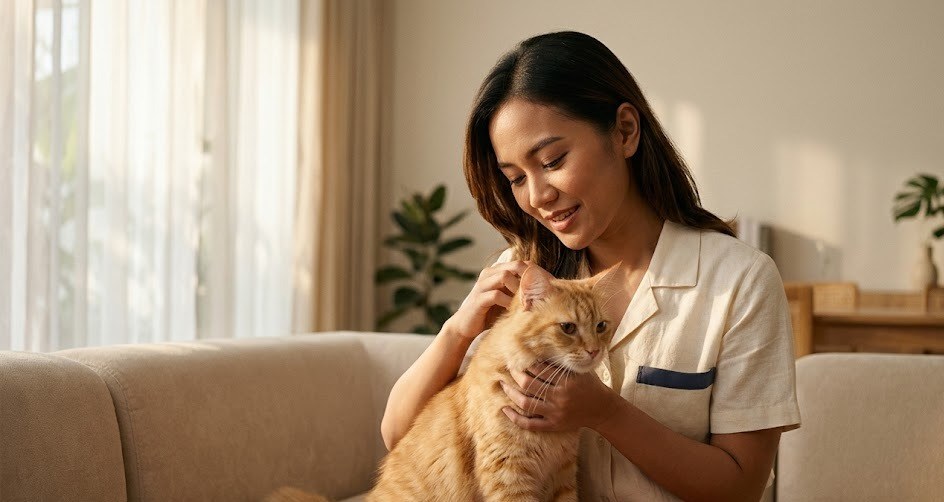
In short: losing a beloved pet is a real loss, and the grief you feel is valid and worthy of respect. There is no "right" schedule for grieving, and everyone moves through it in their own way. What helps: allowing yourself to feel sad, remembering in a meaningful way, supporting children and remaining pets, and seeking support if the grief feels too heavy. If you would like to talk with someone who understands this bond, message Dr. Prabasa on WhatsApp.
If you are reading this after losing your four-legged friend, we are so sorry. The bond with a beloved pet is sincere and deep. Losing it can feel like losing a family member, because that is exactly what it is. You are not overreacting, and you are not alone.
Your grief is real and valid
Sometimes those around us do not fully understand, "it was just a pet." Words like that, even if not meant unkindly, can make us feel we should hide our sadness. Yet grieving a pet we loved for years is a human and healthy thing.
A beloved pet is part of our everyday life, greeting us home, keeping us company when we are lonely, giving unconditional love. It is natural that its passing leaves an empty space that feels real, both in the home and in the heart.
Normal forms of grief
Grief can take many forms, and there is no set order. You may experience:
- Deep sadness, sudden crying, or a sense of emptiness.
- Guilt or "what if" questions, especially if you shared in a hard decision at the end. This is very common and does not mean you were wrong.
- Anger, at the situation, at yourself, even with no clear target.
- Loss of appetite, trouble sleeping, or difficulty concentrating for a while.
- Feeling as if you still hear or see them in a corner of the house.
- Relief, especially if your pet suffered for a long time. This relief is not a sign you loved them less.
All of these are part of a normal process. Grief does not come in a straight line; there are lighter days, then suddenly the wave returns. That is normal.
Ways that can help you find peace
- Allow yourself to feel. Do not force yourself to "recover quickly." Give your sadness room.
- Remember meaningfully. Keeping photos, making a small album, planting something, or keeping a collar or toy can help. A parting ritual, however small, is often soothing.
- Talk about it. Share with someone who understands, or write down your feelings. There are also communities and support groups of owners who have experienced loss.
- Keep basic routines. Eating, sleeping, and moving enough help the body and mind through this heavy time.
- Be patient with yourself. There is no "right" length. Some heal in a few weeks, some need longer. Both are okay.
Supporting children
For many children, this may be their first experience of loss. Some things that help:
- Use honest, gentle, age-appropriate words. Avoid confusing metaphors such as "went to sleep," which can create fear.
- Let them ask questions and show their sadness in their own way.
- Involve them in remembering, for example drawing or keeping a favourite photo.
- Show that being sad is okay, by not hiding your own sadness entirely.
Remaining pets can grieve too
If there are other pets at home, they may sense the change. Some become quieter, search for their companion, eat less, or become more attached to you. What can help: keeping their routine, giving extra attention, and being patient. If a remaining pet stops eating for days or seems ill, it is best to have it checked, because stress can trigger health problems, especially in cats.
When to seek more support
Normal grief usually becomes more bearable over time. Consider seeking help from a professional (a psychologist or counsellor) if:
- The grief does not ease at all after a fairly long time, or grows heavier.
- You struggle to manage daily activities, work, or self-care.
- Deep hopelessness, or thoughts of harming yourself, appear.
- Guilt feels haunting and you cannot let it go.
Seeking help is not a sign of weakness but a form of self-care. If your guilt relates to a medical decision at the end of your pet's life, talking with a vet who understands that situation can sometimes help you see that you did your best, with love.
Closing
Deep loss is the price of sincere love. This pain, however heavy, is proof of how much your friend meant. Give yourself time, gentleness, and permission to grieve. If you would like to talk with someone who understands the bond between you and your pet, or need reassurance about a decision you made, message Dr. Prabasa on WhatsApp. We support families across Greater Jakarta with respect, and if you need more support than we can give, we will honestly recommend the right professional help.


