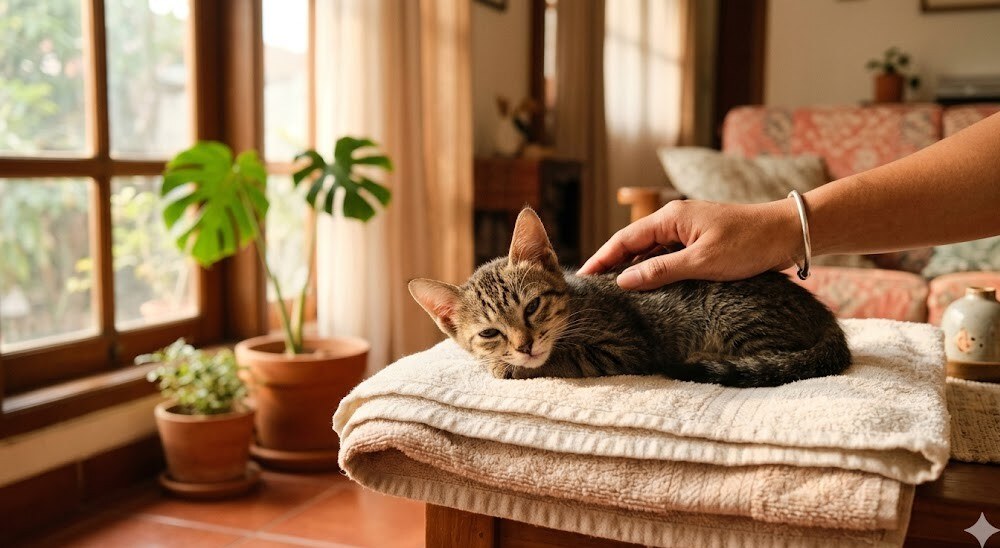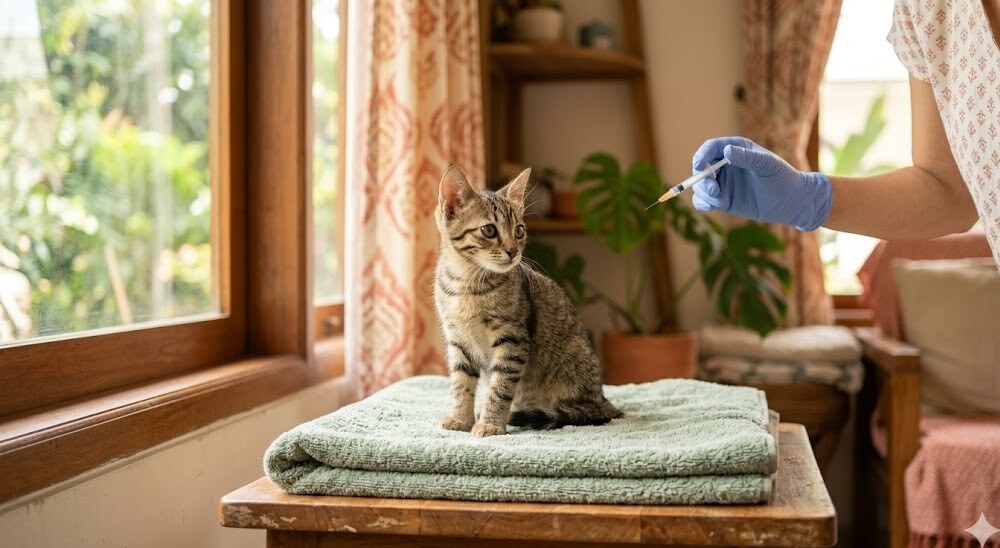

Just brought a kitten home and unsure when to start vaccinations? You're not alone. "How old does a kitten need to be for the first shot?" is one of the most common questions we hear from first-time cat owners.
This guide walks you through the big picture: when to vaccinate, which shots your kitten needs, what the cost typically looks like, and what to do after vaccination. It's not a replacement for talking to a vet, it's so you feel prepared when you do.
When can a kitten start vaccinations?
In general, a kitten can get their first vaccine at 6–8 weeks of age. Before that, kittens still carry maternal antibodies from their mother's milk, so a vaccine given too early won't generate an optimal immune response.
If you just adopted a kitten and aren't sure of their age, don't rush to vaccinate. Here's what a vet typically checks before the first shot:
- Body weight of at least around 800 grams
- Clear eyes, no runny nose
- No diarrhoea, good appetite
- Already dewormed (usually 1–2 weeks before the vaccine)
- No fever
- Settled in the new home for at least 3–7 days
Forcing a vaccine on a kitten that isn't fit can overwhelm their immune system. So if your kitten just arrived and is still a bit unsettled, give them adjustment time first, then book the vet visit.
Which vaccines does a kitten need?
Cat vaccines are generally split into two groups: core vaccines (essential for every cat) and non-core vaccines (depending on lifestyle and exposure risk).
Core vaccines (essential)
These protect against serious diseases common in Indonesia. They're usually combined into one shot:
- Feline Panleukopenia Virus (FPV), often called "feline distemper", highly contagious and deadly for kittens
- Feline Calicivirus (FCV), upper respiratory disease that can cause severe oral ulcers
- Feline Herpesvirus (FHV-1), chronic feline flu, prone to flare-ups when the kitten is stressed
These three combined are commonly known as FVRCP or locally as Tricat (3-in-1). Add Chlamydia protection and it becomes Tetracat (4-in-1).
Non-core vaccines
Not essential for every cat, but strongly recommended if your cat's lifestyle puts them at higher risk:
- Rabies vaccine, important for all cats, especially those with outdoor access. In much of Jabodetabek, a current rabies vaccine is also required if you want to move your cat across cities or internationally.
- FeLV (Feline Leukemia Virus) vaccine, recommended if you have multiple cats at home or if your cat has contact with other cats.
A typical first-vaccine schedule
Here's the schedule most commonly used in Indonesia. The exact timing still depends on your kitten's condition and your vet's recommendation:
- 6–8 weeks: first vaccine (Tricat / Tetracat / FVRCP)
- 10–12 weeks: first booster
- 14–16 weeks: second booster + first Rabies shot
- Every year after: annual booster to maintain immunity
Why repeat? Because vaccine protection isn't permanent. Boosters ensure the kitten's antibody response is fully formed and durable.
How much does cat vaccination cost?
Vaccine cost in Jabodetabek is usually shaped by three things: which vaccine is used, which clinic or vet you choose, and whether you visit the clinic or the vet comes to your home.
The amount depends on which vaccine is used, the brand, and whether you visit the clinic or the vet comes to your home, house call vaccinations add a visit fee depending on distance. Vaccination is a cost worth budgeting for, but it's routine and predictable. The upside of a house call: you save time, your cat avoids the stress of car travel, and they don't share a waiting room with other sick cats.
For a specific estimate for your area, the easiest path is to just ask, Prabasa Vet's team typically gives an estimate before the visit so there are no surprise bills.
What to prepare before the first vaccine
- Make sure your kitten is dewormed about 1–2 weeks before vaccination. Worms reduce immune response and make the vaccine less effective.
- Give adjustment time if your kitten just arrived. Ideally 3–7 days before the first shot.
- Note a short history: adoption date, last deworming, any symptoms (sneezing, diarrhoea, watery eyes).
- Make sure your kitten is fed and relaxed before the vet arrives. Skip bathing on the same day as vaccination.
After the shot: what's normal vs what to watch
Mild reactions after vaccination are normal and usually pass within 1–2 days. Common things that don't need panic:
- A bit of lethargy and more sleep in the first 24 hours
- Slightly reduced appetite, briefly
- Mild swelling at the injection site
- Mild fever
But call the vet right away if you see:
- Severe vomiting or diarrhoea
- Swelling around the face, eyes, or lips
- Difficulty breathing or panting
- Severe lethargy, unable to stand for more than 24 hours
- Itching or rash all over the body
Severe allergic reactions (anaphylaxis) are very rare but not impossible. Keep an eye on your kitten on the first day after vaccination, and keep the vet who did the shot on standby.
FAQ
Can cat vaccinations be done at home?
Yes. House call vaccinations like the ones Prabasa Vet offers are often the preferred choice for kitten owners, your cat doesn't need to go into a carrier, doesn't get stressed in transit, and isn't exposed to other potentially sick cats at a clinic. Just message us on WhatsApp; the vet arrives with vaccines kept in the proper cold chain.
How much does kitten vaccination cost in Jabodetabek?
Cost varies depending on the vaccine type (Tricat / Tetracat / Rabies), your area, and whether it's done at a clinic or at home. The most accurate estimate comes from a direct consultation, mention your cat's breed, age, vaccine history, and area when you reach out to the Prabasa Vet team on WhatsApp.
Is it okay to delay the first vaccine if my kitten is still very small?
Yes, but don't push it too far. If your kitten isn't fit yet (still has diarrhoea, very small, recently recovered from illness), it's reasonable to delay 1–2 weeks until they're fully healthy. But the longer you delay, the longer your kitten is unprotected from serious diseases like panleukopenia. Discuss a safe schedule with your vet.
What's the protocol for an adult cat that has never been vaccinated?
An unvaccinated adult cat can still start a vaccination program. Usually that means a first shot, then a booster about 3–4 weeks later, then annual shots after that. Before vaccinating, the vet typically confirms the cat is healthy and parasite-free.
Wrapping up
The first vaccine is one of the most important things you give your kitten in their first year. It's not just a formality, it's protection against diseases that can be fatal. If you're still unsure about timing, which vaccines fit, or you'd rather a vet just come to your home, the Prabasa Vet team is happy to help.
Reach us on WhatsApp, mention your area and your kitten's condition, we'll match you with a partner vet near you and confirm a time that works for you.