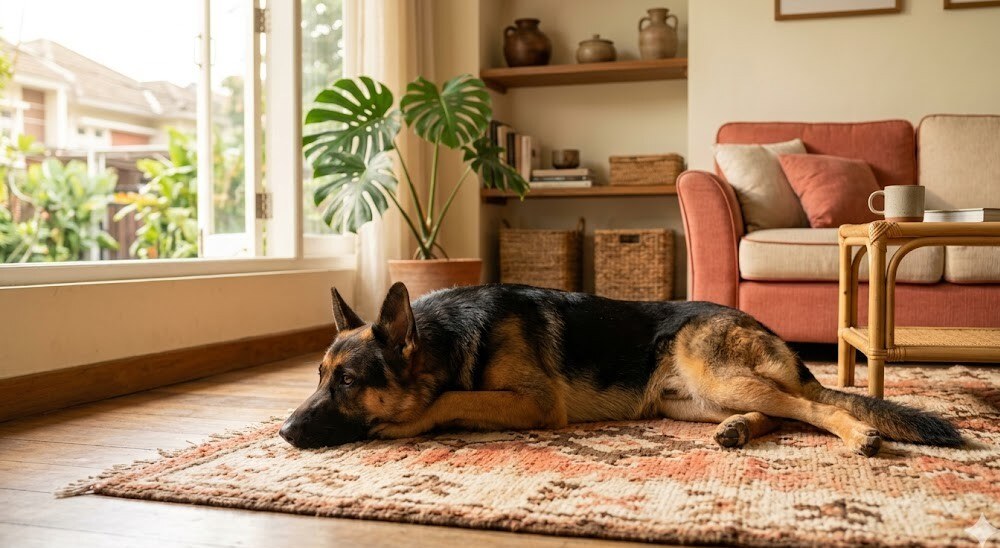

"My dog is already 9 years old, and lately he struggles to get up in the morning, walks stiffly, and sometimes seems confused in his own home, is it time for senior care?" Senior dogs need a different approach to care than young adult dogs, but many owners only realize this once the dog is already showing obvious symptoms. Yet many senior dog health problems can be managed far better when caught early.
This article explains when a dog is considered senior (which, it turns out, is not the same for all breeds), the common physical and behavioral changes, the diseases that frequently appear, and the senior care framework that AAHA recommends.
When is a dog considered senior?
Unlike cats, which are relatively uniform, dogs vary widely based on breed size. AAHA Senior Care Guidelines:
- Small breeds (<9 kg), become senior around 10 years. Examples: pomeranian, mini pinscher, shih tzu, maltese, chihuahua
- Medium breeds (9–22 kg), become senior around 8 years. Examples: cocker spaniel, beagle, corgi
- Large breeds (22–40 kg), become senior around 7 years. Examples: golden retriever, labrador, husky
- Giant breeds (>40 kg), become senior as early as 6 years. Examples: great dane, st. bernard, mastiff
This is why a 7-year-old golden retriever can look far "older" than a 10-year-old chihuahua. The general rule "senior dog = 7+ years" fits large breeds better, while small breeds only truly become senior at 10+.
The key: don't wait until symptoms appear clearly before starting senior care. Once your dog enters the senior category based on breed, begin a thorough check-up every 6 months.
Physical changes in senior dogs
Some of these changes are part of normal aging, others require evaluation:
- Loss of muscle mass (sarcopenia), especially in the hind legs and back. The shoulders and waist look more prominent, but the belly can appear larger (abdominal muscles sag). This is not "getting fat" but loss of muscle with fat accumulation, a condition AAHA calls sarcopenic obesity
- Osteoarthritis, degenerative joint disease is the number one problem in senior dogs. Signs: stiffness on waking that improves after walking, reluctance to climb stairs or jump onto the sofa, frequent slow jogging with a lower tail, or changes in sleeping position. Many owners assume "well, he's just old", yet this pain can be managed
- Vision decline, nuclear sclerosis (the lens slightly cloudy) occurs in almost all senior dogs and does not impair vision much. Cataracts are different, they need an eye specialist evaluation if the dog starts bumping into objects or gets confused in dark rooms
- Hearing decline, many senior dogs become less responsive to sound. It can look like "deliberately ignoring", when in fact it is mild-to-severe deafness
- Worsening dental-gum condition, periodontal disease is very common in dogs 7+ years. Bad breath, red inflamed gums, or reluctance to chew hard food = needs a dental scale
- Skin and coat condition, the coat becomes duller, drier, sometimes with thin areas. Lipomas (benign fatty lumps) also commonly appear, usually not a problem unless large or in a location that restricts movement
Cognitive Dysfunction Syndrome (CDS), canine dementia
One of the most important changes that is often misinterpreted as "just old age" is Canine Cognitive Dysfunction Syndrome, the dog version of dementia. Guidance from CDS research uses the mnemonic DISHAA:
- Disorientation, confused in his own home, getting stuck in a corner, not knowing which side of the door to push, or forgetting the location of food/water bowls that have been in the same spot for years
- Interactions, changes in social interaction. A normally friendly dog withdraws, or conversely becomes more clingy/anxious (new separation anxiety)
- Sleep-wake cycle, reversed sleep pattern. Sleeping all day, restless, pacing, or barking in the middle of the night
- Housesoiling, a previously housetrained dog starts defecating/urinating indoors again, forgetting to ask to be let out
- Activity changes, a decline in activity disproportionate to physical condition, or odd repetitive activity (rhythmic pacing, obsessive self-licking)
- Anxiety, new anxiety in situations that used to be fine (strangers, thunder, being left alone)
CDS is a diagnosis of exclusion, other medical causes must be ruled out first (hypertension, hypothyroidism, liver problems, undetected chronic pain). Management is through a special diet, supplements (omega-3, antioxidants), medication (selegiline if indicated), and environmental enrichment.
So if your senior dog begins to show behavioral changes, don't immediately assume "he's just senile", work it up first to make sure there is no treatable medical cause.
Common diseases in senior dogs
Ordered by frequency and impact in dogs 7+ years:
- Osteoarthritis, the most common disease in senior dogs. More than 80% of dogs 8+ years have some degree of OA, often undetected because owners assume "he's just lazy because he's old". Multimodal management: veterinary NSAIDs, supplements (glucosamine, chondroitin, omega-3, Adequan injections), weight control, gentle exercise, hydrotherapy
- Chronic kidney disease (CKD), senior dogs drinking and urinating a lot, losing weight, with reduced appetite. Screening via blood (BUN, creatinine, SDMA) and urinalysis
- Liver disease, owners notice reduced appetite, lethargy, vomiting, or yellow gums. Initial work-up via ALT/ALP/bilirubin, followed by abdominal ultrasound if needed
- Diabetes mellitus, drinking and urinating a lot, appetite stable or increased but weight dropping. Incidence rises in obese senior dogs, especially unspayed females
- Cushing's disease (hyperadrenocorticism), very common in senior dogs. Signs: drinking and urinating a lot, pot belly, symmetric thin coat, weakening leg muscles, thinning skin. Diagnosed via ACTH stim test or LDDS
- Hypothyroidism, the opposite of cats (which commonly have hyperthyroidism). Dogs with hypothyroidism: weight gain without eating much, lethargic, dry skin, symmetric hair loss. Diagnosed via total T4 and TSH
- Cancer, incidence rises dramatically in dogs 8+ years, especially large breeds. Lymphoma, hemangiosarcoma, mast cell tumor, osteosarcoma are the most frequent. Signs: a new or changing mass, unexplained weight loss, changes in stamina, blood abnormalities
- Heart disease, degenerative valve disease (DVD/MMVD) is very common in small breeds; DCM (dilated cardiomyopathy) is more frequent in large breeds. Signs: cough, breathlessness after activity, brief fainting, lethargy. Screening via routine auscultation + echo if there is a murmur
Just like senior cats, multiple conditions often appear together. A senior dog can have osteoarthritis + Cushing's + early CKD all at once. That is why a thorough senior panel is more important than partial testing.
The senior dog panel, ideal components
AAHA Senior Care Guidelines recommend a thorough check-up every 6 months for senior dogs. Minimum components:
- Thorough physical examination, including lymph node palpation, abdominal palpation, cardiopulmonary evaluation, joint evaluation, body condition score, muscle condition score
- Complete blood work, CBC + chemistry panel (BUN, creatinine, SDMA, ALT, ALP, GGT, glucose, total protein, electrolytes, cholesterol)
- Total T4, hypothyroidism screening in senior dogs, especially large breeds or those showing signs
- Urinalysis, including specific gravity (USG) for early kidney function evaluation
- Blood pressure, often missed in general practice, even though hypertension can be comorbid with CKD and Cushing's
- Osteoarthritis assessment, gait analysis, range of motion, pain palpation per joint. Owners are given the CBPI (Canine Brief Pain Inventory) questionnaire or LOAD score
- (Optional) imaging, thoracic or abdominal radiographs if indicated, ultrasound if there are abnormal findings on blood/palpation
For senior dogs with severe clinic anxiety or limited mobility, a house call is well suited for routine examination, collecting blood and urine samples, measuring blood pressure, and evaluating gait in the dog's own home (more accurate because it is not distorted by clinic stress). Imaging and procedures still require a clinic.
Environmental adaptation for senior dogs
Simple environmental changes can dramatically improve quality of life:
- Orthopedic bed, memory foam padding that supports the joints. Place it in a spot the dog already likes, away from cold or drafty floors
- Ramp or steps to the sofa/bed/car, senior dogs with OA should not jump. A short ramp (for entering the car) or small steps (for getting onto the bed) reduce impact on the joints
- Non-slip flooring, slippery ceramic or wood floors are very hard for senior dogs with weak leg muscles. Area rugs, yoga mats, or runners along the dog's frequent paths help
- Elevated food-water bowls, slightly raised bowls (15-20 cm for small breeds, higher for large breeds) reduce strain on the neck and back while eating
- More frequent outdoor access, senior dogs with housetraining problems (CDS or kidney) need to be taken out more often. Add 1-2 extra outdoor sessions per day, especially after meals and before bed
- Comfortable temperature, senior dogs are more sensitive to heat and cold. Provide a warm spot in air-conditioned rooms and a shaded area when outside
- Consistent routine, for dogs with CDS, a consistent schedule for feeding, walks, and sleep reduces disorientation
Senior dog nutrition
A senior dog's diet is not simply "senior food". The approach AAHA recommends:
- Adequate good-quality protein, the myth that "old dogs should have low protein" is outdated. Senior dogs need adequate protein to prevent sarcopenia. Protein restriction is only for specific conditions (advanced CKD), and even then with a properly formulated renal diet
- Joint support, glucosamine, chondroitin, omega-3 (EPA+DHA), as part of the diet (many senior foods already include it) or as a separate supplement. Fish-derived omega-3 has the strongest evidence for joint anti-inflammation
- Calories adjusted to activity, senior dogs are usually less active, so calories are reduced 20-30%. But do not let the dog lose weight, weight loss in a senior dog is almost always a sign of disease, unless it is a controlled obesity-reduction program
- Moderate fiber, many senior dogs tend toward constipation (less activity, less drinking). A diet with moderate fiber (vegetables, sweet potato, or a senior formula) helps
- Antioxidants and vitamin E, some senior formulas add antioxidants and medium-chain triglycerides (MCT) for cognitive support, there is evidence supporting their use for CDS, though the effect is gradual
- More hydration, senior dogs, especially with early CKD, need to drink more. Add water to dry food, or give partial wet food
Exercise modification, gentle is the key
Senior dogs still need activity, but with modifications:
- More frequent but shorter walks, instead of one long 1-hour session, 2-3 short 15-20 minute sessions are gentler on the joints
- Soft surfaces, grass, soft sand, or a treadmill (if the dog is willing) are better than hard, hot asphalt
- Avoid high-impact, no jumping, no sprinting, no long-running games of fetch. Tug games in a static position are OK
- Hydrotherapy / swimming, excellent for senior dogs with OA because there is no joint load but the muscles still work. Several dog hydrotherapy facilities are available in Jakarta-Bekasi
- Mental exercise, puzzle feeders, learning new tricks, sniffing walks. Mental activity is as important as physical for preventing CDS
- Warm up first, before a walk, let the senior dog move slowly around the house for 5 minutes (like a "warmup"). Stiff joints do better with a gradual transition
Senior dog pain management, a multimodal approach
Chronic pain in senior dogs, especially from osteoarthritis, is often under-managed in Indonesia. WSAVA Pain Management Guidelines emphasize a multimodal approach, not just one drug, but a combination of strategies:
- Canine NSAIDs, meloxicam, carprofen, firocoxib, or galliprant are the veterinarian's choices for canine OA pain. DO NOT self-prescribe from a human pharmacy:
- Human ibuprofen, naproxen, and aspirin are HIGHLY TOXIC to dogs, they can cause kidney failure, stomach ulcers, death
- Human paracetamol is also risky for dogs (if the dose is wrong) and lethal for cats
- Even safe veterinary NSAIDs require kidney and liver function evaluation first (baseline blood work), monitoring during use, and dose adjusted to weight
- Supplements / nutraceuticals, glucosamine, chondroitin, omega-3 EPA-DHA, MSM, hyaluronic acid. The effect is gradual, usually 4-8 weeks before the impact is visible. The strongest evidence: fish omega-3 at an adequate dose (around 50-100 mg EPA+DHA per kg body weight per day)
- Adequan (polysulfated glycosaminoglycan injection), a disease-modifying injection for OA, usually with an initial protocol of 2× a week for 4 weeks, then maintenance
- Physiotherapy / hydrotherapy, massage, laser therapy, hydrotherapy. Dog-specific hydrotherapy is available at several Jakarta-Bekasi facilities
- Weight control, a 10% weight reduction in a dog with OA can dramatically reduce pain. This is often more effective than medication
- Gabapentin or amantadine, for pain that does not respond to NSAIDs alone. Only with a veterinarian's prescription
The key: pain management requires discussion with a veterinarian. Senior dogs often already have subclinical kidney/liver conditions that make drug selection require care. Self-medication from a human pharmacy is a leading cause of drug poisoning in dogs in Indonesia.
Senior dog FAQ
My dog is 8 years old and still looks active, should I start senior care or wait until there are symptoms?
Start now. Many senior dog diseases (early CKD, early Cushing's, early-stage OA) do not show clear symptoms until quite advanced. Annual screening, then 6-monthly after 8 years, can detect problems while they are still easy to manage. AAHA Senior Care Guidelines explicitly say: don't wait for symptoms.
My dog walks stiffly every morning but improves after a walk, should I leave it or see a vet?
Needs evaluation. The pattern of "stiff on waking, improves after moving" is a classic sign of osteoarthritis. Many owners think this is "well, that's just old age", yet unmanaged chronic OA pain lowers quality of life and accelerates the decline of general condition. Dogs whose OA pain is managed live more actively and longer.
Is it safe to give human paracetamol to a senior dog that seems to have sore legs?
Not safe without veterinary supervision. Human paracetamol dosing is not suitable for dogs and can damage the liver if the dose is wrong. For cats, paracetamol is lethal even in small doses. What is safe for canine OA pain: veterinary NSAIDs (meloxicam, carprofen, firocoxib, galliprant) on a veterinarian's prescription with baseline blood evaluation. Human ibuprofen, naproxen, and aspirin are HIGHLY TOXIC to dogs, never give them. Poisoning from human drugs is a leading cause of senior dog emergencies in Indonesia.
My 11-year-old dog is starting to get confused at home and is restless at night. Is it definitely cognitive dysfunction?
Not necessarily, it needs a work-up first. Symptoms that look like CDS can also be caused by hypertension (which is often comorbid with CKD or Cushing's), undetected chronic pain, liver problems causing hepatic encephalopathy, or declining vision/hearing. CDS is a diagnosis of exclusion after other medical causes are ruled out. If it really is CDS, there is management: a special diet, antioxidant + omega-3 supplements, environmental enrichment, and medication (selegiline) for certain cases.
My senior dog panics badly at the clinic, is a home examination enough?
For physical examination, joint/gait evaluation, taking blood and urine, and measuring blood pressure, a house call is often more accurate. Senior dogs with clinic anxiety often have falsely high blood pressure (white coat effect), and gait analysis on the home floor (where the dog is comfortable) is far more representative than on the unfamiliar ceramic floor of a clinic. For imaging (radiographs, ultrasound), dental scaling under anesthesia, or complex procedures, a clinic is still required. A common approach: routine senior panel at home, follow-up imaging at the clinic if indicated.
Closing
Senior dogs, whose age threshold depends on breed size (giant 6+, large 7+, medium 8+, small 10+), need a care framework different from young adult dogs: 6-monthly examinations, a complete diagnostic panel (including T4 and blood pressure), structured osteoarthritis assessment, a mobility-friendly environment, and multimodal pain management. Most importantly: many senior dog problems can be managed far better when caught early, not when symptoms are already obvious.
Want to schedule your dog's senior panel at home, especially if your dog gets severely anxious at the clinic? See the Prabasa Vet pet care guide for a service overview, or directly contact us via WhatsApp, mention the breed, age, symptoms you have seen (if any), and your area. Our team will help evaluate the examination package that fits.
Read also: Senior Cats 10+ Years: Changes and Geriatric Care, Signs of an Animal Emergency That Should Not Be Delayed (the emergency concept applies to senior dogs too).
Medical references used in this article
This article was prepared with reference to the following sources, verified sentence by sentence for clinical content:
- AAHA Senior Care Guidelines for Dogs and Cats, age categories by dog breed size (small/medium/large/giant), 6-monthly examination frequency for seniors, senior panel components, body condition + muscle condition assessment
- BSAVA Manual of Canine and Feline Geriatrics and Palliative Care, multi-system management of senior dogs, environment modification, quality of life assessment
- WSAVA Global Pain Council Pain Management Guidelines, multimodal pain management approach for senior dogs, safe veterinary NSAIDs, warnings on human drugs (ibuprofen, naproxen, aspirin, paracetamol)
- Plumb's Veterinary Drug Handbook 7e, monographs for meloxicam, carprofen, firocoxib, gabapentin, and Adequan (polysulfated glycosaminoglycan injection) for dogs
- Salvin HE, et al. Under diagnosis of canine cognitive dysfunction: A cross-sectional survey of older companion dogs. The Veterinary Journal, DISHAA framework for Canine Cognitive Dysfunction Syndrome
This article is general guidance based on international AAHA/WSAVA guidelines. For your dog's specific condition, including selecting a senior panel package, pain management, and chronic disease management, consulting a veterinarian is the right step. For medication in particular: veterinary NSAIDs require a veterinarian's prescription with baseline blood evaluation; never self-prescribe human drugs for dogs.