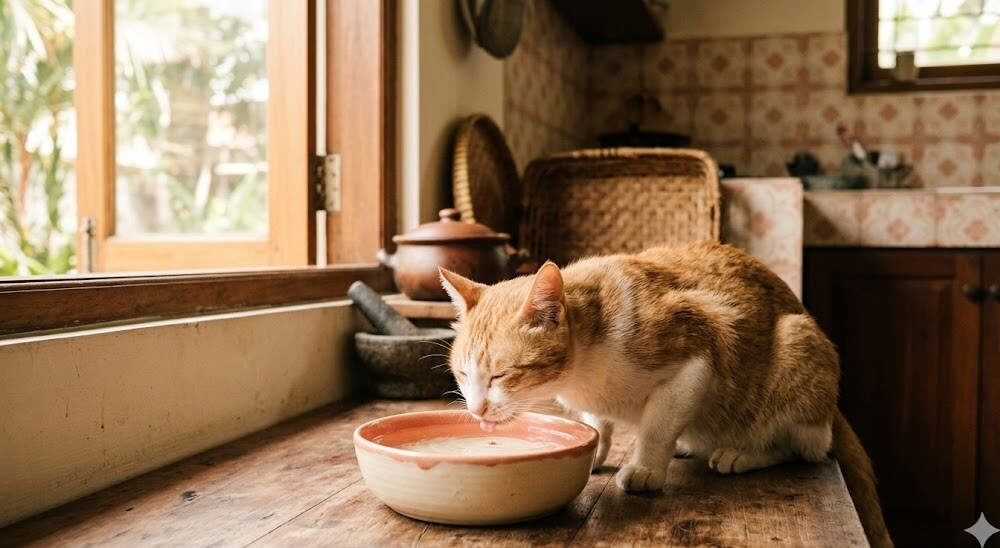

"My cat is overweight, but lately he drinks a huge amount of water, urinates a lot, still eats eagerly, but strangely his body is getting thinner. Why is that?" This pattern is very characteristic: drinking a lot, urinating a lot, eating a lot, but losing weight. In cats, especially adult-senior and overweight ones, this is one of the classic signals of diabetes mellitus (DM).
Diabetes in cats is a serious but very manageable chronic disease. In fact, some cats treated correctly early on can achieve remission, no longer needing insulin. This article helps you recognize the signs, understand how the vet diagnoses it, and know what is needed to manage a diabetic cat at home.
What is diabetes mellitus in cats?
Diabetes mellitus is a disorder in which the body cannot properly regulate blood sugar levels. In cats, the majority of cases resemble type 2 diabetes in humans, the pancreas still produces insulin but the cat's body does not respond well (insulin resistance), often combined with a decline in insulin production over time due to exhaustion of the pancreatic beta cells.
Insulin is the hormone that helps glucose (sugar) from food enter the body's cells to be used as energy. Without enough insulin, or when cells do not respond to insulin, glucose accumulates in the blood and does not enter the cells. The result: the cells "starve" even though the blood is full of glucose, and the excess glucose leaks into the urine (carrying water with it, that is what causes the PU/PD).
The characteristic signs of feline diabetes
The pattern of clinical signs in feline diabetes has a fairly specific combination. If you see several of these together, it is highly worth suspecting:
PU/PD: drinking a lot, urinating a lot
Just like CKD, this is often the first sign. The cause in diabetes: excess glucose in the blood is filtered out into the urine, and the glucose "pulls" water with it (osmotic diuresis). The result: a lot of urine, and the cat compensates by drinking a lot.
How to check at home: compare the size of the urine clumps in the litter box and the frequency of changing the litter with the condition 6 months ago.
Polyphagia: eating a lot but still hungry
Diabetic cats often eat eagerly, even asking for more, even though the meal portion is already enough. The cause: the body's cells do not get glucose, so the brain keeps sending a "hungry" signal even though the blood is full of glucose.
Note: in an advanced, severe stage (especially if it has progressed to DKA, see the section below), the cat can actually lose its appetite completely. So the "eating a lot" pattern is more characteristic in the early-to-middle phase.
Weight loss despite eating a lot
This is the most characteristic and the most confusing for owners. The owner's logic: "how is he eating a lot but getting thinner?" The explanation: without effective insulin, the body cannot use glucose for energy, so it begins to break down fat and muscle reserves. The result: weight loss despite high food intake.
Lethargy / weakness
The cat appears less active, sleeps a lot, plays less. It is often subtle early on, but becomes more progressive over time.
Plantigrade stance (the characteristic dropped-hock walk)
A characteristic sign that often appears in advanced feline diabetes: the cat walks with a "dropped-hock" posture, the lower part of the hock (the hind joint) touches the floor, not just the toes as is normal. This is caused by diabetic neuropathy (peripheral nerve damage from chronic high blood sugar). If you see this, consult a veterinarian immediately, it usually indicates diabetes that has gone undetected for a long time.
Dull coat and reduced grooming
Diabetic cats often look less well-groomed than usual.
If you see the combination of PU/PD + polyphagia + weight loss, especially in an adult-senior cat that was previously overweight, do not delay. A simple blood test can confirm or rule out diabetes within 1 day. For owners in Jakarta and Greater Jakarta, WhatsApp Prabasa Vet for an initial discussion.
Causes and risk factors
Several factors that increase the risk of diabetes in cats:
- Obesity, the biggest and most modifiable risk factor. Overweight cats have several times the diabetes risk of cats at an ideal weight. Visceral fat causes insulin resistance.
- Adult-senior age, the majority of cases appear in cats 7+ years, though it can occur at a younger age with severe obesity.
- Sex, male cats are slightly more often affected than females (the literature is somewhat mixed).
- Breed predisposition, the Burmese is reported as the most strongly predisposed (from population studies in Australia and the UK). Other breeds like the Maine Coon and Russian Blue are also mentioned.
- High-carbohydrate diet, many commercial dry foods are high in carbs, and cats as obligate carnivores are not ideally suited to a high-carb diet. This is an area of ongoing scientific discussion, but the clinical consensus: a high-protein low-carb diet is more compatible with feline metabolism.
- Long-term steroids, the use of corticosteroids (e.g. prednisolone, dexamethasone) for other conditions can trigger iatrogenic diabetes. The risk is especially with high-dose steroids or chronic use.
- Pancreatitis, chronic inflammation of the pancreas can damage the insulin-producing beta cells.
- Acromegaly / hyperthyroidism, other endocrine diseases can be comorbid with diabetes and make management more complex.
The most actionable thing for prevention: maintain an ideal body weight. Obesity is not just cosmetic, it is a serious medical risk factor.
How the vet diagnoses feline diabetes
Diagnosing diabetes is not enough from a single test, it requires a combination:
Blood glucose
The fastest and cheapest test. A normal cat usually has a blood sugar level below ~120 mg/dL (the range varies between labs). Diabetes usually makes blood sugar far above that (often >250–300 mg/dL).
Important gotcha: cats are very prone to stress hyperglycemia, blood sugar can rise high (sometimes up to >250 mg/dL) just from the stress of being brought to the clinic. So a single high reading does not automatically mean diabetes. The vet will usually combine it with other tests.
Urine glucose (glucosuria)
If blood glucose exceeds the renal threshold (~250–290 mg/dL in cats), glucose begins to leak into the urine. Consistent glucosuria + clinical signs is highly suggestive of diabetes. But like blood glucose, a single glucosuria reading in a very stressed cat is less reliable.
Fructosamine
This is a very useful test for distinguishing diabetes from stress hyperglycemia. Fructosamine reflects the average blood sugar of the last 2–3 weeks (not affected by momentary stress). If fructosamine is high, that confirms chronic hyperglycemia = diabetes. If fructosamine is normal but blood glucose is high at the time of testing, it is likely stress hyperglycemia. Not all labs in Indonesia run fructosamine, ask your vet.
Complete urinalysis
Besides glucose, check for ketones (important, a sign of DKA), bacteria (diabetic cats are at risk of UTI), and other parameters.
Complete blood panel
To rule out comorbidities (CKD, hyperthyroidism, pancreatitis, hepatic lipidosis) and as a baseline before starting insulin.
Insulin management: the insulin types commonly used
Confirmed feline diabetes almost always requires insulin. Oral diabetes drugs (the ones used in humans) are less effective for cats and are not routinely recommended.
Several insulin types commonly used in cats:
Insulin Glargine (Lantus)
A long-acting analog insulin. Much research in cats, the best-known from the Rand JS et al research group in Australia, shows that glargine combined with a low-carb diet can achieve remission in a significant proportion of newly diagnosed cats, especially if treatment starts quickly. Many vets choose glargine as first-line for newly diabetic cats.
ProZinc (recombinant protamine zinc insulin)
An intermediate-long acting insulin specifically registered for feline diabetes (feline-specific label). Another first-line option vets often use.
Vetsulin (lente/porcine insulin)
Registered for dogs and cats. Some vets use it, but its duration of action in cats can be shorter than glargine or ProZinc.
Injection frequency and starting dose
Most insulin for cats is given twice daily (q12h), injected subcutaneously at the scruff or the side of the body, usually after eating. The starting dose is usually low (many vets begin with a conservative dose to reduce the risk of hypoglycemia) and is titrated up based on the glucose response.
DO NOT change the dose yourself without consultation. The insulin dose is highly individual, what works for one cat can be too high (risk of fatal hypoglycemia) or too low for another cat. Titration is the vet's decision based on the glucose curve.
Home injection technique
The vet or nurse will teach the insulin injection technique to the owner. Key points:
- Always use a syringe that matches the insulin concentration (a U-40 syringe for U-40 insulin, U-100 for U-100 insulin), the wrong syringe = a fatal wrong dose
- Store insulin in the refrigerator, do not freeze it, do not shake it hard (roll gently)
- Inject after the cat has eaten, not before, in case the cat refuses to eat
- If in doubt (e.g. whether the dose has been injected or not), do not double-inject, it is better to skip one dose than to overdose
Home glucose monitoring
Monitoring blood sugar at home is far more accurate than only checking at the clinic because it avoids stress hyperglycemia. Several methods:
Portable glucometer
A veterinary glucometer (e.g. AlphaTrak, calibrated for cat/dog blood) is more accurate for cats than a human glucometer (which is calibrated for a different human hematocrit). Some owners still use a human glucometer and adjust the interpretation, discuss with your vet.
Sampling site: the edge of the ear, the foot pad, or the edge of a claw. It takes practice for a gentle technique.
Continuous glucose monitor (CGM)
A small sensor attached to the cat's skin (e.g. FreeStyle Libre) that can monitor blood sugar continuously for several days without repeated pricks. Increasingly popular in modern vet practice because it reduces stress for the cat and the data produced is more informative for insulin titration. Discuss with your vet whether it is available.
What is monitored
- Glucose curve, multiple measurements per day (e.g. every 2 hours over 12 hours) to see the blood sugar pattern across the insulin cycle. This is the best way to titrate.
- Pre-insulin spot check, a measurement before the injection to decide whether it is safe to inject (if the blood sugar is already low, do not inject the full dose).
- Clinical signs, still PU/PD? Body weight? Appetite? This is as important as the glucose numbers.
The diabetic cat's diet: high-protein low-carb
Diet is the second pillar of management after insulin. The modern clinical consensus: diabetic cats are best suited to a high-protein, low-carbohydrate diet. The logic: cats are obligate carnivores, their metabolism is indeed designed for protein and fat, not carbohydrate.
Some characteristics of a diabetic diet:
- Carbohydrate <10–12% ME (metabolizable energy), far lower than many commercial dry foods that can be 30–40% carbs
- High protein (>40–50% ME), maintains muscle mass + does not contribute much to blood glucose
- Moderate fat, the main energy source
- Adequate fiber, helps satiety and stabilizes glucose
Diet options:
- Therapeutic diabetes diet, Hill's m/d, Purina DM, Royal Canin Diabetic, etc. Wet food is generally lower-carb than the dry version
- High-protein canned wet food, many premium commercial wet foods (whose main ingredient is meat) are already low-carb without a diabetes label
- Avoid, semi-moist food (often high in added sugar), dry food with a lot of grain filler
Important: if you switch the diet, the insulin dose usually needs to be reassessed because blood sugar can drop significantly after a low-carb diet begins. Do not suddenly switch the diet without discussing it with your vet, there is a hypoglycemia risk if the insulin dose is not adjusted.
See also the cat nutrition by life stage guide for broader context.
Diabetes remission, when and how
This is one of the most unique (and promising) things about feline diabetes compared to humans: some cats treated correctly early on can achieve remission, meaning the pancreatic beta cells "rest" and recover, and the cat no longer needs insulin.
What increases the chance of remission:
- Fast diagnosis, the sooner it is treated, the higher the chance the beta cells recover before permanent damage
- Good glucose control in the first 6 months, called the "remission window"
- Low-carb diet from the start
- No severe comorbidities (chronic pancreatitis, acromegaly)
- No concurrent steroids (steroids sabotage remission)
The remission rate reported in various studies varies widely (from ~20% to more than 50% depending on the study population, criteria, and protocol). The most consistent: the combination of insulin glargine + low-carb diet + early start gives the highest chance of remission (the work of Rand JS et al in Australia repeatedly highlights this).
If remission is achieved, the cat needs routine monitoring, some cats can relapse later if their weight goes up again or there is another stressor.
Complication: diabetic ketoacidosis (DKA)
DKA is a serious complication of diabetes, a medical emergency. It occurs when diabetes has been uncontrolled long enough or when there is an added stress (infection, another illness) that makes the body start breaking down fat on a large scale → ketone production → metabolic acidosis.
Signs of DKA to recognize:
- Severe weakness, slow reflexes
- Repeated vomiting
- Complete loss of appetite (in contrast to early diabetes which is actually polyphagia)
- Dehydration (sunken eyes, dry gums)
- Rapid, deep breathing (acidosis compensation)
- "Fruity" or acetone breath (ketones)
- Collapse
DKA is an emergency requiring hospitalization, IV fluids, tightly titrated insulin, electrolyte correction. It cannot be managed at home with a house call. If you suspect your diabetic cat has DKA, find a 24-hour clinic with hospitalization and IV fluid facilities as soon as possible, a delay of hours can be fatal.
Feline diabetes FAQ
How long can a diabetic cat live?
It varies widely depending on control, comorbidities, and response. Many well-managed diabetic cats can live for years with a good quality of life. Some even achieve remission. The key: consistent blood sugar control + monitoring of comorbidities.
What does managing a diabetic cat involve?
Managing diabetes is a long-term commitment, not a one-time payment. The recurring components are: insulin (one vial usually lasts 1–2 months), syringes, blood glucose monitoring (glucometer + strips, or CGM), a therapeutic diabetes diet, and periodic blood checks (fructosamine + chemistry panel). What it adds up to depends on the type of insulin used, the monitoring frequency, and whether there are comorbidities that also need managing. Because it is highly individual to each cat, the best way to get a clear picture is a direct consultation. WhatsApp Prabasa Vet for a free discussion based on your cat's condition.
Can I give treats to a diabetic cat?
Yes, but limited and carefully. Choose high-protein low-carb treats (e.g. small pieces of boiled chicken without salt, freeze-dried meat treats). Avoid sweet treats, treats containing sugar, or high-carb treats. Treats are counted as part of the total daily calories, do not let them become a source of a sugar spike that sabotages control.
If I forget to inject insulin once, what should I do?
Skip the missed dose, DO NOT double-inject at the next dose. Double-injecting can cause fatal hypoglycemia. Note the skip and tell the vet at the next check-up. If you forget often, set an alarm on your phone or a more consistent routine.
What is the difference between feline diabetes and human diabetes?
The majority of feline diabetes resembles human type 2 diabetes (insulin resistance + stressed beta cells), in contrast to canine diabetes which is more like type 1 (absolute insulin deficiency). What is characteristic of cats: the chance of remission is far higher than in human type 2, and a low-carb diet has a more central role.
Closing
Diabetes in cats is a serious chronic disease, but very manageable, and there is even a chance of remission in a significant proportion of cats treated correctly early on. The key: fast detection, consistent glucose control with a suitable insulin combination + a low-carb diet, and routine monitoring at home (not just at the clinic).
If you see the combination of signs, drinking a lot, urinating a lot, eating a lot but losing weight, in an adult or senior cat, do not delay. A simple blood + urine test can confirm or rule out diabetes within 1 working day.
For cat owners in Jakarta and Greater Jakarta, especially if bringing the cat to the clinic raises its blood sugar from stress (a common false positive), WhatsApp Prabasa Vet for an initial discussion. Sample collection at home in a familiar environment can give a more representative baseline result for the cat.
Read also: Cat nutrition by life stage, Signs a cat is sick and needs a vet soon, Pet care guide (pillar).
Medical references used in this article
This article was prepared with reference to the following sources, verified sentence by sentence for clinical content:
- Behrend EN, Holford A, Lathan P, Rucinsky R, Schulman R. 2018 AAHA Diabetes Management Guidelines for Dogs and Cats. American Animal Hospital Association, diagnosis, insulin choice, monitoring, remission framework
- Sparkes AH, Cannon M, Church D, et al. ISFM Consensus Guidelines on the Practical Management of Diabetes Mellitus in Cats. Journal of Feline Medicine and Surgery (JFMS) 2015 , feline-specific insulin types, home monitoring, low-carb diet rationale
- Plumb's Veterinary Drug Handbook 7e, insulin glargine, ProZinc, Vetsulin, maropitant, dosing protocol and contraindications
- Rand JS et al, clinical research summary: feline diabetes pathogenesis, glargine + low-carb diet remission protocol (multiple publications)
This article is general guidance based on the international AAHA + ISFM guidelines + vet endocrinology textbooks. For diagnosis, insulin choice, dose, and titration specific to your cat, consulting a veterinarian is the right step. Insulin management is not safe to do without veterinary supervision.