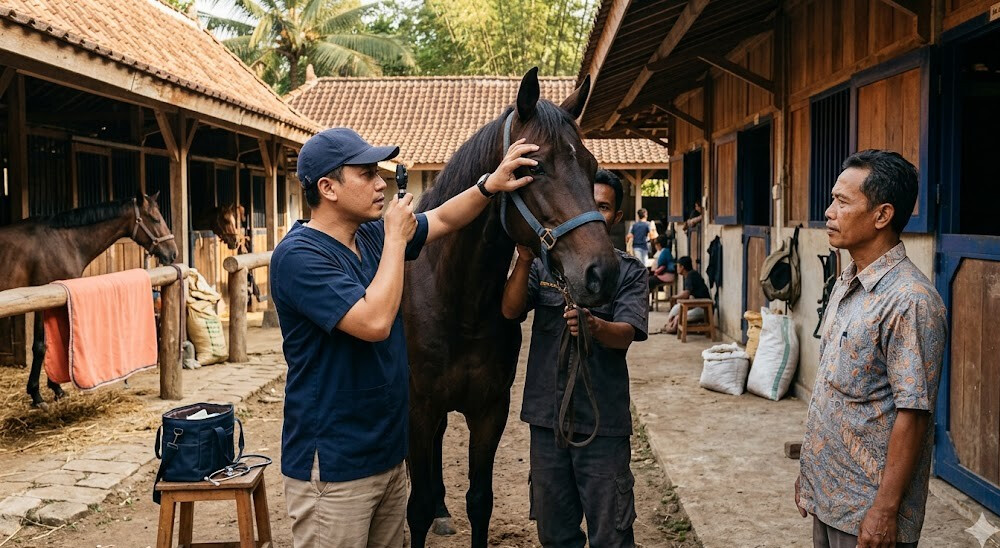

Caring for a horse means carrying responsibility for an animal that is large, strong, and at the same time far more vulnerable than often assumed. Unlike household pets, a horse is not practical to transport every time it needs examining. So horse health care has traditionally been done in an ambulatory pattern, where the vet comes to the stable. This approach is not merely about convenience, but the most sensible way for an animal this size.
This article explains how an equine vet service works, what can be handled through a stable visit, and why an on-site examination gives a more complete picture of your horse\'s health.
Why Ambulatory Suits Horses
Moving an unwell horse adds an unnecessary burden. Loading and unloading a trailer, the journey, and unfamiliar surroundings all trigger stress, and in a horse stress is not trivial because it can affect its digestive tract. With an examination at the stable, the horse stays in an environment it knows and the assessment can be done more calmly.
Coming to the stable also gives the vet information you would not see in a clinic. The bedding condition, the quality and method of feeding, the water source, the horse\'s workload, even how it moves in a familiar area can all be observed directly. Many equine health problems are rooted in feed and stable management, and those read most honestly in their own place.
What Can Be Handled Through a Visit
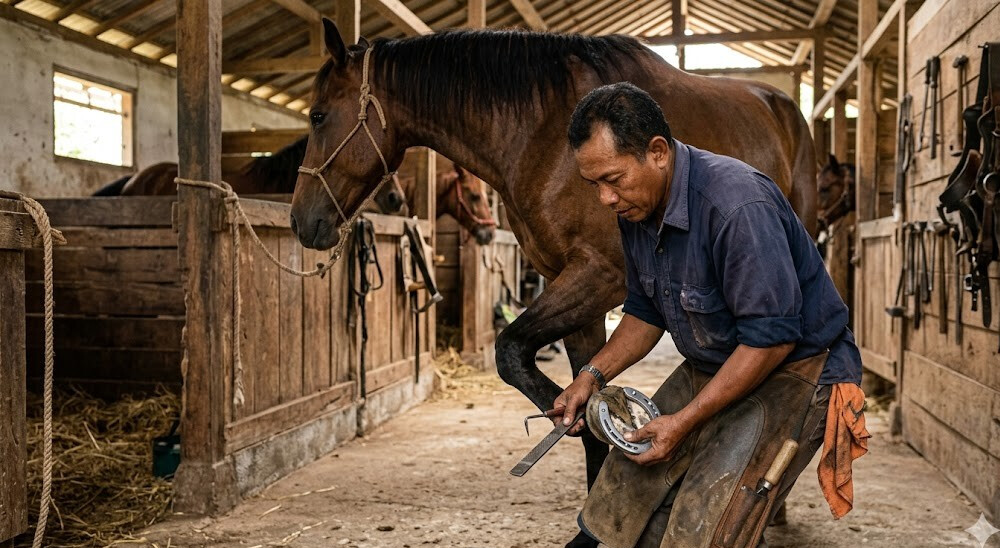
The equine ambulatory service focuses on general health examinations, body condition assessment, routine care, initial evaluation of a horse that looks unwell or has changed behaviour, and discussion of feed and stable management. For needs requiring special facilities, such as major surgery or advanced imaging, the right step is to refer to a facility properly equipped for it. Directing you to the right place is part of honest service, not a shortcoming.
Signs That Should Not Be Delayed
Some conditions in horses should not wait until tomorrow.
- Colic: the horse is restless, rolling repeatedly, kicking towards its belly, sweating for no clear reason, and refusing to eat. Colic is an emergency and every hour matters.
- Acute lameness: the horse suddenly becomes very lame or reluctant to bear weight on one leg, sometimes with a hot or swollen leg.
- Stopping eating and drinking for a long time, or drastic changes in the amount and shape of droppings.
- Breathing trouble: heavy, noisy, or laboured breathing.
Any of the above signs is best consulted right away, not treated yourself first.
Ask the vet by your horse type
Pick your horse and a pre-filled WhatsApp chat opens so our team knows exactly which type it is.
How the Service Works
The process is kept simple. You contact us over WhatsApp and describe the horse\'s condition and what you observe. From there the direction of care is discussed, whether initial advice suffices or a direct visit is needed. If a visit is needed, the vet comes to the stable in the Jabodetabek area. The examination is done as calmly as possible so the horse does not get agitated, then you receive an explanation of the condition and a sensible plan, including when a referral is best.
For those outside Jabodetabek, nationwide reach remains available as remote consultation. Many issues, especially feed, stable, and routine health management, can be helped without meeting in person.
You Do Not Have to Guess Alone
Horse health demands special attention, but you do not have to guess alone. Any question, however small, from feed patterns to confusing symptoms, deserves to be asked before it is too late.
Frequently Asked Questions
Can I consult first before deciding on a visit?
Yes, via WhatsApp. From the symptom story, we help assess whether initial advice suffices or a direct visit is needed.
Why is a horse examined at the stable, not taken to a clinic?
Moving an unwell horse adds stress and is less practical. Examining it in its own stable is calmer and gives a complete picture of feed and stable management.
Does this service handle major surgery or advanced imaging?
For needs requiring special facilities, the right step is to refer to an equipped facility. The ambulatory visit focuses on examination, routine care, and initial assessment.
I am outside Jabodetabek, can I still be helped?
Yes, through remote consultation. Feed, stable, and routine health management can often be guided without a physical visit.
How about the cost?
Each case differs, so it is best discussed directly over WhatsApp to fit your horse\'s needs.
Ask About Schedule & Rates on WhatsApp
Have a horse that worries you, or want to make sure its health is maintained? Tell us its condition over WhatsApp. Contact us via WhatsApp and mention the type of horse, its symptoms, and your stable location.