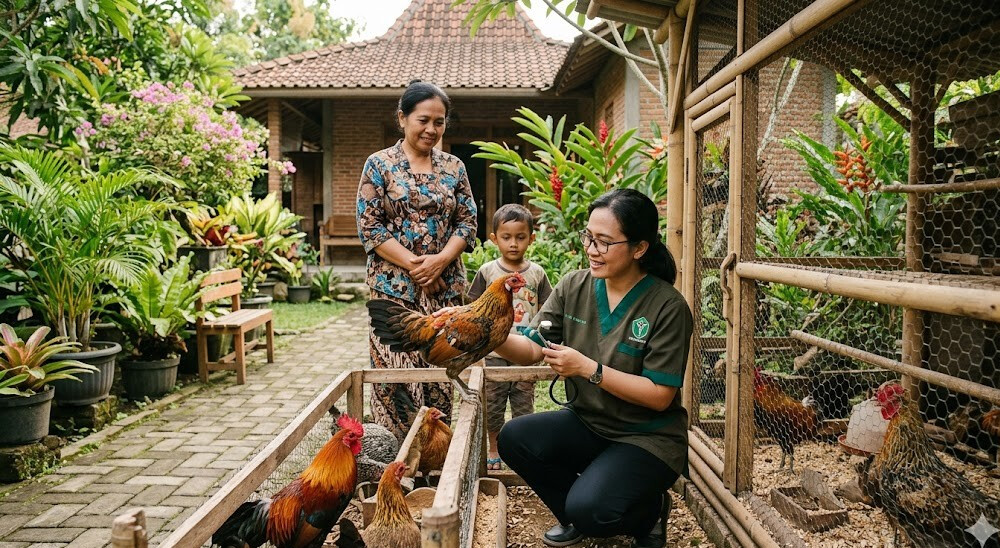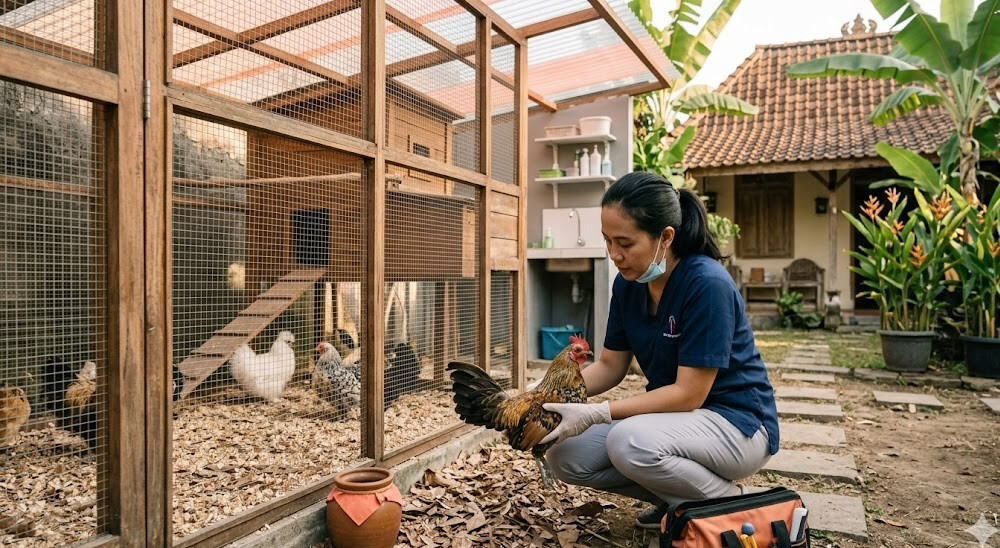

Keeping show chickens or beloved poultry has its own challenge when the animal falls sick. Unlike dogs or cats, which are relatively easy to travel with, chickens often grow more stressed when moved from the coop, put into a carrier, and taken on a journey. This is why a poultry vet home-visit service exists, so the examination can be done right where the chicken is kept.
This article explains what a poultry vet home-visit service is, when it is useful, and how to make use of it for show chickens like serama, laughing chickens, silkies, bangkok roosters, and kept free-range chickens across the Jabodetabek area.
What a Poultry Vet Home Visit Means
This service means the vet comes directly to your home or coop to examine the poultry\'s condition. The examination is done in the environment where the chicken normally lives, so the vet can assess not only the chicken\'s condition but also the environmental factors that often play a role in poultry health.
A poultry examination generally covers an assessment of general condition, posture, feather and skin condition, eyes and nostrils, breathing sounds, the shape and colour of droppings, and the condition of the legs. The vet also usually assesses coop management, stocking density, ventilation, the drinking water source, and the type of feed.
When This Service Is Useful
Several situations make a home visit a practical choice:
- The chicken shows signs of illness like snoring, abnormal droppings, weakness, or refusing to eat.
- You keep many chickens and worry about disease spreading between coops.
- A high-value show chicken that stresses when moved, such as a serama for contests.
- You want a routine check and coop management consultation before contest season.
- The chicken is too weak to be taken out.
Types of Poultry That Can Be Handled
This service handles a range of hobby chickens and pet poultry, including serama (a tiny ornamental breed popular in contests), laughing chickens (known for their distinctive crow), silkies and other uniquely feathered ornamental breeds, bangkok roosters and large kept chickens, and free-range chickens kept as pets. Each type has slightly different character and care needs, so handling is tailored to the condition and purpose of keeping them.
Ask the vet by your chicken type
Pick your chicken and a pre-filled WhatsApp chat opens so our team knows exactly which type it is.
Common Poultry Health Problems
Some complaints that often appear in hobby chickens include respiratory trouble like snoring or snot, chalky white and green droppings especially in chicks, chickens that are weak or refuse to eat, and contagious diseases that can spread quickly within a coop. Many of these problems are closely tied to coop management, so a direct on-site examination often gives a more complete picture.
It is important to note that symptoms like snoring or weakness are signs, not diagnoses. One symptom can come from several different causes, so giving medicine without examination risks masking symptoms and slowing recovery. The safer approach is to examine first, understand the coop context, then decide on care.
How to Use the Service
The first step is usually an initial consultation over WhatsApp. You can describe the observed symptoms, since when they appeared, the appetite, the droppings, and how many chickens are affected. From this information we can weigh whether a coop visit is needed and what preparation is best.
This service covers the Jabodetabek area. For cases needing further supporting examination, the vet will explain the available options openly.
Frequently Asked Questions
Does the vet really come to the home?
Yes. For poultry, an examination in their own coop is often better because it reduces travel stress and allows assessment of the environment.
What types of chickens can be handled?
Serama, laughing chickens, silkies, bangkok roosters, kept free-range chickens, and other ornamental poultry.
Does a sick chicken need to be separated from the others?
In many cases, isolating a symptomatic chicken is a wise first step while waiting for examination, because many poultry diseases are contagious.
How much does a visit cost?
The cost is best discussed directly over WhatsApp because it depends on location and needs. The initial consultation is free of charge.
Can I also consult about coop management?
Yes, and it is actually recommended, because many poultry health problems are rooted in coop management.
Free Initial Consultation via WhatsApp
If your poultry shows signs of illness or you want to make sure it is fine, start with a chat. The initial WhatsApp consultation is free and without pressure. Contact us via WhatsApp and mention the type of chicken, its symptoms, and your area.