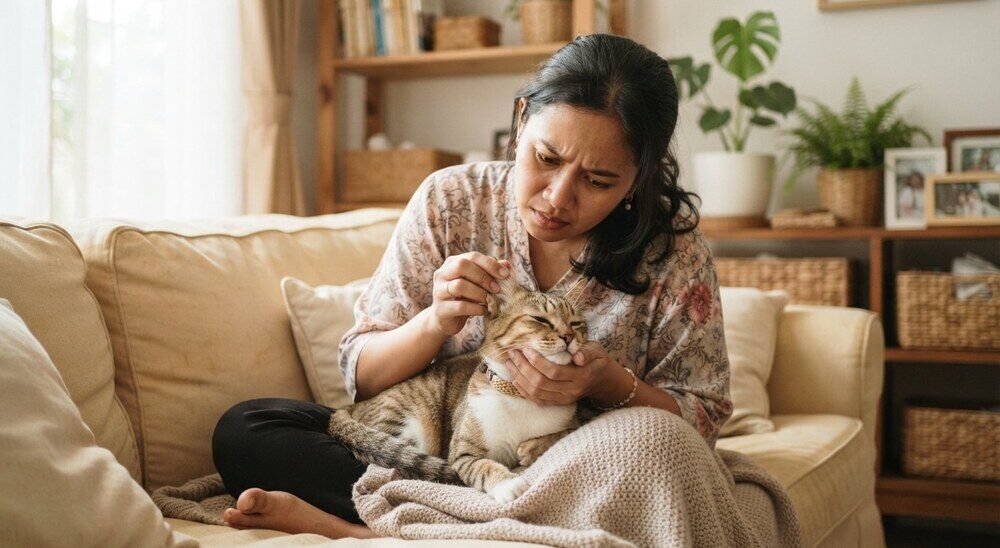

No article can truly prepare you for today. If you are reading this, chances are you are standing at the hardest crossroads a pet owner can face, weighing whether it is time to let go of the friend who has been by your side for years.
This is not here to tell you what to decide. It is here to keep you company as you make sense of it, honestly, without lecturing, so that whatever you choose, you can do it with peace and without unnecessary regret.
What euthanasia is, and why it is sometimes an act of love
Euthanasia, a Greek word meaning "a good death", is a medical act to end the suffering of an animal that can no longer be healed, in a way that causes no pain. In everyday language we call it "putting to sleep".
Many owners feel guilty for even thinking about it, as though considering euthanasia means giving up. But often the truth is the opposite: when illness can no longer be cured and pain can no longer be controlled, letting go peacefully is a decision that places your animal's comfort above our own wish to hold on a little longer. That is not a failure of love. It is one of love's quietest forms.
When is the time? Assessing quality of life, not just age
The question of "when" has no answer marked on a calendar. What helps more is to shift the question: not "can they still hold on?", but "can they still enjoy being themselves?"
Veterinarians around the world often use a simple framework to help families assess quality of life honestly. One of the best known summarises a few things you can observe at home:
- Pain, do they seem comfortable, or is most of their day spent enduring pain even with the medication your vet has given?
- Eating & drinking, are they still willing to eat and drink enough, or do they need to be coaxed constantly?
- Hygiene, can they still keep themselves clean, or are they often soiled by their own urine or stool because they can no longer move?
- Happiness, do they still show interest in you, in their surroundings, in the small things they used to love?
- Mobility, can they still get up, move around, and rest comfortably without distress?
- Good days vs bad days, if you count honestly, do their good days still outnumber the bad ones?
There is no single "wrong" answer that automatically means the time has come. But when bad days begin to far outnumber the good, and pain can no longer be eased, this framework often helps a family see what they have already been feeling, but found too hard to say out loud.
One thing often overlooked: animals, cats especially, are remarkably good at hiding pain. So by the time the signs are clearly visible to you, the condition has usually progressed quite far. Discussing it with your vet earlier, not in the middle of a crisis, almost always makes the decision feel calmer.
Want to assess this more concretely? You can use our Pet Quality of Life Calculator, a simple aid based on a scale used by veterinarians worldwide. Fill it in calmly from home, and you can discuss the result directly with a vet.
Why many families choose to say goodbye at home
For some families, the clinic is the right choice, and that is perfectly fine. But many also choose to do it at home, for reasons that are deeply human:
Your animal stays in the place they know. No stressful car ride, no unfamiliar clinic smell, no crowded waiting room. They are on their favourite sofa, in your lap, in the corner of the house where they always felt safe.
The family can gather. Children, other family members, even other pets in the home can be present without the constraints of clinic space and time. Nothing is rushed.
Their final moment is calm. For an animal that is already ill and weak, reducing stress in those last hours is a gift in itself, both for them and for the memory you carry afterwards.
How the process unfolds, so you don't have to face the unexpected
The greatest fear often comes from not knowing what will happen. So let us walk through it calmly. In general, the process is gentle and gradual:
1. The vet explains first, without rushing. Before anything begins, the vet will explain each step and answer your questions. You decide when you are ready. Nothing is forced.
2. A calming medication is given first. The first stage is to make the animal truly relaxed and drowsy, often called sedation. At this point they slowly drift into a comfortable sleep, usually still in your arms or by your side. Many families describe this stage as watching their friend finally able to rest, after a long time of suffering.
3. The final step, once they are fully asleep. Once the animal is in a deep sleep and feeling nothing, the vet gives the final injection under full anaesthesia. The process is calm and quick; their breathing and heartbeat gently stop. Because they were already deeply asleep beforehand, they feel no pain.
4. The vet confirms and gives you time. The vet will confirm that they have truly passed peacefully, then give you room and time to say goodbye for as long as you need. There is no clock ticking to pressure you.
There are a few small things that can happen naturally, as reflexes, afterwards, muscles may twitch, the eyes may not close completely, or there may be a final exhale. These are automatic responses of the body, not a sign that they feel anything. The vet will remind you of this beforehand so it does not startle you.
Afterwards: burial or cremation
You do not need to decide everything alone in the middle of grief. In general there are a few options for a final resting place, burial in a spot you choose, or cremation (whether collective or individual, where the ashes are returned to you). No choice is more "right"; there is only the one that feels most fitting for your family.
If you are unsure where to begin, this is one of the things you can ask about beforehand via WhatsApp, we will gently help explain the options before that day comes, so you do not have to think about logistics when your heart is already heavy.
Talking with children
If there are children at home, gentle honesty is usually better than confusing metaphors. Explaining that your beloved pet is very ill and the vet is helping them go without pain is easier to understand than "they went to sleep", which can sometimes make a child afraid to sleep. Giving them the chance to say goodbye, if they wish to, often helps their grieving.
About guilt, which almost everyone feels
Almost every owner wonders: was I too soon? Too late? Was there something else I could have tried? This doubt is not a sign that you made the wrong decision, it is a sign of how deeply you love them. A decision born from the wish to end suffering, not from your own convenience, is almost always a decision full of love. Grief is the price of having loved so deeply, and it is worth it.
FAQ about at-home euthanasia
Is the process painful for my animal?
No. The very purpose of this procedure is to remove pain. The animal is given a calming medication until they are truly asleep first, and the final step is only carried out once they are in a deep sleep and feeling nothing.
May I hold them during the process?
Yes, and many families choose to. You can hold them, stroke them, and speak to them right to the end. For many animals, the voice and touch of their owner is the last and most comforting thing of all.
How long does the whole process take?
The medical part itself is calm and brief. But we never rush the part before and after, the time to prepare your heart and to say goodbye is entirely yours.
What if I am still unsure whether it is time?
That is natural, and you do not have to decide alone. You can consult with us first via WhatsApp, tell us about your animal's condition and daily life, and we will help assess it together, honestly. Sometimes the answer is that it is not yet time, and there is still something that can be done to make them more comfortable.
Do the other animals at home need to see?
Some families let the other animals sniff and be present afterwards, because some animals seem calmer when they "understand" that their companion has gone. There is no obligation, do what feels right for your home.
We accompany you, we do not rush you
If you are weighing all of this, you do not have to face it alone, not even the thinking stage. You can contact Prabasa Vet via WhatsApp any time to talk: to assess quality of life, to understand the options, or simply to ask without having to decide anything right away. The initial consultation is free of charge, and we will answer calmly, without pressure.
Whatever you finally decide, may that decision be born of love, and may the goodbye, when it comes, be as peaceful as they deserve.
Notes & references
The explanation of the process in this article is general and educational, following the principles of animal euthanasia widely held in veterinary practice (e.g. the principle of "a good death" in the AVMA guidelines on animal euthanasia, as well as the end-of-life quality-of-life assessment approaches commonly used by veterinarians). This article does not replace a direct examination. Every animal's condition is unique, the best decision always comes from a discussion with a veterinarian who examines them in person.