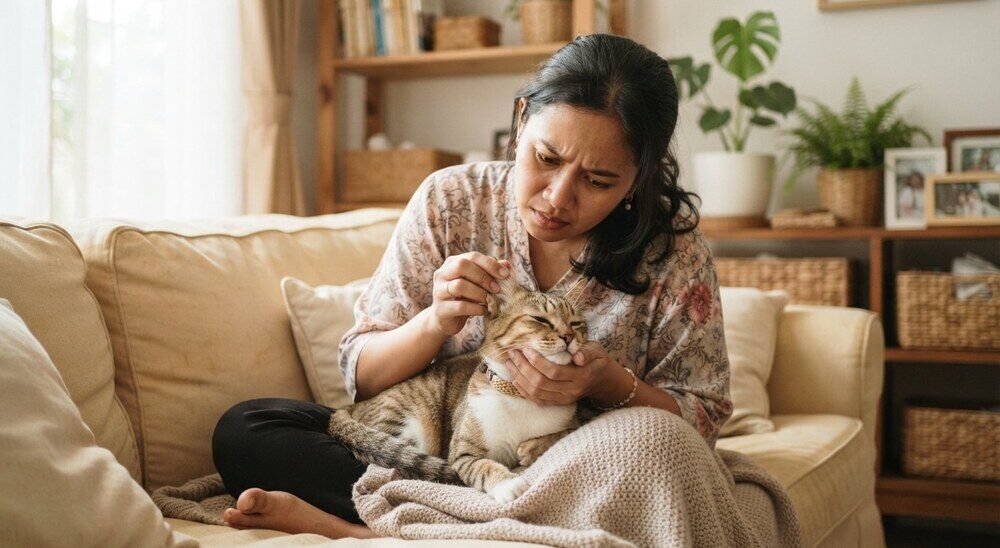

Watching your beloved pet shake its head, scratch its ear non-stop, or catching a foul smell coming from its ear is worrying. You want to help, but you are unsure whether this can be handled at home or needs prompt care. Let us go through it calmly, from recognising the signs to knowing when you need to call a vet.
What causes ear infections in cats and dogs
An animal ear is shaped like the letter L, with a long, bending canal. This shape means moisture, debris, and heat get trapped inside easily, making it a comfortable place for bacteria, yeast, and mites to grow. Some of the most common causes:
- Ear mites. Tiny parasites that are highly contagious between animals. This is a very common cause in cats, especially kittens, and can affect dogs too.
- Bacterial or yeast infection. Often appears when the balance inside the ear is disturbed, for example from a constantly moist ear or an underlying skin problem.
- Allergies. Food or environmental allergies often show up as an ear that keeps getting inflamed, especially in dogs.
- A moist ear. After a bath or a swim, water left in the ear canal can trigger problems, especially in floppy-eared dogs.
- Foreign objects. Grass, seeds, or debris that get in and lodge in the ear canal.
Understanding that the cause can vary is important, because the medicine for mites is different from the medicine for a bacterial infection. Guessing and giving the wrong medicine can actually slow down recovery.
Signs to keep an eye on
Animals cannot tell us their ear hurts, so they show it through behaviour and physical changes. The most common signs:
- Scratching the ear non-stop or rubbing its head against the floor and furniture.
- Frequently shaking or tilting the head to one side.
- A foul smell coming from the ear.
- Black debris that looks like coffee grounds, or sticky brownish gunk.
- Redness, swelling, or warmth in the inner part of the ear flap.
- Signs of pain when the ear is touched, or shying away when you reach toward its head.
Black debris: mites or infection?
This is a common question, and the answer cannot always be confirmed just by looking. Dry black debris resembling coffee grounds is often linked to ear mites, while wetter, yellowish, or brownish debris points more toward a bacterial or yeast infection. But both conditions can occur together, and they can look similar.
The way to confirm is to examine a sample of the ear debris under a microscope, something a vet does. From there it becomes possible to see whether there are mites, and what type of bacteria or yeast, so treatment can be aimed precisely. This is why guessing at home often misses the mark.
What you can do at home
There are a few safe things you can do while waiting for an examination:
- Clean only the visible outer part. Use damp cotton or gauze to wipe the outer ear flap and the folds you can easily reach. Just what the eye can see.
- Observe and take notes. When the signs started, which ear, whether it is getting worse. This information really helps the vet later.
- Keep the ear dry. Hold off on baths for now, and gently dry the ear if it gets wet.
- Prevent excessive scratching. Hard scratching with claws can injure the ear and worsen the situation.
What you should NOT do
- Do not dig into the ear canal with a cotton bud. This actually pushes debris deeper, can injure the ear canal, and even risks damaging the eardrum. The inner ear is not an area to clean yourself at home.
- Do not use leftover ear drops or human medicine. Some ingredients can be dangerous if the eardrum turns out to be damaged, and the wrong medicine can make the problem worse.
- Do not pour cleaning fluid carelessly into the ear without knowing the condition inside.
When to call a vet or head to an emergency clinic
Most ear problems should be seen by a vet so the cause is clear and does not recur. But some signs mean you need to act faster. Seek care right away if:
- The head is constantly tilted to one side, the animal seems to lose its balance, circles, or staggers. This can signal that the infection has spread deeper.
- There is blood or pus coming from the ear.
- The ear flap is swollen large like a fluid-filled cushion.
- The animal is in severe pain, refuses food, is listless, or has a fever.
- The ear problem keeps recurring despite previous treatment.
If your pet shows an emergency sign such as severe loss of balance or extreme pain outside normal hours, do not wait. Contact the nearest animal clinic open 24 hours for prompt care. To be sure of the nearest option, you can also chat with us first for guidance.
Why an examination at home is often more comfortable
Many cats and dogs get tense when taken to a clinic, and an already painful ear makes them even harder to examine. An ear examination at home, in an environment they know, often makes the process calmer for both the pet and you. The vet can examine the ear, take a debris sample if needed, and explain the care steps right there.
Prabasa Vet house call vet for cats and house call vet for dogs services cover the Greater Jakarta (Jabodetabek) area, so you do not have to force an uncomfortable pet into a carrier and endure the trip. If you are still unsure whether the condition needs to be seen directly, you can start with a free online consultation first.
Pet ear infection FAQ
Can ear mites spread to other pets at home?
Yes, ear mites are highly contagious between animals, especially between cats. If one pet has them, the others at home often need to be checked too. That is why confirming the diagnosis is important.
Do pet ears need regular cleaning?
It depends on the type and condition of the pet. Some need periodic cleaning, some do not. How and how often is best discussed with a vet, because cleaning too much or in the wrong way can actually trigger problems.
My pet has a little ear debris but no smell. Is that normal?
A small amount of debris without odour, redness, or itching is often still normal. What to watch for is the combination of smell, excess debris, redness, and a pet that is bothered.
Summary
An ear that is itchy, smelly, and full of black debris is a signal that something needs to be addressed. At home, limit yourself to cleaning the visible outer part and never dig inside. Because mites and infections need different medicines, an examination by a vet is the safest way to confirm the cause and cure it completely.
If your cat or dog has an ear problem and you want it checked calmly without the drama of a trip to the clinic, you can message Prabasa Vet on WhatsApp. We will help schedule an ear examination right at home, across the entire Greater Jakarta (Jabodetabek) area. The initial consultation is free of charge. For severe cases or those needing further procedures, we will be upfront and point you to the right facility.
Notes & references
This article is educational and general in nature, and does not replace a direct examination by the vet handling your pet. Determining the exact cause of an ear problem (mites, bacteria, or yeast) requires an examination, including checking the ear debris under a microscope. Any ear medication should be on the advice of a vet, because some ingredients are risky if the eardrum is already damaged.