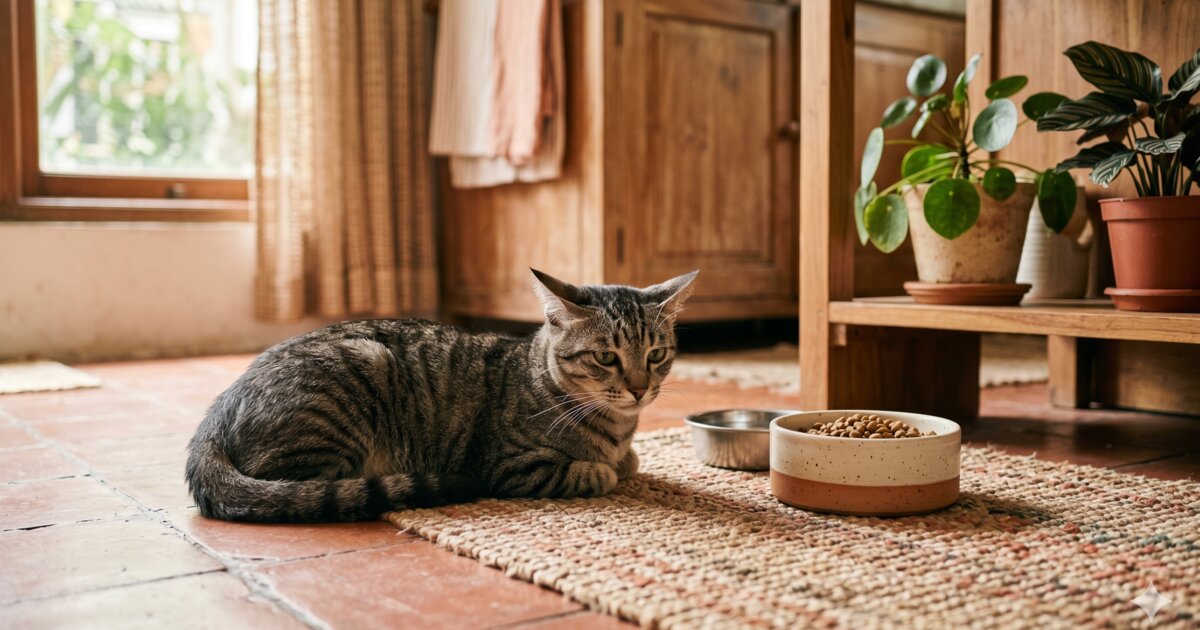

Cat diarrhea and vomiting are two of the most common complaints owners bring up. Good news: most cases are mild and resolve on their own within 24–48 hours. The part you need to know: some cases are signals of a serious problem that should not be put off.
This article helps you tell the difference between what can be monitored at home with simple first aid, and what already counts as a red flag that needs a vet. We'll also cover what NOT to do, because many "home remedies" for cat diarrhea and vomiting actually cause harm.
Normal vomiting vs concerning vomiting
An occasional vomit is normal in cats, especially from hairballs, eating too fast, or once in a while reacting to a new food that doesn't agree with them. But not all vomiting is the same.
Vomiting that's usually not a worry:
- Hairballs, cylindrical hair-filled vomit, usually once every 1–2 weeks in long-haired cats
- Vomiting right after eating too fast, food still intact, cat is normal afterwards
- One or two vomits during a food transition, then back to normal
- Occasional clear fluid vomit when the stomach has been empty too long
Vomiting that needs attention:
- More than 2–3 times in 24 hours
- Repeated vomiting over several consecutive days
- Vomit with blood (fresh red or dark like coffee grounds)
- Repeated green (bile) vomit
- Vomiting with lethargy, refusing food, hiding
- Vomiting together with diarrhea
- Vomit containing visible foreign material (string, plastic, toy parts)
- Vomiting in kittens, always serious because they dehydrate fast
Common causes of cat diarrhea
Diarrhea in cats can be triggered by many things. Knowing the category helps you gauge urgency.
Diet and dietary indiscretion
- Switching brands or types of food without a gradual transition
- Eating something unusual (cow's milk, seasoned human food leftovers, spoiled food)
- New treats or too many snacks
- Food intolerance or food allergy (usually chronic, not sudden)
Intestinal parasites
Worms (roundworm, tapeworm, hookworm) and protozoa (Giardia, Coccidia) are often-overlooked causes of diarrhea. Common in kittens that haven't been dewormed, or in outdoor cats that hunt. Parasite-related diarrhea tends to be chronic and recurring, sometimes with worms visible in the stool.
Viral and bacterial infections
- Panleukopenia (FPV), fatal in unvaccinated kittens, presents with severe bloody vomiting and diarrhea
- Coronavirus enteritis, mild to moderate diarrhea, usually self-limiting
- Salmonella, Campylobacter, Clostridium, bacterial infections, can come from raw food or contact with other sick animals
Internal organ problems
- Chronic kidney disease (CKD), chronic diarrhea in senior cats
- Hyperthyroidism, diarrhea plus a big appetite with weight loss
- IBD (Inflammatory Bowel Disease), chronic recurring diarrhea
- Pancreatitis, diarrhea plus vomiting plus abdominal pain
- Intestinal lymphoma, common in senior cats, needs biopsy to confirm
Stress and environmental triggers
Moving house, a new cat, renovations, fireworks. GI stress in cats can show up as 1–2 days of diarrhea that resolves once the environment settles.
Stool colour guide: meaning and urgency
Stool colour and consistency tell you a lot. Quick guide:
- Normal brown, healthy. Soft but pickup-able = normal soft. Watery = diarrhea.
- Very dark brown or almost black tarry (melena), can indicate bleeding in the upper GI tract (stomach, small intestine). See a vet.
- Fresh red blood, bleeding in the lower GI tract (colon, anus). If only a small amount and the cat is otherwise well, likely mild colon irritation. If a lot, recurring, or with other symptoms, see a vet.
- Yellow or orange, can indicate a liver or bile issue. If recurring, get it checked.
- Pale green, excess bile, sometimes because food moved through too quickly. Monitor 24 hours; if it continues, get it checked.
- White or pale grey, can indicate serious liver or pancreas issues. See a vet.
- Clear or white mucus, intestinal irritation, common with IBD or parasites.
- Stool with visible worms, needs deworming; ask a vet for the right product.
At-home first aid
For mild cases with no red flags (1–2 vomits, soft diarrhea without blood, cat still active and drinking), a few safe steps:
Short fast (8–12 hours), adult cats only
For repeated vomiting, fasting solid food for 8–12 hours can give the GI tract a rest. After the fast, restart with small portions of a bland diet (plain boiled chicken with no seasoning, or a prescription bland GI diet). Do not fast kittens, risk of hypoglycemia. Water stays available the whole time, never withhold water.
Bland diet
- Boiled chicken with no seasoning, no skin, shredded small
- Plain pumpkin (boiled, no seasoning), soluble fibre that helps stool consistency, good for both diarrhea and constipation
- Prescription wet GI food (if you have any on hand)
- Small portions but frequent, 4–6 mini meals a day, not 2 big ones
Switch back to normal food gradually after 2–3 days of improvement.
Keep them hydrated
Diarrhea and vomiting cause rapid dehydration. Offer fresh water in several bowls. If the cat refuses to drink, try:
- Running tap water (many cats prefer flowing water)
- A pet fountain
- Wet food with extra water mixed in (more dilute)
- Small ice cubes, some cats are interested
Pet-specific probiotics
Pet-specific probiotics (FortiFlora, ProBenefits, Vivomixx vet) can help restore gut flora after diarrhea. Avoid human probiotics, the strains and doses are different.
SEE A VET, red flags
These conditions are already urgent or emergency. Do not try to treat at home:
- Bloody diarrhea or vomit, any amount, if recurring
- Diarrhea lasting more than 24 hours in adults, more than 12 hours in kittens
- More than 3 vomits in 24 hours
- Diarrhea and vomiting at the same time, dehydration sets in very fast
- Cat is weak, gums are pale, struggling to stand
- Refusing all water
- Abdomen looks bloated or feels painful when touched
- Fever (feels very hot) or hypothermia (very cold)
- Vomit with visible foreign material (string, plastic, small toy parts)
- Possible ingestion of toxic plants or medications in the past 24 hours
- Kittens under 4 months with any vomiting or diarrhea, always call a vet
- Senior cats (10+) with diarrhea lasting more than a day
Need a vet to come to your home today? WhatsApp Prabasa Vet, describe the full symptoms and how long they've been going on, and our team will help schedule a house call vet in your area.
What NOT to do
A few "home solutions" owners often reach for that actually do harm:
- DON'T give human medication for diarrhea or vomiting. Loperamide, metoclopramide, ondansetron, all have specific doses and contraindications in cats. Self-medicating can make things worse or cause toxicity.
- DON'T give paracetamol (acetaminophen) for fever, paracetamol is fatal to cats.
- DON'T give cow's milk as a "tummy soother", most adult cats are lactose intolerant and it will worsen diarrhea.
- DON'T give over-the-counter dewormers without a diagnosis, if the cause isn't worms, dewormer won't help and may stress an already weakened system.
- DON'T withhold water, you can briefly fast food, but water must always be available.
- DON'T fast kittens, high risk of hypoglycemia.
- DON'T "wait and see until tomorrow" if there are red flags, many conditions become fatal with a one-day delay.
- DON'T give human probiotics, different strains and doses, and they can sometimes make things worse.
Dehydration check: the skin tent test
One of the most useful checks you can do at home for a vomiting or diarrhetic cat is the skin tent test:
- Gently pinch the skin at the back of the neck / between the shoulder blades
- Slowly pull upward about 2–3 cm
- Release and watch
Reading the result:
- Skin snaps flat immediately (less than 1 second), well hydrated
- Skin returns in 1–2 seconds, mild dehydration, monitor closely
- Skin takes more than 2 seconds, or stays tented, moderate to severe dehydration, see a vet
Other checks:
- Gums, wet and slippery = normal hydration. Sticky or dry = dehydrated.
- Capillary refill time (CRT), press the gum, release, count how many seconds until it goes pink again. Normal is under 2 seconds.
- Sunken eyes, sign of moderate to severe dehydration.
FAQ
My cat vomited once and is back to normal, should I worry?
If your cat vomits once and then goes back to being active, eating, drinking, and no other symptoms, usually no need to worry. Monitor for 24–48 hours. If there's repeated vomiting, diarrhea, or lethargy, then it's time to consult.
Bloody diarrhea in my cat, should I call a vet right away?
Yes. Any amount of recurring bloody diarrhea is a red flag. It can indicate panleukopenia (especially in unvaccinated kittens), heavy parasite load, IBD, or another serious problem. Don't wait, find a vet who can see your cat the same day.
Can I give my cat human diarrhea medication (loperamide / diapet)?
No. Human diarrhea medications aren't safe for cats, different doses, different contraindications, and many cats are sensitive to the active ingredients. Diapet and similar products also often contain herbal ingredients that haven't been validated as safe in cats.
Can I treat hairballs with cooking oil?
Not recommended. Cooking oil isn't effective and can actually cause aspiration pneumonia if it goes down the wrong way. For recurring hairballs, use a cat-specific hairball remedy (food-grade petroleum jelly base) or switch to a hairball-control formula food.
How long does normal recovery take after diarrhea?
For mild diarrhea with no underlying condition, things usually improve within 24–48 hours with a bland diet and adequate hydration. Stool consistency takes 3–5 days to fully normalise. If things haven't improved after 48 hours, or new symptoms appear, consult a vet promptly.
Closing
Diarrhea and vomiting in cats can be a mild case that resolves on its own, or a signal of something serious that needs prompt attention. Simple rule: if there's blood, more than 24 hours, or it comes with lethargy or dehydration, don't wait, see a vet. For mild cases, bland diet + hydration + 24-hour monitoring is usually enough.
If you're not sure whether the situation is an emergency or can wait, it's better to ask a vet than to guess. Message the Prabasa Vet team on WhatsApp, tell us the symptoms, how long they've been going on, and how your cat is doing, and we'll help assess urgency and arrange a house call vet if needed.