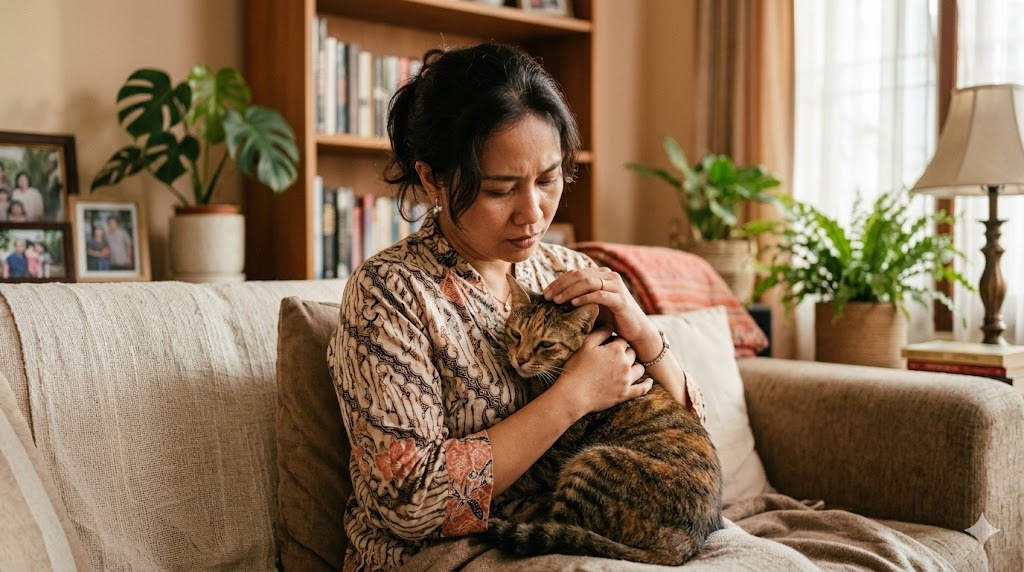

A cat that suddenly stops eating is one of the most common health red flags that sends owners into a panic, and it really should get your attention. Unlike dogs, who can skip a few days without serious consequences, cats have a unique metabolism that makes prolonged fasting dangerous.
This article helps you figure out: when the situation is still normal and can be monitored at home, and when it has crossed into red-flag territory that needs a vet. We will also cover common causes and safe first-aid steps you can try before consultation.
How long is it safe for a cat not to eat?
The practical rule vets use: a cat that has not eaten at all for more than 24 hours needs attention, more than 48 hours is concerning, and more than 72 hours is an emergency.
Why stricter than dogs? Because cats are prone to hepatic lipidosis (fatty liver syndrome). When a cat fasts, the body starts mobilising fat to the liver for fuel. A cat's liver is not efficient at processing large amounts of fat, so the fat accumulates and disrupts liver function. Hepatic lipidosis can be fatal if not treated.
The risk of hepatic lipidosis is highest in overweight adult cats that suddenly stop eating. The chubby ones are not the ones that hold out longer, quite the opposite, they are the fastest to develop fatty liver.
For kittens, the time threshold is even tighter: not eating for 12 hours already warrants a call to the vet. Kittens have small glycogen reserves and can become hypoglycaemic quickly.
Non-medical causes: stress, environment, food
If your cat has only skipped one or two meals but is still active, energetic, and drinking normally, the cause is often not a serious medical issue. Some common triggers:
- Switching food brand or type, cats are famous "divas" about food. Sudden switches without a transition are often rejected. Ideally change food gradually over 7–10 days, mixing old:new with a ratio that slowly shifts.
- Environmental stress, moving house, guests staying over, a new cat, renovations, fireworks, construction noise. Cats are very sensitive to routine changes.
- Food temperature, wet food straight from the fridge is too cold and often rejected. Warm it a few seconds in the microwave or let it sit at room temperature first.
- Dirty or smelly bowl, cats are scent-sensitive. Wash bowls regularly with warm water (avoid strong-scented detergent that lingers).
- Bowl location, too close to the litter box, in a busy area, or next to a more dominant pet's bowl. Try moving it to a quiet spot.
- Heat cycle (for unspayed cats), cats in heat often skip meals for a few days.
- Extreme heat, in humid Jakarta weather, cat appetite naturally dips during the hottest part of the day. Try feeding in the early morning or evening.
For all of these categories, if the cat goes back to eating normally and stays active within 24–48 hours, medical intervention is usually not needed. But keep monitoring.
Medical causes that commonly suppress appetite
If the missed meals come with other symptoms (lethargy, vomiting, diarrhoea, hiding, changes in drinking), there is likely a medical issue that needs checking. Some of the most common:
Dental and oral problems
Mouth ulcers, broken teeth, gingivitis, or a tooth abscess make eating painful. The cat usually approaches the bowl, sniffs with interest, then walks away. Sometimes there is excessive drooling or very sharp bad breath. Common in cats 5+ years old that have never had a dental check.
Kidney disease (CKD)
Chronic kidney disease is the silent killer of senior cats. One early sign: drinking more, urinating more, then a gradual drop in appetite. Often accompanied by nausea, sometimes mild vomiting after meals. Cats 7+ years old should have routine blood work to screen kidney function.
Digestive problems
A stuck hairball, a swallowed foreign object (thread, rubber band, plastic), pancreatitis, IBD (inflammatory bowel disease), or a GI infection can all cause a cat to refuse food. Often paired with repeated vomiting or changes in stool.
Infection or fever
Upper respiratory infection (cat flu), urinary tract infection, abscess from a fight wound, or other systemic infection. A cat with a fever usually feels warm in the ears and feet, sleeps more, and hides.
Liver or pancreas problems
Besides hepatic lipidosis (which can be a consequence of fasting), primary liver disease or pancreatitis often shows up as appetite loss + lethargy + sometimes yellowing of the gums or eyes.
Intestinal obstruction
A swallowed foreign object stuck in the intestines is an emergency. Signs: repeated vomiting that does not stop, painful belly when touched, no bowel movements, progressive weakness. It is an emergency, cannot wait.
Red flags that mean it is time to see a vet
The following situations have crossed into "do not wait any longer" territory:
- Not eating at all for 48 hours (24 hours for kittens and overweight cats), whatever the cause, this needs intervention
- Not eating + not drinking, risk of rapid dehydration, more urgent than just skipping food
- Skipping meals + repeated vomiting (more than twice in 24 hours)
- Skipping meals + progressive weakness, hiding, struggling to stand, slow reflexes
- Skipping meals + yellow gums or eyes, sign of jaundice, possible liver issue
- Skipping meals + heavy breathing / open-mouth breathing, open-mouth breathing in cats is almost always an emergency
- Skipping meals + swollen or painful belly when touched
- Skipping meals + body temperature that feels very hot or very cold (normal rectal temperature for a cat is 38–39.2°C)
- Skipping meals + history of swallowing a foreign object (thread, rubber band, toy)
For these conditions, do not wait until tomorrow morning or the weekend. Find a vet you can reach, or a house call vet available the same day.
Need a vet to come the same day for an urgent case? WhatsApp Prabasa Vet, describe the symptoms and how long it has been going on, and our team will help assess urgency and schedule a visit.
First aid at home
While you observe or wait for the vet appointment, here are a few safe things you can try:
Tempt with appealing food
- Warm wet food (not hot), the stronger smell helps stimulate appetite
- Plain canned tuna (no salt, no excess oil), okay occasionally, do not make it a staple
- Plain chicken broth with no seasoning and no onion, onion is toxic to cats
- Hand-feeding, some cats will eat from their owner's hand when they refuse the bowl
- Avoid offering constantly, give a 30-minute break if rejected, then try again
Make sure they stay hydrated
If your cat refuses food but still drinks, that is better than no intake at all. Provide several bowls of fresh water in different spots. If needed, offer wet food with extra water mixed in so they get fluids along with food.
Reduce stress
If there is a new environmental change (guests, renovations), provide a quiet space with a hiding spot. Keep the litter box clean, place bowls in a calm location away from noise.
What not to do
- Do not force-feed, pushing food in with a syringe without vet guidance can cause aspiration pneumonia
- Do not give human medication, paracetamol is fatal to cats, ibuprofen is toxic, many human drugs are dangerous
- Do not give rice or bread as a substitute, it does not help nutritionally and can worsen GI issues
- Do not give cow's milk, most adult cats are lactose intolerant, this will make things worse
When is a house call better than a clinic visit?
For cases where a cat is not eating, a house call is often the smarter choice because:
- Car stress can make things worse, a cat with GI distress often vomits or has diarrhoea in the car, worsening dehydration
- Examination in a familiar environment is more accurate, the cat is less defensive, the vet can check temperature, heart, and abdomen more calmly
- The vet can see the home environment directly, check bowls, food, litter box, and identify environmental triggers
- Multiple cats can be examined together if there is a chance of contagious illness exposure
For cases that need imaging (ultrasound, X-ray), on-site lab work, or hospitalisation (IV fluids over several days), a clinic is still more efficient. A good house call vet will be honest if your case needs a referral to a clinic with full facilities.
FAQ
My cat skipped one day but is still active, should I worry?
One skipped day for a healthy adult cat at normal weight is usually still safe. Monitor activity, water intake, and watch for other symptoms. If day two looks the same or lethargy appears, see a vet right away. For kittens and overweight cats, the threshold is tighter, 12–24 hours already warrants a call.
How do I check if my cat is dehydrated?
Skin tent test: gently pinch the skin on the back of the neck, lift it up, then release. In a hydrated cat, the skin snaps back immediately. In a dehydrated cat, the skin returns slowly (more than 2 seconds) or stays tented. Also check the gums, sticky or dry gums signal dehydration. Sunken eyes are another indicator.
My cat will not eat but still drinks, is that better?
Better than no intake at all. But you still need to find the cause. A cat that skips meals for 48+ hours is still at risk of hepatic lipidosis even if drinking normally. Hydration reduces the risk, it does not eliminate it.
How fast should I get to a vet?
The moment a red flag appears: repeated vomiting, progressive weakness, pale or yellow gums, heavy breathing, painful belly, or a history of swallowing a foreign object. In these situations do not wait 24 hours, find a vet available the same day.
Is there a safe at-home medication to stimulate appetite?
There is no safe and effective over-the-counter drug for cats. Appetite stimulants (mirtazapine, capromorelin) are prescription drugs that must be dosed by a vet. Avoid human medications or supplements without consultation, many are actually toxic to cats.
Closing thoughts
A cat that refuses food is a serious signal because the metabolic consequences are fast and dangerous. The short rule: one skipped day in a healthy cat can still be monitored, two days warrants a consult, three days is an emergency. For kittens and overweight cats, the threshold is tighter.
If you are unsure whether your situation needs a vet or can still wait, do not guess. Contact the Prabasa Vet team via WhatsApp, we will help assess the symptoms and recommend next steps, with no charge for an initial chat consultation.