
Many prospective deer breeders start from administrative questions: what documents to prepare, where to process them, and how long it takes. Those questions are natural and important. But there is one side that often gets little attention until the process is underway, namely the animal health aspect. Breeding wild animals is not merely a paper matter. It is a commitment to keep living creatures healthy and decent, and that commitment is assessed too.
This article is meant to help managers understand the position of animal health in the context of a deer breeding licence. It must be stressed from the start that the binding administrative provisions rest with the conservation authority, in this case BKSDA and related ministries. Because the provisions can differ between areas and are updated over time, the official details should always be verified directly with your regional BKSDA office.
Why Animal Health Is Part of the Assessment
A breeding licence is essentially trust given by the state for you to keep and breed protected or regulated wildlife. That trust comes with an obligation to safeguard animal welfare. So the wildlife\'s physical condition, enclosure adequacy, and health governance are often part of the assessment and oversight, both at application and at periodic checks afterwards.
In other words, the health side is not an add-on that can be deferred. It is one of the foundations determining whether your facility is considered fit to run and maintain.
Things Generally Related to the Health Aspect
Although the official details need to be verified with BKSDA, the following generally relate to the health and welfare side of wildlife in breeding. This list is for orientation, not an official requirements list:
- Enclosure and land adequacy, covering sufficient space, security, cleanliness, and protection from weather and excessive stress.
- Availability of feed and water that is adequate and suited to the needs of deer as ruminants.
- Health governance, including routine observation, handling of sick animals, and access to a vet.
- Health documentation, in the form of tidy records of condition, handling, and wildlife history.
- Biosecurity application to prevent the entry and spread of disease within the population.
Again, this list is not a substitute for official provisions. Its purpose is to help you map your readiness on the health side before facing the actual administrative requirements.
Ask the vet by your captive wildlife
Pick your wildlife and a pre-filled WhatsApp chat opens so our team knows the context exactly.
Medical Documentation, Proof That You Are Serious
Among all the above, health documentation is often the most neglected, even though it is the easiest to prepare from the start. Simple but consistent records of wildlife condition, handling done, and changes that occur become tangible proof that the facility is managed seriously. Tidy documentation also makes it easier for a vet to assess the situation quickly when needed, and easier for you during inspections or reporting.
The good news is that building this habit does not demand a complex system. What is needed is consistency in recording and the willingness to organise from day one.
Where the Vet Comes In
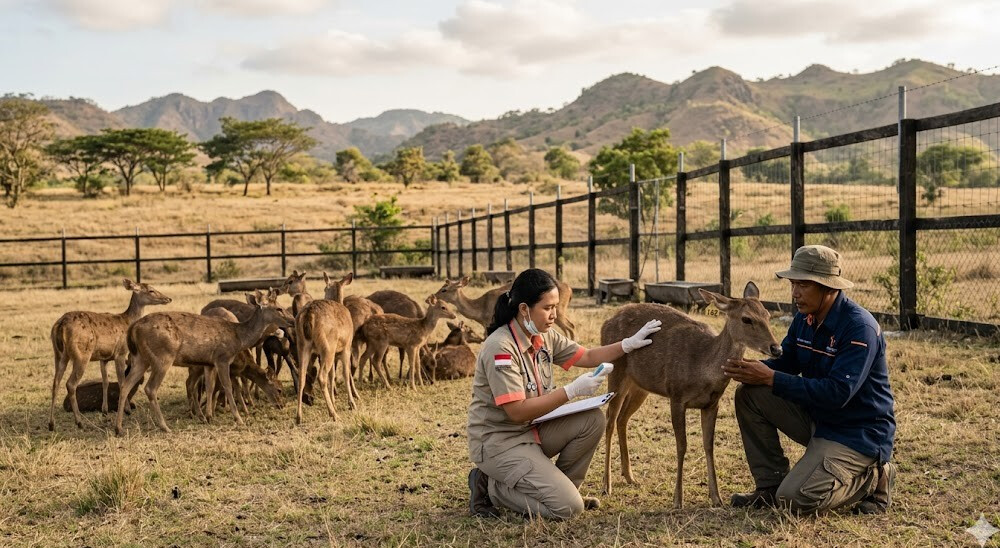
Veterinary support in this context does not replace BKSDA\'s role and does not guarantee a licence is issued. Its role is on a different but complementary side: preparing the wildlife\'s health condition, organising medical documentation, and helping ensure the enclosure and management are adequate from a welfare standpoint. With a strong health foundation, you face the administrative process from a far more prepared position.
Frequently Asked Questions
Can a vet issue a breeding licence?
No. Issuing licences rests with the conservation authority such as BKSDA. A vet helps on the wildlife health side and medical documentation that is often part of the assessment.
What are the official health requirements for a deer breeding licence?
The official details should be verified directly with your regional BKSDA, because the provisions can differ between areas and may change. Generally, enclosure adequacy, feed, and health governance are a concern.
How important is wildlife health documentation?
Very important. Tidy records show the facility is managed seriously, ease a vet\'s assessment, and help during inspections or reporting. This habit is best built from the start.
I am only planning to open a facility, when should I involve a vet?
As early as possible. Involving a vet at the planning stage helps organise the enclosure, feed, and documentation before the wildlife arrives, so you are better prepared for the licensing process.
Initial Consultation via WhatsApp
Preparing a deer breeding facility and want its health side organised from the start? Tell us your plan over WhatsApp. The initial consultation is free. Contact us via WhatsApp. For the official administrative requirements, still coordinate directly with your regional BKSDA.