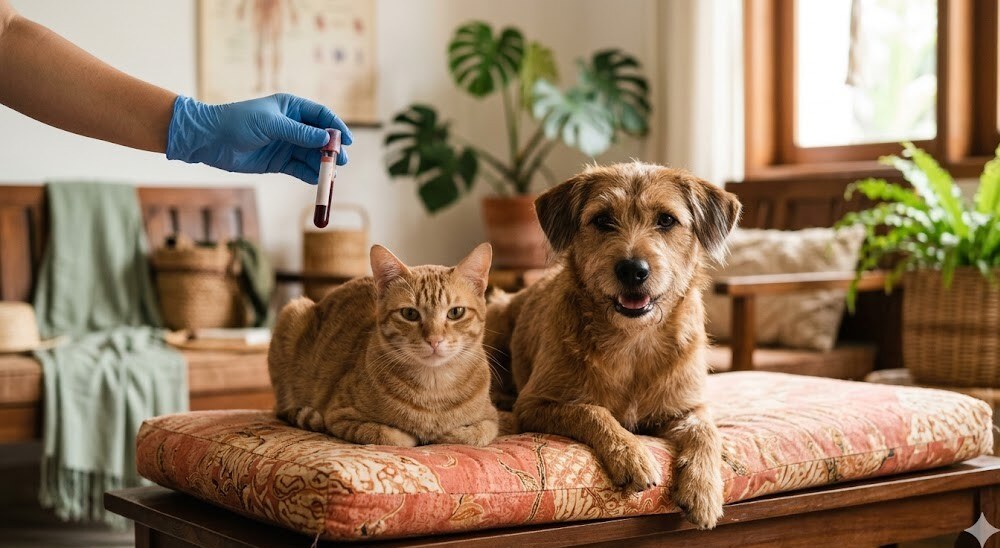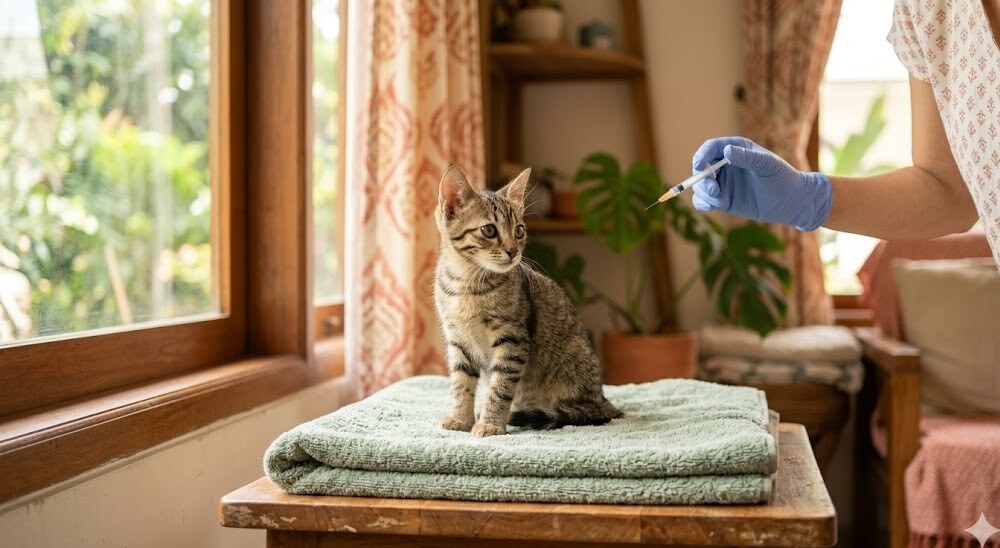

"My dog just recovered from parvo last month, now he's active and normal. The DHPP booster is scheduled for next week, can he be vaccinated now or should I wait longer?" Questions like this are very common in vet practice. Many owners are torn, on one hand they're afraid the animal is still weak so vaccinating might make things worse, and on the other hand they're afraid of delaying too long and the animal catching another disease because protection isn't complete yet.
This article is practical guidance for dog and cat owners, when a vaccine booster is safe after an animal has just recovered from illness (parvo, panleukopenia, gastroenteritis, URI), after major surgery (spay/neuter, orthopedic, tumor removal), or after severe trauma. Timing benchmarks per WSAVA 2024 and AAHA, plus special considerations per scenario.
Why post-recovery vaccine timing matters
Vaccines work by stimulating the immune system to form protective antibodies. In an animal that has just recovered from illness or surgery, the immune system is in a recovery phase, if vaccinated too early, two potential problems arise:
- A suboptimal antibody response, an immune system that is still fatigued won't form a high enough level of antibodies → inadequate protection, the vaccination is wasted
- A higher risk of a vaccine reaction, an animal still in the recovery phase can be more sensitive to local reactions (swelling, fever) or systemic ones (lethargy, recurrent anorexia)
- A recovery setback, a vaccine triggers an immune response that can delay healing if given while the animal is not yet fully stable
WSAVA and AAHA both recommend delaying elective vaccination until the animal is clinically stable and recovered, a benchmark of a minimum of 2-4 weeks, depending on the type and severity of the prior condition.
When is it considered "fully recovered", a clinical checklist
Before a booster vaccine, make sure the animal already meets the following checklist:
- Normal body temperature for at least 7 consecutive days (38.0-39.0°C dog, 38.0-39.2°C cat)
- Normal appetite, eating full portions with the same enthusiasm as before the illness
- Recovered body weight, back to baseline or within 5% of pre-illness (if it had dropped before)
- Normal energy level, activity, play behavior, and interaction with the owner back to usual
- No residual symptoms, no vomiting, no diarrhea, no coughing, no sneezing, no weakness
- Not currently on immunosuppressive medication, prednisone at an anti-inflammatory dose or higher, ciclosporin, etc. (see the separate article on vaccinating immunocompromised dogs)
- No open wound or surgical sutures that haven't healed
- Normal CBC if the vet wants to verify more objectively, WBC count and differential have recovered
If any one item on the checklist is not yet met, delay the vaccine. There is no urgency greater than an immune system that is ready.
Vaccine timing per recovery scenario
After a serious viral illness (parvo, panleukopenia, distemper, calici-herpes URI)
These diseases use the immune system intensively to fight the infection, recovery takes time for the immune system to reconstitute:
- A minimum of 4 weeks after discharge from hospitalization with a stable condition
- Ideally 6-8 weeks for a severe illness that required prolonged hospitalization
- Important: an animal that has recovered from parvo or panleukopenia already has natural protective antibodies against that virus (often lasting for years or for life). A post-recovery DHPP/HCP/FVRCP booster is more for the other antigens in the combo vaccine (e.g., distemper + adeno in DHPP after a dog has recovered from parvo), not for the parvo itself, which already has natural immunity
- Check a CBC + check the antibody titer if there's a concern
After major surgery (spay/neuter, orthopedic, tumor removal, GI surgery)
- A minimum of 2 weeks after surgery before an elective vaccine
- Make sure the sutures have healed, there is no wound infection, and the animal is not on an active antibiotic for a complication
- Routine surgery without complications (a smooth spay/neuter), 2 weeks is usually enough
- Major orthopedic surgery (TPLO, fracture fixation), extensive tumor removal, GI surgery (intestinal resection-anastomosis), 4 weeks is safer
- If the dog/cat is still on prednisone or another corticosteroid after surgery, discuss with the vet (vaccinating during immunosuppression is not ideal)
After severe trauma (being hit, a fall, a severe bite)
- A minimum of 2-4 weeks after the wound has closed and clinical recovery is stable
- Trauma with internal injury (pneumothorax, diaphragmatic rupture, multiple fractures), longer, 4-6 weeks
- Make sure there is no secondary infection still ongoing
After mild-to-moderate GI illness (self-limiting gastroenteritis, dietary indiscretion, parasites)
- A minimum of 1-2 weeks after symptoms resolve and appetite is normal
- For GI parasites: completion of the deworming protocol + 1-2 weeks of observation
After a non-specific fever or mild acute illness
- A minimum of 1-2 weeks after the fever subsides and appetite is normal
- It's important to find out the etiology of the fever if it isn't clear yet, a vaccine won't be given if there's an underlying chronic disease that hasn't been worked up
After hospitalization with IV fluids + injectable medication but not severe
- A minimum of 2-3 weeks depending on the initial indication for hospitalization
Special situation: a rabies booster that expires just as the animal is recovering
A scenario that often comes up: a dog has just recovered from illness, and the rabies booster happens to have expired or be about to expire. Rabies is legally mandated in Indonesia (per the Ministry of Agriculture regulation and regional policies), so it can't simply be skipped. The approach:
- Discuss with the veterinarian before rescheduling
- If the animal is clinically stable (already meets the recovery checklist), rabies can be given a minimum of 2 weeks after the acute illness has subsided
- If the animal is still recovering or on immunosuppressants, the vet can issue a medical statement to extend the rabies booster deadline
- Avoid a combination of multiple vaccines at the same visit, split rabies and the other core vaccines by 2-4 weeks
What the vet does during the pre-vaccine post-recovery evaluation
Before a post-recovery booster, the vet usually:
- Takes a complete history, history of the illness, duration of recovery, recent medications
- A comprehensive physical exam, temperature, BCS, hydration, mucous membrane color, abdominal palpation, heart-lung auscultation, examination of the wound if there was surgery
- Checks body weight and compares it with the previous record
- CBC + biochemistry if indicated, especially for an animal that has just recovered from a severe illness or has a chronic comorbidity
- Discusses the protocol, single vaccine vs combo, split or together, type of vaccine (live attenuated vs inactivated)
- Written consent if there's a particular concern
A post-recovery vaccine isn't simply "it's been 2 weeks, just give it", the professional approach includes a clinical evaluation first.
Special considerations per species
Dogs
- After parvo recovery: the dog already has natural immunity to parvo, so a DHPP booster after 4-8 weeks is more for distemper-adeno, not parvo
- After routine spay/neuter surgery: 2 weeks is usually enough
- After a tracheal collapse episode or pneumonia: a minimum of 4 weeks plus making sure it's not on an active corticosteroid
Cats
- After panleukopenia recovery: the cat has long-lasting natural panleukopenia immunity, so an FVRCP booster 6-8 weeks after recovery is more for herpes-calici
- After severe URI (calici, herpes flare): 3-4 weeks after symptom resolution
- After routine spay/neuter surgery: 2 weeks is enough
- After FIP treatment (GS-441524, etc.): discuss case-by-case with the vet, a cat's immunity after FIP recovery is often still maturing, so timing is individualized
- Senior cats with CKD: an antibody titer is often wiser than an automatic booster
Post-recovery vaccine FAQ
My dog is 1 month post-parvo, DHPP is scheduled. Is that okay?
If clinically fully recovered (normal appetite, recovered weight, normal energy, no residual GI symptoms), a DHPP booster can be given 4 weeks after discharge. Note: the dog already has natural immunity to parvo from the infection, so the parvo component of DHPP isn't too critical, what matters is boosting distemper + adeno.
My cat was spayed 10 days ago, FVRCP is scheduled. Is that okay?
Ideally wait a minimum of 14 days after routine surgery. Make sure the sutures have healed, the cat is active and normal, eating well, with no fever. If urgent (a tight vaccine schedule), discuss with your vet.
My dog is 3 weeks post-TPLO surgery, rabies expired. Is it safe to vaccinate?
Rabies is legally mandated and can't be delayed too long. If the dog is clinically stable, weight-bearing normally, and not on active prednisone, a rabies booster can be given 3-4 weeks post-TPLO. Discuss with your orthopedic vet.
My cat finished FIP treatment 2 months ago. Can it get an FVRCP booster?
Discuss case-by-case with your vet. Most cats whose FIP treatment is finished and are clinically stable in recovery can get an FVRCP booster, but consider an antibody titer as an alternative if there's a concern.
My dog recovered from acute pancreatitis 3 weeks ago. Is a vaccine okay?
If clinically fully recovered (normal appetite, no vomiting, recovered weight) and not on active medication for pancreatitis maintenance, 3-4 weeks after recovery is usually OK for an elective booster. Avoid a combination of multiple vaccines in 1 visit.
Summary
Post-recovery vaccination of dogs and cats requires appropriate timing, a minimum of 2-4 weeks after mild illness/surgery, 4-8 weeks after a serious viral illness or major surgery. The clinical benchmark: the animal must already be fully recovered (normal temperature, normal appetite, recovered weight, pre-illness energy level, no residual symptoms, not on immunosuppressants).
For an animal that has just recovered from a viral illness (parvo, panleukopenia), remember that it already has natural immunity, a post-recovery booster is more for the other components in the combo vaccine, not for the virus it already experienced. Rabies is legally mandated and still needs a booster, but the timing is flexible with the vet's input.
The best approach: don't rush, don't defer too long, evaluate case-by-case with a veterinarian. A vaccine given to an animal that is ready will be effective and safe. A vaccine forced on an animal that hasn't recovered will be suboptimal.
Has your animal just recovered from illness/surgery and you need to discuss the right vaccine timing? Contact us on WhatsApp for an initial consultation and an evaluation plan. We'll help determine a vaccine schedule that's safe for your animal's recovery condition.
Read also: Vaccinating Immunocompromised Dogs, Complete Cat Vaccination Schedule, Pet Vaccination Guide.
Medical references used in this article
This article was prepared with reference to the following sources, verified per clinical statement:
- WSAVA Vaccination Guidelines for the Owners and Breeders of Dogs and Cats (2024 version), the "When to Vaccinate" and "Special Situations" sections: principles of timing after acute illness, elective vaccination of a stable animal, considerations for post-operative and post-recovery cases
- AAHA Canine Vaccination Guidelines & AAFP Feline Vaccination Advisory Panel, booster timing recommendations after clinical illness, considerations for elective vs major post-operative cases, natural immunity after infection (parvo, panleukopenia)
- Greene's Infectious Diseases of the Dog and Cat (4th edition, Sykes JE), duration of natural immunity after CPV/CDV/CAV infection (dogs) and FPV/FHV/FCV (cats), the post-recovery booster approach
- Plumb's Veterinary Drug Handbook 7e, corticosteroid monograph (immunosuppressive vs anti-inflammatory dose effects), implications for vaccination timing in an animal on corticosteroids after surgery or after treatment for autoimmune disease
- Ettinger SJ, Feldman EC, Cote E. Textbook of Veterinary Internal Medicine, chapter on post-operative care recovery timeline, immunology of clinical recovery after acute infectious disease
This article is general guidance based on the international WSAVA and AAHA guidelines. For your animal's specific condition, including vaccine timing after recovery from a particular condition, navigating legally mandated rabies while the animal isn't fully recovered, or a booster vs titer test decision, consulting a veterinarian is the right step.