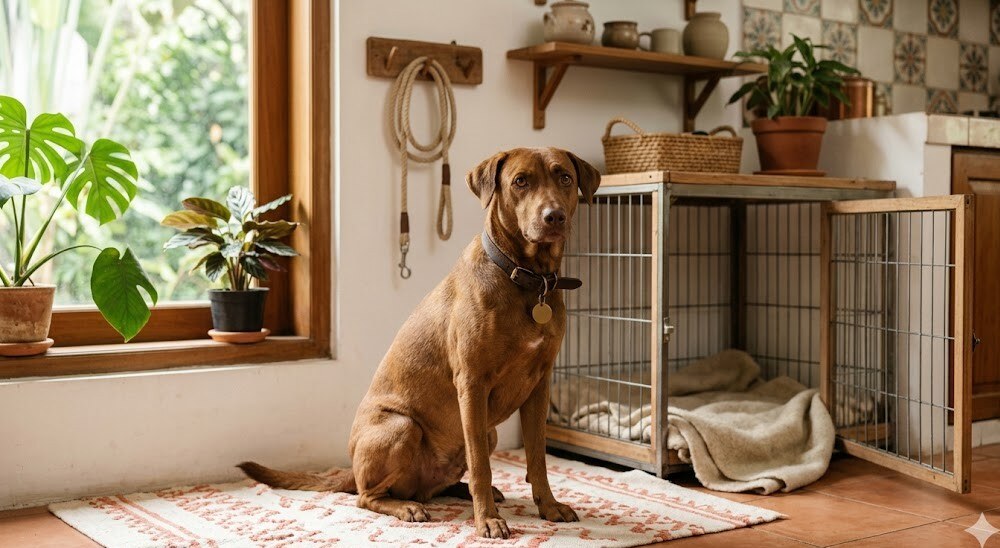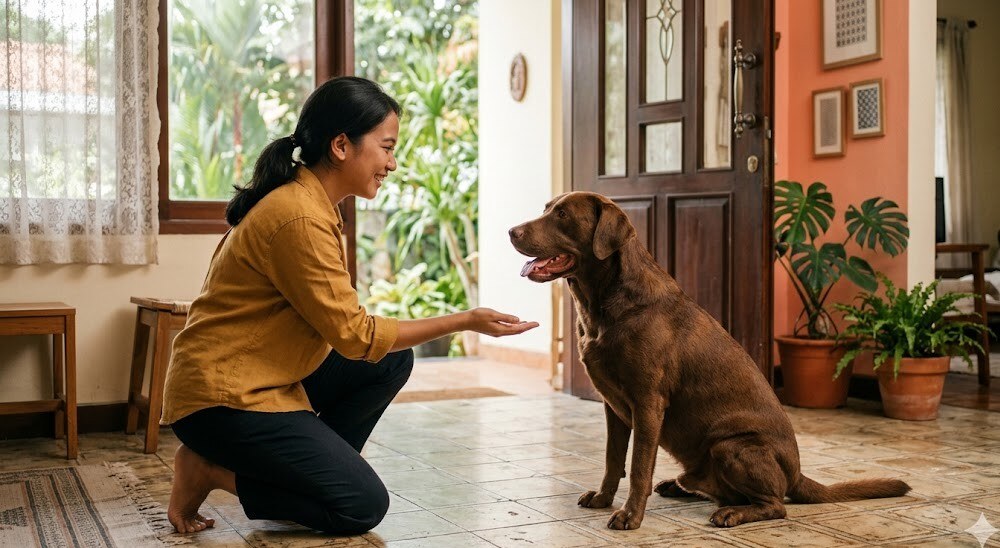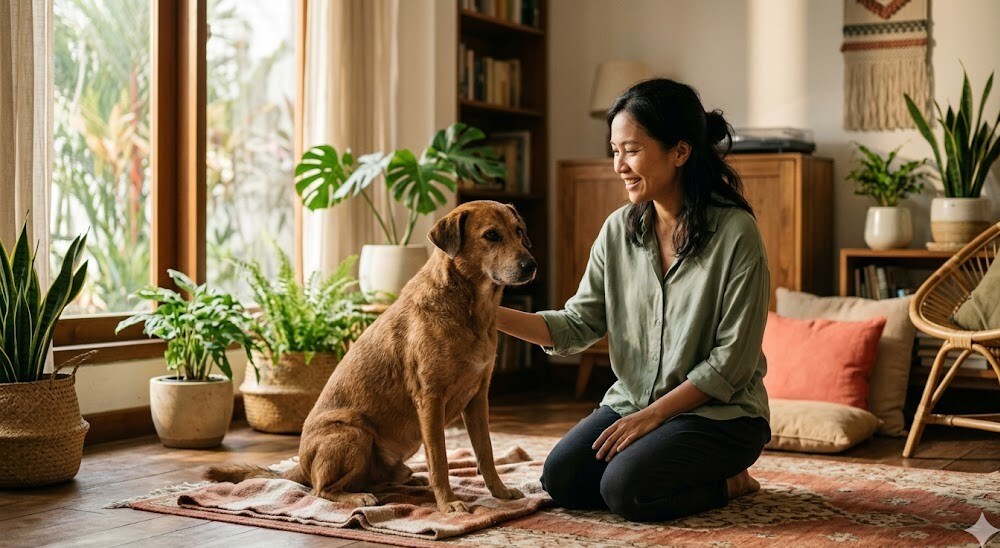

Many new puppy owners first hear the term "crate training" with a negative reaction, "poor thing being caged," "dogs need freedom," "crates are cruel." This perception is actually the opposite of the true purpose of crate training. When done with the right philosophy, a crate isn't a prison, it becomes a calming safe space, a sleeping quarters that the puppy chooses for themselves, and a foundation for house training, safety, and separation anxiety prevention.
However, crate training done incorrectly, as punishment, for too long, or with force, can actually cause a lifelong crate phobia and worsen anxiety. This article is a complete guide for first-time puppy owners: the den-instinct philosophy behind crate training, concrete benefits, how to choose the right crate, a step-by-step positive introduction, and common mistakes to avoid. Disclaimer: this is a general guide based on international puppy training guidelines and does not replace direct consultation with a veterinarian or dog trainer for your puppy's specific condition.
What is crate training? The den-instinct philosophy
Crate training is the process of teaching a puppy that their crate is a safe, quiet, and pleasant place, a place where they can rest, eat, and feel secure. The goal: the puppy chooses to enter the crate on their own when they are tired or need alone time, rather than being forced in and locked up.
The philosophical foundation is the den-instinct, the instinct of dogs as animals descended from wolves and other wild canids that build dens for birthing, resting, and protection. These dens are usually small, protected spaces, a small cave, a hole under a tree, or a space just large enough to lie down and turn around but not too vast. This instinct carries over to domestic dogs: many dogs love to sleep under tables, in narrow corners behind sofas, or in open closets, not because they were told to, but because it feels safe.
A properly introduced crate taps into this instinct, not against it. Both the AAHA (American Animal Hospital Association) Puppy Care Guidelines and the AVSAB (American Veterinary Society of Animal Behavior) Position Statement on Puppy Socialization list crate training as a best practice for puppy rearing, as long as it's done with positive reinforcement principles and never used as punishment.
Benefits of crate training, why it's worth the effort
1. Much faster house training (potty training)
Dogs instinctively will not soil their sleeping area if they have another choice. A properly sized crate (just enough to stand, turn, and lie down, no more) utilizes this instinct: the puppy will hold their needs until let out. This speeds up the house training process from potentially 4-6 months (free-roaming puppy with scattered accidents) to a more structured 2-3 months.
2. Safety when the puppy is unsupervised
Puppies are destructive balls of curiosity, they chew on everything within reach (electrical cords, shoes, dropped medication, toxic plants). A crate is a safe place while you shower, cook, work, or sleep, the puppy is safe from household hazards, and the house is safe from the puppy.
3. Much easier travel + home vet visits
A dog that is already comfortable in a crate will be much calmer during car rides (using the crate as a car restraint), temporary boarding at a pet hotel, or home vet visits that require handling. A dog that panics in a crate as an adult usually experiences multiplied stress in these scenarios.
4. Separation anxiety prevention
A puppy that learns from a young age how to settle alone in a crate for short durations gradually builds a tolerance for solitude. This is a preventive measure against separation anxiety, which is much harder to handle if it appears in an adult dog. See also the comprehensive guide in Dog Separation Anxiety: Signs, Causes, and How to Handle It for more context.
5. A calm space for decompression
Adult dogs that were crate-trained as puppies often enter their crate voluntarily when overwhelmed, during busy guest visits, by overly aggressive children, or when they are simply tired and need a nap. The crate becomes an opt-out from excessive stimulation.
6. Medical recovery when needed
Many medical scenarios require confinement: post-surgery (neutering, orthopedic), recovery from fractures, or crate rest for spinal disc issues. A dog already comfortable in a crate will heal much more peacefully than a dog introduced to a crate for the first time while they are sick and stressed.
Choosing the right crate: types and sizes
Types of Crates
1. Wire Crate (Iron Cage)
- Pros: Best ventilation (suitable for Indonesia's hot climate), visibility (puppy can see around, doesn't feel isolated), foldable (easy to store), durable, affordable. Many have divider panels to adjust size as the puppy grows.
- Cons: Noisier if the puppy moves, less "den feel" because all sides are open (can be covered with a cloth to simulate a cave).
- Best for: The default choice for the majority of owners. Daily home use.
2. Plastic Crate (Airline-style)
- Pros: More "den-like" (protected on 3 sides, covered roof), travel-friendly (meets airline standards if sized correctly), quieter.
- Cons: More limited ventilation (be careful in hot climates), not foldable, bulkier to store.
- Best for: Dogs needing a high sense of security, or owners who frequently travel by plane with their dog.
3. Soft-sided Crate (Fabric Cage)
- Pros: Lightweight, portable, good for car travel + visiting (friend's house, pet-friendly offices), low price.
- Cons: NOT safe for puppies still in the chewing phase, can be torn with bites. Not for unsupervised overnight use.
- Best for: Adult dogs already established crate-trained with wire/plastic crates. Not for a puppy's initial introduction.
4. Furniture-style Crate (Crate that doubles as a side table)
- Pros: Aesthetic for the living room, dual-function as a table.
- Cons: Expensive, not foldable, usually wood which can be damaged if the puppy chews.
- Best for: Established crate-trained adult dogs in homes concerned with aesthetics.
Crate size: crucial rules
The wrong crate size is the #1 cause of crate training failure. Rules:
- Large enough for an adult dog to stand with head upright without hitting the roof, turn 360 degrees unobstructed by walls, and lie down fully extended with legs out.
- No larger than that. A crate that is too vast allows the puppy to poop in one corner and sleep in the other, eliminating the primary house training benefit. This is the most common mistake: owners feeling pity and getting a "large" one, which actually causes training failure.
- For puppies that will grow large (Lab, Golden, Husky, etc.): Buy an adult-sized crate but use a divider panel to limit the puppy's space. Move the divider back gradually as they grow. This is economical (no need to buy new crates for each growth phase) and maintains the correct size principle.
General size guide (for wire crates):
- Small (61 × 46 × 48 cm), adult dogs <10 kg: Chihuahua, Shih Tzu, Mini Poodle.
- Medium (76 × 53 × 58 cm), 10-20 kg: Beagle, Cocker Spaniel.
- Large (91 × 58 × 64 cm), 20-30 kg: Border Collie, Australian Shepherd.
- X-Large (107 × 71 × 76 cm), 30-40 kg: Labrador, Golden Retriever.
- XX-Large (122 × 76 × 84 cm), 40+ kg: German Shepherd, large Husky, Rottweiler.
Check product specifications vs. your puppy's estimated adult size (based on breed + parents' size if available).
Correct step-by-step crate introduction
Total process duration: 1-3 weeks for most puppies. Consistency is more important than speed, if the puppy gets stressed at one step, move back to the previous step and repeat until they are comfortable.
Step 1: Positive setup in a main area (Days 1-2)
- Place the crate in a main family area (living room or TV room), not in a remote corner or garage. The puppy must feel the crate is part of their "living space," not an exile.
- Leave the crate door wide open. Use a soft blanket and cloths with familiar scents (if you have a blanket from the breeder or the puppy's mother, use it, familiar scents reduce stress).
- Place several treats inside the crate. Let the puppy find them on their own as they explore, do not force them.
- DO NOT close the door at this stage. Goal: the puppy learns that crate = a neutral or positive place (treats appear).
Step 2: Feeding in the crate, door still open (Days 3-5)
- Start giving all of the puppy's daily meals inside the crate.
- Day one: bowl near the crate door, puppy can eat without really going inside.
- Day two: bowl further inside, puppy must partially enter to eat.
- Days three-five: bowl at the back of the crate, puppy enters fully. Door remains open.
- Association formed: crate = feeding place = good place.
Step 3: Close door briefly during meals (Days 6-8)
- While the puppy is focused on eating inside the crate, gently close the door without locking it.
- As soon as they finish eating, immediately open the door, before they start whining or scratching at it.
- Closed-door duration: first day 30 seconds post-meal, then add 30 seconds each day up to 2-3 minutes.
- If the puppy starts whining before your timer hits, the duration was increased too fast, drop back to 15 seconds and repeat until they are confident.
Step 4: Extend duration with distraction (Days 9-14)
- Provide a frozen Kong (use xylitol-free peanut butter! or wet food) or other frozen treats that take 15-30 minutes to eat.
- Close the door while they start enjoying the Kong. Stay in the room, sitting naturally (reading a book, working on a laptop), NOT staring at the puppy.
- Open the door after they finish the Kong and while they are still calm. Don't wait until they whine to open it, that teaches "whining = door opens."
- Progress: 5 minutes → 15 minutes → 30 minutes → 60 minutes with you still at home.
Step 5: Leaving the room briefly (Days 12-16, overlapping with Step 4)
- Once the puppy is comfortable in the crate for 15-30 minutes, start leaving the room for 1-5 minutes (to the bathroom, grabbing something from the bedroom). Return before they get stressed.
- Gradually extend: 5 minutes → 15 minutes → 30 minutes out of the room but still in the house.
- Goal: the puppy learns that you "disappear" occasionally but always return, the foundation for longer durations later.
Step 6: Overnight crating (Days 14-21)
- Place the crate in your bedroom for the first overnight week, the puppy can hear your breathing, reducing anxiety.
- Last potty break before bed, then the puppy enters the crate with a Kong or treat.
- For puppies <4 months: expect that they will need 1-2 potty breaks overnight (around 2-3 AM). Set your alarm, take them out to pee, then immediately return to the crate, NO playing, NO feeding.
- Gradually (over 1-2 months), bladder capacity increases, and overnight potty breaks will no longer be necessary.
- Move the crate to its permanent location (living room / corridor) once the puppy's adjustment to the new home is complete (usually 2-3 weeks).
Bladder capacity rule: the "age + 1" formula
This is an important formula often ignored, causing much owner frustration due to wrong expectations:
A puppy can hold their bladder for a maximum of about (age in months + 1) hours.
- 2-month-old puppy: max 3 hours.
- 3-month-old puppy: max 4 hours.
- 4-month-old puppy: max 5 hours.
- 6-month-old puppy: max 7 hours.
- 8 months and older: can go 8-10 hours overnight.
This is a biological limit, not a training issue. Forcing a 3-month-old puppy to hold it for 8 hours in a crate is physically impossible and will destroy your training (puppy is forced to soil the crate → negative association with crate → back to square one).
Practical solutions for working owners:
- Return home for lunch for a potty break + 15-30 minutes of play.
- Pet sitter / neighbor / helper who can check in midday.
- Doggy daycare 2-3× per week.
- An X-pen (playpen) larger than the crate with a separate potty pad area, for longer durations when the puppy cannot yet hold it.
Common mistakes to avoid
1. Crate as punishment
When the puppy is naughty (chewing the sofa, peeing on the carpet), DO NOT force them into the crate as "punishment." This destroys all the positive associations built. If the puppy needs a time-out, use another area (not the crate) for a 30-60 second break, then redirect to an appropriate activity.
2. Duration too long
General rule: puppies <6 months should NOT be crated for more than 4 hours straight during active hours (except for overnight sleep). For adult dogs, the ethical limit is 6-8 hours straight, with exercise + potty breaks before and after. Crating for 10-12 hours straight is cruel and will create anxiety and medical issues (bladder, joints).
3. Crate too large
Already discussed in the size section, but worth repeating: a crate that is too vast allows the puppy to soil one corner and sleep in the other, losing all house training benefits. Use a divider panel for growing puppies.
4. Forcing them in
Catching the puppy, pushing them into the crate, closing the door, and walking away. This creates a crate phobia that can last a lifetime. Always let the puppy approach the crate themselves, use treats, food, or toys to lure, never physical force.
5. Responding to whining = opening the door
When the puppy whines in the crate, the temptation to immediately open the door is strong. But this teaches: whining = door opens. Wait until they are quiet (even just 5-10 seconds of calm) before opening, you reward calm, not whining.
Exception: if the whining is urgent and continuous for >5 minutes with high intensity, there is a chance the puppy really needs to potty or there's another problem. Check low-key (don't be dramatic), take them out to pee if necessary, then immediately return to the crate.
6. Skipping steps (moving up levels too fast)
Excited owners often jump from Step 2 straight to Step 5. Result: puppy panics, associates crate with stress, and training moves back 2-3 weeks. It's better to be too slow at the start (extra days on Step 3) than too fast and hit a setback.
7. No exercise before crating
An energetic puppy put in a crate with unreleased energy will whine and be destructive. Before a long crate session (overnight, or when you leave for 4 hours), ensure the puppy has had physical exercise (15-30 minutes of active play) + mental exercise (5-10 minutes of simple training). Tired = quiet sleep in the crate.
When can a puppy have out-of-crate freedom?
The transition from a crate-trained puppy to a free-roaming adult dog when alone is usually gradual, starting around 8-12 months old depending on the individual.
Signs a puppy is ready for freedom:
- Solid house training (no accidents in the last 2-3 months).
- Not destructive when free in the house with you present (doesn't chew furniture, no counter-surfing).
- Calm settle behavior, can sleep peacefully while you work at home, instead of constantly seeking attention.
- Sufficiently mature (most dogs >12 months, large breeds >18 months due to slower maturity).
Transition stages:
- Start with free-roaming in just 1 room (e.g., living room with other doors closed) while you step out for 30-60 minutes.
- Extend to 2-3 hours of free-roaming, observing via CCTV / Wi-Fi cam.
- Gradually add more rooms.
- Full free-roaming once you are certain there is no destructive behavior or accidents.
Keep the crate as an opt-in safe space (door always open), many adult dogs still choose to enter their crate for naps because it has become a comfortable routine.
When to see a doctor (or call a home vet)
Consult a veterinarian or veterinary behaviorist if:
- The puppy shows extreme panic in the crate (heavy drooling, doesn't respond to food/Kong, bites the door until teeth/nails are damaged, nonstop vocalization for hours), this can indicate severe anxiety needing intervention before permanent associations form.
- A puppy that was initially fine in the crate suddenly starts panicking, medical issues (unseen pain), environmental changes, or traumatic events need to be ruled out.
- The puppy soils the crate continuously despite correct sizing and potty schedules, rule out medical issues (UTI, intestinal parasites, diabetes insipidus, dietary issues).
- You've tried a consistent protocol for 3-4 weeks and the puppy is still in distress.
- Before the case develops to a level requiring pharmacological intervention, early intervention is always easier than managing severe anxiety in adult dogs.
For crate training issues, home visits are invaluable because the doctor can directly observe the crate setup (location, size, type), daily routine, and the puppy's response in their own environment. Plus, many puppies are stressed at clinics, home observation gives a much more accurate behavior baseline.
Puppy crate training FAQ
What is the ideal age to start crate training?
Ideally, start as soon as the puppy arrives at their new home, usually 8-10 weeks old. The fastest window for building positive associations is 8-12 weeks (the primary socialization phase). However, adult dogs / rescue dogs introduced to a crate later in life can still learn; it just requires more patience and progressively slower steps. Even rescue dogs with previous crate trauma can often be retrained with a 6-12 week protocol.
Do senior dogs still need a crate?
Depends on the individual. Adult dogs crate-trained from a young age usually still use the crate as an opt-in safe space (door open, they enter when they need quiet). Senior dogs with medical issues (arthritis, cognitive dysfunction, incontinence) may need setup adjustments, extra padded bedding, a location closer to the family, more frequent outdoor access. Consult with a doctor when a senior care plan is drafted.
My puppy refuses to enter the crate even with treats, what's wrong?
Several possibilities: (1) the crate was used as punishment previously (a negative association has formed, requires a 2-4 week reset with a new baseline), (2) the treats used aren't enticing enough (upgrade to high-value: tiny bits of chicken/cheese, not just regular kibble), (3) the crate's location is unappealing (too quiet or too busy), (4) there was a traumatic experience in the crate previously (loud noise, child poking, etc.). Move back to Step 1: door open, treat trails, let them explore without pressure for 1 week before trying the next step.
Should I put water in the crate?
For short durations (up to 4 hours) in an air-conditioned climate that isn't too hot, it's not necessary. For longer durations or hot weather, yes, use a no-spill bowl attached to the crate door (not a loose bowl that can spill and soak the bedding). Avoid water in the crate for puppies being night house-trained as it will trigger more overnight peeing, last drink 2 hours before bed, last potty before entering the crate.
Can Prabasa Vet visit my home for puppy crate training consultation?
Yes. Crate training cases, especially those that are stuck or where the puppy shows panic, benefit significantly from home visits because the doctor can directly observe the crate setup, location, routine, and the puppy's response in their own environment. Simultaneously, we can perform general health screenings + vaccination schedule checks for the puppy. Contact us via WhatsApp; mention the breed + age + problems experienced + your area, our team will schedule a partner doctor for an evaluation + discussion of a realistic training plan for your home situation.
Closing
Crate training is not about caging a puppy, it's about providing a safe space that the puppy will choose themselves when they need peace. Done with a positive philosophy and a step-by-step approach, the crate becomes a tool that speeds up house training, prevents separation anxiety, protects the puppy from household hazards, and eases future medical care + travel.
Common causes of failure: using the crate as punishment, incorrect sizing, durations exceeding the puppy's bladder capacity, and forcing them in without a positive intro. Avoid these, follow the protocol gradually, and most puppies will be happy in their crate within 2-4 weeks.
Need a consultation or want to schedule a home vet visit for your puppy's crate training / behavior? Contact us via WhatsApp, mention the breed, age, and situation you're experiencing; our team will help schedule an evaluation with a partner doctor in your area.
Read also: Adopt a Puppy: Complete New Owner Checklist, Dog Separation Anxiety: Signs, Causes, and How to Handle It, How to Handle Dogs Afraid of the Clinic, Pet Care Guide.
Medical references used in this article
This article was compiled referring to the following sources, verified per clinical sentence:
- AAHA (American Animal Hospital Association) Puppy Care Guidelines, best practice for puppy rearing, crate training as a component of house training + safety.
- AVSAB (American Veterinary Society of Animal Behavior) Position Statement on Puppy Socialization, socialization window 3-12 weeks, integration of crate training with positive socialization.
- Fear Free Pet Professional Education, protocols for crate introduction with positive reinforcement, avoiding force, and positive associations with food + rewards.
- ACVB (American College of Veterinary Behaviorists), clinical guidance on separation anxiety prevention via early crate training, distinguishing healthy confinement from forced isolation.
- Karen Pryor Academy Positive Reinforcement Training Principles, foundations of positive reinforcement, reward timing, and gradual progression.
- BSAVA Manual of Canine and Feline Behavioural Medicine 2nd Edition, chapter on crate training dos and don'ts, troubleshooting puppies panicking in the crate.
- Overall KL. Manual of Clinical Behavioral Medicine for Dogs and Cats, integration of crate training into separation anxiety treatment protocols.
This article is a general guide based on international puppy training guidelines. For your puppy's specific condition, including breed, pre-adoption history, and household dynamics, consulting a veterinarian or a certified dog trainer is the right step. Crate training should never be used as a substitute for the exercise, socialization, or social interaction that a puppy needs every day.