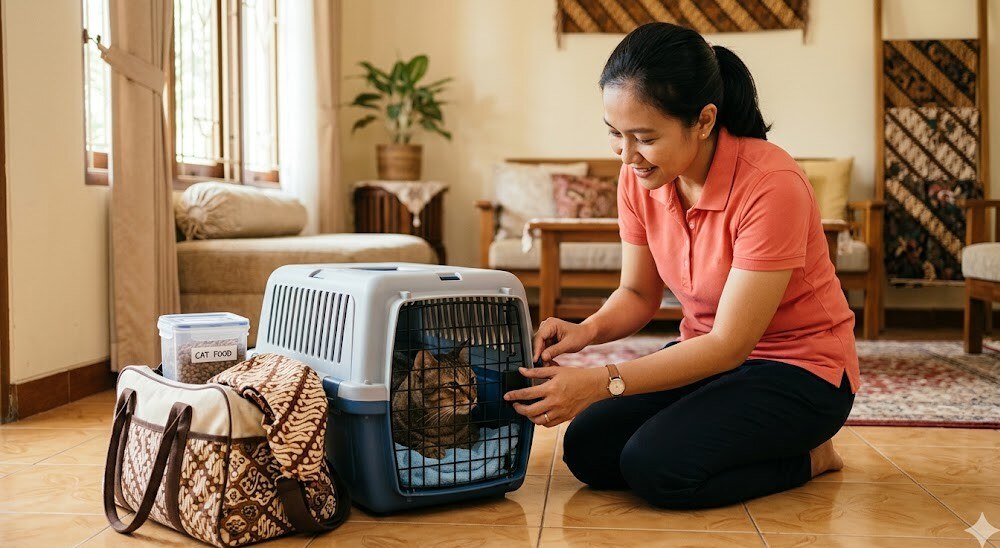

"My cat is already 6 months old, they say it's time to spay, but I'm not sure yet. Do I really have to?" This question comes to us often, from cat owners and dog owners alike. Spaying/neutering is one of the biggest medical decisions you make for your pet, and its timing greatly affects the long-term benefits and risks.
This article explains what spaying/neutering is, the optimal timing per species, the clear medical benefits, the risks you need to know, and what happens during the procedure. Based on AAHA 2020 guidelines and recent breed-specific research.
Spay vs neuter: terminology that often gets mixed up
Before going further, let's clarify the terms, many pet owners are still confused:
- Spay, surgical removal of the ovaries (and usually also the uterus) in females. Also called ovariohysterectomy (OHE) or ovariectomy (OVE)
- Neuter (castration), surgical removal of the testicles in males
- "Steril" (general), in Indonesia, the term "steril" is often used for both (females and males). Technically it is not quite accurate but it has become everyday usage
In this article, we use "spay/neuter" as an umbrella for both types of procedure, and specifically "spay" or "neuter" when a distinction is needed.
Medical benefits of spaying/neutering cats
Female cats (spay)
- Prevents pyometra, a uterine infection that can be fatal in unspayed adult cats. A spayed cat has no uterus, so the risk is zero
- Reduces the risk of mammary tumors, especially if the spay is done before the first estrus. Mammary tumors in cats have a high malignancy rate (around 85% malignant)
- Eliminates the estrus (heat) cycle, no more loud vocalization, rolling, and repeated stress every 2-3 weeks in a cat that does not mate
- Prevents pregnancy, including unwanted pregnancy from outdoor cats
Male cats (neuter)
- Reduces spraying behavior (urine marking), intact male cats often mark territory with strong-smelling urine indoors. After neutering, this behavior decreases significantly, especially if done before 1 year
- Reduces roaming and fighting, intact male cats have a strong drive to go out looking for females, often returning with bite wounds (which can transmit FIV/FeLV)
- Prevents testicular tumors, risk is zero after the testicles are removed
- More neutral urine smell, the hormonal change alters the urine composition, and the characteristic intact-male-cat smell disappears
Medical benefits of spaying/neutering dogs
Female dogs (spay)
- Prevents pyometra, a serious complication in unspayed senior dogs, often requiring emergency surgery with a worse prognosis than a routine spay
- Reduces the risk of mammary tumors, the protective effect is strongest if the spay is before the first estrus, with a smaller effect remaining if after the first or second estrus
- Eliminates the estrus cycle, no more bleeding, behavioral changes, and the attraction of male dogs from the neighborhood every 6 months
- Prevents unwanted pregnancy
Male dogs (neuter)
- Reduces roaming and hormone-related aggression, especially inter-male aggression
- Prevents benign prostatic disease (BPH) in senior dogs, common in intact male dogs aged 7+
- Prevents testicular tumors
- Reduces mounting behavior and urine marking (results vary depending on the age at neutering)
Optimal timing for cats: 4-6 months (pediatric spay) or pre-pubertal
For cats, the consensus of international guidelines (AAHA, ASPCA, and many welfare organizations) is fairly clear: spay/neuter before 5 months is optimal.
- 4-5 months, the sweet spot. The anatomy has developed enough for safe surgery, but the cat has not yet had its first estrus (which can occur as early as 4 months in some breeds)
- 2-4 months (pediatric spay), done in many rescue/shelter programs with modern anesthesia. Safe according to long-term research, with recovery tending to be faster than in adult cats
- 6+ months, still possible, but most of the protective benefit against mammary tumors is already reduced if the cat has had several estrus cycles
A house cat that will have outdoor access (or where there are other cats in the home) should ideally be sterilized before 5 months to prevent unexpected pregnancy, a female cat can get pregnant from the first estrus.
Optimal timing for dogs: variation by breed size
For dogs, the optimal timing varies depending on the breed's adult size, this is an important difference from cats. Breed-specific research from Hart et al shows that neutering/spaying too early in some large breeds is associated with an increased risk of joint disorders (hip dysplasia, cruciate ligament rupture) and some cancers.
Small dogs (under 20 kg adult)
- 5-6 months, usually safe and optimal. Small dogs grow faster and their growth plates close earlier
- There is no strong evidence that delaying sterilization in small dogs provides an orthopedic benefit
Medium and large dogs (20+ kg adult)
- Can wait until the growth plates close, usually 12-18 months depending on the breed
- Breeds included: Golden Retriever, Labrador, German Shepherd, Rottweiler, Doberman, etc.
- Discuss with your vet, also consider lifestyle (outdoor access, contact with other dogs, risk of unwanted pregnancy)
Giant dogs (40+ kg adult)
- 18-24 months, many vets recommend waiting for bone growth to finish
- Breeds: Great Dane, Mastiff, Saint Bernard, Newfoundland
An important note: the optimal timing for large dogs is an area still developing in veterinary research. Consult your vet about your pet's specific breed, the decision should weigh the benefits (preventing unwanted pregnancy, preventing pyometra) against the breed-specific orthopedic risks.
What happens during the spay/neuter procedure
Pre-operative (1-2 days before)
- Physical examination, the vet checks the general condition, temperature, heart rate, hydration
- Pre-anesthetic blood work, especially for senior pets or those with a medical condition. Check liver function, kidney function, hemogram
- Fasting from food 8-12 hours before surgery, to prevent aspiration (vomit entering the lungs) during anesthesia. Water is usually allowed up to 2 hours before
During surgery
- Premedication, a combination of sedative + pain reliever to reduce stress and the anesthesia dose
- Anesthesia induction, usually via intravenous injection, then continued with anesthetic gas via an endotracheal tube
- Monitoring, heart rate, oxygen saturation, body temperature monitored throughout the surgery
- The surgery itself, usually 30-60 minutes. A spay (female) takes longer than a neuter (male) because it requires entering the abdominal cavity
Early recovery (at the clinic)
- The pet is monitored until fully awake, usually 1-3 hours after surgery
- Given pain relief (analgesia), meloxicam or gabapentin are often used
- The majority of pets can go home the same day with an e-collar fitted
Risks and complications you need to know
Spaying/neutering is a routine and generally safe surgery, but like any surgery, there are risks. It is important you know them before deciding:
- Anesthesia risk, very low in healthy animals with modern monitoring (around 0.1% mortality in healthy dogs/cats according to clinic data), but rises significantly in pets with an underlying medical condition
- Post-operative bleeding, rare, usually detected during early monitoring. Higher in large deep-chested dogs
- Wound infection, around 1-5% of cases, usually minor and responsive to antibiotics. An e-collar and activity restriction reduce the risk
- Dehiscence (the sutures opening), usually because the pet is too active or licks the wound. An e-collar is mandatory for 10-14 days
- Incisional hernia, very rare, usually requiring corrective surgery if it occurs
- Metabolic change, sterilized pets tend to need 20-30% fewer calories. Without portion adjustment, the obesity risk rises
The benefits of spaying/neutering almost always outweigh the risks for the majority of household pets, but the decision should still be based on your pet's specific condition. Discussing it with the vet before scheduling surgery is important.
Basic post-spay/neuter care
After the pet comes home from the clinic, the recovery phase at home lasts about 10-14 days. The main points:
- The e-collar must always be fitted, except during eating/drinking that you directly supervise
- Activity restriction, no jumping, no running, no climbing stairs if it can be avoided
- Daily wound monitoring, check for signs of infection (excessive redness, swelling, pus, odor)
- Medication per prescription, usually pain relief for 3-5 days, sometimes antibiotics
- Follow-up, a post-operative check around day 3 and suture removal on day 10 to 14
For a complete guide to post-spay/neuter recovery (what is normal, signs of complications, when to see a vet), read: Post-Spay/Neuter Recovery: What to Watch For, Signs of Complications, and Care at Home.
Myths vs facts about spaying/neutering
Myth: "Cats/dogs get fat after sterilization"
Fact: Sterilization changes the metabolism, the pet needs around 20-30% fewer calories. What causes weight gain is not the surgery, but the owner not adjusting the food portion after sterilization. If the portion is adjusted, the body weight stays ideal.
Myth: "A female cat needs to get pregnant once before being spayed"
Fact: There is no medical evidence supporting this. Quite the opposite, spaying before the first estrus gives the maximum protective effect against mammary tumors. Pregnancy provides no health benefit at all for the female.
Myth: "A pet's behavior will change drastically after sterilization"
Fact: The behavior that changes is usually the hormone-related kind, mating behavior, spraying, inter-male aggression, roaming. The basic personality (playful, affectionate, independent) does not change. The pet does not become "less enjoyable" after sterilization.
Myth: "Sterilizing too early stunts growth"
Fact: For cats, long-term research shows pediatric spay is safe and does not significantly stunt growth. For large dogs, there is a nuance, sterilizing before the growth plates close can affect long-bone proportions. For that reason, for large dogs consider waiting 12-18 months (discuss with your vet).
Myth: "Spay/neuter surgery is very expensive and complicated"
Fact: Spaying/neutering is one of the most routine procedures in veterinary practice. The cost varies depending on the clinic location, the size of the pet, and the level of service, but many clinics in Greater Jakarta also offer sterilization programs at affordable prices. The initial consultation is free if you need an estimate or help finding a sensible option.
Cat and dog spay/neuter FAQ
My pet is already an adult (3+ years), can it still be sterilized?
Yes, and it is still highly recommended. Benefits like preventing pyometra and testicular tumors still apply. Pre-anesthetic blood work is more important for adult/senior pets, make sure organ function is good before surgery.
How much does spaying/neutering a cat/dog cost in Greater Jakarta?
The cost varies depending on the sex (a female spay is more expensive than a male neuter), the size of the pet, the clinic, and the level of service (pre-anesthetic panel, type of anesthesia, post-operative medication). Our initial consultation is free via WhatsApp, if you need a clinic recommendation for surgery or want to discuss options, contact us for guidance that fits your pet's condition.
How long is the total recovery after sterilization?
For cats and small dogs, full recovery is usually 10-14 days (until suture removal). Normal activity can return gradually after that. For large dogs or more complex spay surgery, it can take 2-3 weeks until full activity.
Will the pet be in pain?
With modern anesthesia and analgesia protocols, post-operative pain is well managed. The pet usually appears weak for the first 24-48 hours, then starts to become active again. Routine pain relief is prescribed for the first 3-5 days. If the pet appears in severe pain after day 3 or its condition declines, contact the vet immediately.
Can I request a post-spay/neuter follow-up at home, instead of going back and forth to the clinic?
Yes, this is one of the services our clients often request. For a pet that is stressed by being brought to the clinic or an owner who is busy, a home follow-up (changing the dressing, removing sutures, evaluating the wound) is often a more comfortable option. See Prabasa Vet's post-operative home care service.
Summary
Spaying/neutering is an important medical decision with clear long-term benefits, preventing reproductive disease (pyometra, mammary tumors, testicular tumors), reducing troublesome hormonal behavior, and preventing unwanted pregnancy. Optimal timing:
- Cats: 4-6 months (before the first estrus)
- Small dogs (under 20 kg adult): 5-6 months
- Large dogs (20+ kg adult): discuss with the vet, often optimal at 12-18 months after the growth plates close
For a discussion specific to your pet's condition, including breed considerations, health history, and the right timing, our initial consultation is free. Send a photo of your pet and a brief history via WhatsApp.
For owners who have already scheduled spay/neuter surgery and need a follow-up at home (changing the dressing, removing sutures, wound monitoring), a Prabasa Vet partner vet can come to your home, your pet recovers in the most comfortable place.
Read also: Post-Spay/Neuter Recovery: Care, Signs of Complications, and When to See a Vet, Complete Pet Care Guide, Signs a Cat Is Sick and Needs a Vet.
Medical references used in this article
This article was prepared with reference to the following sources:
- AAHA 2020 Spay-Neuter Guidelines for Dogs and Cats (Bushby PA et al)
- Howe LM. Pediatric Neutering in Dogs and Cats. Veterinary Surgery
- Hart BL et al. Long-term Health Effects of Neutering in Dogs (breed-specific timing data)
- BSAVA Manual of Canine and Feline Reproduction
This article is general guidance based on international guidelines. For a timing decision specific to your pet, including breed considerations, health condition, and lifestyle, consulting a veterinarian is the right step.