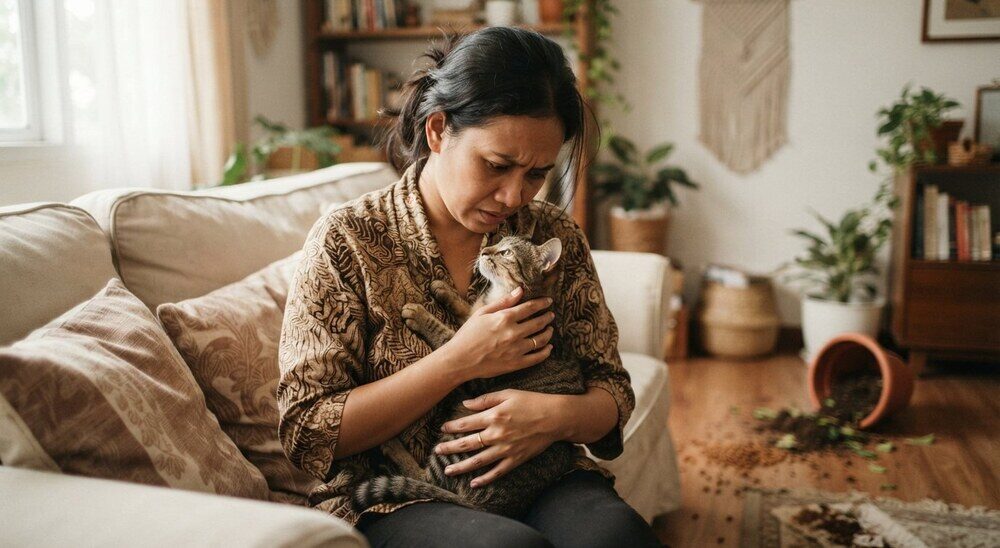

TL;DR: Constipation in cats and dogs is most often triggered by too little water, too little fibre, too little movement, or something that makes passing stool painful. At home, you can help with fresh water always available, moisture-rich food, and light activity. But constipation left unaddressed can progress to megacolon, a widened colon that is hard to recover from. If your pet strains for more than a day with no result, is weak, is vomiting, or refuses food, that is a sign to see a vet right away. One important note: a male cat that is straining may not be constipated at all, but blocked in the urinary tract, which is an emergency.
Why cats and dogs get constipated
Constipation means bowel movements become infrequent, difficult, or incomplete, with hard, dry stool. It is not a single disease, but a symptom that can arise from many causes. Understanding the trigger matters, because the right treatment differs for each cause.
Not enough fluids. This is the most common cause. When the body lacks water, the colon absorbs more fluid from the stool, so the stool hardens and becomes hard to pass. Pets that rarely drink or only eat dry food are prone to this.
Not enough fibre or an unsuitable diet. Fibre helps form stool and keeps the bowel moving. A sudden change of food can also cause upset.
Hairballs and swallowed objects. In cats, hair swallowed during grooming can build up. Dogs sometimes swallow bits of bone, sand, or other objects that harden in the gut.
Lack of movement and being overweight. Physical activity helps the bowel move. Pets that rarely move or are overweight are more prone to constipation.
Painful defecation. Anal gland problems, arthritis that makes the squatting position painful, wounds around the anus, or an old pelvic fracture that narrows the passage, can all make a pet hold in its stool. The longer it is held, the harder the stool becomes.
An underlying disease. Kidney problems that make the body prone to dehydration, mineral imbalances, or nerve disorders can trigger constipation. That is why recurring constipation is worth investigating more deeply by a vet.
Stress and an uncomfortable litter box. Cats are very sensitive. A litter box that is dirty, too crowded, or placed somewhere that makes them tense can lead them to hold it in.
Signs to keep an eye on
Constipation is often missed because we do not always watch the litter box or where our pet toilets. Some common signs:
- Straining in the litter box or while squatting, but only a little or nothing comes out.
- Small, hard, dry stool, sometimes with a little mucus or blood.
- Passing stool less often than usual, for example more than a day or two.
- Going back and forth to the litter box with no result, sometimes meowing or looking uncomfortable.
- Reduced appetite, weakness, a bloated-looking belly, or vomiting in more severe cases.
An important warning for male cats. A male cat that appears to be straining in the litter box is not necessarily constipated. He may be experiencing a urinary blockage, a very dangerous condition that can become life-threatening within hours. If you are not sure whether your pet is struggling to pass stool or struggling to urinate, treat it as an emergency and contact a vet right away.
What you can do at home
For mild, recent constipation where your pet is still active and eating, these steps often help:
- Increase fluid intake. Provide clean, fresh water in several spots. Many cats prefer running water, so a drinking fountain can help.
- Add moisture to the food. Wet food or adding water to the food can naturally increase fluid intake.
- Fibre in moderation. Some gentle fibre sources can help, but the type and amount should suit your pet condition, so ask a vet first to avoid getting it wrong.
- Encourage movement and manage weight. Light daily activity helps the bowel work.
- Care for the litter box. Keep it clean, provide enough of them, and place them somewhere quiet so your cat feels comfortable.
- Brush regularly for long-haired cats, to reduce the hair they swallow.
What you should not do: do not give human laxatives, and do not give an enema or bowel-cleansing fluid yourself at home. Some over-the-counter enema products are toxic to cats and can be dangerous. Actions like these must be under a vet supervision.
Why megacolon is dangerous
This is the reason constipation should not be taken lightly. When hard stool builds up and is held for a long time, the colon stretches to accommodate it. Over time, the muscle in the colon wall loses the strength to contract and push the stool out. This condition is called megacolon, a widened and weakened colon.
The trouble is that the more often the colon becomes overly full, the more its function is damaged, and this cycle can keep repeating. In advanced stages, megacolon is hard to recover from with diet changes alone, and some severe cases eventually require surgery. That is why treating constipation early is far better than waiting until it becomes recurring and severe.
When to call a vet or head to an emergency clinic right away
Contact a vet or go to a clinic open 24 hours if you see any of these signs:
- More than a day or two with no bowel movement despite continued straining.
- Repeated straining with no result, especially if your pet looks in pain or meows while trying.
- Vomiting, refusing food, weakness, or a belly that is swollen and painful to the touch.
- Blood around the anus or on the stool.
- A male cat straining and you are not sure whether it is difficulty passing stool or difficulty urinating. Treat this as an emergency.
- Constipation that keeps recurring, even if it eventually resolves each time. A recurring pattern is a signal of an underlying cause worth investigating.
An examination usually aims to assess how much stool is retained, find the underlying trigger such as dehydration or another disease, and decide on safe treatment. The sooner it is addressed, the smaller the risk of it progressing to megacolon.
A calm consultation at home with Prabasa Vet
The good news is that many mild constipation cases can be assessed calmly without forcing your pet into a carrier and enduring a stressful trip. As a home-visit vet service in the Greater Jakarta (Jabodetabek) area, Prabasa Vet can come directly to your home to examine your pet in the place where it feels most comfortable. If you are unsure whether what is happening is ordinary constipation or something more serious, our vet can help judge and recommend a safe next step.
You can start with a free online consultation to describe the symptoms, or schedule an at-home pet examination if the condition needs to be checked directly. For cat care, you can also read more about our house call vet for cats service.
If your cat or dog is struggling to pass stool and you want to be sure about its condition, you can message Prabasa Vet on WhatsApp. The initial consultation is free of charge, and we will be honest if the case is severe and would be better referred to a facility with inpatient care or 24-hour emergency services.
Notes & references
This article is educational and general in nature, not a substitute for a direct examination by a vet. Every pet is different, and the management of constipation should be tailored to the individual, including the choice of fibre, fluids, or medical actions that need to be performed by a vet. Enemas, laxatives, and other medications must not be given on your own without a vet guidance, because some are risky or toxic, especially for cats. If warning signs appear, do not delay in seeking medical care.