
"My cat absolutely hates baths, to the point of scratching and screaming. Does she really need a bath once a week?" This is one of the most frequent questions in Prabasa Vet's WhatsApp chats, especially from new owners who were told by a pet store to bathe their cat weekly.
The short answer often surprises owners: most cats do NOT need frequent baths. In fact, bathing too often can make their skin and coat condition worse. Cats are expert self-groomers, evolution designed them to clean themselves very efficiently.
This article covers the right philosophy of cat grooming, when a bath is genuinely needed, the differences by coat type, safe vs dangerous shampoos, low-stress bathing technique, and alternatives for cats who simply cannot be handled for a bath.
Philosophy: cats generally do NOT need frequent baths
Unlike dogs, cats have a barbed tongue (papillae) that works like a natural comb to groom the coat and lift away dirt and dead skin cells. They spend roughly 30-50% of their waking time grooming themselves. Their saliva contains enzymes that help clean the coat while maintaining the natural distribution of skin oil (sebum).
The consequence: bathing a cat too often actually disrupts their natural grooming system.
- Strips natural oil, water and shampoo remove the sebum that coats the skin. Without sebum, the skin becomes dry, itchy, and prone to irritation or secondary infection.
- Severe stress, cats dislike being wet because a wet coat takes away their ability to jump and leap with precision and undermines thermal control. Their evolutionary instinct tells them "wet fur = danger." Routine stress from forced bathing can trigger behavioral problems (overgrooming, urinary issues, aggression).
- Duller coat, counterintuitive but proven. Cats bathed frequently without indication tend to lose their natural shine.
Bottom line: if your cat is an indoor cat, short-haired, healthy, and grooms diligently on its own, chances are it does not need a bath at all throughout the year, or at most 1-2 times a year if it gets genuinely dirty.
When a cat genuinely needs a bath
There are several scenarios where a bath is a valid indication:
1. Long-haired breeds prone to matting
Persians, Himalayans, Maine Coons, Ragdolls, Norwegian Forest Cats, and other long-haired breeds need special maintenance. Their long coat can form mats (tangled clumps of fur) that the cat cannot clear by self-grooming, especially around the rear, lower belly, and armpits.
- Bathing frequency: roughly once a month, or only when a mat has formed and is hard to comb out
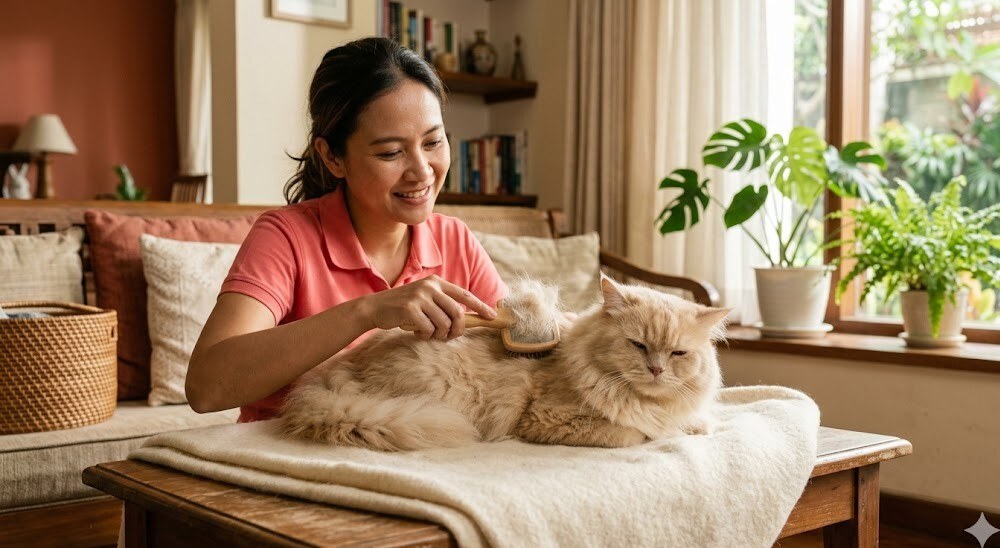
- The real key: daily brushing, comb the long coat with a slicker brush or metal comb every day. Routine brushing is more important than routine bathing for these breeds.
- Persians and Himalayans (brachycephalic) also need routine eye-area cleaning (chronic tearing around the eyes due to their flat face shape), but this is not a "bath", wiping with cotton and warm water is enough
2. Sphynx or hairless breeds
Hairless cats (Sphynx, Donskoy, Peterbald) actually need more frequent bathing, about once a week. Without fur to absorb sebum, natural skin oil keeps building up on the surface, making the skin feel sticky, smelly, and prone to acne/folliculitis. Routine bathing here is the skin's equivalent of dental brushing.
3. Outdoor cats with heavy soiling
Cats with outdoor access that come home with mud, dirt, oil, tar, or other foreign substances that cannot be cleared by self-grooming, a spot bath or full bath is valid.
4. Medical conditions
Some skin conditions require a medicated bath on a veterinarian's prescription:
- Bacterial or fungal skin infections (ringworm, malassezia), usually with chlorhexidine or miconazole shampoo
- Heavy flea infestation, flea shampoo on prescription (note: for routine prevention, topical spot-on is far more effective than flea shampoo)
- Scabies (sarcoptic mange), lime sulfur dip under veterinary supervision
- Seborrhea (chronic oily/flaky skin), medicated keratolytic shampoo
For medical conditions, do not reach for over-the-counter shampoo at random, consult a veterinarian for a diagnosis first (many skin conditions look similar but have completely different treatments).
5. Declawed cats that cannot self-groom well
Declawed cats (note: declawing is not recommended by the international vet community because of behavioral effects and chronic pain) lose their full grooming ability because claws are part of a cat's grooming system. Declawed long-haired cats often need bathing and manual brushing more frequently than intact cats.
6. Senior or sick cats that can no longer self-groom
Senior cats with joint inflammation (osteoarthritis) or chronic disease (CKD, hyperthyroidism) often lose interest in or the ability to groom. Their coat becomes dull, mats appear, or it gets dirty around the rear. Help with routine wipe-downs using waterless shampoo or a warm damp cloth, and a full bath only when genuinely needed (frequency depends on the condition).
Bathing frequency: realistic numbers by cat profile
- Indoor short-haired cat, healthy, diligent self-groomer: 0-2 times per year, or only when genuinely dirty
- Long-haired breeds (Persian, Maine Coon, Ragdoll): about once a month, plus daily brushing
- Sphynx/hairless: once a week
- Outdoor cats that get dirty often: conditional, depending on exposure
- Medical conditions: per the veterinarian's protocol (could be 2-3x/week for medicated baths)
- Senior cats with grooming impairment: conditional, plus help from waterless shampoo
DANGEROUS shampoos, never use human or dog shampoo
The most important part of this article. Cat shampoo must be cat-specific shampoo. Many new owners use baby shampoo or dog shampoo assuming "it's gentle," but there is a fundamental problem.
Human shampoo (including baby shampoo)
The issue is not just that it is "unsuitable", it is a serious pH mismatch. Human skin is pH ~5.5 (slightly acidic). Cat skin is pH ~6.5-7.0 (more neutral). Human shampoo is formulated for human pH; used on a cat it disrupts the skin's acid mantle, causing irritation, dryness, and susceptibility to secondary infection.
Plus, human shampoo often contains fragrances/essential oils that are toxic to cats (lavender, tea tree, eucalyptus, citrus, all hepatotoxic to cats in cumulative doses).
Dog shampoo
Dog shampoo has a pH closer to cats but still must not be used, especially products containing pyrethrin or permethrin (dog flea insecticides). Permethrin is highly toxic to cats, it can trigger seizures, tremors, respiratory failure, and death. Permethrin that is safe for dogs can be fatal to cats at the same concentration.
Many dog flea-and-tick shampoos contain permethrin. Never use a dog flea product on a cat without a "safe for cats" label confirmation and veterinary supervision.
Bar soap, dish soap, detergents
Dish soap (Sunlight, Mama Lemon, etc.) is often suggested online for emergency flea treatment, this is ONLY acceptable as a one-time emergency option for heavy flea infestation under veterinary supervision, with immediate rinse, drying, and warming afterward. Not as a routine.
Human bar soap, laundry detergent, or dishwasher liquid, never use them. The pH is too alkaline, it strips oil completely, and residual detergent swallowed during grooming can cause digestive problems.
Safe cat shampoos
Common options available in Indonesia (online and at larger pet shops):
- Vet's Best Hypo-Allergenic Cat Shampoo, pH-balanced specifically for cats, no soap no sulfate, safe for kittens 12 weeks and older
- Earthbath Cat Shampoo, natural formulation, several variants (vanilla almond, hypoallergenic, light color brightener)
- TropiClean Cat Shampoo, a dedicated line for cats
- Virbac Episoothe / Allermyl (on veterinary prescription), for cats with sensitive skin or atopy
- Douxo S3 (CEVA, on veterinary prescription), a medicated line for various skin conditions
Look for an explicit "for cats" or "feline-safe" label, not just a generic "for pets" (which is often dog shampoo marketed as dual-purpose).
Low-stress cat bathing technique
If a bath is genuinely needed, the right setup can turn the experience from traumatic to tolerable. Here is a step-by-step:
Preparation before the bath
- Comb the coat first, especially for long hair, comb out any mats completely. Tangled fur gets worse once wet.
- Trim the claws the day before, reduces the risk of scratches during handling
- Prepare everything first: shampoo (poured into a small container and diluted with water if concentrated), 2-3 thick towels, a small dipper, a non-slip pad at the bottom of the basin, treats for reward
- Choose a time when the cat is calm, after eating and playing is usually more cooperative
Water temperature and setup
- Lukewarm, not hot, around the cat's body temperature (37-38°C). Test on your wrist; it should feel "neutral warm," not the pleasantly warm temperature humans enjoy (too hot for a cat).
- Shallow water level, just up to the cat's wrists (about 3-5 cm). Do not fully submerge.
- A small basin or sink is far better than a large bathtub, a confined area reduces panic and makes handling easier. Line it with a non-slip surface (a wet towel, silicone mat).
The bathing process
- Wet from neck down, wet from the neck to the tail; do not pour water directly onto the head. Use a small dipper or a gentle showerhead (not a pressure shower).
- Avoid the eyes and ears, do not let water get in. For the face, wipe gently with a damp cloth; do not soap it.
- Apply shampoo from neck to tail with slow movements and a soothing voice, speak in a gentle tone, call its name. Massage gently; do not scrub hard.
- Rinse thoroughly, very important; leftover shampoo residue will be swallowed during grooming and trigger digestive irritation. Rinse until the running water is completely clear.
- Total duration: 5-10 minutes maximum, the faster the better for the cat's well-being
Drying
- Towel dry, NOT blow dry, wrap the cat in a thick dry towel and press gently to absorb water. Swap the wet towel for a dry one and repeat until mostly damp.
- Blow drying only if the cat is fully acclimatized, most cats panic at the noise and hot air of a hair dryer. There is also a risk of thermal burn if held too close or set too hot. It is safer to air-dry in a warm, draft-free room.
- Keep the ambient temperature warm, a wet cat becomes hypothermic quickly. Do not place it under strong air conditioning after a bath, or in a drafty area.
- Brush after drying, especially for long hair, to prevent new mat formation
Alternatives: waterless shampoo, spot cleaning, brushing
For cats that genuinely cannot be handled for a water bath, there are options that can cover grooming needs:
- Waterless / dry cat shampoo (Vet's Best Waterless Cat Bath, Earthbath, Burt's Bees), a foam or spray massaged into the coat then dried with a towel. No rinsing needed. Good for routine freshening or senior cats stressed by water.
- Spot cleaning with pet wipes, animal-specific wipes (not baby wipes, as many contain essential oils) to clean specific dirty areas (rear, feet, mouth after eating).
- Routine brushing, for maintaining a healthy coat without water. Long hair daily, short hair 1-2x/week is enough. Use a brush specific to the coat type (slicker for long hair, rubber brush for short hair, undercoat rake for double coats).
- Warm damp cloth, if you do not have waterless shampoo, a warm damp washcloth (without soap) is enough to wipe down a lightly dirty cat.
When you need a professional groomer
- Severe mats that cannot be combed out, these need a shave-down with professional clippers. Without shaving, mats can cause skin injury (skin tears) when pulled, or skin infection underneath.
- Declawed cats with long hair whose self-grooming is impaired
- Senior cats with conditions that make home handling difficult, some cat-specific or feline-friendly groomers have experience handling these cases
- Cats with a medical skin condition that needs routine medicated baths the owner cannot manage
Choose a groomer that specializes in cats or holds a feline-friendly certification. Avoid salon groomers whose main focus is dogs and where cats are just a side service, handling a stressed cat requires different expertise and different tools.
Cat bathing FAQ
My cat smells musty, does that mean it needs a bath?
Not automatically. A healthy cat should not smell musty. If it does, check the source first: a smell from the mouth (dental disease), from the ears (otitis, ear mites), from the rear (anal gland issue, diarrhea, urinary issue), or from the coat (mats plus skin infection underneath). Bathing will not resolve the underlying issue and may delay diagnosis. Consult a veterinarian first if the smell is persistent.
Can a 2-month-old kitten be bathed?
Avoid it if you can. Kittens under 8 weeks still have unstable thermoregulation, getting soaked can quickly cause hypothermia. If it is very dirty, use waterless shampoo or spot clean with warm wipes. A full water bath is acceptable after 12 weeks, if genuinely needed.
How long after a bath does a cat return to normal?
It varies widely, some cats shake off immediately and continue self-grooming to redistribute sebum (10-30 minutes). Some cats are traumatized and hide for 2-24 hours. As long as there is no sign of physical illness (limping, complete refusal to eat for >24 hours, tremors, fever), give it space and let the cat recover on its own.
My cat scratches badly during baths, are leather gloves okay?
Thick protective gloves are fine for the owner's safety, but if the cat scratches that badly, the bath is too stressful, consider postponing and trying gradual desensitization, switching to waterless shampoo, or taking it to a professional groomer experienced in handling feline aggression.
Can I use cat conditioner?
For long-haired breeds that mat often, cat conditioner (Vet's Best Cat Detangler, Earthbath Cat Conditioner) can help reduce tangling and make subsequent brushing easier. Still rinse thoroughly after applying. Avoid human or dog conditioner.
Can a cat be bathed after vaccination or surgery?
Avoid bathing for at least 7-14 days after vaccination (let the immune response settle without an added stressor) or 14 days after surgery (stitches plus infection risk). Consult a veterinarian for case-specific timing.
Summary
Cats generally do not need frequent baths, they are expert self-groomers and over-bathing actually damages their natural grooming system. Bathing frequency depends on profile: a healthy indoor short-haired cat barely needs a bath at all (0-2x/year), long-haired breeds about once a month plus daily brushing, Sphynx weekly, medical conditions per the veterinarian's protocol.
The most critical point: never use human shampoo (pH mismatch plus toxic essential oils), dog shampoo (risk of fatal permethrin), or dish soap routinely. Always use a cat-specific shampoo with an explicit "for cats" label.
Low-stress bathing technique: full preparation first, lukewarm water, shallow water level in a small basin, wet from neck down (avoid eyes and ears), rinse thoroughly, towel dry (NOT blow dry unless very acclimatized), keep the ambient temperature warm after the bath.
For genuinely resistant cats, there are plenty of alternatives: waterless shampoo, pet wipes, routine brushing, and cat-specific professional groomers for cases needing specific handling.
Want to consult about your pet's skin condition, coat, or behavior during bathing? Contact us on WhatsApp, send photos of the coat/skin condition, the prior grooming history, and the cat's breed. The Prabasa Vet team will help assess whether the condition is normal or needs a veterinary assessment.
Read also: Dental Brushing for Cats and Dogs: How to Do It Safely, Frequency, and Which Toothpaste Is Allowed, Claw Trimming for Cats and Dogs: How to Do It Safely, Tools, and Avoiding Injury, Complete Pet Care Guide.
Medical references used in this article
This article was prepared with reference to the following sources, verified per clinical sentence:
- ISFM (International Society of Feline Medicine) Cat Friendly Practice Guidelines, low-stress cat handling, environmental enrichment, grooming approach
- AAFP (American Association of Feline Practitioners) Feline-Friendly Handling Guidelines, desensitization, low-stress restraint, recognizing feline stress signals
- ACVD (American College of Veterinary Dermatology), cat skin pH, indications for a medicated bath, contraindications of OTC shampoo without diagnosis
- BSAVA Manual of Feline Practice, grooming requirements per breed, condition-specific bathing protocols
- Plumb's Veterinary Drug Handbook 7e, medicated shampoo agents (chlorhexidine, miconazole, lime sulfur), permethrin toxicity in cats, essential oil hepatotoxicity in felines
- Peterson ME, Talcott PA (eds). Small Animal Toxicology 3rd ed, permethrin toxicosis in cats (mechanism, clinical signs, treatment), essential oil toxicity
This article is general guidance based on ISFM, AAFP, ACVD, and BSAVA guidelines. To evaluate your cat's specific skin/coat condition or a medicated bath protocol, consulting a veterinarian is the right step.