
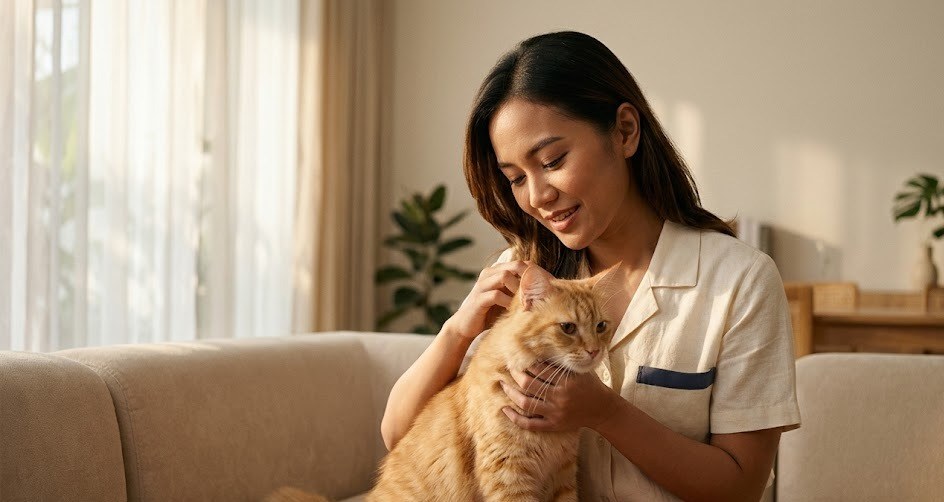
In short: routine grooming is not just about keeping cats and dogs looking neat and smelling fresh. Regular grooming is really a recurring health check. As you brush, bathe, and run your hands over your pet's body, you get the chance to find a new lump, a small wound, fleas, or a change in the skin early, long before it becomes a big problem. There is a lot you can safely do at home. But if the skin is troubled, there is a wound, the coat is badly matted, or your pet is severely stressed by grooming, it is best to involve a vet. Want calm grooming plus a home health check? message Dr. Prabasa on WhatsApp.
Many owners treat grooming as purely cosmetic, so they only think about it once the coat is already matted, dirty, or smelly. But that mindset costs you one of the simplest early-detection tools you have. The coat that covers the body also hides many early signs of illness, and regular grooming is the moment those signs are easiest to catch.
Why grooming is a health matter, not just looks
When grooming is put off until the coat is truly tangled, problems have often already developed under the surface. Tight mats can pull on the skin and hurt, trap moisture, and trigger irritation or infection beneath them. Fleas and ticks multiply quietly. A small lump grows unnoticed. Overgrown nails start to change the way a pet walks.
Routine grooming reverses that order. Instead of waiting for a problem to appear, you check your pet's body regularly and find small things while they are still small. That is why grooming deserves to be seen as part of health care, not just a salon visit.
The health benefits of routine grooming
Early detection of lumps, wounds, and parasites
As you brush and feel over the whole body, your hands travel across skin that is normally hidden by fur. This is where a new lump, a wound, a spot that hurts when touched, fleas, ticks, or black flea dirt are easiest to find. Catching something early makes it far easier to treat.
Healthy skin and coat
Brushing removes loose hair and dead skin cells, prevents matting, and helps spread the skin's natural oils so the coat stays soft and less dull. Clean, mat-free skin is also less likely to stay damp and irritated, two things that often start skin problems.
Ears, eyes, nails, and paw pads
A grooming routine is a good time to glance at the ears (any unusual smell, redness, or excess discharge), the eyes (clear and not watery), and the nails. Overgrown nails can curl, press into the paw pad, and make walking uncomfortable. Checking between the toes also helps you find wounds or stuck foreign objects.
For cats, fewer hairballs
Cats spend a lot of time licking themselves and swallowing loose hair, which can build up into hairballs. Brushing your cat regularly reduces the amount of hair that gets swallowed, which helps cut down on hairballs, especially in long-haired cats.
Building calm handling habits
A pet that is used to being brushed, having its paws held, and its ears checked from early on will be far calmer when it genuinely needs a vet exam one day. Gentle grooming teaches a pet to accept touch without panic, and that makes every future health check easier.
Safe grooming tips at home
- Brush regularly. Brush according to your pet's coat type. Long coats need it more often to avoid matting, and even short coats benefit from removing loose hair. Brush slowly in the direction the hair grows, and pause when your pet starts to get restless.
- Bathe only as needed, not as often as possible. Over-bathing can strip the natural oils and dry out the skin. Most cats groom themselves and rarely need a bath. Use a pet-specific shampoo, because human shampoo can irritate their skin.
- Trim nails carefully. Inside the nail is a part containing blood vessels and nerves (the quick). Trim just the tip a little at a time so you do not cut into it. If in doubt, better to be shown how first than to cut too deep.
- Clean the outer ears and around the eyes gently. Just wipe the visible outer part with cotton or a soft cloth. Do not poke deep into the ear canal with a cotton bud, as it can push debris further in and cause injury.
- Make it a positive experience. Short, calm grooming beats one long, stressful session. Take breaks, speak softly, and stop before your pet gets exhausted. The goal is to build a sense of safety, not to force it done in one sitting.
For pets that stress easily, or when the coat is already matted and hard to manage yourself, home grooming by a vet can be far calmer. Your pet stays in the environment it knows, and at the same time its body can be checked more thoroughly. You can book home grooming for your pet together with a light health check in a single visit.
When to see a vet
At-home routine grooming is great for day-to-day care, but some conditions are better assessed or handled by a vet rather than tackled alone:
- Troubled skin. Redness, constant itching, excessive hair loss to the point of bald patches, thick dandruff, damp smelly skin, or an area that is licked constantly. These can signal allergies, infection, fungus, or other skin problems that need checking.
- Wounds or lumps. A weeping wound, a scab that will not dry, a new lump, or swelling should be examined rather than just cleaned and covered by fur.
- Severe mats stuck to the skin. Hard mats stuck tight to the skin should not be cut off carelessly, because the skin underneath is easily cut too. This is safer handled with the right tools and technique.
- Heavy flea or tick infestation. When parasites are already numerous, treatment should be guided by a vet so it is correct and safe for your pet's species and condition.
- Severe grooming stress. Intense panic, fear-driven aggression, heavy panting, or looking very distressed every time you groom are signs to stop forcing it. Pushing through can injure the pet or you, and only deepens the trauma.
If you notice a change in the skin or coat while grooming, a home skin exam for pets can help find the cause directly. For lighter questions, you can also start with an online consultation with Dr. Prabasa before deciding on the next step.
Calm grooming, in your home
Routine grooming is one of the simplest ways to keep cats and dogs comfortable and healthy while catching problems early. If you want calm grooming without the stress of a trip to the salon, along with a vet's eyes on your pet's body, Dr. Prabasa can come to your home across Greater Jakarta. We combine grooming with a light health check, so you do not just go home with a tidy pet, but with a picture of its condition too.
To book home grooming plus a health check, or simply to ask first, message Dr. Prabasa on WhatsApp. The initial consultation is free, and we will help tailor the service to your pet's needs.