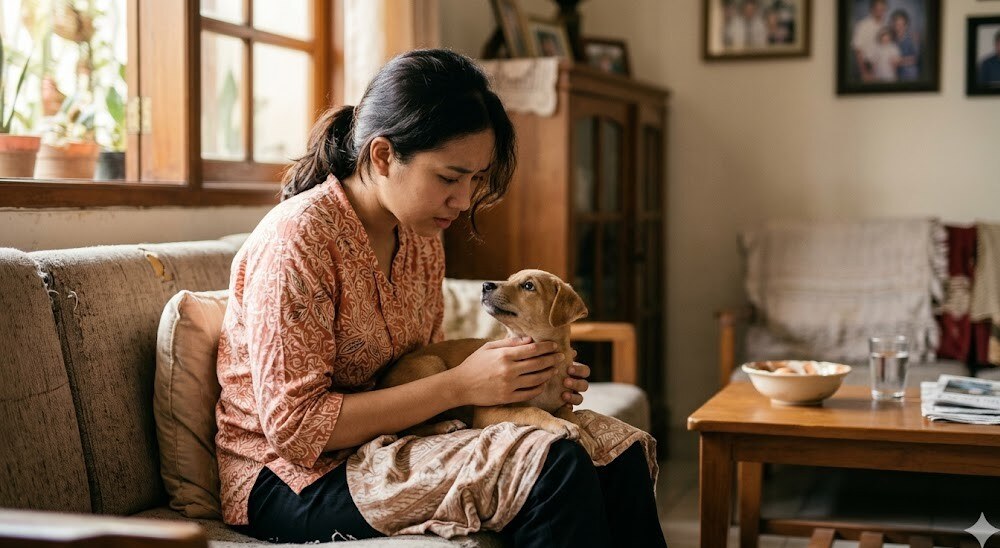

"My puppy is only 3 months old, just finished his first vaccine dose. Yesterday he was weak, today he's vomiting repeatedly and has bloody, foul-smelling diarrhea, I'm panicking. Is this parvo?" Parvovirus is one of the most fatal infectious diseases in puppies in Indonesia. Onset is rapid, deterioration happens within hours, and without intensive treatment mortality reaches 80% or higher. But with fast diagnosis plus modern intensive care, the majority of puppies can be saved.
This article explains what parvo is and why the virus is so aggressive, why puppies with incomplete vaccination are most at risk, the characteristic clinical signs vs ordinary gastroenteritis, the diagnostic process at the clinic, the emergency treatment required (which CANNOT be done at home), prognosis with vs without treatment, and prevention strategy via a highly effective vaccine.
What is parvo (canine parvovirus)
Canine parvovirus, abbreviated CPV (canine parvovirus), with the currently dominant strain CPV-2c in many countries including Indonesia, is a DNA virus that attacks rapidly dividing cells in a dog's body, especially:
- Small intestinal mucosal cells (crypt cells), cells that should regenerate the intestinal lining every few days. When damaged by parvo, the intestinal lining sloughs off → the characteristic hemorrhagic (bloody) diarrhea + loss of the intestinal barrier → gut bacteria translocate into the bloodstream → sepsis.
- Bone marrow cells, where white blood cells are produced. When destroyed → severe leukopenia → defenses against bacterial infection collapse exactly when they are needed most.
- In very young puppies (<8 weeks), the virus can also attack the heart muscle (parvo myocarditis), a rarer form since maternal vaccination became widespread, but very fatal.
It is this combination that makes parvo so deadly: intestinal damage + sepsis + immune collapse all happen at once. The dog loses the ability to absorb nutrients and fluids, loses the barrier against its own gut bacteria, and loses the ability to fight secondary infections, all within 24-72 hours.
Why unvaccinated puppies are most at risk
Parvo can theoretically attack dogs of any age, but >90% of clinical parvo cases are puppies aged 6 weeks to 6 months whose vaccination is incomplete. The reasons:
Maternal antibody gap (the vulnerable window)
Puppies receive passive antibodies from the mother's colostrum in the first days of life. These antibodies protect for the first 6-16 weeks, depending on the mother's antibody level. But there's a problem:
- Maternal antibodies slowly decline over time
- At a certain point, the antibodies are too low to protect against natural infection, but still high enough to neutralize the vaccine if given too early
- This "danger" window is usually 6-16 weeks, with the least predictable window around 10-14 weeks
- That's why modern DHPP vaccine protocols give 3-4 doses with the final booster at 16 weeks of age or older, to ensure at least one dose is effective after maternal antibodies fade
A puppy vaccinated just once = not yet protected. New owners often realize this only after parvo strikes.
Immature immune system
Puppies <6 months are still in the active immune development phase. Their response to infection is not as efficient as an adult dog's, and the bone marrow reserve is also smaller, that's why parvo leukopenia becomes catastrophic faster.
Additional risk factors
- Certain breeds are more susceptible with more severe cases: Rottweiler, Doberman Pinscher, Labrador, German Shepherd, English Springer Spaniel, Pitbull
- High-density environments: shelters, pet shops, breeders with weak biosecurity
- Parasite co-infection (worms) that has already damaged the gut beforehand
- Stress (moving home, long-distance transport, drastic diet change) in the days before exposure
Transmission, why parvo is "so persistent" in the environment
Parvovirus is one of the most environmentally resistant of all viruses affecting domestic animals. This is part of why outbreaks are so hard to control:
- Main route: fecal-oral, an infected dog sheds astronomical amounts of virus in its feces (billions of viral particles per gram), even 4-5 days before signs appear and up to 2 weeks after recovery
- The virus can survive in the environment for months to over a year, in soil, concrete, grass, animal fur, shoes, car tires, food bowls, and kennels
- It is resistant to common household disinfectants (soap, alcohol, iodophors, chlorhexidine), the only effective ones are bleach (sodium hypochlorite 1:30 dilution, 10 minutes contact), accelerated hydrogen peroxide, or potassium peroxymonosulfate (Virkon)
- Temperature resistant, survives freezing and heat up to 50°C for several hours
- It is transmitted mechanically: owner's shoes that stepped on infected feces in a park, car tires that drove through a contaminated area, a broom used to clean the kennel
Practical implication: a puppy that is not fully vaccinated should not be taken to public areas with access to other dogs, parks, pet shop public areas, pet-friendly cafes, dog schools. Even your own yard, if an unfamiliar visiting dog of unknown vaccination status has been there, is risky.
Clinical signs of parvo, distinguishing it from ordinary gastroenteritis
Incubation is 4-7 days after exposure. The onset of clinical signs is usually sudden and progresses rapidly:
Early phase (hour 0-24)
- Sudden lethargy, a normally active puppy suddenly goes quiet, lethargic, unwilling to play
- Loss of appetite, complete anorexia, not even interested in favorite food
- Mild-to-moderate fever (39.5-40.5°C) or sometimes even a normal/dropping temperature
- May vomit 1-2 times, initially food contents
Progression phase (hour 24-72)
- Repeated vomiting, often profuse, containing yellow-green bile, sometimes mixed with blood
- The characteristic hemorrhagic (bloody) diarrhea, this is the most suggestive sign of parvo. Watery diarrhea, reddish-brown to fresh red in color, with a very characteristic, pungent rotten-fishy smell (many veterinarians and technicians can "smell" parvo from the next room because of this distinctive odor)
- Rapid dehydration, skin loses elasticity (positive skin tent test), sunken eyes, dry and tacky gums, slowed capillary refill time
- High fever or, conversely, hypothermia (a bad sign, late-stage sepsis)
- Abdominal pain on palpation, the puppy arches its back, cries out when the abdomen is touched
- Collapse, unable to stand, dull eyes, decreased responsiveness
Late stage (hour 72+, without treatment)
- Hypovolemic shock, pale to grayish gums, cold extremities
- Sepsis, severe leukopenia + gut bacteria in the blood
- Hypoglycemia (especially small puppies)
- Multi-organ dysfunction
- Death, usually from a combination of shock + sepsis + severe dehydration
Distinguishing it from other GI causes
Vomiting + diarrhea can be caused by many things, poisoning, parasites, diet change, dietary indiscretion (eating garbage), metabolic disease. What makes parvo highly suspected:
- Puppy <6 months with incomplete vaccination (3 DHPP doses)
- Profuse bloody diarrhea with the characteristic foul-fishy smell
- Rapid onset, from healthy to severe condition within 24-48 hours
- Sudden lethargy + complete anorexia + rapid dehydration
- Exposure to a contaminated dog/environment in the last 1-2 weeks (park, pet shop, pet-friendly cafe, breeder with a history of parvo)
Suspect parvo → go straight to a 24-hour clinic, don't wait until morning. Every hour of delay = a significant drop in prognosis.
Diagnosis at the clinic
The veterinarian will combine examinations to confirm:
- Parvo SNAP test (fecal antigen), a rapid test on a fecal sample, results in 10 minutes, high sensitivity and specificity. The first-line standard for confirmation. False negatives can occur when viral shedding is already low (early or late phase), if the clinical picture is highly suggestive but the SNAP is negative, the veterinarian may retest 24-48 hours later.
- CBC (complete blood count), severe leukopenia (very low white blood cell count) is the classic parvo finding. Often <3000/µL, sometimes <1000/µL in severe cases. Helps confirm + monitor treatment response (bone marrow recovery = WBC starting to rise).
- Biochemistry panel, check electrolytes (often hypokalemia due to vomiting/diarrhea), glucose (often hypoglycemia), albumin (low due to loss + inflammation), BUN/creatinine (assess dehydration vs pre-renal kidney issues)
- Blood gas / acid-base if available, many parvo puppies have metabolic acidosis from dehydration + diarrhea
Diagnosis usually does not require advanced imaging unless there is a complication (intussusception, suspected foreign body, which can sometimes occur because of a weakened intestinal wall).
Parvo treatment = EMERGENCY hospitalization, NOT a house call
Parvo is one of the veterinary conditions that most requires hospitalization in a clinic with ICU capability. A house call does not have the capacity for the treatment required:
- Continuous 24/7 IV access with aggressive IV fluids
- Monitoring of vital signs every few hours
- Isolation to prevent transmission to other patients
- Administration of injectable medications multiple times per day
- Periodic lab monitoring
- Access to plasma transfusion if needed
There is no specific antiviral for parvo, treatment is 100% supportive while giving the puppy's immune system a chance to produce its own antibodies to clear the virus (usually 5-7 days). The main treatment components:
1. Aggressive IV fluids
- Crystalloids (Ringer's Lactate or Plasmalyte) to replace the fluid deficit + maintenance + ongoing losses from vomiting and diarrhea
- Rate adjusted hourly based on condition, often a fluid rate well above maintenance is needed to catch up on dehydration
- Additional potassium and dextrose per lab results
- If albumin is severely low or there is edema → colloid (plasma or synthetic) can be added
2. Aggressive anti-emetics
- Maropitant (Cerenia), modern first-line, an NK1 antagonist, very effective at stopping parvo vomiting. Often a once-daily injection.
- Ondansetron or dolasetron, 5-HT3 antagonists, can be added if vomiting persists
- Metoclopramide CRI (continuous rate infusion), another option for refractory vomiting
3. Broad-spectrum antibiotics
- Not for the parvovirus itself (antibiotics do not work against viruses), but to prevent/treat bacterial sepsis from gut translocation + severe leukopenia
- Common choices: a combination of IV ampicillin + enrofloxacin, or ceftriaxone, or ampicillin-sulbactam, depending on the veterinarian's choice and availability
- Until the white blood cell count recovers and the fever subsides
4. Pain management and other supportive care
- Opioids (butorphanol or buprenorphine) for visceral pain
- Avoid NSAIDs, contraindicated because of dehydration + kidney risk + GI erosion
- Gastroprotectants (omeprazole or pantoprazole) for the GI mucosa
- Early enteral nutrition as soon as vomiting is controlled, the old "fasting" protocol has been replaced with an early enteral feeding strategy (NG tube, feeding tube, or small frequent meals) because it has been shown to improve mucosal recovery and outcomes
5. Adjunctive treatment for severe cases
- Plasma transfusion, in cases of severe hypoalbuminemia or coagulopathy, fresh frozen plasma helps replace protein + clotting factors
- Whole blood transfusion if there is severe bleeding or anemia
- IV dextrose CRI to correct ongoing hypoglycemia
- Strict isolation, a separate kennel, dedicated equipment, staff handling the parvo puppy ideally not handling other patients in the same shift, or using full PPE + strict decontamination between patients
Length of hospitalization
On average 3-7 days, severe cases can be longer. Markers for discharge:
- No vomiting for ≥24 hours
- Eating voluntarily
- Stable hydration without IV fluid support
- Diarrhea starting to improve or at least no longer hemorrhagic
- White blood cell count starting to rise (bone marrow recovery)
- Activity and mental state returning
Prognosis: with vs without treatment
The difference is dramatic, and this is why a fast treatment decision is so crucial:
Without intensive treatment
Mortality of 80% or higher. Most puppies die within 48-72 hours of the onset of signs from a combination of hypovolemic shock, sepsis, and hypoglycemia. Simple "home" treatment (oral fluids, oral antibiotics, oral anti-emetics) very rarely succeeds because the puppy cannot keep down anything by mouth.
With intensive treatment at the clinic
Survival of 70-90% in puppies treated aggressively with ICU-level care. The variability depends on:
- Speed of presentation, a puppy that reaches the clinic within 24 hours of onset has a far better prognosis than one that arrives on day 3
- Initial severity, severe leukopenia (<1000/µL), severe hypoglycemia, or shock at presentation = a more guarded prognosis
- Age + breed + body condition, very young puppies or susceptible breeds (Rottweiler, Doberman) often have more variable outcomes
- Co-morbidities, heavy worm burden, malnutrition, or other infections
- Access to and quality of care, access to 24-hour monitoring with trained staff makes a significant difference
Puppies that survive usually recover completely without long-term sequelae. A small minority can develop "leaky gut syndrome" or food sensitivity after recovery, often self-resolving after a few months with a hypoallergenic or easily digestible diet.
Prevention, a highly effective vaccine
The good news: parvo is highly preventable. The modern vaccine (DHPP / DHLPP, distemper, hepatitis, parvo, parainfluenza ± leptospira) is very effective. A comprehensive prevention protocol:
1. Vaccination according to protocol
- Start the first dose at 6-8 weeks of age
- Booster every 3-4 weeks until the puppy is 16 weeks of age or older
- A minimum total of 3 doses, in certain cases 4 doses (especially for high-risk breeds or high-exposure environments)
- First booster 1 year after the puppy series is complete
- Thereafter a booster every 3 years (per modern core vaccine guidelines) or every 1 year (conservative protocol), as discussed with your veterinarian
Schedule details: Dog Vaccine Schedule, Puppy to Adult.
2. Avoid high-risk areas until vaccination is complete
- Do NOT take a puppy that is not fully vaccinated (3 DHPP doses) to: public parks, pet shop public areas, pet-friendly cafes, dog schools, dog parks, or any area where other dogs defecate
- Puppy socialization is important for behavioral development but can be done in a controlled environment: the home of a friend whose dog is fully vaccinated and healthy, a puppy class that requires proof of vaccination from all participants, or inside your own home with healthy guests
- Consider changing shoes at the home entrance; wipe stroller wheels or carrier after going out
3. Biosecurity at home
- A healthy puppy's feces should be cleaned up immediately + disposed of in a closed container
- Food + water bowls washed daily with soap
- If there is a history of parvo in the home/environment, decontaminate the area with 1:30 bleach, 10 minutes contact; avoid keeping a new puppy in that area for at least 6 months
4. New owners, buy a puppy the right way
- Ask for the vaccination record of the mother + puppy
- Avoid buying a puppy from a pet shop or breeder with poor biosecurity (high density, kennels next to sick puppies, dirty environment)
- Adopting from a shelter: make sure the shelter has a good vaccination + isolation program
- After the puppy arrives, visit a veterinarian within 1 week for a health check + discussion of the specific vaccination protocol
Parvo FAQ
My puppy has had 1 vaccine, can he still get parvo?
Yes, very much so. The first vaccine is usually not yet protective because maternal antibodies may still interfere. Full protection is only achieved after the complete series (3 doses with the final booster at ≥16 weeks of age). Don't assume the puppy is "already safe" just because he has been vaccinated once. Until the series is complete, treat the puppy as unprotected, avoid high-risk areas.
Can an adult dog that has been vaccinated get parvo?
Very rarely. An adult dog with a complete vaccination history and up-to-date boosters almost never develops clinical parvo. Cases in adults usually occur in: dogs that were never vaccinated before, dogs with a compromised immune system (long-term steroid therapy, chemotherapy, severe metabolic disease), or dogs whose vaccines expired years ago.
If one puppy in my litter gets parvo, will the others definitely get it too?
The risk is very high but not automatic. Other puppies in the litter with the same exposure and same vaccination status usually develop signs within the next 4-7 days. Action: immediately take ALL litter puppies to a veterinarian for evaluation + prophylactic monitoring; consider a SNAP test even for those not yet showing signs; isolate them from other puppies/dogs in the area; start strict biosecurity.
Can parvo spread to humans or to cats?
CPV-2 is specific to Canidae (dogs and relatives), it does not spread to humans. Cats have their own parvovirus (feline panleukopenia / feline parvo), which was once thought to be species-specific but research shows certain CPV-2 strains can infect cats in rare cases (feline panleukopenia remains the dominant disease in cats, a different virus). For practical purposes, treat parvo as a dog disease that poses no risk to humans or household cats.
How much does parvo treatment cost at a 24-hour clinic?
The cost varies widely depending on the clinic, severity, and length of hospitalization. Parvo hospitalization is one of the veterinary treatments that can carry a significant cost because of the intensity of care + 3-7 day duration + multiple injectable medications + monitoring + serial labs, and it will be higher in severe cases. Every case is different, so the best approach is to consult a veterinarian at the clinic for an estimate suited to the puppy's condition + facility options. Prevention via vaccine (3 DHPP doses) is far more affordable than treating a single episode of parvo, that is one of the strong economic arguments for routine vaccination. Want to talk through your puppy's signs first? Contact Prabasa Vet on WhatsApp for a free initial triage and clinic referral.
After a puppy recovers from parvo, when can it have contact with other dogs again?
A recovered puppy still sheds virus in its feces for about 2 weeks post-recovery. Wait 4 weeks after discharge before contact with other dogs outside the household; clean the area with bleach; continue the vaccine series on schedule (a puppy that has survived parvo generally develops natural protective antibodies for life against that strain, but the vaccine is still continued for protection against other diseases in the DHPP combo + maintenance boosters).
Summary
Parvo (canine parvovirus, CPV-2) is one of the most fatal infectious diseases in puppies with incomplete vaccination. The virus attacks the intestines and bone marrow, causing vomiting + the characteristic hemorrhagic (bloody) diarrhea with a foul-fishy smell + rapid dehydration + leukopenia + risk of sepsis. Without intensive treatment, mortality is 80%+. With treatment at a 24-hour clinic (hospitalization with aggressive IV fluids + anti-emetics + broad-spectrum antibiotics + supportive care, 3-7 days), survival reaches 70-90%.
Suspected parvo in a puppy = a mandatory 24-hour clinic emergency, not a house call. A house call does not have the capacity for continuous IV access, intensive monitoring, isolation, or the serial injectable treatment required. Every hour of delay = a drop in prognosis. Key signs that raise high suspicion: puppy <6 months with incomplete vaccination + sudden lethargy + profuse vomiting + bloody, fishy-smelling diarrhea + rapid dehydration + a history of exposure to a high-risk area in the last 1-2 weeks.
Prevention is highly effective via complete DHPP vaccination (3-4 doses, final booster at ≥16 weeks of age) + avoiding high-risk areas until the vaccine series is finished + biosecurity at home. Investing in routine vaccination = cheap compared to the cost and risk of a single parvo episode. For a new puppy at home, prioritize the vaccine schedule as one of the most cost-effective health interventions.
Want an initial consultation to assess whether your puppy's signs are suggestive of parvo and need an emergency referral, or to schedule a routine in-home check for vaccination + health check? Contact us on WhatsApp, mention the puppy's age, vaccination status, body weight, signs (vomiting / diarrhea / lethargy / how long), and whether there is a history of exposure to public areas. The Prabasa Vet team will help assess whether an immediate 24-hour clinic referral is needed or whether a routine evaluation can be scheduled.
Read also: Dog Vaccine Schedule: Puppy to Adult, Dog Vomiting Blood: Causes and Management, Complete Pet Emergency Guide.
Medical references used in this article
This article was prepared with reference to the following sources, verified per clinical statement:
- WSAVA Vaccination Guidelines for the Owners and Breeders of Dogs and Cats (latest edition), CPV as a core vaccine, the 3-4 dose protocol with final booster at ≥16 weeks, recommendations on titer testing or booster maintenance intervals
- AAHA Canine Vaccination Guidelines, DHPP vaccination protocol, core vs non-core criteria, booster intervals, special considerations for high-risk breeds
- ACVIM Small Animal Consensus Statement on Canine Parvovirus, CPV-2 pathogenesis, diagnosis (SNAP test + CBC + biochemistry), treatment protocols (IV fluids, anti-emetics, antibiotics, supportive care, plasma transfusion), prognostic indicators (severe leukopenia, hypoglycemia, sepsis), early enteral nutrition evidence
- Goddard A, Leisewitz AL, Canine parvovirus, Veterinary Clinics of North America: Small Animal Practice, intestinal + bone marrow pathology, transmission, viral shedding kinetics, environmental persistence, disinfection protocols
- Plumb's Veterinary Drug Handbook 7e, monographs for maropitant (anti-emetic NK1 antagonist, IV/SC dosing), metoclopramide (CRI), ondansetron (5-HT3 antagonist), ampicillin-sulbactam and enrofloxacin (broad-spectrum IV for sepsis prevention), opioids (butorphanol for visceral pain)
- BSAVA Manual of Canine and Feline Emergency and Critical Care, fluid therapy protocols for parvo puppy dehydration (crystalloid rate calculation + colloid indication + electrolyte correction), ICU supportive care, monitoring parameters
- Greene's Infectious Diseases of the Dog and Cat (latest edition), chapter on Canine Parvovirus: epidemiology, strain evolution CPV-2 → 2a → 2b → 2c, clinical signs, diagnosis, treatment, vaccination guidelines, biosecurity
This article is a general guide based on the international guidelines of WSAVA, AAHA, ACVIM and veterinary infectious disease references. For an accurate diagnosis and a treatment plan suited to your puppy's specific condition, consulting a veterinarian for a direct evaluation is the right step. Suspected parvo is an indication for referral to a 24-hour clinic for hospitalization and intensive treatment, not a house call.