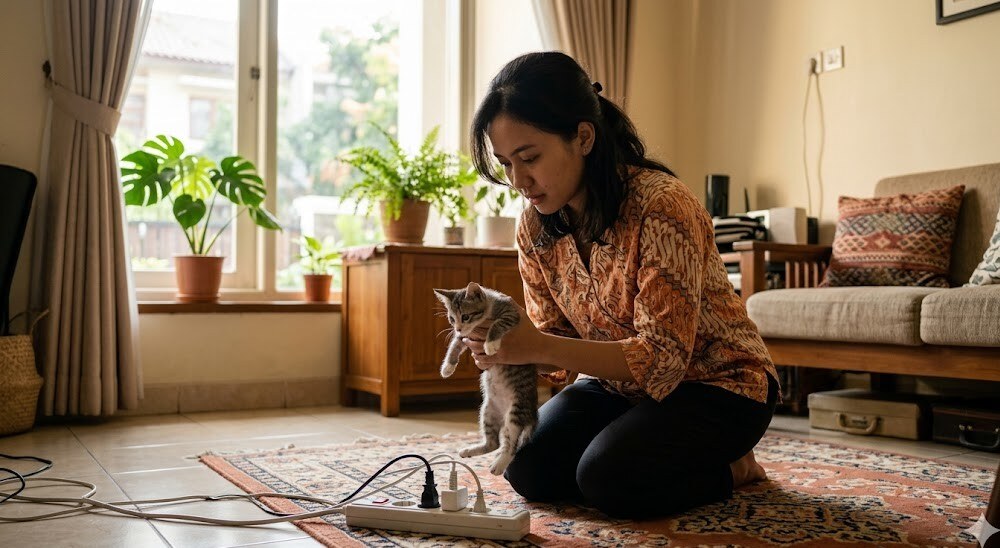

"The kitten I adopted 2 days ago, maybe around 5 weeks old, was normal and wanted to play this morning, but this afternoon she suddenly went weak, had tremors, walked wobbly like she was drunk, and kept hanging her head down. This morning she didn't eat fully, just a little. Do I need to go to the clinic right away?" Short answer: yes, immediately. That symptom pattern is highly suspicious for hypoglycemia, a crash in blood sugar, one of the most frequently missed vet emergencies in tiny kittens and toy breed puppies, because new owners often don't realize how vulnerable small animals are to feeding intervals that feel "normal" for adult pets.
Severe hypoglycemia without intervention can progress to seizures, coma, permanent brain damage, and even death within hours. But with early recognition + simple first aid at home + fast transport to a 24-hour clinic for IV dextrose, the outcome is usually good and the animal can fully recover. This article explains what hypoglycemia is, why kittens and toy breed puppies are so vulnerable, the specific populations to watch for, the clinical signs owners must recognize, safe vs dangerous first aid, when it's an immediate emergency, and long-term prevention.
What hypoglycemia is, distinguishing it from ordinary weakness
Hypoglycemia is a condition of blood glucose below normal. In dogs and cats, the thresholds used practically in clinics:
- Blood glucose <60 mg/dL (3.3 mmol/L), generally called hypoglycemia. Many animals begin showing neurological signs in this range
- Blood glucose <40 mg/dL (2.2 mmol/L), severe hypoglycemia, severe neurological signs (seizures, collapse, coma) often appear
- The exact threshold for symptoms varies by individual, a kitten with chronic borderline levels may be asymptomatic at low values, while an animal that acutely drops from normal to 50 mg/dL may collapse immediately
The brain is the organ most sensitive to hypoglycemia because it has no glucose reserve of its own and cannot use alternative energy sources efficiently. As a result, all early signs of hypoglycemia are neurological signs, not generic "feeling unwell" signs.
Why this is an "hours-count emergency"
Hypoglycemia is not a condition you can "wait and see until tomorrow morning". Persistently low brain glucose → progressive neuron damage → prolonged seizures → status epilepticus → permanent brain damage → death. This sequence can unfold in hours, not days. Early recognition + fast intervention is the key to a good outcome.
Why kittens and toy breed puppies are so vulnerable
If this is your first time caring for a tiny kitten or toy breed puppy, it's important to understand that these small animals are not miniature adults, their physiology is fundamentally different in several ways that make them far more prone to hypoglycemia:
Small glycogen reserves
The liver stores glucose as glycogen, which is released when blood glucose starts to fall. In kittens and small puppies, the liver itself is still very small, total glycogen storage capacity is far more limited than in adults. These reserves can be depleted within a few hours of fasting, especially when the animal is active or stressed.
High metabolic rate (per kg body weight)
Small animals burn calories per kg far faster than large animals, their relative body surface area is larger compared to mass, they lose heat faster, and their thermoregulation needs are high. A 5-week-old kitten or an 8-week-old Chihuahua puppy needs caloric intake per kg that is many times that of an adult dog/cat.
Immature glucose regulation system
The hormonal mechanisms regulating blood sugar (glucagon from the pancreas, cortisol from the adrenals, gluconeogenesis in the liver) are not yet fully developed in very young animals. When blood glucose starts to fall, compensation is not as effective as in adults.
Inconsistent intake patterns
Tiny kittens and puppies often "forget to eat" because they're too busy playing, sleeping deeply, or stressed by a new environment. For new owners used to adult cats/dogs, a 6-8 hour interval without food feels normal, but for a 5-week-old kitten or a 2-month-old toy puppy, just 3-4 hours without food is already enough to drop blood sugar significantly.
The highest-risk populations
Kittens
- Kittens <6 weeks, high risk regardless of condition. Highly dependent on a consistent feeding pattern (ideally still nursing from the mother or bottle-feeding every 2-4 hours)
- Malnourished kittens or the runt of the litter, smaller than their littermates, with minimal fat + glycogen reserves, higher risk
- Kittens separated from the mother too early (before the ideal 8 weeks), often lack independent feeding skills, intake not optimal
- Kittens with diarrhea, vomiting, or infection (URI, panleukopenia), the combination of poor intake + fluid loss + metabolic stress = high risk
- Newly adopted kittens + new-environment stress, the combination of not wanting to eat + stress + unfamiliar surroundings = high risk in the first week
Toy breed puppies
Toy breed puppies (adult body weight <4 kg) are the category most frequently affected by hypoglycemia, specific enough to have a name: "juvenile / toy breed hypoglycemia". The most commonly affected breeds:
- Chihuahua, top risk, one of the most frequent presentations
- Yorkshire Terrier, very frequent, especially teacup or extra-small ones
- Pomeranian, high risk
- Maltese, high risk
- Toy Poodle, Papillon, Shih Tzu (especially small ones), Miniature Pinscher, all high risk
- Toy breed mixes with below-average body weight
The most vulnerable age range: 2-3 months (post-weaning, transition from the mother's milk to independent feeding). After ~5-6 months, most toy puppies have "outgrown" the most acute predisposition, although stress + prolonged fasting can still trigger an episode.
Additional risk factors
- Severe recent stress, moving house, vaccination, long car rides, being boarded in an unfamiliar place
- Cold exposure, a hypothermic kitten/puppy burns calories fast for heat → depletes glycogen
- Excessive activity, intense play without rest + food
- Diarrhea or vomiting, nutrient loss + decreased intake
- Systemic infection, sepsis, parvo (dogs), panleukopenia (cats), metabolic demand rises + intake drops
- Underlying portosystemic shunt (PSS), congenital vascular anomaly in the liver, common in toy breeds, one cause of recurrent hypoglycemia (see dedicated section below)
Clinical signs, recognize the cluster, not a single sign
Hypoglycemia signs are tiered from mild to severe. Owners must recognize the early cluster so they can intervene before progression to seizures / coma:
Early signs (blood glucose 50-65 mg/dL)
- Sudden weakness, an animal that was just actively playing now lies weak, not responding normally
- Progressive lethargy, increasingly hard to rouse, dull eyes
- Refusing to eat even when offered favorites
- Fine tremor, head or body shaking lightly
- Odd behavior, confused, vocalizing unusually, looking disoriented
Moderate signs (40-55 mg/dL)
- Ataxia, wobbly gait like being drunk, loss of coordination
- Head dropping, difficulty lifting the head
- More obvious tremor, whole body shaking
- Hypersalivation, drooling
- Pale gums, pink turning white or grey-pale. Check the upper gums or inside the cheek
- Dilated pupils or not responding normally to light
- Hypothermia, body feels cold (temperature below the normal 38-39°C)
Severe signs (≤40 mg/dL)
- Seizures, tonic-clonic, or extreme muscle twitching
- Collapse, unable to stand at all, falling over
- Unconsciousness, not responding to any stimulus
- Irregular breathing, may be fast and shallow or slow and agonal
- Coma
At the severe level, brain damage progresses with each passing minute. Status epilepticus (seizures >5 minutes continuously, or repeated seizures without regaining consciousness in between) is an indication for immediate emergency referral.
FIRST aid at home, what you may and may not do
While preparing transport to the clinic, early home intervention can save a life if done correctly. Here is what is safe vs dangerous:
YOU MAY do (while the animal is still CONSCIOUS + able to swallow)
- Rub honey, sugar syrup, Karo syrup, or maple syrup onto the inside of the cheek gums, about 1/2 teaspoon for a kitten / toy puppy. Use a finger or cotton bud. Glucose from the oral mucosa is absorbed quickly through the oral membrane, with no need to reach the stomach first
- Repeat every 10-15 minutes during transport to the clinic if the animal is still responsive
- Keep the animal warm, wrap in a towel, place somewhere warm during transport. Hypothermia worsens hypoglycemia (a cold body burns glycogen faster)
- Recovery position if the animal is semi-conscious, lying on its side (lateral recumbency), head slightly lower than the body so mouth fluids are not aspirated into the lungs
- Call the nearest 24-hour clinic first while preparing for transport, tell them the condition (kitten's age / puppy's breed / what signs), so the clinic team is ready with IV dextrose when you arrive
YOU MUST NOT do
- DO NOT force sugar water or any liquid into the mouth of an animal that is unconscious or semi-conscious, the risk of aspirating liquid into the lungs is very high, and aspiration pneumonia can be fatal on its own. If the animal cannot swallow reflexively, only rub syrup on the gums, do not put liquid down the throat
- DO NOT inject anything IV or IM yourself at home, 50% IV dextrose, if it extravasates (leaks out of the blood vessel), can cause severe tissue necrosis. IM glucose absorbs too slowly for an emergency + injecting in the wrong location can injure a nerve
- DO NOT give solid food to a semi-conscious animal, high risk of food aspiration
- DO NOT wait and "just observe" for more than 15-30 minutes after the initial intervention if the animal is not improving. Even if the animal looks somewhat recovered after honey, hypoglycemia can rebound, you still need the clinic to confirm blood glucose + IV dextrose + find the underlying cause
- DO NOT rub or pat roughly to "wake it up", this can trigger worse seizures in an already unstable animal
24-hour clinic EMERGENCY, when you must not delay
The following conditions mean a 24-hour clinic is mandatory and immediate, not a house call:
- The animal is unconscious or semi-conscious
- It is having or has just had a seizure
- It does not respond normally to initial home intervention (syrup on the gums does not improve the condition within 15-30 minutes)
- Recurrent hypoglycemia episodes, it has happened before, this is not the first time
- Other confusing underlying signs are present (high fever + weakness + dehydration → could be sepsis with a hypoglycemia component)
- The animal cannot swallow / has a weak swallowing reflex
A house call cannot handle severe hypoglycemia, what is needed:
- IV catheter + IV dextrose bolus, usually 50% dextrose diluted 1:2 or 1:4 with saline, given slow IV (reference Plumb's 7e, emergency dextrose bolus dose). Quickly reverses hypoglycemia within minutes
- Continuous dextrose CRI (constant rate infusion), 2.5-5% dextrose in IV fluid, to keep blood glucose stable while finding + treating the underlying cause
- Emergency glucagon (if IV access fails), Plumb's 7e IM/SC dose for situations where venous access is difficult
- Active warming, incubator, warming blanket, a small kitten / puppy with hypothermia needs controlled warming, not too fast (rebound vasodilation problem)
- Serial bloodwork, blood glucose every 30-60 minutes, plus electrolytes, complete blood count, glucose curve if PSS is suspected, etc.
- Treat the underlying cause, infection, dehydration, PSS work-up, anemia, sepsis, the root cause that precipitated the episode
- Anticonvulsants (if seizures persist despite dextrose), IV diazepam, midazolam, level/escalation depending on response
- Monitoring 12-24 hours minimum before discharge to ensure rebound does not occur
Hepatic encephalopathy + Portosystemic Shunt (PSS), when to suspect
For toy breed puppies with recurrent hypoglycemia (more than once), poor response to standard feeding management, or other neurological signs outside of clear hypoglycemia episodes, one important differential that must be worked up is congenital Portosystemic Shunt (PSS).
What PSS is
PSS is a congenital vascular anomaly where blood vessels from the digestive tract bypass the liver, blood from the intestines does not pass through liver filtration first, going straight into systemic circulation. As a result: ammonia + toxins that should be metabolized by the liver accumulate in circulation → hepatic encephalopathy (neurological signs). Plus, a liver not receiving normal blood flow from the portal vein → a small liver + impaired metabolic function (including gluconeogenesis + glycogen storage) → recurrent hypoglycemia.
Breeds prone to PSS
- Yorkshire Terrier, top risk for extrahepatic PSS, one of the most common congenital anomalies in this breed
- Maltese, Miniature Schnauzer, Pug, Cairn Terrier, Bichon Frise, high risk
- Some large breeds (Irish Wolfhound) for intrahepatic PSS, but the presentation differs
Additional clinical signs suggesting PSS
- Stunted growth, smaller than littermates, slow growth
- Hepatic encephalopathy episodes: neurological signs (head pressing against a wall, circling, confusion, seizures) especially after a high-protein meal
- Recurrent hypoglycemia, not a one-off from fasting, but repeated despite good feeding
- Ptyalism (excessive drooling)
- Polydipsia / polyuria, excessive drinking + urination
- The animal seems "less bright" than its littermates, slow to learn
For owners of toy breed puppies with recurrent hypoglycemia: ask the vet to work up PSS, usually starting from a bile acid stimulation test (pre-prandial + post-prandial), then abdominal ultrasound + CT angiography if the bile acid test is abnormal. PSS treatment can be surgical (shunt vessel ligation) or medical management (low-protein diet, lactulose, antibiotics) depending on the condition. Early diagnosis = better outcome.
Prevention, long-term strategy for at-risk kittens + puppies
1. Small frequent meals, non-negotiable
- Kittens <8 weeks: ideally nursing/bottle-feeding every 2-3 hours including at night. After 4-5 weeks, begin introducing solid food (wet kitten food + a little moistened kibble), gradually 4-6x a day
- Kittens 2-4 months: 4-5x a day at 3-4 hour intervals during the day, plus ad libitum access to dry kitten kibble if tolerated. Make sure food is available 24 hours, never let the bowl go completely empty
- Toy breed puppies <3 months: 4-6x a day with a maximum interval of 3 hours during the day. High-quality high-calorie puppy food (puppy food for small breeds, or adult food + calorie calculation as appropriate). 24-hour access to dry food if tolerated
- Toy breed puppies 3-6 months: 3-4x a day, intervals can gradually rise to 4-6 hours, but monitor body weight + energy. If lethargy signs appear, go back to a more frequent pattern
- After 6 months, some toy puppies can transition to 2-3x a day (adult pattern), but monitor the individual response
2. Monitor body weight daily / weekly
A small kitchen scale (gram-accuracy) is very useful for kittens and toy puppies. Steady weight gain = adequate nutrition. Plateaued or dropping weight = red flag, investigate before it becomes hypoglycemia. Record it in a notebook/phone.
3. Don't allow prolonged fasting
- Before vaccination: do not force prolonged fasting for a small kitten / puppy (vaccination doesn't require fasting anyway, unlike anesthesia). Feed normally on the morning of the visit
- Before anesthesia (if early spaying/neutering or emergency surgery is needed): coordinate with the vet, a short 2-4 hour fast is enough for this age, do not follow the adult 8-12 hour guideline which is dangerous for small animals
- Long-distance travel / vacation: bring favorite food + a consistent feeding schedule, don't allow a missed meal
4. Minimize stress especially in the first 2-4 weeks after adoption
- A quiet area for rest, avoid over-handling
- Avoid multiple visitors in the first week
- Warm the area (especially for small kittens), a heat pad set low or a warm water bottle wrapped in a towel
- Reduce stimuli gradually, not a stress-test "must tolerate anything"
5. Educate all family members
- Everyone who interacts with the kitten / puppy knows the feeding pattern + when to be alert (weakness + not eating +/- trembling = syrup on the gums + go to the clinic)
- Keep honey / Karo syrup somewhere easy to reach
- Save the nearest 24-hour clinic number on all family members' phones + review the route
6. For PSS-risk breeds, discuss screening with the vet
New Yorkshire Terrier, Maltese, Mini Schnauzer puppies: consider bile acid screening at the first vaccine or pre-spay/neuter. Early PSS diagnosis allows diet + medical management before a severe episode, and if the animal is a surgical candidate, the outcome is far better than a late diagnosis after an encephalopathy episode.
FAQ on kitten + toy puppy hypoglycemia
My kitten is 4 weeks old, adopted 1 day ago, and is now weak. Should I go to the clinic or can I observe?
Weakness + age <6 weeks + new-environment stress = high suspicion for hypoglycemia. First aid: rub honey / Karo syrup on the gums, 1/2 teaspoon, keep warm (wrapped in a towel + a warm water bottle), then go to a 24-hour clinic immediately to confirm blood glucose + IV dextrose if needed + screen for other conditions (infection, dehydration, parasites). Don't wait to see it get "worse first before going to the clinic", at this age, deterioration can be fast within hours.
My 3-month-old Chihuahua puppy looked fine during the day, but at night suddenly went weak + trembling. What should I do?
A toy breed puppy + sudden weakness + tremor at night (the longest gap from the last meal) = classic toy breed hypoglycemia. Step 1: rub honey / Karo syrup on the gums (if still conscious and able to swallow reflexively), 1/2 teaspoon. Step 2: keep warm. Step 3: call the nearest 24-hour clinic while preparing for transport. Step 4: bring a food sample + a note of when it last ate for the vet's information. After the first episode, working up the underlying cause is mandatory, don't assume a one-off. Discuss PSS screening with the vet, especially if the puppy is also stunted or has other neurological signs.
What's the difference between kitten vs puppy hypoglycemia, is the management the same?
The pathophysiology and presentation are similar, and the emergency management is alike (syrup on the gums → clinic). The difference is in the common underlying cause: kittens more often have hypoglycemia from infection (URI, panleukopenia), malnutrition, heavy parasites, or being separated from the mother too early. Toy puppies more often from anatomical predisposition (small body weight + high metabolic rate) + potentially congenital PSS. For kittens, the work-up includes screening for viral infection + parasites first. For recurrent toy puppy cases, the work-up includes PSS screening (bile acid).
How long does the effect of honey / syrup on the gums last?
About 15-30 minutes for peak effect, then it declines. This is why home intervention does not replace the clinic, it is only a bridge for transport. An IV dextrose CRI at the clinic can keep glucose stable for hours during investigation + underlying treatment. If you need long transport (>30 minutes), repeat rubbing syrup every 15-20 minutes throughout the trip if the animal is still conscious and swallowing.
After a hypoglycemia episode + IV dextrose treatment, will my kitten / puppy be fine for life?
It depends on the cause + how fast the intervention was. A single episode treated quickly without prolonged seizures → usually full recovery without sequelae. Prolonged seizures / severe hypoglycemia left untreated → risk of permanent brain damage (behavioral changes, slow learning, recurrent epileptiform seizures). Recurrent episodes are often a sign of an underlying cause that must be diagnosed + treated (PSS, chronic infection, chronic malnutrition, etc.). Follow up with the vet after recovery to diagnose the underlying cause + prevent recurrence.
I keep an ordinary adult cat, why is a tiny kitten this complicated?
A healthy adult cat/dog has glycogen + fat reserves + a mature regulatory system that can handle 12-24 hours of fasting without problems. A tiny kitten and a toy puppy are a "physiological edge case", their physiology is still maturing, the regulatory system doesn't compensate effectively yet, and reserves are limited. The first 4 weeks after adoption (especially for those separated from the mother early) = the highest-risk window. After passing 6-8 weeks for kittens and 4-6 months for toy puppies, the most acute predisposition generally disappears (unless there is an underlying issue like PSS). Think of this phase as an "intensive care window", invest extra attention, with payoff for the animal's lifetime.
Summary
Hypoglycemia (blood sugar <60 mg/dL) is a very common emergency in tiny kittens (<6 weeks, especially newly adopted + new-environment stress) and toy breed puppies (Chihuahua, Yorkshire Terrier, Pomeranian, Maltese, Toy Poodle, adult body weight <4 kg, especially 2-3 months). Causes: small glycogen reserves, high metabolic rate per kg, immature regulation system, inconsistent intake, a combination that makes 3-4 hours without food already enough to drop blood sugar significantly.
The clinical sign cluster owners must recognize: sudden weakness + tremor + ataxia + head dropping + seizures + hypothermia + pale gums. It progresses from mild to severe within hours without intervention. First aid at home while the animal is still conscious and able to swallow: rub honey / Karo syrup / sugar syrup 1/2 teaspoon onto the inside of the cheek gums, keep warm, transport to a 24-hour clinic immediately. DO NOT force liquid into an unconscious animal (aspiration risk) or inject yourself (dextrose extravasation risk). DO NOT wait and observe if the initial intervention does not respond within 15-30 minutes.
A 24-hour clinic is mandatory for severe hypoglycemia, it needs an IV dextrose bolus + CRI, controlled active warming, serial glucose monitoring, and treatment of the underlying cause (infection, dehydration, PSS work-up). For toy breed puppies with recurrent hypoglycemia, work up congenital Portosystemic Shunt (PSS), especially Yorkshire Terrier, Maltese, Mini Schnauzer. A bile acid stimulation test as the first step. Early diagnosis = better outcome with medical management or surgical correction.
Long-term prevention: small frequent meals 4-6x a day for kittens + toy puppies <3 months (maximum 3-hour daytime interval), ad libitum access to dry food, monitor weight daily, don't allow prolonged fasting, keep warm, minimize stress in the first 2-4 weeks after adoption, educate all family members, keep honey / a 24-hour clinic number ready.
Want an initial consultation on whether your kitten / puppy is in the at-risk population + needs a special diet plan / monitoring schedule, or have suspicious hypoglycemia signs that need evaluation? Contact us on WhatsApp, mention the age + breed + body weight (if known) + signs (if any). The Prabasa Vet team will help assess whether you need an immediate referral to a 24-hour clinic or can schedule a routine consultation for preventive care.
Read also: Signs of a Cat Emergency You Must Not Delay, Kitten Adoption Checklist for New Owners, Puppy Adoption Checklist for New Owners, Complete Pet Emergency Guide.
Medical references used in this article
This article was prepared with reference to the following sources, verified per clinical statement:
- ACVECC (American College of Veterinary Emergency and Critical Care), emergency triage of neonatal + juvenile hypoglycemia, IV dextrose bolus + CRI protocol, glucagon rescue, controlled active warming for concurrent hypothermia, anticonvulsant escalation (diazepam → midazolam → phenobarbital) for persistent seizures
- BSAVA Manual of Canine and Feline Emergency and Critical Care, hypoglycemia + neonatal/pediatric emergency chapter: blood glucose thresholds, pediatric fluid resuscitation, dextrose dilution for slow IV, serial glucose monitoring, hypothermia management with gradual rewarming, pediatric status epilepticus management
- ISFM (International Society of Feline Medicine) Kitten Care Guidelines, feeding pattern by kitten age, intake monitoring, hypoglycemia recognition and first aid, weaning + early life nutrition, stress management during adoption
- ACVIM Small Animal Internal Medicine consensus + textbook, congenital portosystemic shunt (PSS) in toy breeds (Yorkshire Terrier, Maltese, Mini Schnauzer, Cairn Terrier, Bichon Frise), bile acid stimulation test as screening, ultrasound + CT angiography for confirmation, surgical vs medical management decision tree
- Plumb's Veterinary Drug Handbook 7e, monograph for 50% dextrose (emergency bolus dose dog/cat, dilution for slow IV peripheral catheter, CRI rate), glucagon (IM/SC emergency dose when IV access is difficult), IV diazepam (emergency anticonvulsant), midazolam (alternative for pediatric status epilepticus)
- Hand MS, Thatcher CD, Remillard RL et al, Small Animal Clinical Nutrition: calories per kg by age, growth feeding plan for kittens + puppies, transitional weaning, nutritional management of juvenile hypoglycemia
- Greene CE, Infectious Diseases of the Dog and Cat: panleukopenia + parvovirus + URI complications of hypoglycemia, sepsis-related hypoglycemia pathophysiology + management
- Tobias KM, Johnston SA, Veterinary Surgery Small Animal (PSS chapter): surgical correction of extrahepatic + intrahepatic shunts, prognostic outcome factors, post-op management
This article is a general guide based on international guidelines from ACVECC, ISFM, ACVIM, BSAVA and pediatric veterinary references. For an accurate diagnosis and a treatment plan tailored to your specific kitten / puppy's condition, consulting a vet for direct evaluation is the right step. Severe hypoglycemia (unconscious, seizures, hypothermia) is an indication for immediate referral to a 24-hour clinic for IV dextrose + monitoring, not a house call.