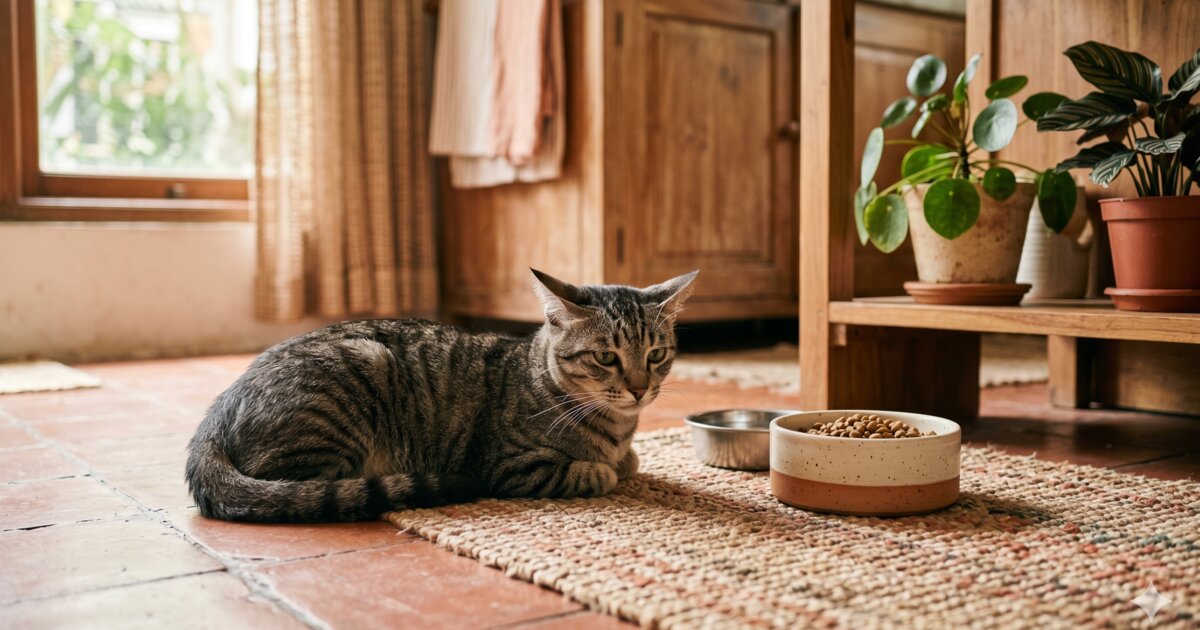

Cats are experts at hiding pain, it's a survival instinct inherited from their wild ancestors. So by the time your cat shows clear symptoms, the underlying problem is usually more serious than it looks.
This article walks through 8 emergency signs in cats that should not be put off until tomorrow, they need vet care within hours, not days. Plus guidance on when to head straight to a 24-hour clinic versus booking an emergency house call vet.
1. Trouble breathing (dyspnea)
What to watch for: open-mouth breathing (healthy cats always breathe through the nose), fast breathing above 40 per minute at rest, sitting upright with neck stretched out, pale or bluish gums.
Common causes: pleural effusion (fluid in the chest cavity), acute feline asthma, congestive heart failure, lung cancer. Get to a vet within 1 hour. For this one, head straight to a 24-hour clinic with oxygen, not a house call.
2. Unable to urinate for more than 12 hours (urinary blockage)
What to watch for: a male cat going to the litter box repeatedly but only producing drops or nothing at all, vocalising in the litter box, lethargy, vomiting, an abdomen that feels full and firm to the touch.
This is the most lethal emergency in male cats, uremic toxins build up quickly, permanent kidney damage in 24–48 hours, death within 48–72 hours without intervention. Head to a 24-hour clinic NOW. Do not wait until morning, and this is not a house call situation (needs catheterisation plus IV fluids).
3. Sudden abdominal distension plus collapse
What to watch for: belly suddenly enlarged (not from a big meal), cat is weak, sunken eyes, pale gums, slow reflexes, cold body.
Common causes: internal bleeding (trauma, ruptured tumour), intestinal torsion, obstructive megacolon. Get to a 24-hour clinic within 1–2 hours. Likely needs ultrasound, X-ray, and possibly emergency surgery.
4. Repeated seizures or unresponsiveness
What to watch for: cat suddenly stiff, muscles contracting, eyes rolling, foam at the mouth, loss of bladder/bowel control. Or: cat completely unresponsive when called or touched.
Common causes: poisoning (lily, antifreeze, rodenticide, pesticide, all highly toxic to cats), head trauma, hypoglycemia, acute liver or kidney failure. Head to a 24-hour clinic within 30 minutes to 1 hour. While in transit, don't put your fingers in the mouth (a cat can bite reflexively during a seizure).
5. Non-stop vomiting over 24 hours
What to watch for: vomiting more than 5–6 times a day, vomit with blood or green (bile) tint, can't keep water down, progressive lethargy, dehydration (skin doesn't snap back when pinched).
Common causes: foreign body (string, hair tie, toy), acute pancreatitis, acute kidney failure, intestinal lymphoma. See a vet within 6–12 hours. For this one, a house call vet can do initial diagnostics and IV fluids if dehydration isn't severe, or head straight to a 24-hour clinic if there's blood in the vomit.
6. Not eating at all for more than 24–36 hours
What to watch for: cat refuses favourite foods, avoids the bowl, hides in dark places, fast weight loss.
Why this is serious: a cat that fasts completely for more than 48 hours is at risk of hepatic lipidosis (fatty liver syndrome), a metabolic condition that can be fatal, especially in overweight cats. See a vet within 24 hours. A Prabasa Vet house call vet is a good fit here, the vet can do a physical exam, draw blood, and give IV fluids plus appetite stimulants at your home.
7. Bleeding that won't stop
What to watch for: active wound bleeding for more than 10 minutes despite pressure, nosebleed without clear trauma (epistaxis), blood in urine or stool, spontaneous gum bleeding.
Common causes: trauma (fall, dog bite), anticoagulant rodenticide poisoning, clotting disorders, cancer. Head to a 24-hour clinic within 1–2 hours. While in transit, apply pressure to the wound with a clean cloth.
8. High fever plus extreme lethargy
What to watch for: rectal temperature above 40°C / 104°F (normal cat range is 38.0–39.2°C / 100.4–102.5°F), cat is very weak, can't stand, gums very red or very pale, shivering, not responding normally.
Common causes: systemic infection (sepsis), heat stroke, pyometra in unspayed females. Head to a 24-hour clinic within 2–6 hours. Note: FIP (Feline Infectious Peritonitis) can also cause fever, but its onset is typically gradual (weeks). If you suspect FIP, read the "behaviour change + drastic weight loss" context in our non-emergency cat illness signs article.
For these emergency signs, always a 24-hour clinic, not a home visit
All 8 signs above need facilities that aren't available when a vet comes to your home: oxygenation, IV pumps for aggressive fluid therapy, X-ray, ultrasound, bedside lab equipment, and possible emergency surgery. For life-threatening conditions, speed plus full equipment is the key to saving your cat. Every minute at a 24-hour clinic means more interventions the vet can offer.
Find a 24-hour vet clinic nearest to your location, Jakarta and the surrounding area have several 24-hour operators, especially in West and South Jakarta. While on the way to the clinic, if you need help finding the nearest one to your location, message us on Prabasa Vet WhatsApp, we can help refer you to the closest clinic to where you are.
House call vet services are best for non-emergency cases:
- Routine vaccinations
- Wellness check-ups
- Post-op follow-up (bandage changes, suture removal)
- Nutrition or behaviour consultations
- Check-ups for mild symptoms that have been going on for days without any of the emergency signs above
For an initial consult on whether your cat's condition is an emergency or can wait, message us on WhatsApp, we can help assess the symptoms by text/photo before you decide whether to go to the clinic or book a house call.
What to do while waiting for the vet / on the way to the clinic
- Don't give human medication, paracetamol (acetaminophen) is fatal to cats, ibuprofen is toxic. Wrong-dose aspirin is also dangerous
- Don't force food or water if the cat is unconscious or vomiting, risk of aspiration pneumonia
- Take notes on symptoms with timestamps, when it started, frequency, colour of vomit/diarrhea, temperature if you have a thermometer. The vet will need this
- Bring a sample of vomit or stool in a sealed container if possible, can be examined right away at the clinic
- Stay calm, cats read your stress. Speak softly, move gently when getting them into the carrier
Cat emergency FAQ
Is it safe to wait until morning if my cat vomits 1–2 times?
If it's only 1–2 times, your cat is still eating and drinking normally, and there are no other symptoms (weakness, behaviour change), it's reasonable to observe for 12–24 hours. But if vomiting continues, there's blood, or your cat refuses water, don't wait, contact a vet.
For senior cats (10+), which symptoms are more urgent?
Senior cats are more prone to: acute kidney failure (sudden increase in drinking and urination), hypertension (behaviour change, sudden blindness), hyperthyroidism (fast weight loss). For cats 10+, the threshold for "let's wait" should be lower, symptoms that are routine in young cats become more serious in seniors.
Can I consult via WhatsApp first before going to a clinic?
Prabasa Vet WhatsApp is active 8 AM–8 PM for free consults. For messages outside those hours, replies may be slower but we still read them. But for genuinely emergency signs (the 8 above), don't wait for a WhatsApp reply, head straight to the nearest 24-hour clinic. WhatsApp consults are best for mild or ambiguous symptoms, not cases that are clearly emergencies.
Can Prabasa Vet vets come to my home for an emergency case?
For the 8 emergency signs above, our answer is consistent: 24-hour clinic, not a home visit. Not because we don't want to help, but because of your cat's safety, we can't bring an oxygen tank, X-ray, ultrasound, or IV pump to your home. Every minute at a clinic with full equipment increases your cat's chance of survival. For non-emergency cases (routine vaccinations, wellness check-ups, post-op follow-up), we still offer home visits.
Summary
Cats hide pain, by the time symptoms are obvious, the condition is already serious. The 8 emergency signs above (breathing trouble, urinary blockage in males, distended abdomen with collapse, seizures, non-stop vomiting, not eating for 24–36 hours, bleeding, high fever with extreme weakness) should not be put off until tomorrow.
For all emergency conditions: head straight to a 24-hour clinic, not a home visit. For an initial consult on whether your cat's symptoms qualify as an emergency or can wait for a home visit, message Prabasa Vet on WhatsApp, we can help assess by text or photo.
Read also: Signs Your Cat Needs a Vet (Non-Emergency), Cat Diarrhea and Vomiting: Causes and Care.