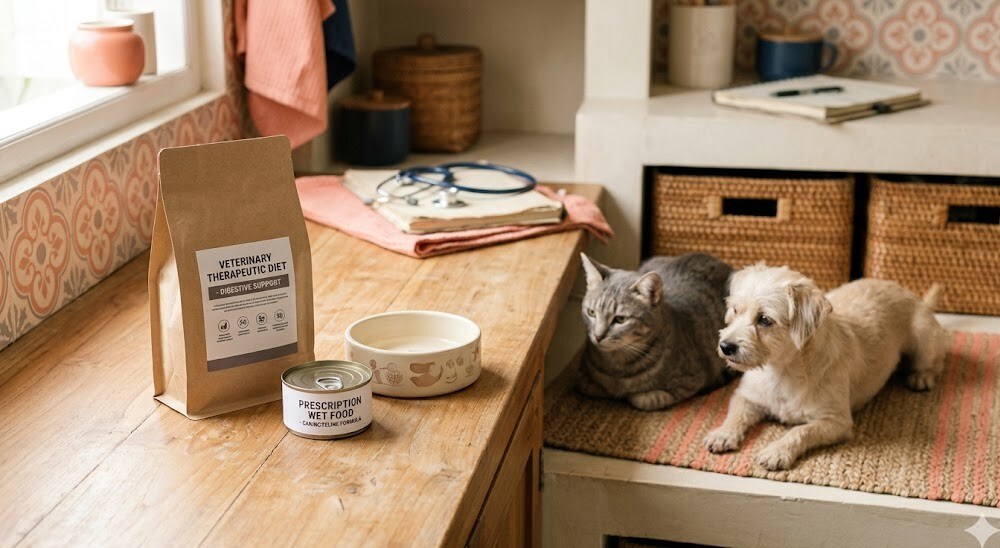

"My cat is allergic to every commercial brand, doctor, I want to cook myself so I know exactly what's in it." Or: "My senior dog no longer likes kibble; is it safe if I boil chicken and rice for him every day?" Questions about homemade diets, cooking pet food yourself at home, come in almost every week. Many owners are drawn to it for ingredient control, allergy management, or simply bonding through the kitchen. The intention is good, but a homemade recipe that is not formulated correctly can cause nutritional deficiencies that end up more dangerous than ordinary kibble.
This article lays out why owners are interested in homemade, the five main risks of homemade without a formulator, the right approach (consulting a board-certified veterinary nutritionist, the BalanceIT tool, supplement premix), toxic ingredients that must be avoided, the mixed-feeding combination as a middle ground, and when to consult a vet or nutritionist.
Why owners want a homemade diet
The most common reasons we hear from owners:
1. Full control over ingredients
After reading a kibble label full of long chemical names (preservatives, palatants, mineral premix), owners want to "get back to basics", animal protein, vegetables, a simple carbohydrate source they can identify by eye. This is valid as a motivation, but what is often missed: the mineral premix ingredients in kibble are not "bad chemicals", they are essential vitamins and minerals that must be present because chicken + rice alone does not provide them.
2. Elimination diet for food allergy
For animals with suspected food allergy (chronic itching, recurrent ear infections, persistent GI upset), a short-term elimination diet with a novel protein + novel carbohydrate is one of the standard diagnostic methods. A homemade recipe makes it easier to absolutely control ingredients so the 8-12 week elimination trial is not contaminated with cross-reactive proteins.
3. Picky eaters that refuse kibble
Some dogs/cats are extremely brand-loyal or refuse to eat kibble, especially after a previous experience eating fresh food. Owners turn to homemade as a way out.
4. Perceived cost-saving
Some owners think homemade is cheaper than premium brands. Reality: when calculated correctly (protein quality, supplement premix, ingredient variety, prep time), properly formulated homemade is often equal to or more expensive than premium kibble. What is cheaper is homemade that is not balanced, and that is actually more expensive in the long run because of the medical cost of nutritional deficiencies.
5. Bonding + controlling a specific condition
For animals with a specific medical condition (renal disease, IBD, cancer, post-surgery recovery), properly formulated homemade with vet/nutritionist supervision can be more flexible than a commercial prescription diet, but this only applies when it is formulated, not guessed at yourself.
Five risks of homemade not formulated by a nutritionist
This is the part most often missed from homemade diet discussions. Not to scare you, but the data from peer-reviewed studies is quite consistent:
1. Nutritional imbalance, 90%+ of online recipes are deficient
A study by Heinze CR et al in JAVMA 2013 (Stockman J, Fascetti AJ, Kass PH, Larsen JA) analyzed 200 homemade recipes from 34 sources (dog diet books, veterinary websites, non-veterinary blogs) that claimed to be "complete and balanced". Result: only 9 recipes (4.5%) met the minimum AAFCO for adult dogs. 95.5% of recipes, including from seemingly credible sources, had at least one essential nutrient deficiency.
A similar study in cats showed the same pattern. Meaning: if you search "homemade dog food" recipes on Google or take one from a popular book, statistically the recipe is most likely deficient in at least one nutrient.
2. The wrong Calcium:Phosphorus ratio
The Ca:P ratio in adult dogs is ideally 1.2-1.4:1, in cats 1.0-1.2:1. Meat-based homemade recipes without a calcium supplement almost always have an inverted ratio (P > Ca) because meat is high in phosphorus, low in calcium.
The long-term consequences of inverted Ca:P:
- In growing puppies/kittens: nutritional secondary hyperparathyroidism, soft bones, pathological fractures, bone deformities (especially large breed puppies whose growth phase is long)
- In adults: bone demineralization, periodontal disease, urolithiasis
Many owners think "just give bones for calcium", but cooked bones become hard and sharp (risk of GI perforation), while raw bones carry the risk of bacterial contamination. A calcium carbonate supplement or vitamin-mineral premix is a more predictable approach.
3. Vitamin and mineral deficiency
The nutrients most often deficient in homemade without a supplement:
- Vitamin D, animals with limited sun exposure (indoor) cannot synthesize enough vitamin D from the skin the way humans do. Almost always needs supplementation.
- Taurine (cats, essential amino acid), taurine deficiency is correlated with dilated cardiomyopathy (DCM) and retinal degeneration. Cats cannot synthesize adequate taurine, it must come from the diet. Raw meat/some home cooking loses taurine during heat processing.
- Vitamin E, an antioxidant, often inadequate in recipes without fortification.
- Vitamin B12 (cobalamin), only available from animal sources; recipes with limited animal protein or long cooking experience loss.
- Choline, essential for liver function and brain development.
- Iodine, selenium, zinc, copper, trace minerals that must be measured, not guessed from "mixed vegetables".
Subtle deficiency often does not show dramatic symptoms, the animal looks "OK" but the coat slowly thins, energy declines, immune function weakens, and it is only detected years later when there is a serious problem.
4. Protein quality, quantity, not quality
Many owners assume "more meat = better". Reality: dogs and cats need a certain amino acid profile, not just grams of protein. A single protein source (e.g. only chicken all the time) may be sufficient in protein quantity but suboptimal in amino acid profile.
For reference: AAFCO sets 10 essential amino acids for dogs and 11 for cats (cats need taurine in addition). A homemade recipe with only animal protein + rice + vegetables without rotation or supplement is generally sufficient in Lysine + Methionine + Threonine but may be marginal in other amino acids.
5. Contamination, storage, and inconsistency
Risks often missed from the discussion:
- Bacterial contamination, Salmonella, E. coli, Listeria in raw or inadequately cooked animal protein
- Storage degradation, homemade without preservatives spoils quickly; large batches stored more than 2-3 days in the fridge often already undergo fat oxidation
- Batch-to-batch inconsistency, measuring ingredients by "eye" + ingredients not always the same → nutrient content varies every time you cook
- Declining owner compliance, homemade needs consistent daily effort, and more complex recipes get shortcut more often
The right approach: if you still want homemade
It doesn't mean homemade diet is "forbidden". With the right approach, properly formulated homemade can be equal to or better than commercial kibble for certain conditions. Here is the framework we recommend:
1. Consult a board-certified veterinary nutritionist
The highest standard for pet diet formulation is consulting a board-certified veterinary nutritionist, a vet who has completed 3-4 years of nutrition-specific residency after graduating DVM, then passed the board exam. Credentials:
- ACVN diplomate (Diplomate, American College of Veterinary Nutrition), United States certification
- ECVCN diplomate (European College of Veterinary and Comparative Nutrition), European certification
In Indonesia there is not yet an ACVN/ECVCN diplomate practicing, but remote/email/video consultations are available from most international diplomates. The cost depends on the complexity of the case and the diplomate chosen, a one-time formulation produces a custom recipe with a supplement chart specific to your animal.
For animals with complex medical conditions (CKD stage 3-4, refractory IBD, cancer with cachexia), a nutritionist consult is a worthwhile investment, far cheaper than the cost of deficiency complications.
2. A commercial complete diet is generally > homemade without a formulator
For healthy animals without special medical conditions, premium kibble or wet food from a reputable brand (Royal Canin, Hill's Science Diet, Purina Pro Plan, Orijen, Acana) that is AAFCO-compliant with feeding trial substantiation is generally a more predictable and safe choice than homemade without a formulator. These brands invest in research, multi-generation feeding trials, and a QA process, hard to replicate in a home kitchen.
See also: Wet Food vs Dry Food for Cats and Dogs: Pros-Cons, Hydration, and When to Choose Which.
3. BalanceIT.com, a tool by a UC Davis ACVN
BalanceIT is an online platform created by an ACVN diplomate from UC Davis (Dr. Sean Delaney), providing a homemade diet formulation tool with ingredient + life stage + medical condition inputs, outputting a complete recipe with a supplement premix that must be ordered separately. The basic version is free for healthy adult dogs; the vet-supervised version for medical conditions.
This is a practical middle ground: cheaper than a direct consult with a nutritionist, more reliable than a random internet recipe, with a supplement premix specifically formulated to fill the nutritional gaps of that recipe.
4. The recipe must be formulated, not adapted from a random source
A rule to hold firmly: a recipe for long-term feeding (more than 4-6 weeks) must be formulated by a qualified professional, not taken from a popular blog, Facebook group, or general diet book. "Popular internet recipes" have a statistical reliability already discussed in the risk section above: 95% chance of being deficient.
If you find an interesting recipe online, use it as a starting point to be consulted with a nutritionist or cross-checked via BalanceIT, not fed long-term directly.
5. Ingredient quality + a vitamin/mineral supplement premix is mandatory
Non-negotiable components for a long-term homemade diet:
- Quality animal protein, fresh meat (not just organ meat), varied protein sources (rotate chicken, fish, beef) for amino acid diversity
- A simple carbohydrate source, cooked white rice, potato, sweet potato (for dogs); cats don't actually need carbohydrates but they are often added as an economical calorie filler
- A fat source, fish oil for EPA/DHA, a little vegetable oil
- A fiber source, vegetables like pumpkin, cooked carrot, zucchini (avoid garlic and the onion family, toxic)
- A pet-specific vitamin-mineral premix, mandatory, cannot be skipped. Commercial premixes are available from brands like Balance IT Carnivore Blend, ThorneVet, or a custom formulation from a nutritionist. Human multivitamins are NOT safe, wrong dose and ratio, some contain xylitol (toxic to dogs) or problematic ingredients.
Toxic ingredients that must be avoided
Before experimenting with homemade, memorize this list. Some toxins are very dose-dependent, but the safe approach: avoid entirely.
Toxic to dogs and cats
- Garlic, shallots, onions, leek, chive (Allium family), contain n-propyl disulfide → oxidative damage to red blood cells → hemolytic anemia. Toxic dose in dogs: ~5 g/kg body weight of raw onion. Cats are more sensitive (~5x more toxic). Includes all forms (powder, cooked, dehydrated).
- Chocolate and its derivatives, theobromine + caffeine → cardiac arrhythmia, seizures. Dark chocolate is most toxic; milk chocolate moderate; white chocolate has minimal theobromine but is still high in fat.
- Macadamia nut, dog-specific; the mechanism is not yet clear, signs are weakness, tremor, hyperthermia, vomiting (dogs). Not reported in cats but still avoid.
- Grapes and raisins, dog-specific; can cause acute kidney injury although the dose response is unpredictable (some eat 1 fruit → kidney damage, some eat a lot without effect). Avoid all forms.
- Xylitol (sweetener in candy, sugar-free gum, some peanut butter, human multivitamins), dog-specific; triggers a massive insulin release → acute hypoglycemia + acute liver injury. Toxic at a very low dose (~0.1 g/kg body weight).
- Avocado (especially pit + skin), persin compound; the fruit flesh is relatively safe for dogs/cats but the pit (seed) and skin are risky + risk of mechanical obstruction.
- Cooked bones, heat processing makes bones brittle → splinter when chewed → GI tract perforation. Includes chicken bones, fish bones, cooked beef bones.
- Raw bread dough (yeast dough), fermentation in the stomach produces alcohol + mechanical expansion.
Dangerous specifically to cats
- Frequent raw fish, thiaminase in some raw fish (carp, herring, smelt) destroys vitamin B1 (thiamine) in the GI. Long-term consumption → thiamine deficiency → neurological signs. Cooked fish is OK; canned tuna for humans is not balanced as a cat's main diet.
- Excessive liver, chronic vitamin A toxicity (hypervitaminosis A) → bone spurs, neck stiffness, lameness. Maximum ~5% of the diet from liver.
- Cow's milk for adult cats, most adult cats are lactose intolerant → osmotic diarrhea. Cat-specific milk is OK if needed.
Dangerous specifically to dogs
- Caffeine (coffee, tea, energy drinks), cardiac arrhythmia, tremor.
- Alcohol (including in yeast-fermented bread dough), hepatotoxic, CNS depression.
Short-term homemade for an elimination diet, OK with supervision
One of the most medically defensible use cases for homemade: a short-term elimination diet (8-12 weeks) to diagnose food allergy. The standard protocol:
- Choose a novel protein (one the animal has never consumed, e.g. rabbit, goat, duck, or venison) + a novel carbohydrate (e.g. potato or sweet potato if it usually eats rice)
- Cook simply without salt/seasoning/onion family
- Feed exclusively for 8-12 weeks, NO treats, table scraps, or extra ingredients
- Monitor symptoms (itching, GI signs) weekly
- After resolution, do a provocation challenge: reintroduce old proteins one by one to confirm the allergen
Because the duration is short (8-12 weeks) and the goal is diagnostic rather than maintenance, minor deficiency during this period is tolerable. But it must still be done with vet supervision, don't experiment on your own without a clear working diagnosis of food allergy.
After confirming the allergen, transition to a commercial hydrolyzed protein diet (Hill's z/d, Royal Canin Anallergenic, Purina HA) or a commercial novel protein diet for long-term maintenance, more reliable than homemade for fed-for-life.
See also: Food Allergy in Cats: Signs, Protein Triggers, and Elimination Diet.
Mixed feeding, homemade + commercial
An approach that often becomes the sweet spot for owners who want to "contribute homemade" without the risk of full diet imbalance:
- Base 75-80%: AAFCO-compliant premium kibble as the foundation of nutritional adequacy
- Topper 20-25%: homemade fresh ingredients, plain boiled animal protein, cooked vegetables (without the onion family), a little rice → for variety + palatability + bonding
The logic: 75-80% of the diet comes from a source that is already AAFCO-complete, so even if the 20-25% topper is not fully balanced, the total diet is still within the range of nutritional adequacy. This is also more sustainable for owners (lighter prep effort) and more cost-effective.
Specific suggestions for the homemade topper:
- Rotate protein (chicken, fish, turkey) for amino acid variety
- Cook plain: no salt, no seasoning, no onion family
- Add simple cooked vegetables: pumpkin, carrot, zucchini
- Avoid sauces, soy sauce, milk, cheese, butter
- Consider fish oil (1 tsp per 10 kg body weight for dogs, 1/4 tsp for cats) for omega-3
FAQ on homemade diet
My dog has eaten boiled chicken + rice for 2 years and looks healthy, is it really dangerous?
Not automatically dangerous in the short term, but what is often missed: subtle deficiency often shows no dramatic symptoms, the animal looks "OK" while the body's nutrient reserves slowly deplete. Some deficiencies (taurine, vitamin D, trace minerals) are only detected years later when lab/imaging is done for another reason, or when the animal is stressed (illness, surgery) and the body has no reserve to recover. Recommendation: a minimum lab check (CBC, blood chemistry, urinalysis) to evaluate the current condition, and consult a nutritionist or switch to a commercial AAFCO-compliant diet for long-term maintenance.
I can only afford to cook, I can't pay for a nutritionist consult. What's the minimum option?
The most minimalist yet still responsible option: (1) use BalanceIT.com basic free version to generate a recipe + supplement premix (the supplement premix becomes an ongoing monthly cost), or (2) use a recipe from a credible veterinary source (a nutrition textbook like Hand's Small Animal Clinical Nutrition) plus a commercial supplement premix. Do not take a recipe from a blog/Facebook group without a supplement, statistically it is most likely deficient.
My cat is allergic to every commercial brand, is homemade definitely safe?
Not necessarily. If the allergy diagnosis is confirmed via a proper elimination trial, a more reliable option is a commercial hydrolyzed protein diet (Hill's z/d, Royal Canin Anallergenic, Purina HA), the protein is broken down into small peptides that generally do not trigger an immune response. Homemade with a novel protein can be an option if a commercial novel protein also fails, but it MUST be formulated by a nutritionist because cats have unique and critical taurine + arachidonic acid + arginine requirements.
I give homemade with a human multivitamin, is it safe?
Not safe. Human multivitamins: (1) the ratio and dose are wrong for dogs/cats, (2) some contain xylitol (highly toxic to dogs), (3) some have too high an iron content (toxic dose-dependent), (4) do not cover species-specific nutrients like cat taurine. Use a supplement formulated specifically for pets, BalanceIT Carnivore Blend, ThorneVet, or a custom formulation from a nutritionist.
Raw meat (BARF/raw) vs cooked, which is better for homemade?
A separate topic with different trade-offs. Raw diets have vocal advocates, but the mainstream veterinary consensus (AVMA, FDA, CDC) remains cautious because of the risk of bacterial contamination (Salmonella, Listeria, E. coli) for the animal and the human household, especially those with infants/elderly/immunocompromised members. Details of the raw vs cooked trade-off in the article: Raw Food Diet (BARF) for Dogs and Cats: Pros-Cons, Safety, and Risks.
How long can I try homemade without a nutritionist consult?
For healthy adult animals: a maximum of 4-6 weeks as a short-term experiment (e.g. when the animal refuses kibble and you need time to find a solution). Longer than that for feeding as the main diet → must be formulated. For growing puppies/kittens, seniors with medical conditions, pregnant/lactating: do not experiment with homemade without supervision at all, deficiency at these life stages can be irreversible.
When to consult a vet or nutritionist
- Before starting homemade as the main diet (not a topper), whatever the motivation
- For animals with a medical condition (CKD, diabetes, IBD, cancer, refractory food allergy)
- For growing puppies/kittens, the greatest deficiency risk is here
- For pregnant/lactating animals
- For large/giant breed puppies, the Ca:P ratio is critical for bone development
- If the animal has been on homemade long-term without a formulator, a minimum annual lab check + discussion to switch to a formulated recipe or commercial
- If suspicious deficiency signs appear: thinning coat, abnormal puppy growth, lameness without trauma, persistent lethargy, chronic GI signs
If you are in Greater Jakarta and need a pet diet evaluation right at home, including a BCS assessment, a review of the homemade recipe you've been using, or a discussion of switching diet strategies, the Prabasa Vet house call vet service can help evaluate and coordinate a referral to a remote nutritionist if needed.
Summary
- Homemade motivations are generally valid (ingredient control, allergy management, picky eaters, bonding), but incorrect implementation is more dangerous than ordinary kibble
- Five main risks of homemade without a formulator: nutritional imbalance (95% of online recipes deficient per the 2013 study), wrong Ca:P ratio, vitamin/mineral deficiency (taurine, vit D, B12), protein quality vs quantity, contamination + storage + inconsistency
- The right approach: consult an ACVN/ECVCN diplomate, BalanceIT.com as a middle ground, a commercial AAFCO-compliant diet is generally > homemade without a formulator, the recipe must be formulated not adapted at random, a pet-specific vitamin-mineral supplement premix is mandatory
- Toxic ingredients to absolutely avoid: onion/garlic, chocolate, grapes/raisins (dogs), xylitol (dogs), macadamia (dogs), cooked bones, frequent raw fish (cats, thiaminase), excessive liver (cats, vit A toxicity)
- Mixed feeding (75-80% premium kibble + 20-25% homemade topper) is often the sweet spot, getting the benefit of homemade without the risk of full imbalance
- Short-term homemade elimination diet (8-12 weeks) is OK with vet supervision to diagnose food allergy, but for long-term maintenance, move to a commercial hydrolyzed or novel protein diet
Have a specific question about a homemade recipe or a diet for your pet's medical condition? WhatsApp Prabasa Vet for a free consultation. Mention the type of animal, age, BCS, medical condition (if any), homemade motivation, and current diet. Our team will help evaluate.
Read also: Raw Food Diet (BARF) for Dogs and Cats: Pros-Cons, Safety, and Risks, Food Allergy in Cats: Signs, Protein Triggers, and Elimination Diet, Wet Food vs Dry Food for Cats and Dogs: Pros-Cons, Hydration, and When to Choose Which. See also the pet care guide by Prabasa Vet.
Medical references used in this article
This article was prepared with reference to the following sources, verified per clinical statement:
- Stockman J, Fascetti AJ, Kass PH, Larsen JA. Evaluation of recipes of home-prepared maintenance diets for dogs. JAVMA 2013;242(11):1500-1505 , 200 homemade recipes analyzed, 95.5% deficient in at least one AAFCO nutrient
- WSAVA Global Nutrition Committee. Global Nutritional Assessment Guidelines + Selecting a Pet Food brochure, diet evaluation framework including homemade vs commercial
- ACVN (American College of Veterinary Nutrition). Position statement on home-prepared diets, recommendation to consult a board-certified nutritionist for long-term homemade
- Hand MS, Thatcher CD, Remillard RL, Roudebush P, Novotny BJ (eds). Small Animal Clinical Nutrition 5th edition, homemade diet formulation chapter, nutritional adequacy criteria, AAFCO standards
- Plumb DC. Plumb's Veterinary Drug Handbook 7th edition, taurine supplementation, vitamin D toxicity threshold, drug-nutrient interaction
- AAFCO (Association of American Feed Control Officials). Dog Food Nutrient Profiles + Cat Food Nutrient Profiles, minimum nutrient requirement per life stage
- BalanceIT.com, UC Davis ACVN-developed homemade diet formulation platform with supplement premix
- Cortinovis C, Caloni F. Household Food Items Toxic to Dogs and Cats. Frontiers in Veterinary Science 2016 , comprehensive review of household toxins + food ingredients
This article is a general guide based on the consensus of international veterinary organizations + standard textbooks. For diet formulation specific to your animal, especially with a medical condition or a sensitive life stage, consulting a vet and ideally a board-certified veterinary nutritionist is the right step. A homemade diet can be done safely, but it needs more effort and resources than many people assume.