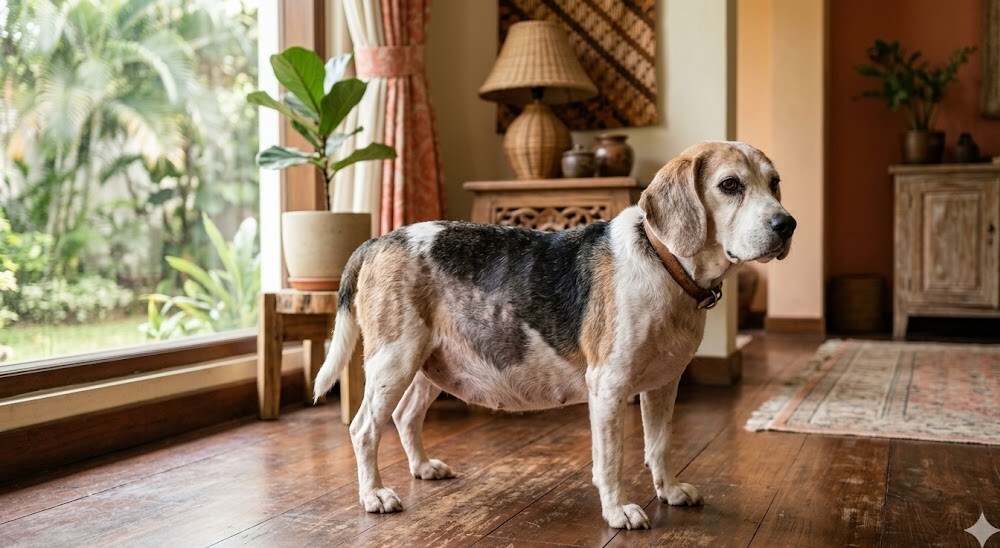

"My dog has been to three different vets in the last six months. Each time he vomits, feels weak, and refuses to eat for a few days, only to recover after being given fluids and stomach medication. Now it's happening again, this time worse, he even collapsed. The last vet requested a Na:K ratio test and suspects Addison's. What exactly is that?" Stories like this are frequently heard by the Prabasa Vet team. Addison's disease, or hypoadrenocorticism, is nicknamed "the great pretender" because its symptoms mimic many other conditions, often leading to delayed diagnosis until an acute, potentially fatal crisis occurs.
Unlike Cushing's (excess cortisol), which has quite visual and progressive symptoms, Addison's is the opposite, a deficiency of cortisol and aldosterone. The symptoms are vague, episodic, and often surface during times of stress. Diagnosis requires a high level of clinical suspicion and laboratory confirmation.
This article will help you understand why Addison's is difficult to diagnose, recognize episodic signs you might be missing, understand why an Addisonian crisis is a dire emergency, and know how veterinarians diagnose it through the Na:K ratio + ACTH stim test, along with the lifelong treatment that offers an excellent prognosis when followed correctly.
What is hypoadrenocorticism (Addison's disease) in dogs?
Hypoadrenocorticism is a condition where the adrenal glands (located above the kidneys) do not produce enough hormones. There are two essential types of hormones involved:
- Cortisol (glucocorticoid), the "stress" hormone that regulates blood sugar, blood pressure, inflammatory responses, and the body's ability to handle physiological stress.
- Aldosterone (mineralocorticoid), the hormone that regulates the balance of sodium (Na) and potassium (K) in the kidneys. Without aldosterone, the body loses sodium (excreted in urine) and retains potassium, leading to dangerous electrolyte imbalances.
The majority of canine Addison's cases are primary hypoadrenocorticism, the adrenal glands themselves are damaged, usually due to immune-mediated destruction (autoimmune adrenalitis). Other rarer causes include adrenal tumors that impair function, hemorrhage, infection (systemic fungal), or iatrogenic causes (resulting from over-suppression during Cushing's treatment with trilostane or mitotane).
According to the BSAVA Manual of Canine and Feline Endocrinology and the ACVIM Consensus on Hypoadrenocorticism, there are two main types of spontaneous Addison's:
1. Typical (Classical) Addison's, approximately 70-80% of cases
A deficiency of both hormones: cortisol AND aldosterone. This is the classic form with more comprehensive symptoms, including characteristic electrolyte imbalances (low sodium + high potassium, Na:K ratio dropping below 27, often below 20). Because of this electrolyte imbalance, typical Addison's is more easily identified in routine blood panels.
2. Atypical Addison's, approximately 20-30% of cases
A deficiency of cortisol only, with aldosterone remaining sufficient → electrolytes (Na, K, Cl) remain within the normal range. Since the Na:K ratio is normal, these cases are often missed during routine blood panel screenings. Diagnosis can only be made through an ACTH stim test. Some atypical dogs will progress to typical Addison's months or years later as aldosterone deficiency develops, requiring regular electrolyte monitoring.
Why is Addison's called "the great pretender" (the great imitator)?
This nickname stems from the fact that Addison's symptoms overlap with many other more common diseases, often leading owners and sometimes even the first vet to encounter the dog to consider other diagnoses first:
- Mimics gastroenteritis: vomiting, diarrhea, decreased appetite → often mistaken for "food poisoning" or "intestinal infection."
- Mimics pancreatitis: abdominal pain, vomiting, lethargy → mistaken for pancreatitis, especially if lipase is slightly elevated.
- Mimics kidney disease: azotemia (elevated BUN/creatinine) is often present due to hypovolemia → mistaken for AKI or CKD.
- Mimics atypical "reverse" Cushing's: weakness, GI signs, can be confused initially.
- Mimics liver disease: ALT/ALP can sometimes be moderately elevated.
- Mimics toxin ingestion: sudden collapse post-stress is often mistaken for the ingestion of toxins.
Due to this overlap, many dogs with Addison's are only diagnosed after several episodes of "mysterious illness" that resolve on their own with fluids and supportive care, or when they enter an acute crisis. Maintaining a high clinical suspicion of Addison's in dogs with a history of vague episodic illness is the key to early diagnosis.
Clinical signs of Addison's, Vague and Episodic
Symptoms of Addison's usually appear gradually and episodically (coming and going), often linked to stress or exertion. Common clusters include:
Episodic Lethargy (sudden "unexplained weakness")
A dog that is usually active suddenly becomes lazy, refuses to walk, sleeps excessively, and shows no enthusiasm for food or interaction. After resting for a few days (sometimes with IV fluids at the clinic), they recover on their own, only for it to recur weeks or months later. This "off and on" pattern is highly suggestive of Addison's.
Recurrent Vomiting and Diarrhea
Episodes of vomiting or diarrhea that appear, resolve, and return, often without a clear dietary pattern. Sometimes bloody diarrhea (hematochezia or melena) occurs. It may resemble IBD (inflammatory bowel disease) but does not respond to hypoallergenic diets or standard immunosuppressants.
Decreased Appetite (Anorexia or Hyporexia)
Unlike Cushing's where appetite increases, Addison's causes a loss of interest in eating. Gradual weight loss may occur.
Weakness and Exercise Intolerance
A dog that previously enjoyed long walks now pants heavily and becomes exhausted after short activities. Muscles may tremor during exertion.
Mild to Moderate Polyuria/Polydipsia (PU/PD)
Due to sodium loss and an inability to retain water effectively. It is usually not as severe as Cushing's PU/PD and is often subtle.
Signs that appear suddenly during stress, RED FLAG
A classic sign of Addison's: a dog that seems fine suddenly collapses severely after a stressful event, such as grooming, boarding, a car ride, an earthquake, guests arriving, or physical exertion. This happens because the body cannot produce cortisol to respond to the stress, leading to an acute adrenal crisis.
Addisonian Crisis = EMERGENCY
An Addisonian crisis (acute adrenal crisis) is a life-threatening condition that can be fatal within hours without medical intervention. It occurs when a dog with Addison's (either undiagnosed or whose treatment has failed/stopped) faces stress and the body cannot respond.
Signs of an Addisonian Crisis
- Sudden Collapse, the dog cannot stand and appears to be in shock.
- Paradoxical Bradycardia, a slow heart rate (often <60 bpm in large dogs, <80 in small dogs) despite being in shock. This is pathognomonic for severe hyperkalemia.
- Hypovolemic Shock, pale gums, prolonged capillary refill time (>2 seconds), weak peripheral pulses.
- Hypothermia, a drop in body temperature.
- Severe Vomiting and Diarrhea, often bloody.
- Altered Mentation, depressed or stuporous.
- Cardiac Arrhythmias, if blood potassium exceeds 7-8 mEq/L → bradyarrhythmia → cardiac arrest.
Pathophysiology of the Crisis
Without sufficient aldosterone, the kidneys lose sodium (high urinary sodium) and retain potassium. Simultaneously, without cortisol, vascular tone collapses, and the body cannot maintain blood pressure. The results include:
- Hyperkalemia (K >6 mEq/L, often >7-8), toxic to cardiac conduction → bradycardia, peaked T-waves, prolonged PR, and potential cardiac arrest.
- Hyponatremia (Na <135 mEq/L, often <130), along with low sodium, water retention fails → hypovolemia.
- Hypovolemia + Hypotension → shock.
- Pre-renal Azotemia, elevated BUN/creatinine due to decreased kidney perfusion.
- Hypoglycemia, cortisol is vital for gluconeogenesis.
- Metabolic Acidosis.
Crisis Treatment (Emergency Vet REQUIRED)
This is a medical emergency, DO NOT attempt treatment at home. According to the BSAVA Manual of Emergency and Critical Care and the ACVIM Consensus:
- Aggressive IV fluid therapy (0.9% NaCl is usually the first choice) to correct hypovolemia and dilute potassium levels.
- Treatment for severe hyperkalemia: IV fluids ± dextrose ± insulin ± calcium gluconate (for cardioprotection) as per clinical protocols.
- IV Glucocorticoids (dexamethasone sodium phosphate, chosen because it does not interfere with the ACTH stim test if the test hasn't been performed yet, or hydrocortisone).
- Close ECG monitoring until potassium levels normalize.
- Once stable, transition to maintenance replacement therapy (DOCP + prednisone).
If your dog is suspected of having Addison's and experiences a collapse or severe lethargy, go to an emergency vet immediately, do not wait. The window from collapse to cardiac arrest in severe hyperkalemia can be very narrow. For general guidance on pet emergencies, read our guide on emergency signs in dogs requiring urgent vet care.
How Veterinarians Diagnose Addison's: Na:K Ratio + ACTH Stim Test
Diagnosing Addison's requires a combination of clinical suspicion and laboratory tests. According to the ACVIM Consensus on Hypoadrenocorticism, the diagnostic algorithm is as follows:
Blood Panel + Electrolytes, Initial Screening
Patterns highly suggestive of typical Addison's include:
- Hyperkalemia (K >5.5 mEq/L)
- Hyponatremia (Na <140 mEq/L)
- Na:K Ratio <27, highly suggestive of Addison's (normal is 27-40). A ratio <20 is almost pathognomonic. Some other conditions (severe acidosis, severe AKI) can also lower the Na:K ratio, it is not diagnostic on its own but is a strong indicator.
- Moderate Hypoglycemia
- Azotemia (elevated BUN/creatinine), usually pre-renal, with normal or dilute urine specific gravity.
- Moderate Hypoalbuminemia
- Eosinophilia or Lymphocytosis, paradoxical because cortisol normally suppresses these cells; a lack of cortisol prevents this suppression.
For atypical Addison's, the blood panel might be unremarkable or show only mild hypoalbuminemia, hypoglycemia, or hypotension without electrolyte imbalances. This is why atypical cases are often missed, an ACTH stim test is mandatory if clinical suspicion is high despite normal electrolytes.
ACTH Stimulation Test, THE GOLD STANDARD
The ACTH stim test is the only definitive test for Addison's. The procedure involves taking a baseline blood sample for cortisol → injecting synthetic ACTH (cosyntropin/tetracosactide) → taking a second sample one hour later.
In a normal dog, cortisol levels rise moderately to significantly. In an Addisonian dog, baseline cortisol is low AND does not rise post-ACTH (a "flat" or minimal response). This pattern is diagnostic for Addison's.
Important Notes:
- The test must be performed before (or after a washout period) starting glucocorticoid treatment, except for dexamethasone (which does not interfere with the assay).
- If the dog has already received prednisone or prednisolone, the ACTH stim test may yield a false positive for Addison's, a washout period under veterinary supervision is necessary.
- Dogs in crisis can receive IV dexamethasone, and the ACTH stim test can still be performed afterward (as dexamethasone does not cross-react with the cortisol assay).
Endogenous ACTH Measurement, Differentiating Primary vs. Secondary
Once Addison's is confirmed, measuring endogenous ACTH is optional. In primary Addison's (the majority), endogenous ACTH is HIGH (due to a lack of negative feedback from cortisol). In secondary hypoadrenocorticism (which is rare), ACTH is low due to a pituitary issue.
Abdominal Ultrasound
In primary Addison's, an ultrasound usually shows bilateral, significantly small (atrophic) adrenal glands. While not diagnostic on its own, it supports the diagnosis and helps eliminate other conditions like adrenal tumors.
Treatment for Addison's: Lifelong Replacement Therapy
Treatment for Addison's involves replacing the missing hormones. The good news is that treatment is highly effective, and many well-managed dogs can live almost as long as healthy dogs. Owner commitment is the most significant factor.
DOCP Injection (Desoxycorticosterone Pivalate, Percorten-V or Zycortal), Mineralocorticoid Replacement
Plumb's Veterinary Drug Handbook (7e) lists DOCP as the primary mineralocorticoid replacement for canine Addison's. It is administered via intramuscular or subcutaneous injection, usually every 25-30 days.
Administration: The initial dose is based on body weight → electrolytes are checked 10-14 days post-injection (peak effect) and 25-30 days later (before the next injection, to monitor duration). Some dogs require shorter intervals (21-23 days), while others can go longer (30+ days). Dosage and intervals are adjusted based on electrolyte trends.
Alternative: daily oral fludrocortisone (Florinef), less commonly used now compared to DOCP due to more variable absorption.
Prednisone/Prednisolone, Glucocorticoid Replacement
Because DOCP only replaces mineralocorticoids, dogs also require glucocorticoid replacement. Plumb's lists daily low-dose prednisone or prednisolone as the standard. Many protocols begin with a maintenance dose that is increased during times of stress (stress dose).
Stress Dose: When a dog faces predictable stress (surgery, boarding, long travel, vet procedures, vaccinations), the prednisone dose is increased 2-3x to mimic a natural cortisol surge. DO NOT increase the dose without consulting your vet for the first time, they will set up a stress dose protocol tailored to your dog.
Oral Salt Supplementation, Occasionally Used
In dogs whose sodium levels remain low despite DOCP, oral sodium chloride may be added as a supplement. This is a minor adjustment alongside DOCP and prednisone.
Lifelong Monitoring
A typical monitoring schedule (adjust as per your vet's instructions):
- 10-14 days after the first DOCP injection: Check electrolytes (peak effect). Adjust dose if necessary.
- 25-30 days (before the second injection): Check electrolytes (trough effect). Adjust interval if necessary.
- 1, 3, and 6 months after starting: Recheck electrolytes + routine blood panel.
- Every 3-6 months routinely (lifelong): Electrolytes + body weight + clinical assessment.
- During times of stress: Administer stress dose prednisone (per vet protocol) and monitor for signs of crisis.
- Anytime alarm symptoms appear: Vomiting, diarrhea, collapse, extreme weakness → emergency vet (suspect crisis if treatment fails, dose is inadequate, or an injection was missed).
A missed DOCP injection is serious. If an injection is forgotten and the schedule is missed by >5-7 days, contact your vet for an early re-dose, as the effects of aldosterone replacement will wear off and electrolytes will begin to unbalance.
Prognosis for Addison's
The prognosis for canine Addison's is excellent if:
- It is diagnosed before or quickly during the first crisis.
- DOCP + prednisone treatment is consistent without missed injections.
- The owner is aware of the stress dose protocol and emergency signs.
- Regular electrolyte monitoring is performed.
Many well-managed Addisonian dogs can live a life expectancy close to that of a healthy dog, enjoying a nearly normal lifespan and a high quality of life. Unlike Cushing's, where management often focuses on slowing progression, Addison's with proper hormone replacement allows for a "near-normal" life.
Canine Addison's FAQ
Can Addison's in dogs be cured?
No, the adrenal damage in primary Addison's is permanent. However, hormonal replacement therapy (DOCP + prednisone) is so effective that dogs can live a nearly normal lifespan with an excellent quality of life. It is "not curable" but "highly manageable."
If my dog has Addison's, are their siblings or offspring at risk?
Possibly. Primary Addison's has a genetic component in several breeds (Standard Poodle, Portuguese Water Dog, Bearded Collie, Nova Scotia Duck Tolling Retriever have documented heritable predispositions). For these breeds, ethical breeders usually do not breed from Addisonian dogs. For mixed breeds, the risk for siblings may be elevated but is not specifically predictable.
Can an Addisonian dog be vaccinated?
Yes, they can, and they usually require a stress dose of prednisone before vaccination (per vet protocol). Discuss this with your vet, vaccination remains crucial for protection against infectious diseases.
What is the monthly cost of managing Addison's in Jakarta?
Costs vary and depend on several factors: the dog's weight (DOCP dose per kg determines the amount of medication), drug availability (DOCP/Percorten-V/Zycortal has limited availability in Indonesia and is an imported drug), the frequency of electrolyte panel monitoring (more often at first, then routinely), and whether additional prednisone is needed. Because of these variables, the most accurate estimate comes after knowing your dog's weight and monitoring plan. Free consultation via WhatsApp Prabasa Vet for an estimate tailored to your dog's condition. For an overview of routine home visits, see our 2026 home visit service breakdown for South Jakarta.
Can I use human prednisone for my Addisonian dog?
The prednisone molecule for humans and dogs is identical, but the dosage and schedule for a dog with Addison's must be calculated by a veterinarian based on body weight and replacement protocols. DO NOT self-medicate with human prednisone without veterinary supervision, the risk of under-replacement (crisis) or over-replacement (iatrogenic Cushing's) is high.
What is the difference between primary and secondary Addison's?
Primary Addison's = damage to the adrenal glands themselves (90%+ of cases, autoimmune destruction), resulting in a lack of BOTH aldosterone and cortisol. Secondary Addison's = the pituitary gland does not produce enough ACTH, so only cortisol is deficient; aldosterone is usually OK because it is also stimulated by the RAAS (renin-angiotensin) system, not just ACTH. Secondary Addison's symptoms mimic atypical primary (no electrolyte imbalance), but the cause is different (pituitary vs. adrenal). Secondary treatment usually only requires prednisone without DOCP.
Can Addison's be prevented?
For spontaneous primary Addison's (autoimmune), there is currently no prevention strategy. What can be done: for predisposed breeds (Standard Poodle, Portuguese Water Dog, etc.), regular screening for dogs showing episodic illness. For iatrogenic Addison's: use trilostane/mitotane with strict ACTH stim test monitoring and avoid overdosing.
Conclusion
Addison's disease is "the great pretender", its symptoms are vague, episodic, and often diagnosed late until the dog enters an acute, potentially fatal crisis. However, once diagnosed and treated with DOCP + prednisone replacement therapy, the prognosis is excellent, many dogs with Addison's live a nearly normal lifespan with a great quality of life.
Key Takeaways:
- Maintain high clinical suspicion in dogs with recurring episodes of lethargy, vomiting, diarrhea, or weakness that resolve on their own, don't stop at "recurring gastroenteritis" or "picky eating."
- An Na:K ratio <27 on a blood panel means Addison's must be seriously considered, request an ACTH stim test.
- Sudden collapse post-stress is an emergency that cannot wait, an Addisonian crisis can be fatal within hours.
- Once Addison's is confirmed, adherence to regular DOCP injections, daily prednisone, and the stress dose protocol is the single most important factor in determining the outcome.
For dog owners in Jakarta and Greater Jakarta whose pets are experiencing recurring "mysterious illnesses" without a clear diagnosis, or for those whose Addisonian dogs need routine monitoring (scheduled DOCP injections + electrolyte checks), WhatsApp Prabasa Vet for an initial discussion, we can help assess the situation and schedule home visits for blood sampling and injections.
Also read: Cushing's syndrome in dogs: signs, diagnosis, and treatment (cross-endocrine reference), Emergency signs in dogs requiring a vet, Signs of illness in dogs needing immediate attention, Pet Care Guide (Pillar), Pet Emergency Guide (Pillar).
Medical references used in this article
This article was compiled based on the following sources, verified for clinical accuracy:
- Van Lanen K, Sande A. Canine Hypoadrenocorticism: Pathogenesis, Diagnosis, and Treatment. Topics in Companion Animal Medicine 2014 / ACVIM Consensus framework, diagnostic algorithm (Na:K ratio, ACTH stim test), primary vs. secondary types, atypical Addison's.
- Mooney CT, Peterson ME (eds). BSAVA Manual of Canine and Feline Endocrinology 4th ed, pathophysiology of primary hypoadrenocorticism, clinical sign clusters, monitoring schedule for DOCP + prednisone.
- Feldman EC, Nelson RW, Reusch CE, Scott-Moncrieff JC. Canine and Feline Endocrinology 4th ed, comprehensive endocrinology reference, Addisonian crisis management, electrolyte abnormalities, replacement therapy protocols.
- Plumb's Veterinary Drug Handbook 7e, DOCP (Desoxycorticosterone Pivalate / Percorten-V / Zycortal) dosing for dogs, prednisone/prednisolone replacement, stress dose protocol, fludrocortisone (Florinef) alternative.
- BSAVA Manual of Canine and Feline Emergency and Critical Care 3rd ed, management of Addisonian crisis: IV fluids, treatment of severe hyperkalemia, ECG monitoring.
This article serves as a general guide based on the ACVIM Consensus, veterinary endocrinology textbooks, and emergency care standards. For the diagnosis and specific treatment plan for your dog's Addison's, including interpretation of ACTH stim test results, DOCP and prednisone dosages, stress dose protocols, and integration with other comorbidities, consultation with a veterinarian is the appropriate step. If your dog shows signs of an Addisonian crisis (collapse, extreme weakness, severe vomiting/diarrhea), do not wait, seek emergency veterinary care immediately.