
Reptiles are often sold as "easy pets", no need to walk them, no noise, they eat infrequently. In reality it is the opposite: most pet reptiles that fall ill and die in Indonesia do not die from infectious disease, but from incorrect husbandry (the way they are kept), the wrong temperature, no UVB, the wrong humidity, or a diet that does not suit their species. Reptiles do not fuss when their setup is wrong; they simply decline slowly until they finally collapse, and by then it is often too late.
This article is a basic guide for anyone considering or just starting to keep a reptile, why temperature is everything, the role of UVB, humidity needs, diet by type, and the medical signs you must watch for. Disclaimer: this is general guidance based on exotic/reptile medicine principles, not a substitute for a direct consultation with a vet familiar with reptiles. Every species has specific needs, always research the exact needs of the species you are keeping.
Reptiles are ectotherms, why temperature determines everything
Unlike cats, dogs, or small furry animals, reptiles are ectotherms ("cold-blooded"), they do not generate their own body heat and depend entirely on the environmental temperature to regulate their metabolism. The wrong temperature is not just uncomfortable; it shuts down body functions:
- A reptile's digestion stops if the temperature is too low, food rots inside the digestive tract before it is digested
- The immune system weakens at low temperatures, the reptile becomes vulnerable to infection
- Activity, appetite, and normal behaviour all depend on the correct temperature
The thermal gradient, not a single uniform temperature
The most common beginner mistake: heating the entire enclosure to one temperature. The correct approach is for a reptile enclosure to have a gradient, a warm (basking) side and a cool side, so the reptile can move between them to regulate its own body temperature (thermoregulation):
- Basking spot: the hottest area, with a heat lamp from above, the temperature differs by species (a bearded dragon needs a far hotter basking spot than, for example, a leopard gecko or certain tortoises)
- Cool side: the other end of the enclosure, which is cooler, where the reptile can cool itself down
- Night temperature: many species need a temperature drop at night, research your species
Essential: measure the temperature with a thermometer at two points (basking spot + cool side), do not guess. Use a thermostat to control the heater, heating equipment without a thermostat can overheat and burn the reptile or make the enclosure too hot. Avoid "heat rocks", a common cause of burns on a reptile's belly.
UVB, essential for many species, often skipped
Many diurnal reptiles (active during the day), especially bearded dragons, iguanas, tortoises, and many other lizards, need exposure to UVB light to synthesise vitamin D3, which the body needs to absorb calcium. Without enough UVB, a reptile cannot process calcium even if its diet is rich in calcium, and this causes Metabolic Bone Disease (MBD), one of the most common and most preventable causes of death in pet reptiles.
- Use a reptile-specific UVB lamp (tube or compact) with output appropriate to the species and the height of the enclosure
- UVB lamps weaken over time even while they are still lit, replace them according to the manufacturer's recommendation (generally 6–12 months), because UVB output drops well before the lamp dies
- Do not block UVB with glass or plastic, both block UVB
- Some nocturnal species (e.g. certain night geckos) have different needs, research your species; but for the majority of diurnal pet reptiles, UVB is not optional
Humidity and hydration
Humidity needs vary greatly by species, desert species (bearded dragon, leopard gecko) need low humidity, while tropical-forest species need high humidity. The wrong humidity causes serious problems:
- Too dry for a tropical species → dehydration, incomplete shedding
- Too humid for a desert species → skin infections, respiratory problems
- Retained shed (shed skin that fails to come off), especially on the toes and tail tip, can constrict and cut off blood flow until the toe/tail dies. Often a sign of insufficient humidity during shedding
Provide clean water according to the species' needs (some drink from a dish, some from droplets/misting). Measure humidity with a hygrometer for sensitive species.
Enclosure to match the reptile type
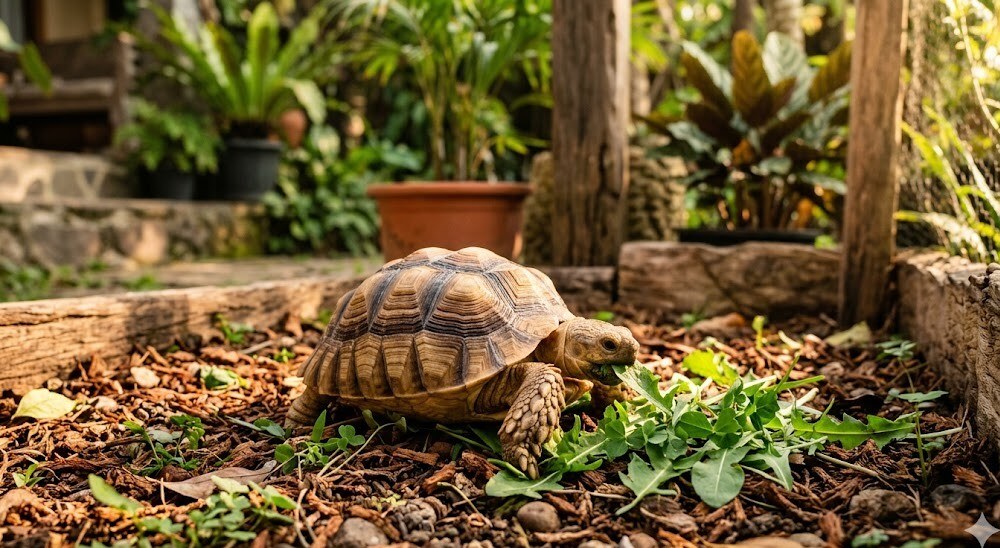
- Terrestrial (bearded dragon, leopard gecko, tortoise): need ample floor space, a basking spot, and hides (hiding places) on both the warm and cool sides
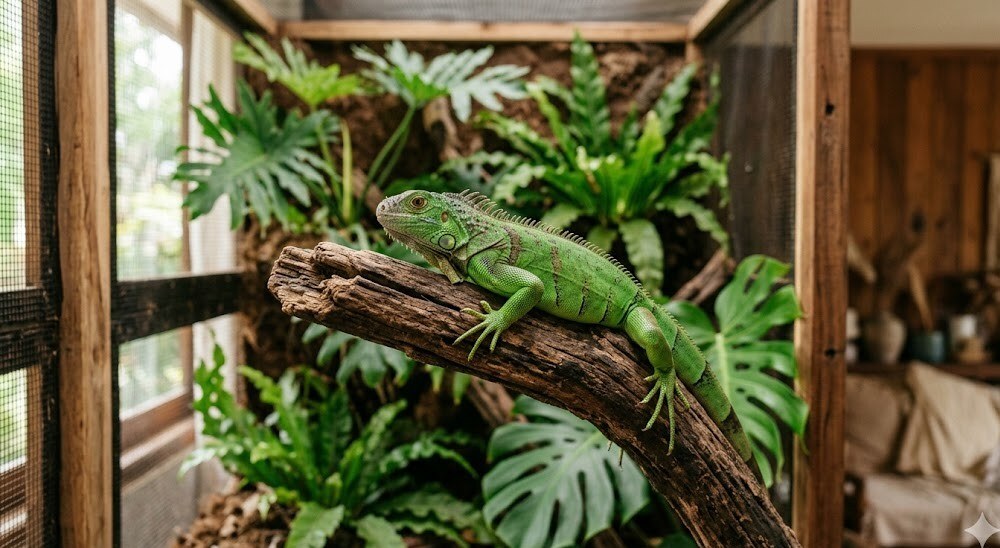
- Arboreal (many tree geckos, iguanas, some snakes): need vertical space and branches to climb
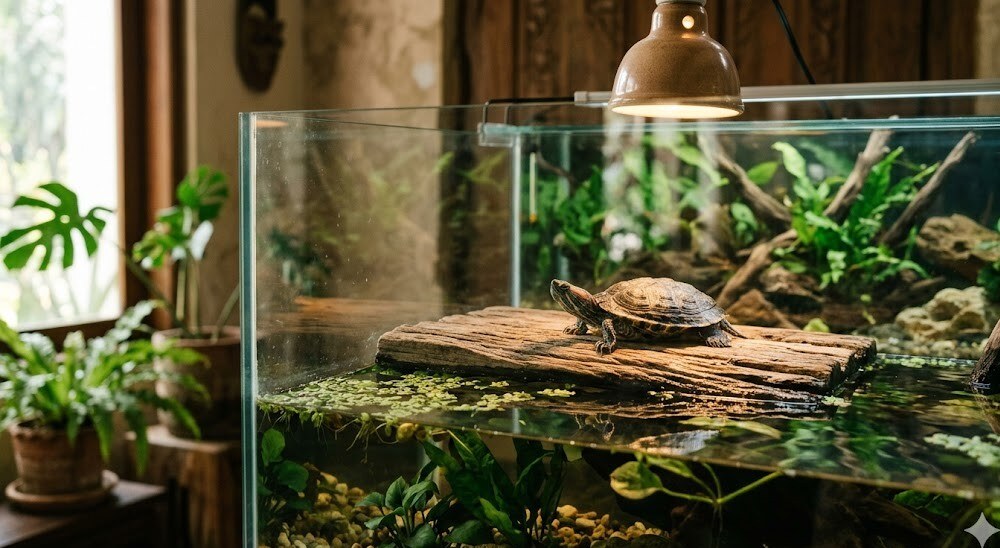
- Aquatic/semi-aquatic (aquatic turtles such as the red-eared slider): need a water area deep enough to swim in + a dry land area for basking + good water filtration. Dirty water is a common cause of eye and shell infections
The substrate must be safe, avoid substrate that can be swallowed and cause impaction (intestinal blockage), especially fine sand for young reptiles. Provide at least two hides so the reptile feels secure without having to choose between temperature and safety.
Diet by reptile type
Reptiles have very different feeding types, and giving the wrong diet is a common cause of disease:
- Herbivores (green iguana, tortoise): mostly high-fibre, low-oxalate leafy greens; avoid a high animal-protein diet that can damage the kidneys
- Insectivores / omnivores (bearded dragon, leopard gecko, many lizards): insects (crickets, worms) that are gut-loaded (fed nutritious vegetables before being used as feed) + vegetables (for omnivores). Adult bearded dragons eat more vegetables, juveniles eat more insects
- Carnivores (snakes): whole prey of an appropriate size (generally thawed frozen rats/mice) at a frequency suited to age and species. Do not feed live prey that can injure the snake
Calcium supplementation
For insect-eating reptiles and many herbivores, the insects/vegetables often need to be dusted with calcium powder, and sometimes with vitamin D3 , according to the species' guidelines. The combination of UVB + diet + correct calcium supplementation is the three pillars of preventing MBD. Ask an exotic vet for a supplementation protocol that fits your species and setup.
Signs a reptile is sick, what needs a reptile vet
Like other exotic animals, reptiles hide illness. Monitor and seek evaluation from a vet familiar with reptiles if there is any of the following:
- Prolonged refusal to eat, always check the enclosure temperature first (the most common cause of anorexia). If the temperature is correct and it still does not eat, it needs evaluation
- Lethargy, abnormal weakness even when the temperature is correct
- Signs of Metabolic Bone Disease (MBD): a soft/swollen jaw, bent limbs, difficulty walking/lifting the body, tremors, fractures from normal activity, needs evaluation immediately
- Signs of respiratory infection (RI): noisy/wheezy breathing, mucus in the nose/mouth, repeated open-mouth gaping, saliva bubbles, often linked to a temperature that is too low
- Mouth rot / stomatitis: redness, swelling, or cheese-like material around the mouth
- Retained shed constricting the toes/tail, risk of dead tissue
- Dehydration: sunken eyes, skin that loses elasticity, dry shed skin
- Prolapse (tissue protruding from the cloaca), an emergency
- In turtles/tortoises: a soft shell, lesions/ulcers on the shell, swollen eyes that stay shut, a runny nose
A note on brumation: some reptiles undergo brumation (similar to hibernation) during certain periods, activity and feeding decline. This can be normal, BUT the decline of brumation is hard for a beginner to distinguish from illness, and brumation in a reptile that is not in good condition can be dangerous. If you are unsure whether your reptile is brumating or sick, consult a reptile vet, do not assume on your own.
Why look for a vet familiar with reptiles
Vets with reptile experience are still very limited in Indonesia. Many general practitioners have never handled a reptile, and treating reptiles is very different from cats/dogs, from interpreting symptoms, to species-specific drug doses, to understanding that many reptile "diseases" are actually rooted in husbandry that must be corrected first.
For reptile owners in Greater Jakarta, an exotic vet house call service has a particular advantage for reptiles: the vet can see your enclosure setup directly, temperature, UVB, humidity, layout, which is often the root of the problem, and which cannot be evaluated if the reptile is brought to a clinic. On top of that, transport (a car's fluctuating temperature, vibration) can be dangerous for a reptile that is already weak.
FAQ
Which reptile is best suited for beginners?
The ones commonly recommended for beginners because their needs are relatively better documented: the leopard gecko (does not need UVB as intensely as others, small size) and the bearded dragon (docile, interesting behaviour), with the caveat that both still need a correct temperature/UVB setup. The ones NOT recommended for beginners: the green iguana (grows large, complex needs, often neglected when it gets big) and large snakes/species that need expert handling. Whatever you choose, research the exact needs of the species before buying, not after.
My reptile won't eat, is it definitely sick?
Not necessarily. The most common cause of a reptile not eating is an enclosure temperature that is too low, without the correct temperature, digestion does not work and the reptile stops eating. First check the basking spot and cool-side temperatures with a thermometer. Other causes: the stress of a new setup, a shedding period, or brumation (seasonal). But if the temperature is correct and the reptile still refuses food for a long time, accompanied by weakness or weight loss, it needs a reptile vet's evaluation.
Is it true that reptiles don't need to see a vet?
A dangerous myth. Reptiles need health care just like any other animal, they even need a husbandry health check, because so many reptile diseases are rooted in an incorrect setup. Ideally there is an examination to evaluate husbandry and detect problems early before they become an emergency, especially because reptiles are skilled at hiding illness until it is severe.
How long do pet reptiles live?
It varies greatly and is often longer than beginners expect, a leopard gecko can live 15–20 years, a bearded dragon around 8–12 years, and many tortoises/turtles for decades (some species can outlive their owners). This is a serious long-term commitment; consider it before adopting.
Can Prabasa Vet do house calls for reptiles?
Yes. Reptiles benefit greatly from house calls because the vet can directly evaluate the enclosure setup (temperature, UVB, humidity) that is often the root of the problem, and because transport can be risky for a weak reptile. When you WhatsApp us, mention the type of reptile as specifically as possible, the symptoms you are worried about, and your area, our team will find a partner vet with experience handling reptiles and exotic animals.
Wrapping up
Reptiles can be interesting and long-lived pets, but "easy" is not the right word. The key to their survival is not medicine, but correct husbandry: the right thermal gradient, sufficient UVB, species-appropriate humidity, and the correct diet. If you are just starting out, invest the time to research the exact species you are keeping before buying, set up the enclosure correctly from the start, and have the contact of a vet familiar with reptiles before an emergency arrives.
Need a consultation or want to book a house call vet for your reptile? Reach us on WhatsApp, tell us the type of reptile, the symptoms or setup question you're worried about, and your area, and our team will find a partner vet with experience handling reptiles.
Medical references used in this article
This article was prepared with reference to the following sources, verified sentence by clinical sentence:
- Mader DR, Divers SJ (eds). Reptile Medicine and Surgery, principles of thermoregulation, UVB/vitamin D3 metabolism, Metabolic Bone Disease, and husbandry-related disease
- Meredith A, Johnson-Delaney C (eds). BSAVA Manual of Exotic Pets, reptile sections, husbandry by type, diet, and common clinical presentations (RI, stomatitis, retained shed, dehydration)
- Johnson-Delaney CA. Exotic Companion Medicine Handbook for Veterinarians, reptile husbandry and clinical considerations
- LafeberVet reptile care references, thermal gradient, UVB lighting guidelines, and species-specific care
This article is general guidance based on reptile/exotic medicine principles. The needs of each reptile species differ, always research your exact species, and for specific conditions (especially signs of MBD, respiratory infection, or a sudden decline) consulting a vet familiar with reptiles is the right step.