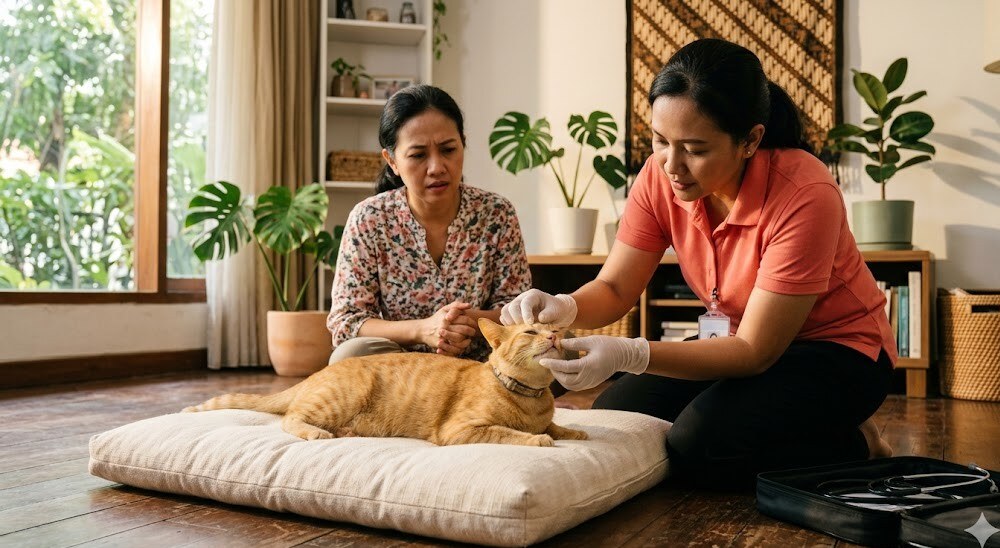

"My dog is a 4-year-old German Shepherd, he eats voraciously every day but he's really thin, his ribs are clearly visible. His stool is voluminous, soft and greasy, with a sharp smell. I've checked and he's negative for worms. Why is this happening?" This very characteristic pattern, polyphagia (eating a lot) + progressive weight loss + chronic voluminous greasy diarrhoea, in a young-to-adult dog, especially a German Shepherd, is the classic presentation of Exocrine Pancreatic Insufficiency (EPI). EPI is a condition where the pancreas does not produce enough digestive enzymes, so the dog can't digest food optimally, many nutrients pass through without being absorbed.
This article is a guide for owners of dogs with this presentation: what EPI is, why German Shepherds are predisposed, the clinical signs and diagnosis (TLI test), treatment with pancreatic enzyme replacement (PER) + nutritional support + B12 supplementation, and long-term management.
What is EPI?
EPI (Exocrine Pancreatic Insufficiency) is a deficiency in the production or secretion of exocrine pancreatic enzymes, the digestive enzymes that break down protein (trypsin, chymotrypsin), fat (lipase), and carbohydrates (amylase) in the small intestine.
The pancreas has two functions:
- Exocrine, digestive enzymes released into the duodenum via the pancreatic duct
- Endocrine, the hormones insulin and glucagon from the beta and alpha cells in the islets of Langerhans
EPI specifically involves a deficiency of exocrine function, the acinar cells (which produce enzymes) atrophy or are destroyed. Without enough enzymes, food that has been eaten can't be broken down into the small units the intestine can absorb → maldigestion → voluminous greasy stool (steatorrhea) + weight loss despite a large food intake.
Causes of EPI
1. Pancreatic Acinar Atrophy (PAA), common in German Shepherds
- Spontaneous atrophy of pancreatic acinar cells, a suspected autoimmune mechanism (lymphocytic-plasmacytic infiltrate)
- German Shepherds have a significant genetic predisposition, estimated to be 60-70% of canine EPI cases
- Other breeds with increased risk: Rough Collie, Eurasier, Cavalier King Charles Spaniel
- Onset at a young-adult age (1-5 years typical)
- Progressive, lost acinar cells do not regenerate
2. Chronic pancreatitis with extensive destruction
- After recurrent chronic pancreatitis episodes, pancreatic tissue is replaced by fibrosis
- If enough acinar cells are destroyed → secondary EPI
- See the separate article on canine pancreatitis
3. Rarer causes
- Pancreatic neoplasia
- Pancreatic duct obstruction
- Congenital pancreatic hypoplasia (very rare)
Clinical signs of EPI
The classic presentation is a triad:
- Progressive weight loss despite a normal or increased appetite (polyphagia), the dog eats voraciously but stays thin
- Chronic diarrhoea with voluminous, soft-to-liquid, greasy stool (steatorrhea), a pale greyish colour, with a sharp smell (rancid because of undigested fat)
- The dog seems "always hungry", coprophagia (eating its own or another animal's faeces), pica (eating non-food items), scavenging
Additional signs:
- Dry, coarse coat that lacks shine, essential fatty acid deficiency
- Excessive flatulence
- Borborygmus (a rumbling stomach)
- Energy level may still be OK at first, declining over time if untreated
- Vitamin deficiency (especially B12/cobalamin, sometimes vitamins K, A, D, E)
- In advanced cases: severe malnutrition, muscle wasting, sarcopenia, anaemia
Diagnosing EPI, the TLI test
1. Trypsin-like Immunoreactivity (TLI), the gold standard
- cTLI (canine Trypsin-like Immunoreactivity), measures trypsinogen + trypsin in the blood, correlating directly with exocrine pancreatic function
- Extremely low TLI (below the lab cut-off) = diagnostic of EPI
- Sample: serum, fasting (12-hour fast) before sampling
- Sent to an external lab (the Texas A&M Gastrointestinal Laboratory is the reference standard; in Indonesia via a lab partner)
- Results usually take 1-2 weeks
- High sensitivity + specificity for established EPI
2. Cobalamin (vitamin B12) + serum folate
- Often done together with the TLI
- B12 is low in many EPI dogs, because B12 absorption requires pancreatic intrinsic factor (in dogs) + a healthy ileum
- Folate is sometimes elevated in secondary SIBO (small intestinal bacterial overgrowth due to maldigestion)
- B12 deficiency needs to be treated in parallel for optimal recovery
3. Supporting tests
- CBC + biochemistry + UA, baseline, to rule out other causes
- Fecal smear + flotation, to rule out parasites (Giardia, worms) that also cause chronic diarrhoea
- Fecal trypsin test (older method), not reliable, now obsolete and replaced by TLI
- Abdominal ultrasound, to assess the pancreas (atrophy is sometimes visible, but it isn't diagnostic for EPI)
Treating EPI
1. Pancreatic Enzyme Replacement (PER), the cornerstone
Goal: replace the missing pancreatic enzymes so the dog can digest food.
- Pancreatic enzyme product, powder, granules, or enteric-coated capsules. Veterinary-specific products (Viokase-V, Pancrezyme, etc.) or human pancreatin (Creon, Pancreaze)
- Dose per Plumb's 7e: variable depending on the product. Porcine pancreatic extract powder is usually 1-2 teaspoons per meal (per 5 kg body weight), titrated based on response
- Administration: mixed with wet food, left in contact for 15-20 minutes before feeding for pre-incubation (not strictly required with some modern products, but a traditional practice)
- Every meal forever, EPI is permanent, PER is needed for every meal for life. Stopping PER = a return to maldigestion
- Cost consideration: PER cost varies depending on the product type (veterinary-specific vs human pancreatin vs compounding), the dog's size (dose per kg body weight), and whether it is enteric-coated. Because PER is needed for life, the monthly cost is a real consideration. Discuss with the vet to choose an effective product that suits your needs
2. Diet
- A highly digestible diet, the key. Not high in fibre (which interferes with nutrient absorption)
- Moderate fat content, too high in fat overloads the enzyme replacement; too low in fat causes a calorie deficit. The sweet spot is usually 12-18% fat DM
- Commercial GI products (Hill's i/d, Royal Canin Gastrointestinal) are often good
- Multiple small meals (3-4x a day) are better than 1-2 large meals
- Avoid a high-fibre diet (which is often "for dogs with diarrhoea")
- Avoid a raw diet, risk of bacterial overgrowth in a maldigestion setting
3. Vitamin B12 (cobalamin) supplementation
- Almost all EPI dogs are B12 deficient, they need supplementation
- SC cobalamin injection, the classic protocol: weekly injections for 4 weeks, then bi-weekly for 4 weeks, then monthly maintenance
- Or high-dose oral cobalamin (250-1000 µg/day per Plumb's 7e); recent research shows oral is also effective, though with a slower onset
- Recheck cobalamin level at 1-3 months to titrate
4. SIBO (small intestinal bacterial overgrowth) management
- Most EPI dogs have a secondary SIBO component, bacterial overgrowth in the small intestine due to nutrient maldigestion
- Often responds to PER + diet alone, but sometimes needs a short antibiotic course (tylosin, metronidazole) to reset
- Discuss with your vet
5. Additional supplementation if needed
- Vitamin K if there is coagulopathy
- Essential fatty acids for the coat/skin if there is a deficiency
- Probiotics, some dogs benefit, but the evidence is mixed
Treatment response and prognosis
- A clinical response is often seen within 1-2 weeks, stool becomes more solid, weight gain begins
- Full weight recovery within 2-3 months
- Some dogs don't respond optimally, consider: an inadequate PER dose, B12 not yet supplemented, co-existing SIBO, concurrent IBD, a non-optimal diet, a compliance issue
- Prognosis with adequate treatment: good, most EPI dogs live a normal lifespan with proper management
- Without treatment, the prognosis is poor, the dog eventually dies of severe malnutrition
Daily management tips
- Consistent PER at every meal, don't skip, don't rotate brands carelessly
- Monitor weight monthly, adjust the dose if weight loss returns
- Monitor the stool, if steatorrhea returns = a problem (dose not enough, a PER batch issue, or a co-existing condition)
- B12 maintenance, don't stop, recheck the level at 6-12 months
- Regular follow-up with the vet, re-assess every 6-12 months
- Educate the family, everyone who feeds the dog must know the PER protocol
- Travel preparation, bring extra PER stock, don't run out mid-trip
Canine EPI FAQ
My German Shepherd is 3 years old and starting to get thin with soft stool. Is it definitely EPI?
Not necessarily, but the presentation is consistent with EPI and needs evaluation. Other differentials: GI parasites (worms, Giardia), IBD, food intolerance, lymphangiectasia, GI neoplasia. A workup with the vet (CBC + biochemistry + UA + faecal + TLI + B12) will clarify the diagnosis.
How much does the TLI test cost?
The TLI test cost depends on whether it is combined with a B12/folate panel and the lab partner used (the sample is sent to an external lab, results in 1-2 weeks). Because estimates vary, contact us on WhatsApp for lab partner information and a current estimate, the initial consultation is free.
PER is really expensive, is there an alternative?
A few options: human pancreatin (Creon, Pancreaze) is often more economical than veterinary products, but the dose needs adjusting and a compounding pharmacy can formulate it. Some owners use raw pancreas (from cattle/pigs) as a cheap alternative, possible but with a risk of inconsistent enzyme content and bacterial contamination; discuss with the vet.
Can EPI be cured?
No, EPI is permanent. Lost acinar cells do not regenerate. But with lifelong PER + diet + B12, the dog can live a normal and healthy life.
My dog had pancreatitis 1 year ago and now has signs of EPI. Are they related?
Possibly. Recurrent chronic pancreatitis can cause enough acinar cell destruction to develop into secondary EPI. A workup with the TLI test will confirm it. There can also be concurrent diabetes mellitus (destruction of the endocrine pancreatic beta cells), check glucose too.
Summary
EPI (Exocrine Pancreatic Insufficiency) in dogs is a deficiency of exocrine pancreatic enzymes → maldigestion → voluminous greasy diarrhoea + weight loss despite eating a lot. German Shepherds have a significant predisposition (60-70% of cases) via pancreatic acinar atrophy.
Diagnosis: the TLI test (low = diagnostic) + a B12/folate panel. Treatment cornerstone: pancreatic enzyme replacement (PER) at every meal for life + a highly digestible moderate-fat diet + B12 supplementation. A clinical response within 1-2 weeks, full recovery in 2-3 months. Prognosis with adequate management: good.
EPI is a permanent condition, PER is needed at every meal forever. If your dog seems to eat a lot but stays thin with voluminous stool, don't assume it's just worms, it needs a medical evaluation with a TLI test for a definitive diagnosis.
Does your dog have a presentation consistent with EPI, or has it just been diagnosed and you need to discuss management? Contact us on WhatsApp for an initial consultation and an evaluation plan including a TLI test referral.
Read also: Pancreatitis in Dogs and Cats, Megacolon in Cats, Pet Care Guide.
Medical references used in this article
This article was prepared with reference to the following sources, verified per clinical statement:
- Ettinger SJ, Feldman EC, Cote E. Textbook of Veterinary Internal Medicine (ACVIM Small Animal Internal Medicine reference), EPI chapter: pancreatic acinar atrophy pathophysiology, clinical presentation, diagnostic approach, enzyme replacement treatment protocol
- BSAVA Manual of Canine and Feline Gastroenterology, EPI diagnostic protocol (TLI + cobalamin + folate), differential diagnosis of chronic canine diarrhoea, treatment optimization and troubleshooting non-responders
- Steiner JM (Texas A&M Gastrointestinal Laboratory), clinical reference for cTLI test interpretation, cut-off for EPI diagnosis, correlation with treatment response
- Plumb's Veterinary Drug Handbook 7e, monograph for pancreatic enzyme (pancreatin), powder vs enteric-coated formulation, variable dose per product, cobalamin (cyanocobalamin), SC injection vs oral high-dose protocol
- Westermarck E, Wiberg M., Exocrine pancreatic insufficiency in the dog: clinical signs, diagnosis, and treatment. Vet Clin Small Anim, German Shepherd predisposition, long-term outcome data
This article is general guidance based on standard veterinary gastroenterology and internal medicine sources (ACVIM, BSAVA, Plumb's). For your dog's specific condition, including the optimal PER dose, combining treatment with comorbidities, or troubleshooting non-responders, consulting a veterinarian is the right step. EPI is permanent and needs consistent long-term management.