
"My cat hasn't pooped in 4 days, he's straining in the litter box but nothing comes out, and now he's starting to refuse food and is vomiting slightly. He also looks stressed." Constipation in cats, especially recurrent or prolonged, is often a sign of an underlying condition called megacolon. Megacolon is a chronic dilation of the colon with loss of motility function, so feces accumulate, dry out, and become obstructive. Unlike acute single-episode constipation, megacolon is a long-term condition that requires ongoing management.
This article is a guide for owners of cats with a history of recurrent constipation or newly diagnosed with megacolon: what megacolon is, why it happens, the clinical signs and diagnosis, tiered management from conservative (diet + laxative + prokinetic) to surgical (subtotal colectomy) for refractory cases, and daily tips at home.
What is megacolon?
Megacolon is a chronic dilation (widening) of the colon with loss of normal peristaltic function. The colon, the final part of the intestine that absorbs water and stores feces before defecation, loses its ability to contract propulsively. As a result, feces keep accumulating in the colon, becoming drier over time (because water absorption continues), harder, and finally impacted (stuck) as a large fecal ball that the cat cannot evacuate on its own.
- Primary idiopathic megacolon, most common in adult-to-senior cats, the mechanism is not fully clear. It may be colonic smooth muscle dysfunction, neurogenic, or a combination. Many cats have no identifiable cause
- Megacolon secondary to mechanical obstruction, an old pelvic fracture that healed with deformity → the pelvic canal narrows → feces struggle to pass → the colon proximal to it dilates in compensation → eventually megacolon
- Neurogenic megacolon, dysfunction of the nerves that innervate the colon (spinal injury, dysautonomia)
- Megacolon from a Hirschsprung-like disease, an anatomical/genetic abnormality (rare in cats, more common in humans)
- Breed predisposition, the Manx cat has a predisposition because a sacral vertebral abnormality disrupts colorectal innervation
Why feline constipation must be treated, the risk of progression
Constipation in cats must not be considered minor:
- A single untreated episode of constipation can cause an overdilated colon → impaired motility → easy recurrence → eventually megacolon
- Dehydration (from vomiting + not eating + not drinking) worsens constipation because the feces become drier
- Obstipation (truly stuck impacted feces) can cause severe discomfort, vomiting, anorexia, and secondary complications such as hepatic lipidosis from prolonged anorexia
- In advanced megacolon, the colonic muscle is irreversibly stretched and medical management is no longer adequate → surgical intervention is needed
- Early intervention in a cat still in early recurrent constipation can often prevent progression to true megacolon
Clinical signs of constipation and megacolon
- Not defecating for more than 48 hours, a normal cat defecates 1-2 times a day
- Straining in the litter box with no result (tenesmus), the cat sits in the litter box for a long time in a defecation posture but no feces come out, or only very little and hard comes out
- Very hard, small, dry feces, sometimes with a streak of blood
- Vocalizing in the litter box, pain
- Defecating outside the litter box, sometimes liquid or soft "overflow" feces around the impacted fecal ball forced out (often mistaken for diarrhea, when the underlying issue is constipation)
- Anorexia, refusing to eat
- Vomiting, secondary to GI obstruction or discomfort
- Lethargy
- Dehydration
- Weight loss in chronic cases
- Unkempt coat, the cat does not groom because it is uncomfortable
- Hiding or behavioral changes
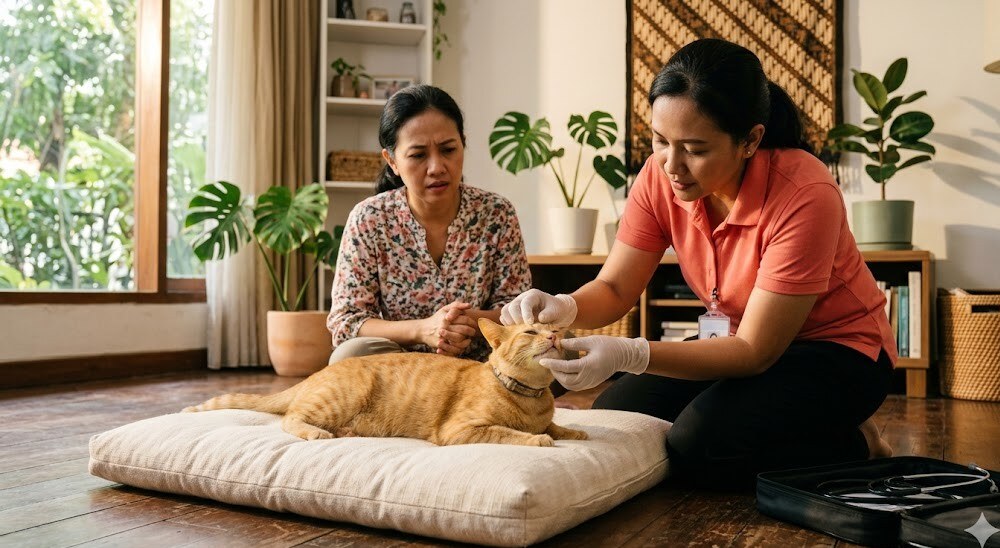
On physical exam, the vet can often palpate a large, hard fecal ball in the colon through the abdominal wall, it can be the size of a tennis ball or larger.
Diagnosing megacolon
- History, a pattern of recurrent constipation, a history of pelvic trauma, breed (Manx)
- Physical exam, abdominal palpation, hydration assessment, BCS
- Abdominal radiographs, the primary diagnostic. Look for:
- A dilated colon diameter (more than 1.5x the length of the L5 vertebra)
- An impacted column of feces
- Assessment of the pelvic canal for mechanical obstruction (an old pelvic fracture)
- Rule out a foreign body or other mass
- CBC + biochemistry + UA, dehydration, azotemia, hypokalemia, hypercalcemia (a secondary cause of constipation), CKD (a dehydrated senior cat worsens constipation)
- Manual rectal examination (under sedation), evaluate the rectum, anal sacs, prostate (in intact males), perineal hernia
- Abdominal ultrasound if a mass or another cause is suspected
Tiered management of megacolon, the clinical approach
Megacolon management is a gradient from conservative to surgical, chosen based on severity and response. The tiered approach:
Tier 1 , Diet and hydration
- Switch to wet food (canned), its high moisture content helps systemic hydration and softens feces. The cornerstone for constipation/megacolon
- High-fiber vs low-residue diet, controversial. In early simple constipation, added fiber (psyllium, canned pumpkin without sugar, 1 teaspoon per meal) can help. In advanced megacolon with lost motility, a low-residue (highly digestible) diet is often more effective because it reduces the volume of feces that must be evacuated
- A commercial low-residue GI diet (Hill's i/d, Royal Canin Gastrointestinal, Purina EN) is often recommended
- Ensure clean water is always accessible, multiple water bowls, a fountain (cats like running water), low-sodium broth
- Encourage exercise and play, activity helps GI motility
- Litter box management, clean, accessible, sufficient number (1 per cat + 1 extra), a texture the cat likes (most like clumping unscented fine grain)
Tier 2 , Lactulose
- Lactulose, a non-absorbable osmotic laxative, dose per Plumb's 7e: 0.5 ml/kg PO every 8-12 hours, titrated based on response. It makes feces softer by drawing water osmotically into the colon
- Side effect: too high a dose → excessive diarrhea, secondary dehydration
- Titrate the dose until the feces are a soft paste consistency, not watery, not hard and solid
- Long-term use is generally safe
Tier 3 , Prokinetic (cisapride)
- Cisapride, a serotonin 5HT4 agonist that increases colonic motility. Per Plumb's 7e, the dose is 0.5-1.0 mg/kg PO every 8-12 hours in cats
- Cisapride is not available in Indonesia as a commercial human product (withdrawn from the market because of human cardiac side effects), but it can be accessed through a veterinary compounding pharmacy
- It is relatively safe in cats but should still be discussed with the vet, avoid it in cats with a history of cardiac arrhythmia
- It is often combined with lactulose for a synergistic effect
Tier 4 , Medical deobstipation (enema and manual extraction)
For cats with severe impacted feces that fail to respond to tiers 1-3:
- Sedation/anesthesia, the cat is too painful and stressed for the procedure without sedation
- IV fluids pre-procedure to correct dehydration
- Enema with warm water + lubricant, manual evacuation of impacted feces
- DO NOT use a phosphate enema (Fleet Phospho-soda), toxic in cats, causing fatal hypocalcemia + hyperphosphatemia + hypernatremia
- Manual digital extraction if needed, careful not to rupture the colon (the stretched colonic mucosa can be fragile)
- After deobstipation: continue medical management tiers 1-3
Tier 5 , Surgery (subtotal colectomy)
For refractory megacolon that fails to respond to adequate medical management:
- Subtotal colectomy, removing most of the dysfunctional colon, anastomosing the ileum to the distal colon/rectum
- The long-term outcome is generally good, post-colectomy cats can defecate normally with softer feces because of the faster transit time
- Post-operative complications: transient diarrhea (often self-resolving within weeks to months), wound complications, anastomotic dehiscence
- Cost and availability are limited, it requires a surgeon experienced in GI surgery and surgical facilities
- Indication: a cat with megacolon refractory to medical management, with declining quality of life due to recurrent obstipation episodes
Daily management at home, practical tips
- 100% wet food or a mix with dry food, high moisture is the key
- Fresh water always accessible, in multiple locations; cats like running water → consider a fountain
- A clean, accessible litter box, a cat that does not like its litter box will hold its stool, worsening constipation. A senior cat with arthritis needs a litter box with low sides
- Encourage activity, wand toys, play sessions, environmental enrichment
- Observe the daily defecation pattern, note defecation dates on a calendar, detect constipation episodes early
- Monitor weight monthly, weight loss is a sign the problem is developing
- Address comorbidities that make it worse, CKD, hyperthyroidism, arthritis (which makes the cat uncomfortable in the litter box)
- Continue medication as directed by the vet, lactulose + cisapride are usually long-term, do not stop them arbitrarily
- Regular follow-up with the vet, dose adjustments based on response
What NOT to do at home
- DO NOT do an enema yourself at home, risk of colonic trauma, rupture, and toxicity if the wrong product is used (especially a phosphate enema, fatal for cats)
- DO NOT give cooking oil or other "natural constipation remedies" without consulting, they can cause aspiration pneumonia if there is vomiting, lipidemia, etc.
- DO NOT give human laxatives, many (Dulcolax, MiraLax with polyethylene glycol) are inappropriate or the wrong dose for cats
- DO NOT delay consultation if the cat has not defecated for >3 days + has signs of stress (anorexia, vomiting), a severe obstipation episode needs professional medical deobstipation
- DO NOT manually extract feces, risk of trauma to the rectum and colon, plus the cat is highly stressed
Feline megacolon FAQ
My cat hasn't pooped in 3 days and is starting to refuse food. Do I need to see the vet?
Yes. Constipation >48-72 hours in a cat with signs of discomfort (anorexia, vomiting, lethargy) needs a medical evaluation. Take it to the vet for abdominal palpation + radiographs + IV fluids + deobstipation if needed. Do not delay, a severe episode can worsen the underlying megacolon.
What is the best diet for a cat with megacolon?
For advanced megacolon, a low-residue (highly digestible) diet is often more effective than high fiber, reducing the volume of feces that must be evacuated. Wet food for hydration. For early simple constipation, added fiber (psyllium, canned pumpkin) sometimes helps. Discuss with the vet for a specific diet choice.
How long are lactulose and cisapride medications continued?
Often long-term, months to years. Megacolon is a chronic condition, and management is a long-term lifestyle adjustment. The dose can be titrated based on response, not automatically the maximum dose. Regular follow-up with the vet is important.
What is the outcome of colectomy surgery?
The long-term outcome is generally good. Most cats after colectomy can defecate normally with softer feces. Transient diarrhea after surgery often self-resolves within weeks to months. Quality of life improves for cats that previously had recurrent obstipation episodes and suffering.
How much does megacolon treatment cost?
The cost varies greatly depending on the management tier your cat needs. The initial workup (labs + radiographs + consultation), long-term medication (lactulose + cisapride, depending on the dose and cisapride source), medical deobstipation under sedation, up to a colectomy for refractory cases all have different cost components. Because the range is wide, the most accurate estimate comes after your cat's condition is evaluated. Contact us on WhatsApp for a free consultation and a discussion of an estimate tailored to your cat's condition.
Summary
Feline megacolon is a chronic dilation of the colon with loss of motility function, feces accumulate, dry out, and become obstructive. Causes: primary idiopathic (most common in adult-to-senior cats), secondary to an old pelvic fracture, neurogenic, or a predisposed breed (Manx).
Signs: not defecating for >48 hours, straining in the litter box with no result, small hard feces, anorexia, vomiting, lethargy. Diagnosis: history + abdominal palpation + abdominal radiographs.
Tiered management: Tier 1 (wet food diet + hydration + exercise + litter box), Tier 2 (lactulose), Tier 3 (cisapride prokinetic), Tier 4 (medical deobstipation under sedation), Tier 5 (subtotal colectomy for refractory cases).
What NOT to do: an enema yourself (especially a phosphate enema = fatal in cats), human laxatives, delaying consultation when the cat is stressed + not defecating for >3 days.
Megacolon is a chronic condition with long-term management, discuss with a veterinarian for a plan tailored to your cat's condition. Early intervention in recurrent constipation can often prevent progression to advanced megacolon.
Does your cat have a history of recurrent constipation or a new megacolon diagnosis and need to discuss management? Contact us on WhatsApp for an initial consultation and an evaluation plan.
Read also: Senior Cat Nutrition, Cat Not Eating, Cat Diarrhea and Vomiting.
Medical references used in this article
This article was prepared with reference to the following sources, verified per clinical sentence:
- Ettinger SJ, Feldman EC, Cote E. Textbook of Veterinary Internal Medicine (ACVIM Small Animal Internal Medicine reference), Megacolon and Constipation in Cats chapter: pathophysiology, etiologic classification, treatment tier hierarchy, surgical indication
- BSAVA Manual of Feline Medicine and Therapeutics, protocols for recurrent constipation and megacolon, diet recommendations (low-residue vs high fiber), safe enema technique (warm water + lubricant), contraindication of phosphate enema in cats
- Plumb's Veterinary Drug Handbook 7e, monographs for lactulose (cat dose 0.5 ml/kg PO q8-12h, titrated), cisapride (cat dose 0.5-1.0 mg/kg PO q8-12h, accessed via a compounding pharmacy), contraindication of phosphate enema
- Washabau RJ, Holt DE., Megacolon chapter in Canine and Feline Gastroenterology: pathophysiology of smooth muscle dysfunction, radiographic diagnostic criteria, evaluation of pelvic obstruction, indications for subtotal colectomy
- Bertoy RW., Megacolon in the cat. Vet Clin North Am Small Anim Pract, surgical outcome data for subtotal colectomy, post-operative care, long-term prognosis
This article is general guidance based on standard veterinary gastroenterology and internal medicine sources (ACVIM, BSAVA, Plumb's). For your cat's specific condition, including medication dosing, tier escalation decisions, or surgical indications, consulting a veterinarian is the right step. Megacolon is chronic with individualized long-term management.