
"My cat is 12 years old. The other day the pet shop suggested a senior food they said was low protein so the kidneys don't get overloaded. But I've read that senior cats actually need higher protein. Which one is right?" This question is very common and the answer isn't a simple yes or no. Senior cat nutrition is an area full of misconceptions, especially around protein. The modern approach per the ISFM 2022 Consensus on Feline Senior Care and the AAFP Senior Care Guidelines shows that a low-protein default for senior cats is not the right recommendation, many senior cats in fact need more high-quality protein to maintain muscle mass.
This article is a detailed guide to senior cat nutrition: senior vs geriatric definitions, metabolic changes and calorie needs, the protein controversy with modern recommendations, hydration as a priority, important monitoring (BCS and MCS), renal-friendly diet for cats with CKD, and practical daily tips.
When is a cat considered "senior"?
Feline age classification per ISFM 2022:
- Mature adult, 7-10 years. Not yet senior but certain monitoring should begin (weight, dental, annual lab screening)
- Senior, 11-14 years
- Geriatric / super-senior, over 15 years
Important: "senior food" is not automatically suitable for every cat over 10 years. Individual nutritional needs depend on medical conditions (CKD, diabetes, hyperthyroidism, IBD, dental disease), BCS (body condition score), activity, and preference. The modern approach is individualized nutrition based on the specific condition, not a blanket "10+ cat = automatic senior diet".
Metabolic changes and calorie needs
Unlike senior dogs (which often need fewer calories because of reduced activity), senior cats have a unique pattern:
- Young-to-mature adult cats (4-10 years), calorie needs drop because of reduced activity → high risk of obesity in middle age
- Senior-geriatric cats (over 11-12 years), calorie needs rise again, plus digestive and absorptive efficiency declines → many senior cats start losing weight and muscle mass even while "eating normally"
- Muscle wasting (sarcopenia) is common in senior cats, even when BCS is normal/overweight, MCS (muscle condition score) can be low
- Declining taste and smell → palatability matters more
- Reduced ability to groom → dull coat, mats (clumps)
Implication: do not automatically cut portions for a senior cat whose weight is stable. A senior cat losing weight unintentionally is often a sign of underlying disease (CKD, hyperthyroidism, neoplasia, diabetes, IBD), it needs a medical evaluation.
The protein controversy, the modern approach
Old myth: "senior cats need low protein so the kidneys don't get overloaded." The modern approach is more nuanced:
In senior cats without CKD (or with IRIS stage I/II CKD)
- High-quality protein remains important, possibly even more than in young cats, to maintain muscle mass
- Per ISFM 2022 and AAFP: protein recommendations are not lowered by default in healthy senior cats. High-quality animal protein remains appropriate
- "Preventive" protein restriction in senior cats without CKD has not been proven to delay CKD onset, and it can actually accelerate muscle wasting
- Focus: quality, not quantity. Highly digestible animal-source protein
In cats with IRIS stage III/IV CKD
- Moderate protein restriction can help reduce the uremic burden and disease progression
- Commercial renal-friendly diets (Hill's k/d, Royal Canin Renal, Purina NF) are already formulated with moderate protein (28-32% DM), restricted phosphorus, potassium support, and added omega-3
- Phosphorus restriction is the most beneficial component of a renal diet, more important than protein restriction per se
- For a senior cat with CKD and severe muscle wasting + reduced appetite, discuss with your vet, and do not over-restrict in a way that worsens malnutrition
Practical: how to choose
- Check a basic annual lab panel (CBC + biochemistry + UA + SDMA) over 10 years of age → identify CKD early
- Cats without CKD: maintenance adult/senior food with high-quality animal protein
- Cats with stage III/IV CKD: renal-friendly diet under veterinary supervision
- Cats with early CKD and muscle wasting: balance, moderate protein with restricted phosphorus, discuss with your vet
Hydration, a high priority for senior cats
Cats have a weak thirst drive by evolution (they descend from desert ancestors that got water from prey). Senior cats are often chronically dehydrated, especially those on exclusive dry food + CKD.
- Wet food is highly preferred for seniors, moisture content 70-80% vs dry food 10%
- Multiple water stations, at least 2-3 locations in the home, away from the litter box (cats don't like water near where they toilet) and away from the food bowl (a natural preference)
- Pet fountain, flowing water is often more attractive to cats than still water. Many owners report their senior cat drinks far more from a fountain
- Wide-mouth bowl, many cats dislike their whiskers brushing the walls of a narrow bowl
- Fresh water changed daily, cats detect stagnant water
- Broth without salt/garlic/onion as a fluid "boost", slow-cooked chicken broth (no seasoning) can be a flavor enhancer
- If the cat refuses wet food, mix it with dry food gradually, or warm the wet food briefly (more aromatic)
Important monitoring, BCS and MCS
Owners often miss muscle wasting in senior cats because they focus only on total weight or BCS:
BCS (Body Condition Score), 1-9 scale
- Ideal for a senior cat: 5-6/9 (slim to mild overweight), a little more cover than a young cat is OK for reserve
- BCS < 4 = underweight, needs medical evaluation
- BCS > 7 = overweight, important to address
- Check by palpation: ribs palpable with slight pressure, a waist visible from above, a tummy tuck visible from the side
MCS (Muscle Condition Score), separate from BCS
- Critical in seniors, BCS can be normal/overweight while MCS is low (muscle wasting hidden under fat)
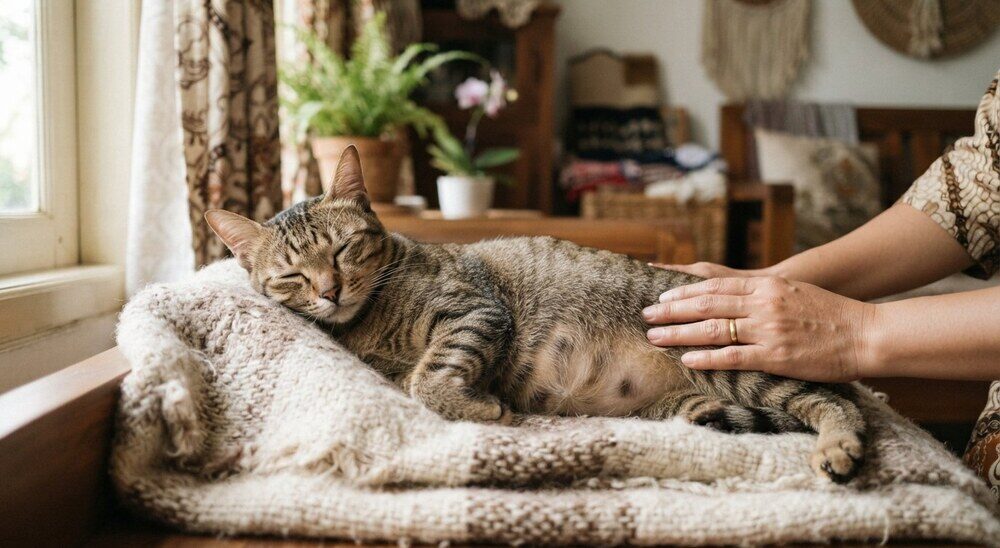
- Palpate muscle mass over the scapula, spine, pelvis, and thigh
- 4-grade scale: normal, mild loss, moderate loss, severe loss
- MCS loss = an important indicator to address (underlying medical condition, protein malnutrition, or just aging)
Check BCS + MCS monthly at home, your vet will also check during a checkup visit.
Specific nutrient components important for seniors
Protein
- High-quality animal-source, meat, fish, egg (in commercial food composition)
- Without CKD: no need to restrict
- With advanced CKD: moderate restriction (commercial renal diet)
Fat and fatty acids
- Moderate fat for calories and palatability
- Omega-3 (EPA + DHA), anti-inflammatory, supports joints, supports the kidneys, supports cognition. Many senior foods already contain it
- Essential fatty acids for coat/skin
Minerals
- Restricted phosphorus in CKD, the most beneficial component of a renal diet
- Potassium support, CKD cats are often hypokalemic and need supplementation
- Moderate sodium, excessive restriction has not been proven to help
Vitamins and antioxidants
- Vitamin E, C, beta-carotene, antioxidant support
- B-complex, especially B12, supporting GI and neurological function
- Vitamin D, metabolism can be disrupted in CKD
Joint support if arthritis is present
- Glucosamine + chondroitin in some senior foods
- Omega-3
- Green-lipped mussel
Practical daily tips
- Wet food as the backbone, at least 50% of intake
- Multiple small meals (3-4x/day) rather than 1-2 large meals, better digestion + more natural for cats
- Warm the wet food briefly before serving to boost aroma and palatability
- Elevate the food bowl for cats with cervical arthritis, a comfortable height so they don't have to stretch
- Quiet feeding area without disturbance
- Accessible, clean litter box, a senior cat with arthritis needs a low side
- Monitor weight monthly, use a baby scale if needed
- Monitor appetite + drinking pattern + litter box output, changes = consult your vet
- Dental care, painful teeth often make a senior cat refuse to eat
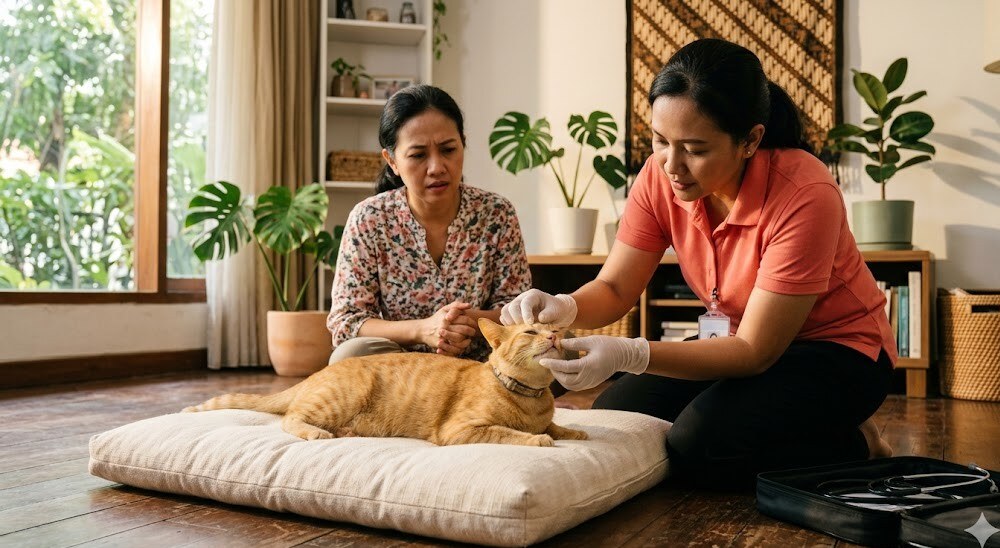
- Annual wellness exam + basic labs (CBC + biochemistry + UA + SDMA + blood pressure + T4) for early detection of CKD/diabetes/hyperthyroidism
What NOT to do
- DON'T automatically switch to "low-protein senior food" without a CKD workup, it can accelerate muscle wasting
- DON'T feed a raw food diet to a senior with comorbidities (weak immunity, CKD, diabetes), bacterial risk
- DON'T home-cook without a veterinary nutritionist consult, often mineral imbalance, taurine deficiency, etc.
- DON'T add many random supplements, some supplements are counterproductive in excess (vitamin D, calcium, phosphorus)
- DON'T ignore weight loss as "normal aging", it is often underlying disease
- DON'T withhold food for a "diet" in seniors without first evaluating BCS and MCS, even an overweight senior cat needs a gradual approach
Senior cat nutrition FAQ
Does a 12-year-old cat have to be on "senior food" automatically?
Not automatically. If the cat is healthy without significant comorbidities, with normal BCS and MCS, a high-quality maintenance adult food remains appropriate. "Senior food" has merit (omega-3, antioxidants, added joint support), but it isn't mandatory. Discuss with your vet based on the cat's specific condition.
My cat is 11, with stage II CKD, can it still have regular wet food?
IRIS stage II CKD usually does not yet require a strict restricted renal diet. High-quality wet food is important for hydration. Phosphorus restriction starts being considered from stage IIb/III. Discuss with your vet for an individualized plan.
Do senior cats need extra supplements?
Often not if the commercial diet is good quality. Extra omega-3 is often helpful. Specific supplementation (taurine, B12, potassium) only if there is a documented medical indication. Avoid a "complete supplement panel" without a workup first.
My senior cat is losing weight but its appetite is normal. What should I check?
Main differentials: hyperthyroidism (the cat eats a lot but loses weight), CKD, diabetes mellitus, GI disease (IBD/lymphoma), teeth/mouth. It needs a medical evaluation with CBC + biochemistry + UA + SDMA + T4 + physical exam. Don't assume "normal aging" first.
How much does a senior wellness exam cost?
The cost depends on several factors: the consultation + physical exam, and how complete a senior screening lab panel (CBC + biochemistry + UA + SDMA + T4 + blood pressure) you choose, plus whether there are comorbidities that need additional checks. A wellness exam is recommended annually from age 10+, more often if there are comorbidities. Contact our WhatsApp for a free consultation and an estimate suited to your cat's needs.
Summary
The modern approach to senior cat nutrition: individualized based on the specific condition, not a blanket "10+ = automatic senior food". Senior cats without CKD do not need a low-protein default, high-quality protein remains important to maintain muscle mass. Moderate protein restriction is for stage III/IV CKD, with the main focus being phosphorus restriction.
Hydration is a high priority, wet food as the backbone, multiple water stations, a pet fountain, broth without salt. Monitor BCS + MCS (separate scores!) to detect hidden muscle wasting.
Important components: high-quality animal protein, omega-3, restricted phosphorus in CKD, potassium support, antioxidants. An annual wellness exam + screening lab panel for early detection of CKD/diabetes/hyperthyroidism.
What NOT to do: switch to low protein automatically without a workup, raw food for the immunocompromised, home-cooking without a consult, ignoring weight loss as "normal aging".
Does your senior cat need a discussion about an individualized nutrition plan or an evaluation of weight loss? Contact us on WhatsApp for an initial consultation and an evaluation plan.
Read also: Megacolon in Cats, Cat Not Eating, Pet Care Guide.
Medical references used in this article
This article was prepared with reference to the following sources, verified per clinical statement:
- ISFM (International Society of Feline Medicine) Consensus Guidelines on Feline Senior Care, 2022 , senior vs geriatric definitions, individualized nutrition needs, the protein controversy (high-quality protein not automatically restricted in healthy seniors), hydration as a priority, BCS + MCS dual scoring
- AAFP (American Association of Feline Practitioners) Senior Care Guidelines, wellness exam intervals, annual lab screening, dental considerations, senior behavioral changes
- Hand MS, Thatcher CD, Remillard RL, Roudebush P, Novotny BJ. Small Animal Clinical Nutrition (5th edition), Feline Senior Nutrition chapter: macronutrient requirements, the protein controversy, renal-friendly diet composition, omega-3 and antioxidant support
- IRIS (International Renal Interest Society) Staging of CKD, IRIS staging with creatinine + SDMA + proteinuria + blood pressure, dietary intervention recommendations per stage (phosphorus restriction from stage IIb, moderate protein restriction in stage III/IV)
- Plumb's Veterinary Drug Handbook 7e, reference for supportive drugs in senior management (cobalamin, B12, antiemetic, appetite stimulant, etc.) and reference for therapeutic renal diets
This article is a general guide based on standard veterinary feline care sources (ISFM, AAFP, IRIS). For a nutrition plan specific to your cat, including an individualized diet choice based on comorbidities (CKD, diabetes, hyperthyroidism, IBD), appropriate supplementation, or an evaluation of weight loss, consulting a veterinarian is the right step. A healthy senior cat does not automatically need protein restriction.