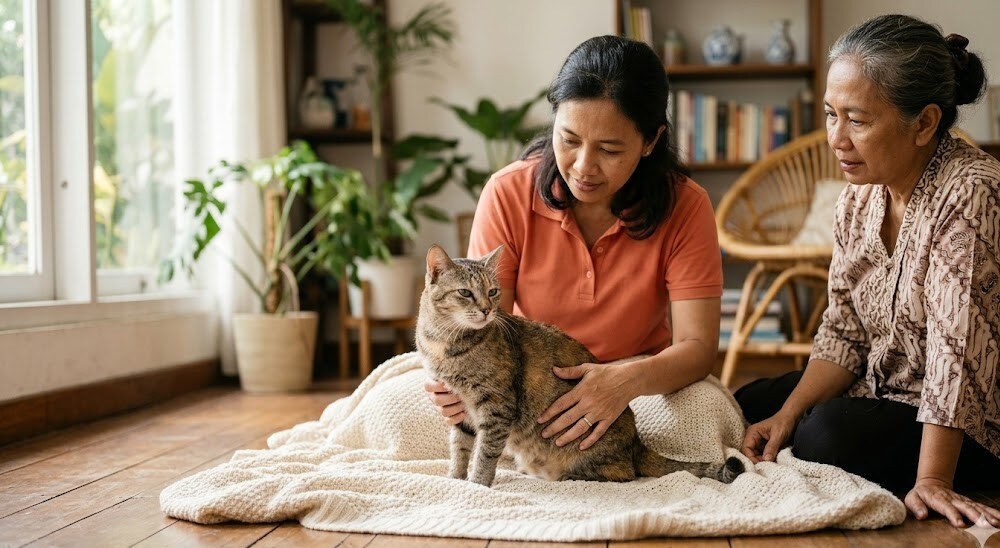

"Doc, my chubby cat here, 6 years old, is usually a very voracious eater. But this past week he has not eaten at all after being stressed by a home renovation, and we gave him a new food because his usual one was out of stock. Just now I noticed his ears look a bit yellow, and his gums too. He has lost a lot of weight." A pattern like this, an overweight cat + a stress trigger + prolonged anorexia + jaundice + muscle wasting, is a red flag for hepatic lipidosis that needs immediate medical evaluation.
Hepatic lipidosis (fatty liver syndrome) is the most common liver disease in adult cats in many veterinary practices worldwide, and it is unique because cats have a specific metabolic vulnerability that makes prolonged anorexia directly trigger fat accumulation in the liver. This article is a comprehensive guide for cat owners, why cats are susceptible, early warning signs, systematic diagnosis, and modern treatment based on early aggressive nutrition.
What is hepatic lipidosis?
Hepatic lipidosis is the excessive accumulation of triglycerides within hepatocytes (liver cells) to the point that the liver cells can no longer function normally. The accumulation occurs when there is an imbalance between:
- Lipid influx from peripheral fat mobilization (adipose lipolysis), which increases in a fasted state
- Lipid export via VLDL (very-low-density lipoprotein) from the liver, which requires adequate apolipoprotein synthesis
When a cat does not eat, the body mobilizes peripheral fat to the liver to be processed into energy. But cats have a limited ability to export lipids out of the liver (due to a specific metabolic vulnerability, see the next section), so fat accumulates in the hepatocytes. Cell injury → intrahepatic cholestasis → jaundice + liver dysfunction.
Classification:
- Primary (idiopathic): no clear underlying disease, often an obese cat with a stress trigger (diet change, moving house, death of another pet, mild illness)
- Secondary: a complication of another disease that causes anorexia, most often pancreatitis, IBD, cholangitis (triaditis), cancer, diabetes mellitus, CKD
About 90% of clinical cases are secondary lipidosis, so when a cat is diagnosed with hepatic lipidosis, a systematic workup for the underlying cause is mandatory.
Why are cats susceptible? Unique pathophysiology
Cats have several metabolic vulnerabilities that make hepatic lipidosis more common than in dogs:
1. Obligate protein metabolism
Cats are obligate carnivores with high protein requirements (50%+ of calories). They cannot adapt efficiently to reduce amino acid catabolism in a fasted state (unlike dogs/humans, who can downregulate it). As a result: in a state of anorexia, the cat keeps "breaking down" skeletal muscle for gluconeogenesis substrate → rapid muscle wasting + an amino acid imbalance for apolipoprotein synthesis.
2. Limited apolipoprotein synthesis
Exporting triglycerides from the liver requires VLDL packaging, which requires apolipoprotein. When a cat lacks certain amino acids (taurine, methionine, carnitine, arginine) due to anorexia, apolipoprotein synthesis drops → triglycerides cannot be exported → accumulation in the liver.
3. Carnitine requirement
Carnitine is needed to transport fatty acids into the mitochondria for beta-oxidation. A cat with anorexia + limited carnitine reserves → fatty acids accumulate in the hepatocyte cytoplasm → triglyceride storage increases.
4. Glutathione depletion
Oxidative stress in the liver during lipidosis can cause further hepatocyte injury → a vicious cycle. A cat with depleted glutathione (the main hepatocyte antioxidant) progresses more quickly to severe lipidosis.
At-risk groups
- Obese or overweight cats, a large adipose mass = a large lipid reservoir for mobilization → more fat moving to the liver during anorexia
- Adult-to-senior cats (4-15 years), pediatric cats rarely develop it
- Indoor cats, less activity + ad libitum diet + a tendency toward obesity
- Common triggers:
- Sudden diet change (a picky-eater cat + a new, unpalatable diet)
- Environmental stress (moving house, renovation, a new pet, loss of the owner or another pet)
- Any mild illness that causes 2-3 days of anorexia
- Surgery or anesthesia with inadequate post-op nutrition
- Underlying disease (pancreatitis, IBD, CKD, diabetes, cancer)
What cat owners must understand: 2-3 consecutive days of anorexia is an emergency in an obese cat, unlike in dogs or other species. Do not delay evaluation.
Clinical signs
Early signs (often subtle)
- Complete or partial anorexia (the most consistent, in almost all cases)
- Gradual lethargy
- Significant weight loss within 1-2 weeks (often 25%+ body weight loss)
- Hiding more / withdrawn behavior
Signs of progression
- Jaundice, most characteristic once progressed. Yellowing of the ocular sclera, gums, belly skin (check the thin skin inside the ear, the lateral abdomen, the ventral pinna)
- Prominent muscle wasting, especially in the paraspinal area (along the spine) and the temporal muscles (head). The contrast is visible against an abdomen that still has intra-abdominal fat (the cat looks "small-headed + pot-bellied")
- Ptyalism (excessive drooling), can be due to nausea or hepatic encephalopathy
- Intermittent vomiting
- Dehydration
- Constipation or diarrhea
- Mild bradycardia if severe
Severe signs / complications
- Hepatic encephalopathy: ataxia, head pressing, seizures, coma, from ammonemia + neurotoxins that are not detoxified
- Coagulopathy (abnormal bleeding, bruising), impaired clotting factor synthesis
- Severe hypokalemia
- Hypophosphatemia (especially post-refeeding), refeeding syndrome risk
Diagnosis
1. History and physical examination
- A history of being overweight + a stress / dietary change trigger + prolonged anorexia
- Visual jaundice on the sclera, gums, ear pinna
- Muscle wasting with a still-full abdomen (intra-abdominal fat preserved)
- Dehydration
- Palpable hepatomegaly (enlarged liver) may be present, sometimes hard to feel
2. Blood panel (biochemistry + hematology)
- Elevated ALT (alanine aminotransferase), often mild-to-moderate, not as high as in primary hepatitis
- Elevated ALP (alkaline phosphatase), often significant, more characteristic than GGT in cats (different from dogs)
- Elevated total bilirubin, biochemical jaundice, often 2-15+ mg/dL
- GGT relatively low compared to ALP, a pattern characteristic of feline hepatic lipidosis (helps distinguish it from cholangitis, where GGT is more elevated)
- Hypokalemia (common)
- Hypophosphatemia (post-refeeding risk)
- Hypoalbuminemia (mild-to-moderate)
- CBC: may show mild nonregenerative anemia, Heinz bodies often present
- Coagulopathy (prolonged PT/PTT) in severe cases
3. Abdominal ultrasound
- Diffusely hyperechoic liver, a pattern characteristic of hepatic lipidosis (fat increases echogenicity)
- Mild-to-moderate hepatomegaly
- Screening for an underlying secondary cause: pancreas (pancreatitis), bile ducts (cholangitis), intestine (IBD/lymphoma), gallbladder (mucocele or distension)
4. Liver FNA (fine needle aspirate)
The gold-standard diagnostic, aspirate hepatocytes; cytology shows hepatocytes full of fat vacuoles (diffuse lipid vacuolation). Safe to perform with a normal coagulopathy screen. Minimally invasive.
5. Check differentials / underlying cause
- SPEC fPL (feline pancreatic lipase), rule pancreatitis in/out
- TLI (trypsin-like immunoreactivity), rule out EPI
- T4 , rule out hyperthyroidism
- FeLV/FIV, rule out
- Ultrasound with a focal lesion → consider liver biopsy to rule out lymphoma or liver cancer
- Thorough workup for systemic infection, diabetes, CKD
Treatment, the modern early aggressive nutrition paradigm
Treatment of hepatic lipidosis is a paradigm shift from the old approach. The old focus was to "rest" the liver + IV fluids + appetite stimulants. Now, per ISFM (International Society of Feline Medicine) 2022 and AAFP, the cornerstone of treatment is early aggressive enteral nutrition via feeding tube, not force-feeding (contraindicated) or IV nutrition alone.
1. Initial stabilization (first 24-48 hours)
- IV fluid therapy (LRS or Plasmalyte) to correct dehydration + electrolyte imbalance
- Correct hypokalemia with IV KCl supplementation (careful with the maximum safe rate)
- Antiemetic: maropitant (per Plumb's 7e dosing range), ondansetron as an adjunct
- Vitamin K1 IM/SC to correct mild coagulopathy before feeding tube placement
- Vitamin B12 (cobalamin) IM or SC supplementation
- Check for hypophosphatemia + correct it before starting aggressive feeding (to prevent refeeding syndrome)
2. Feeding tube placement
An ENTERAL nutrition strategy via feeding tube is the standard of care. Options:
- Nasoesophageal (NE) tube, for short-term (3-7 days), no general anesthesia needed, easy to place. Small diameter = liquid diet only. Owner tolerance variable
- Esophagostomy (E-tube), the gold standard for most cases. Requires brief sedation/anesthesia to place, but is comfortable for the cat and the owner at home (larger diameter = blended diet possible, can last weeks-months if needed)
- Gastrostomy (G-tube/PEG), for cases with esophageal problems or a prediction of long-term tube feeding
Contraindications to force-feeding (forcing food with a syringe into the mouth) per ISFM:
- Stress and food aversion can be permanent
- High aspiration pneumonia risk
- The volume that can be given is inadequate for recovery
- Welfare concern
3. Nutrition strategy
- Calorie target: start with ~25% RER (resting energy requirement) on day 1, with gradual escalation to 100% RER over 3-4 days (to prevent refeeding syndrome)
- Diet: high-protein, high-calorie, palatable. Products: Hill's a/d, Royal Canin Recovery Liquid, or a blended recovery prescription diet
- Frequency: small frequent feedings 4-6x/day via tube
- Monitoring: body weight, jaundice resolution, serial labs (ALT/ALP/bilirubin), electrolytes (especially phosphate and potassium)
4. Adjunct medications
- S-adenosylmethionine (SAMe), an antioxidant and glutathione precursor. Per Plumb's 7e, supports hepatic recovery
- Vitamin E, antioxidant
- Carnitine supplementation, facilitates fatty acid metabolism
- Vitamin B12 (cobalamin), most cats with GI or hepatic disease are deficient
- Ursodeoxycholic acid (UDCA), a choleretic, supports biliary flow if there is cholestasis
- Antibiotics are not routine (except with secondary infection or cholangitis)
5. Treatment of the underlying cause
- Pancreatitis: specific management (see the separate pancreatitis article)
- IBD: immunosuppressive (steroid + diet) after the lipidosis is stable
- Diabetes mellitus: insulin therapy
- CKD: renal management
6. Refeeding syndrome prevention
When chronic anorexia ends and nutrition restarts, intracellular phosphate and potassium shift from the extracellular space. Risk: severe hypophosphatemia (below 2.0 mg/dL) can cause hemolysis, weakness, respiratory failure. Hypokalemia. Prevention: check phosphate before starting aggressive feeding, correct it first if low. Gradual calorie escalation (25→50→75→100% over 3-4 days). Monitor labs every 24-48 hours in the first week.
Prognosis
- With early aggressive nutrition + identification of the underlying cause: good prognosis. Many cats recover completely within 4-8 weeks. Survival rate with proper treatment is around 60-85% in the clinical literature
- Without aggressive nutrition (only IV fluids + appetite stimulant): high mortality (over 50% in historical studies)
- Negative prognostic factors: onset of hepatic encephalopathy, severe coagulopathy, severe underlying disease (cancer, severe pancreatitis), delayed diagnosis, refeeding syndrome complications
- After recovery: the feeding tube is usually removed when the cat eats voluntarily at 75%+ RER for 3-7 consecutive days. Some cases need the tube for 4-8 weeks
FAQ on feline hepatic lipidosis
My cat has not eaten for 3 days, has this already caused hepatic lipidosis?
It can begin to develop. The risk depends on body condition (obese cats develop it faster), stress level, and whether there is an underlying disease. The important thing: do not delay medical evaluation for a cat that has not eaten for more than 48 hours, especially if overweight. Earlier intervention = better prognosis and less invasive treatment needed.
Can I force-feed it with a syringe at home?
Force-feeding via syringe is not recommended per the ISFM 2022 guidelines, high aspiration pneumonia risk, stress + food aversion can be permanent, and the volume is inadequate for the recovery needed. The modern standard: a feeding tube (NE or E-tube) in a clinical setting with owner training for continued feeding at home.
My cat is overweight but is now on a diet to lose weight, is that safe?
A diet for an obese cat MUST be done with veterinarian supervision, restriction that is too drastic (more than 1% body weight loss per week) can trigger hepatic lipidosis. Safe strategy: 0.5-1% body weight loss per week, a prescription weight management diet, routine monitoring of weight and body condition. DO NOT starve a cat to lose weight quickly.
A feeding tube seems extreme, is it really necessary?
For confirmed hepatic lipidosis, a feeding tube is the standard of care, NOT extreme. A proper tube (esophagostomy) is placed under brief sedation, is very well-tolerated by the cat, allows the owner to feed at home with training, and is removed once the cat recovers a voluntary appetite. Without adequate nutrition, hepatic lipidosis mortality is high. The tube is a life-saving tool, not a burden.
How long is recovery from hepatic lipidosis?
It varies depending on severity and underlying cause. Mild primary lipidosis with early intervention: 2-4 weeks for biochemistry to normalize + voluntary appetite to return. Severe with an underlying disease (pancreatitis, IBD): 6-12 weeks, sometimes more. Lab follow-up (ALT, ALP, bilirubin) to confirm resolution before tube removal.
Can hepatic lipidosis recur?
It can, especially if the underlying cause is not identified or not controlled. Recurrence prevention: manage the underlying disease (pancreatitis, IBD, diabetes), maintain a stable body weight (do not lose or gain weight quickly), respond quickly to anorexia (do not delay another 2-3 days), routine monitoring of weight and body condition.
How much does hepatic lipidosis treatment cost in Jakarta?
Treatment requires a clinical setting with full diagnostic capability (lab + ultrasound + cytology), feeding tube placement (brief sedation/anesthesia), and initial hospitalization (3-7 days). Because the care is intensive, the cost can be significant and depends heavily on severity, hospitalization duration, and the diagnostics for the underlying cause, only the vet can give a firm estimate after evaluating your cat's specific condition. For a triage consultation and referral to a clinic with tube-feeding facilities, have a free consultation on Prabasa Vet's WhatsApp first.
Summary
Feline hepatic lipidosis (fatty liver) is a serious complication of prolonged anorexia, with cats' unique metabolic vulnerability (obligate carnivore + limited apolipoprotein synthesis) causing fat to accumulate quickly in the liver during a fasted state. Main risk factors: an obese cat + a stress trigger + sudden anorexia. Clinical signs: anorexia + jaundice + muscle wasting + ptyalism + dramatic weight loss.
Diagnosis: a combination of blood panel (elevated ALT/ALP/bilirubin with relatively low GGT), ultrasound (diffusely hyperechoic liver), and FNA cytology as the gold standard. Modern treatment: early aggressive enteral nutrition via feeding tube (NE or E-tube), not force-feeding or IV nutrition alone. Adjuncts: SAMe, vitamin E, carnitine, B12, ursodeoxycholic acid. Refeeding syndrome prevention with gradual calorie escalation and electrolyte monitoring. Treatment of the underlying cause is mandatory.
The prognosis with early intervention is good (survival rate 60-85% in the literature), but delay and inadequate nutrition lead to high mortality. A cat not eating for more than 48 hours, especially an overweight one, is an emergency that needs immediate medical evaluation.
Is your cat overweight but now refusing food for 2-3 days? See the Prabasa Vet pet care guide or contact us on WhatsApp for an initial consultation and referral to a clinic with tube-feeding facilities. Do not delay, early intervention is the key to recovery.
Read also: Cat Not Eating: Causes and Management, Feline CKD: Chronic Kidney Disease Signs, Cat Emergency Signs You Should Not Delay.
Medical references used in this article
This article was prepared with reference to the following sources, verified per clinical sentence:
- Webb CB. Hepatic lipidosis: clinical review drawn from collective effort. Journal of Feline Medicine and Surgery 2018; 20(3): 217-227 , comprehensive pathophysiology (obligate carnivore metabolism, apolipoprotein limitation, carnitine + glutathione depletion), diagnostic approach (biochemistry + ultrasound + FNA), the treatment paradigm shift to aggressive enteral nutrition, prognosis with early intervention
- ISFM (International Society of Feline Medicine) 2022 consensus material on feline anorexia and lipidosis management, feeding tube as the standard of care, contraindication of force-feeding, refeeding syndrome prevention protocol, monitoring schedule
- ACVIM Consensus Statement on Cobalamin Deficiency in Cats and Dogs, vitamin B12 supplementation in feline hepatic and GI disease, dosing and monitoring
- Plumb's Veterinary Drug Handbook, 7th edition, dosing of maropitant and ondansetron (antiemetics), SAMe (S-adenosylmethionine) as a hepatoprotector, ursodeoxycholic acid for cholestasis, vitamin K1 for coagulopathy, carnitine supplementation
- Center SA. Feline hepatic lipidosis. Veterinary Clinics of North America: Small Animal Practice, historical perspective and evolution of the treatment paradigm, contribution of carnitine metabolism research
- WSAVA Liver Standardization Group material, histopathology lipidosis grading, clinical-biochemical-imaging correlation, workup to identify the underlying secondary cause (pancreatitis, IBD, lymphoma, diabetes)
This article is general guidance based on Webb 2018 + ISFM 2022 consensus and international guidelines. Feline hepatic lipidosis requires diagnosis and treatment in a clinical setting with feeding tube placement capability and intensive monitoring, NOT a home remedy. The Prabasa Vet home visit service can provide an initial triage consultation and referral to a clinic with the appropriate facilities.