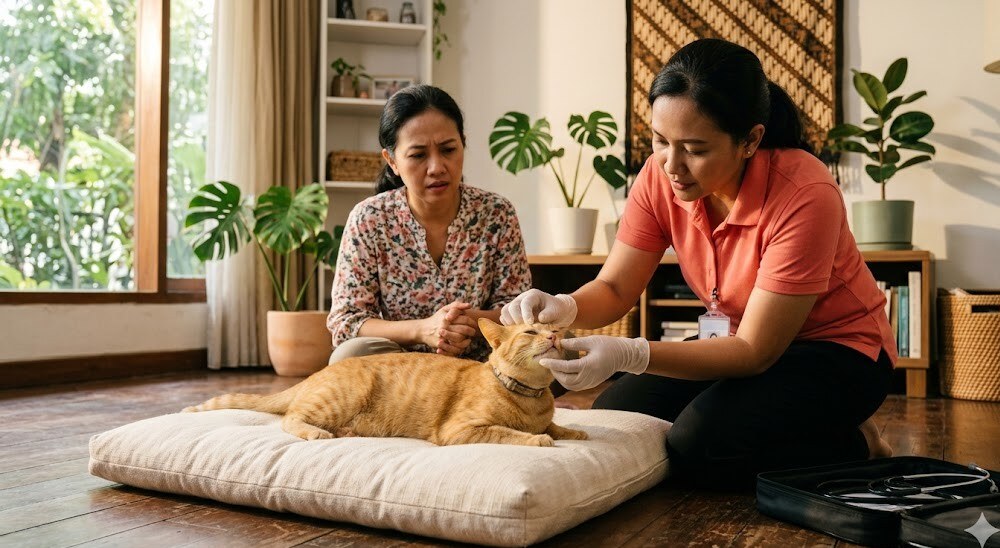

"Doctor, my 11-year-old cat often vomits once or twice a week, for months now. Its weight has slowly dropped. The previous vet said 'maybe hairballs', but I've given malt paste and it still vomits." A pattern like this, chronic vomiting + chronic intermittent diarrhea + gradual weight loss in an adult or senior cat, is a red flag for IBD (Inflammatory Bowel Disease) or small cell lymphoma, two conditions that often overlap and require a systematic diagnosis to tell apart.
This article is a complete guide for owners of cats who have struggled for months with recurrent vomiting/diarrhea without a clear answer, owners of senior cats with unexplained weight loss, and for those who want to understand why an IBD diagnosis cannot be established from symptoms alone, it needs a layered workup.
What is feline IBD?
IBD (Inflammatory Bowel Disease) in cats is a chronic immune-mediated inflammatory condition of the digestive tract, the immune system misfires and attacks the intestinal wall, causing persistent inflammation that damages GI absorption function and motility.
Histological classification of feline IBD based on the dominant inflammatory cell type:
- Lymphoplasmacytic enteritis, most common, dominated by lymphocytes and plasma cells
- Eosinophilic enteritis, eosinophil-dominant, often associated with a food allergy component
- Neutrophilic enteritis, rare, usually with an overlapping bacterial infection component
- Granulomatous enteritis, the rarest
What makes feline IBD clinically complex: significant overlap with intestinal small cell lymphoma (low-grade intestinal lymphoma), both can have nearly identical clinical presentations, and differentiation often requires a biopsy with immunohistochemistry. More detail in the diagnosis section below.
Why is IBD common in senior cats?
IBD can occur at any age, but middle-aged to senior cats (7 years and older) are the most common profile. Contributing factors:
- Cumulative GI antigen exposure, dietary antigens, intestinal microbiota, and the environment accumulate over time; the immune system can lose tolerance and begin chronic inflammation
- Declining regulatory immune function with age, the balance of pro-inflammatory vs anti-inflammatory shifts
- Genetic predisposition in some breeds (Siamese, Oriental cats overrepresented)
- Overlap with small cell lymphoma which is also predominant in senior age, most cases of chronic enteropathy in senior cats fall within the IBD ↔ small cell lymphoma spectrum
Because IBD often manifests as intermittent signs that gradually worsen over months to years, many owners only become aware after the weight has dropped significantly or the vomiting has become too frequent to ignore.
Clinical signs of IBD, chronic, not acute
The definition of chronic enteropathy per ACVIM and ISFM guidelines: persistent or intermittent GI signs for more than 3 weeks, after other etiologies (parasites, infection, foreign body, simple food intolerance) have been ruled out.
Main clinical signs of feline IBD
- Chronic vomiting, vomiting more than 2 times per week, lasting more than 3 weeks. The pattern "cat vomits once or twice a week, for 2-3 months" is very characteristic. Often not immediately after eating (delayed), often vomiting yellow fluid mixed with foam or partially digested food
- Chronic intermittent diarrhea, not necessarily every day, can follow a pattern of "2 days of diarrhea, normal for 5 days, diarrhea again", a repetitive pattern. Can be small bowel diarrhea (large volume, watery) or large bowel (frequency, sometimes mucus/fresh blood)
- Gradual weight loss, slow but consistent weight decline over months, even when the appetite appears normal or even increased. This is due to malabsorption, the cat eats, but nutrients are not absorbed optimally
- Fluctuating appetite, some days the cat eats normally/eagerly, some days it barely wants to eat. Inconsistent
- Intermittent lethargy, energy fluctuates
- Dull coat, declining body condition over time
- Sometimes vocalizing while eating, the cat meows before/after eating (a sign of discomfort)
What makes IBD challenging to diagnose: there is no single "characteristic" sign. The combination of a chronic pattern (>3 weeks) + multiple signs + no other proven etiology is what forms the diagnostic picture.
Acute vs chronic GI, why "wait and see" doesn't fit IBD
Owners often normalize cat vomiting, "cats vomit often anyway", "just hairballs", "ate grass". For acute GI (1-2 vomiting episodes, then recovery), a watch-and-wait approach is often OK. But a recurrent pattern of >3 weeks is a different cut-off.
| Pattern | Acute GI (self-limiting) | Chronic enteropathy (IBD or lymphoma) |
|---|---|---|
| Duration | <3 weeks, often <1 week | >3 weeks, often for months |
| Frequency | Can be intense for a few days then fully subside | Persistently intermittent, fluctuating |
| Body weight | Usually stable after recovery | Gradual downward trend |
| Common etiology | Dietary indiscretion, hairball, mild gastritis, small foreign body | IBD, small cell lymphoma, severe food allergy, chronic parasites, EPI, triaditis |
A cat that has already crossed the "recurrent for more than 3 weeks" threshold should not be delayed, a diagnostic workup needs to begin to identify a treatable etiology.
Differential diagnosis of chronic enteropathy
Before diagnosing IBD, the vet needs to rule out or consider the following differentials:
- GI parasites, Giardia, cryptosporidium, tritrichomonas (especially Bengal/Persian), intestinal worms. Repeated fecal exams are often needed (a single negative does not rule out, especially Giardia which sheds intermittently)
- Food allergy/intolerance, not IBD classically, but can cause identical symptoms. Often responds quickly (2-4 weeks) to an elimination diet
- Intestinal small cell lymphoma, significant overlap with IBD (see separate section below)
- Exocrine Pancreatic Insufficiency (EPI), rare in cats but possible, the fTLI test (feline trypsin-like immunoreactivity)
- Chronic pancreatitis / triaditis, cats have a "triaditis" concept: IBD + cholangitis + pancreatitis often co-exist because of the pancreatic-biliary-intestinal anatomy that merges closely
- Hyperthyroidism, a senior cat with weight loss + GI signs, T4 must be checked (often missed)
- Chronic kidney disease (CKD), can cause vomiting + weight loss, a kidney panel is mandatory
- Diabetes mellitus, especially with polyuria/polydipsia + weight loss
- Chronic liver disease (cholangitis), can overlap with IBD (triaditis)
This is why an IBD workup cannot skip straight to a biopsy, many simpler differentials must be excluded first (more cost-effective + less invasive).
Layered diagnosis, step-by-step workup
An IBD diagnosis is a diagnosis of exclusion + histopathology confirmation. The layered approach of the ACVIM Consensus on Chronic Enteropathy:
Layer 1: Rule out parasites + fundamental screening
- Multiple fecal exams (2-3 samples), flotation + direct smear. For Giardia, an antigen test or PCR is more sensitive
- Broad-spectrum dewormer trial, often an empirical step (fenbendazole for 5 days) before a complicated workup, because it is cost-effective and rules out a parasite cause that is easy to miss
- CBC + biochemistry + T4 + urinalysis, baseline + rule out systemic differentials (hyperthyroid, CKD, diabetes, liver)
- FeLV/FIV status, an immunocompromised cat can cause atypical GI
- Specific cobalamin (B12) + folate, markers of proximal GI malabsorption (cobalamin) and distal (folate). Cobalamin is often low in IBD/lymphoma
Layer 2: Food trial (elimination diet)
Before an invasive workup, many vets recommend a 6-8 week food trial with a hypoallergenic diet (novel protein or hydrolyzed protein). If the symptoms resolve with the trial = food-responsive enteropathy (FRE), not classic IBD. Many cases of feline chronic enteropathy are actually FRE misdiagnosed as IBD.
A strict food trial = only the trial food + water + no treats/toppings/snacks/extras of any kind. Partial compliance = an invalid trial.
Layer 3: Abdominal ultrasound
Abdominal ultrasound is noninvasive, valuable for:
- Intestinal wall thickness, IBD/lymphoma often shows a thickened intestinal wall, especially the muscularis layer (focal or diffuse)
- Mesenteric lymphadenopathy, enlarged mesenteric lymph nodes, one red flag of lymphoma vs IBD
- Loss of intestinal wall layering, concerning for lymphoma
- An intestinal mass, large cell lymphoma or other neoplasia
- Abdominal effusion
- Liver/pancreas/bile, screening for triaditis
Ultrasound can support the diagnosis and guide the biopsy approach, but cannot definitively differentiate IBD vs lymphoma (histopathology is needed).
Layer 4: Biopsy, the gold standard
A definitive IBD diagnosis requires a histopathology biopsy. Two approaches:
- Endoscopic biopsy, the cat is anesthetized, the endoscope enters via the mouth to biopsy the duodenum (or colonoscopy for the colon). Multiple small samples. Less invasive recovery, but the samples are small and limited to the mucosa
- Full-thickness surgical biopsy (laparotomy), multiple-site samples (jejunum, ileum, colon, mesenteric lymph node), full-thickness intestinal wall. Better diagnostic yield, especially for lymphoma which often involves the deeper layers, but recovery is more invasive
Histopathology + immunohistochemistry to differentiate lymphoplasmacytic IBD vs small cell lymphoma, a PARR (PCR for Antigen Receptor Rearrangement) test is often needed for clonality assessment.
IBD vs small cell lymphoma, why the biopsy matters
This is a critical section: lymphoplasmacytic IBD and feline intestinal small cell lymphoma have nearly identical clinical presentations, both with chronic vomiting, diarrhea, weight loss, senior cats. Ultrasound is often non-diagnostic too. Even simple histopathology can be equivocal.
Why the differentiation matters:
- IBD, first-line treatment: diet + immunosuppressive prednisolone ± other agents. The prognosis varies, many are well-managed long-term
- Small cell lymphoma, standard treatment: chlorambucil + prednisolone (low-grade chemotherapy protocol). The prognosis is quite good (median survival 1.5-2.5 years or more with proper treatment)
Although both are treatable with some drug overlap (prednisolone), chlorambucil, which is relevant for small cell lymphoma, is not first-line for pure IBD. The right diagnosis guides the right treatment.
Clinical reality: not all owners want an invasive biopsy (cost + anesthesia risk in a senior cat). In such cases, a therapeutic trial approach is sometimes used, treat as IBD first (diet + prednisolone), monitor the response. If the response is inadequate within 4-6 weeks, escalate to chlorambucil empirically (treat as small cell lymphoma) or push for a biopsy. Discuss with the vet the right strategy for your cat's context.
IBD treatment, multi-modal
Pillar 1: Hypoallergenic diet
Diet is the cornerstone of feline IBD treatment, often used together with immunosuppression. Two categories:
- Novel protein diet, a protein source the cat has never consumed before (e.g. rabbit, duck, kangaroo, goat), the strategy: if the immune system has never been exposed to that protein, there are no pre-formed antibodies, less inflammation
- Hydrolyzed protein diet, the protein is already hydrolyzed into small peptides whose size is below the threshold for triggering an immune response. More reliable than novel protein (because a cat that has already trialed multiple proteins can develop sensitization to a novel protein too). Commercial products are available (Hill's z/d, Royal Canin Hypoallergenic, Purina HA)
A minimum 6-8 week diet trial, strict (no other food). Response evaluation: vomiting/diarrhea frequency, weight trend, body condition.
Pillar 2: Immunosuppression
For IBD that does not respond adequately to diet alone, immunosuppression is needed:
- Prednisolone, first-line corticosteroid. Per Plumb's Veterinary Drug Handbook 7e, the typical induction dose in cats is 1-2 mg/kg PO q12h until controlled, then a gradual taper to the maintenance lowest effective dose (often 0.5 mg/kg q24-48h). Important: use prednisolone, not prednisone in cats, cats have inefficient prednisone-to-prednisolone conversion
- Budesonide, a topical GI corticosteroid with high first-pass metabolism in the liver, so the systemic effect is lower than prednisolone. An option for cats that struggle with systemic steroid side effects (diabetes, hepatopathy)
- Cyclosporine, an alternative immunosuppressant for refractory IBD. Less often used first but a solid option for steroid-non-responders
Pillar 3: Chlorambucil, for lymphoma or refractory IBD
Chlorambucil per Plumb's 7e is an alkylating agent, used in combination with prednisolone for intestinal small cell lymphoma (a low-grade oral chemotherapy protocol) or IBD refractory to steroids alone. Routine CBC monitoring (myelosuppression risk).
Pillar 4: B12 (cobalamin) supplementation
Cobalamin is often deficient in cats with chronic IBD due to proximal GI malabsorption (ileum). B12 injection supplementation (or oral high-dose) is often mandatory alongside other treatment, it can have a significant impact on the clinical response.
Pillar 5: Supportive
- Antiemetic if vomiting persists (maropitant)
- Probiotics to support the microbiota (evidence variable, but a low-risk addition)
- Treatment of comorbidities if present (pancreatitis, cholangitis in the context of triaditis)
Monitoring response, at 2-4 week intervals
After treatment begins, response evaluation is usually at 2-4 week intervals:
- Vomiting and diarrhea frequency, ask the owner to record it on a calendar / journal
- Body weight, weighed each visit
- Body condition score and coat condition
- Appetite and energy
- CBC + biochemistry periodically (especially when using chlorambucil or long-term steroids)
- Cobalamin re-check after supplementation
An adequate response = significant improvement within 4-6 weeks. If there is no response, re-evaluate the diagnosis (biopsy if not yet done), escalate the medication, or consider alternative therapy.
Feline IBD prognosis, well-managed long-term can be good
IBD is a chronic condition that is managed, not cured. But many cats with well-managed IBD can live a good quality of life long-term (years) with a combination of a maintenance diet + medication tapered to the minimum effective dose.
Prognostic factors:
- Fast response to the diet trial, very good prognosis (food-responsive enteropathy)
- Good response to prednisolone, good prognosis with management
- Refractory to steroids + diet, needs a repeat workup (biopsy, rule out lymphoma), a more guarded prognosis
- Small cell lymphoma included in the diagnostic spectrum, still treatable with chlorambucil + prednisolone, median survival 1.5-2.5 years or more
- Comorbidities (triaditis, CKD, diabetes), management complexity rises, the prognosis varies
What matters: the owner needs to be ready for a long-term commitment, a consistent diet, medication on schedule, routine check-ups. Treatment drop-off often causes relapse.
IBD FAQ
My cat vomits once a week, for 2 months now, is this IBD?
That pattern (recurrent vomiting lasting more than 3 weeks) is a red flag for chronic enteropathy that needs a workup, and IBD is one important differential. But an IBD diagnosis cannot come from symptoms alone, it needs ruling out other differentials (parasites, food allergy, hyperthyroid, CKD) and ideally histopathology confirmation. Consult a vet for a systematic workup.
How long must the hypoallergenic diet trial be done?
A minimum of 6-8 weeks on a strict diet (no other food, treats, snacks). If symptoms resolve significantly within that period = food-responsive enteropathy. If partial or no response = continue to the next layer (biopsy or empirical immunosuppression).
Is prednisolone safe long-term for cats?
Prednisolone can be used long-term in many feline IBD cases, with a strategy of tapering to the lowest effective dose and monitoring side effects (steroid-induced diabetes mellitus, hepatopathy, secondary infections). Cats tolerate long-term steroids better than dogs, but periodic CBC + biochemistry monitoring is important. Discuss the tapering strategy with the vet.
IBD vs lymphoma, is a biopsy required?
Ideally yes, a biopsy is the gold standard for definitive differentiation. But the reality: not all owners want an invasive workup, especially in a senior cat with anesthesia risk. Alternative: a therapeutic trial as IBD first (diet + prednisolone), and if the response is inadequate within 4-6 weeks, escalate to chlorambucil empirically (treat as small cell lymphoma) or push for a biopsy. Discuss the strategy that suits your cat.
Is a B12 injection mandatory?
Not automatically mandatory, but very often needed because IBD cats are often deficient in cobalamin (ileal malabsorption). Ideally check the B12 level before supplementation. If deficient, routine B12 injections (weekly at first, then tapering) can have a significant impact on the clinical response.
How much does a feline IBD workup cost?
It varies widely depending on the scope. The cost depends on which stages are done: the initial workup (CBC + biochemistry + T4 + fecal + B12), abdominal ultrasound, and then biopsy + histopathology, which is usually the highest and varies greatly depending on the facility. Ongoing diet and medication add to this over time. Ask Prabasa Vet on WhatsApp for a free consultation on the workup plan and a specific estimate that suits your cat.
Does feline IBD fully recover or is it lifelong?
IBD is a chronic condition that is managed, not permanently cured. But many cats with well-managed IBD reach a stable clinical remission (no symptoms) for years with a combination of a maintenance diet + medication tapered to the minimum effective dose. Treatment drop-off often causes relapse, so the owner needs a long-term commitment.
Summary
Feline IBD is a chronic immune-mediated inflammatory condition of the GI, most common in middle-aged to senior cats, presenting with chronic vomiting + intermittent diarrhea + gradual weight loss lasting more than 3 weeks. Layered diagnosis: rule out parasites + systemic differentials (hyperthyroid, CKD) → food trial 6-8 weeks → blood panel + B12 + abdominal ultrasound → endoscopic/surgical biopsy as the gold standard.
Because of the significant overlap with intestinal small cell lymphoma, biopsy + immunohistochemistry is what differentiates the two, relevant for treatment selection (IBD: diet + prednisolone; lymphoma: chlorambucil + prednisolone).
Multi-modal treatment: a hypoallergenic diet (novel protein or hydrolyzed) as the cornerstone + prednisolone for immunosuppression + B12 supplementation for cobalamin malabsorption + chlorambucil for refractory cases or lymphoma. Monitor the response at 2-4 weeks, taper to the minimum effective dose long-term.
The prognosis with adequate management and owner commitment can be quite good, many IBD cats live a stable quality of life for years.
Is your cat vomiting/having diarrhea repeatedly for months with weight loss? See the Prabasa Vet pet care guide or contact us on WhatsApp for a free consultation and a workup plan that suits you. A chronic enteropathy workup needs a systematic approach, don't use random medication without a diagnosis.
Read also: Cat Diarrhea and Vomiting: When Is It an Emergency?, Cat Not Eating: Causes and Management.
Medical references used in this article
This article was prepared with reference to the following sources, verified per clinical statement:
- Cerquetella M, Marchegiani A, Rossi G, et al. ACVIM Consensus Statement on Chronic Enteropathy in Cats. Journal of Veterinary Internal Medicine, definition of chronic enteropathy, layered workup (rule out → food trial → blood panel → imaging → biopsy), histological classification, treatment hierarchy
- ISFM (International Society of Feline Medicine) Consensus Guidelines on the Diagnosis and Management of Chronic Enteropathies in Cats, differential diagnostic approach, IBD vs small cell lymphoma differentiation, diet strategy (novel protein vs hydrolyzed)
- AAFP (American Association of Feline Practitioners) educational materials on chronic GI disease in cats, clinical presentation, imaging indications, biopsy approach
- Marsilio S, Pilla R, Sarawichitr B, et al. Small intestinal lymphoma in cats: literature review, clinical/imaging overlap with IBD, the role of the PARR test for clonality assessment, chlorambucil + prednisolone treatment protocol
- Plumb's Veterinary Drug Handbook, 7th edition, dosing reference for prednisolone (induction + maintenance), budesonide, cyclosporine, chlorambucil, monitoring (CBC + biochemistry), cobalamin supplementation, antiemetic (maropitant)
- Washabau RJ, Day MJ. Canine and Feline Gastroenterology. Saunders/Elsevier, IBD pathophysiology, the triaditis concept (IBD + cholangitis + pancreatitis), histopathology criteria
This article is a general guide based on the international guidelines of ACVIM, ISFM, and AAFP. For your cat's specific condition, including the symptom pattern, history, examination results, and response to intervention, consulting a vet is the right step. An IBD diagnosis requires a systematic workup with ruling out differentials and ideally histopathology confirmation. Treatment needs to be tailored per patient with response monitoring and adjustment over time.