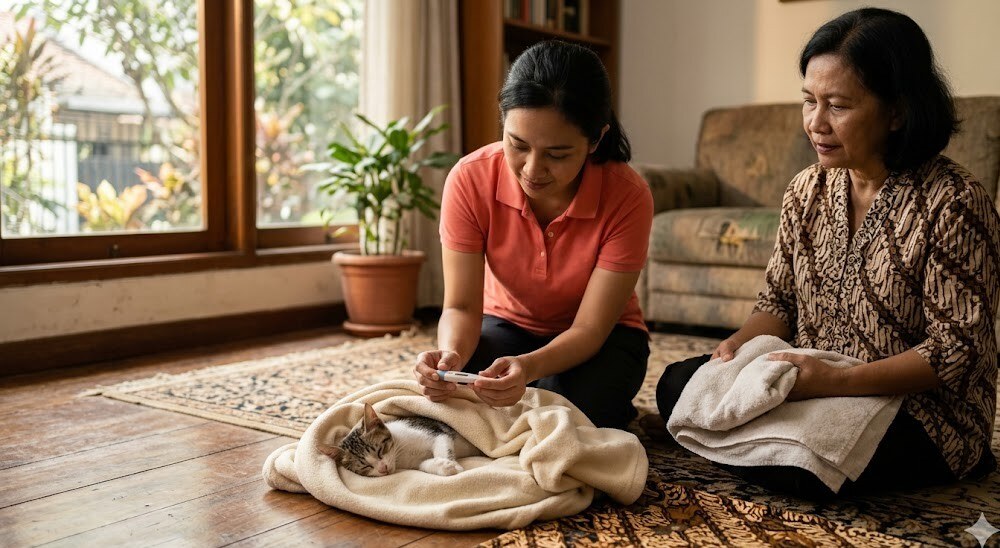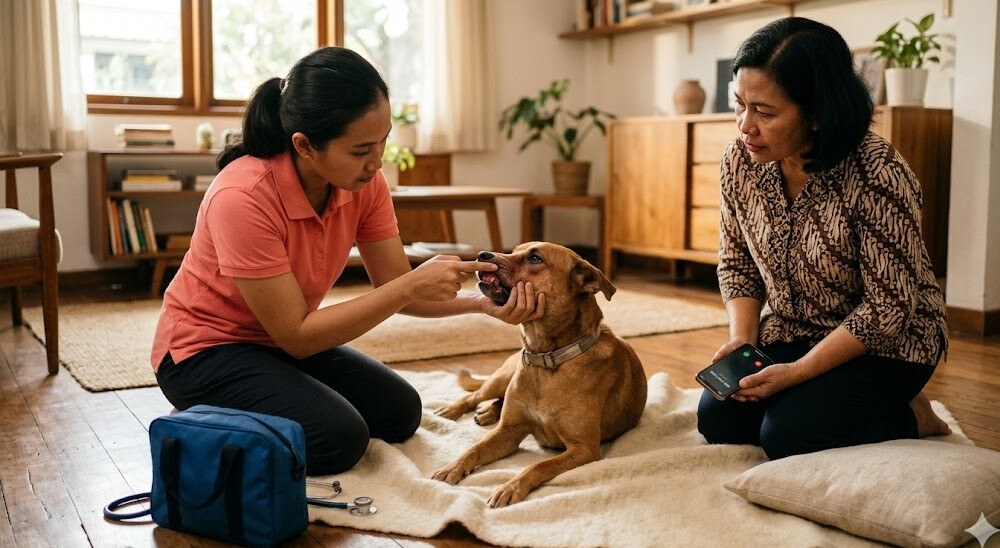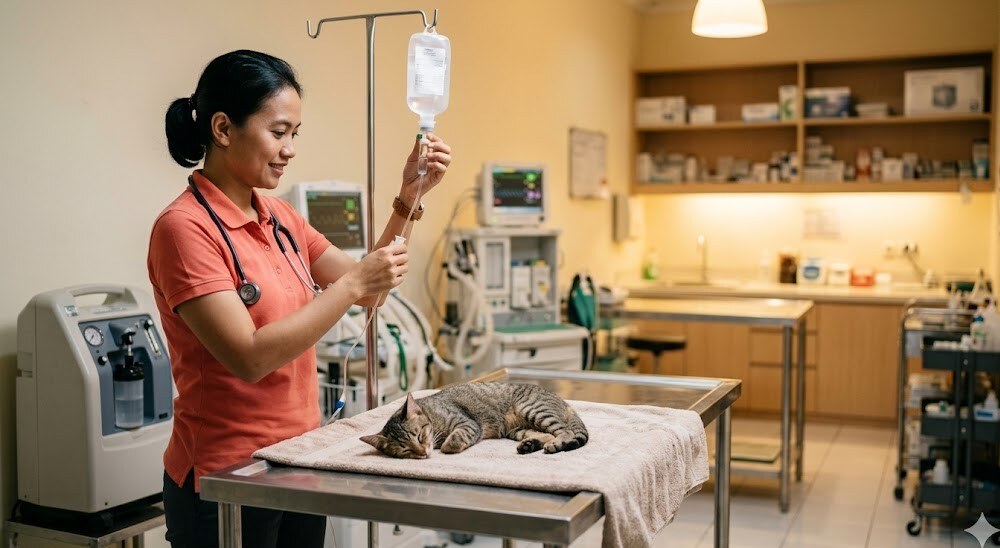

"Doc, my 12-year-old cat has been limping on one front leg since yesterday, and when I checked his paw just now there was a nail that had grown into the flesh of his own paw pad, it's already bleeding with a little bit of pus coming out. It smells too. I've never trimmed his nails because he scratches at his post on his own." This pattern, a senior cat + indoor + nails never trimmed + sudden limp, is a classic presentation of an ingrown nail that is often found late because it stays hidden under the fur of the leg.
Ingrown nails (a claw growing into the paw pad) are an under-recognized problem among Indonesian pet owners, many owners are afraid to trim nails, so they let them grow until the nail curves back and pierces the paw pad itself. The result: a puncture wound + infection + abscess + it can progress to osteomyelitis of the toe if left untreated. This article is a practical guide to recognizing the early signs, knowing when it can be handled at home, and when it needs professional medical evaluation.
What is an ingrown nail in pets?
An ingrown nail occurs when the claw keeps growing without being worn down until it curves back toward the paw pad and eventually pierces the flesh of the pad. This condition is analogous to a human ingrown toenail, but pet anatomy is different, a pet's claw normally grows in a natural curve; if it isn't worn down (through activity walking on rough surfaces or manual trimming), this curve closes in more and more until the tip of the claw touches and then penetrates the pad.
Most common locations:
- Dewclaw (the thumb claw on the side of the front leg, sometimes also the hind leg), most common because the dewclaw does not touch the ground when walking, so it isn't worn down naturally
- Lateral claws in indoor cats, cats kept exclusively indoors without an adequate scratching post
- All claws in seniors with reduced mobility (osteoarthritis, rarely walking)
Causes, why it happens
1. Seniors with reduced activity
- Old pets with osteoarthritis, degenerative neurological disease, or chronic illness → rarely walk → claws not worn down naturally
- The gradual decline in activity often goes unnoticed by owners until it's already too late
2. Dewclaw not worn down
- The dewclaw (thumb claw) is non-weight-bearing → never worn down
- Breeds with large dewclaws (Great Pyrenees, Saint Bernard, mixed breeds with double hind dewclaws) are especially at risk
- Dogs whose dewclaws aren't trimmed routinely often grow ingrown within 6-12 months
3. Indoor cats without adequate scratching
- Outdoor cats tend to wear their nails down naturally by climbing, scratching wood, etc.
- Indoor-only cats without a suitable scratching post → nails grow uncontrolled
- A senior indoor cat with osteoarthritis = double risk (reduced activity + indoor + no scratching)
4. Previous nail trauma
- A nail that cracks/breaks and regrows with a deformity can cause ingrowth
- A history of onychectomy (declawing) with poor technique can also cause abnormal regrowth
5. Endocrine or autoimmune disease affecting nail growth
- Canine hypothyroidism
- Symmetric lupoid onychodystrophy (SLO), a canine autoimmune disease affecting nail shape
- Hyperadrenocorticism (Cushing's), thin skin and nails
Clinical signs of an ingrown nail
Early signs
- Limping or lameness on one leg, often intermittent at first
- Excessive licking of one particular leg
- The nail looks too long and curved, needs visual inspection
- Sensitivity when the paw is touched
Progression signs
- The tip of the nail is seen touching or penetrating the paw pad, visible when the nail is separated from the fur
- The pad is reddened, swollen, or has a wound hole at the puncture site
- Discharge: serous (clear fluid), purulent (yellow-green pus), or hemorrhagic (bloody)
- A foul smell from the paw if there is secondary infection
- The dog/cat refuses to bear weight on that leg
- Mild fever if there is systemic infection
Severe complication signs (emergency)
- A large abscess in the paw pad with swelling of the toe/leg up to the wrist
- Lymphangitis (red streaks along the leg)
- High fever, lethargy, anorexia (suspected sepsis)
- Suspected osteomyelitis: complete refusal to bear weight + severe swelling + extreme pain
Severe complications require an emergency clinic visit for abscess drainage + IV antibiotics + toe X-ray + possible surgery.
Prevention, routine trimming is the key
Nail trimming frequency
- Active outdoor dogs: every 4-6 weeks (check the dewclaw each time)
- Indoor dogs / moderate activity: every 3-4 weeks
- Senior dogs / low activity: every 2-3 weeks
- Indoor cats: every 2-4 weeks
- Outdoor cats / active scratchers: every 6-8 weeks (routine visual check)
Proper nail-trimming technique
- Use a pet nail clipper (guillotine, scissor, or a Dremel grinder), not human nail clippers
- Identify the quick, the pink part inside the nail (on transparent/white nails) or the sensitive zone on dark nails. The quick contains blood vessels and nerves, don't cut into it
- Trim a little at a time (2-3 mm per cut), it's better to undercut several times than to overcut once
- On dark nails (where the quick is hard to see): trim very little per session and observe the cut surface, if a dark dot appears in the center = you're approaching the quick, stop
- Check the dewclaw every time you trim, it's often missed
- If you accidentally cut the quick (the nail bleeds): use styptic powder (Quikstop) or cornstarch to apply pressure and stop the bleeding
For cats
- Gently press the pad to extend the claw
- Trim only the sharp tip (1-2 mm from the quick, which shows as a pink line)
- Reward with a treat afterward
- If the cat is too stressed, you can do 1-2 nails per session spread over several days
What to do if the nail is already ingrown
If the nail hasn't pierced the pad yet (close but not yet puncturing)
- It can be carefully trimmed at home if you are comfortable with nail-trimming technique
- Gently separate the nail from the pad and trim above the contact zone
- Observe the pad for signs of infection over the next 2-3 days
- If in doubt, take your pet to a clinic or contact a house call vet
If the nail has already pierced the pad (punctured)
This needs professional medical evaluation, don't handle it yourself at home because:
- There is a puncture wound in the pad that needs debridement
- Risk of secondary infection (skin + environmental bacteria)
- Pain during manipulation, needs adequate sedation or analgesia
- The embedded nail needs to be trimmed with a safe technique that doesn't worsen the wound
- Systemic antibiotics are usually needed
- If there is an abscess, professional drainage + a culture sample if needed
If there is a large abscess / severe swelling / fever
This is an emergency, it needs a clinic for drainage + IV antibiotics + analgesia + toe X-ray (to rule out osteomyelitis of P3 or the proximal toe). Don't delay with home remedies.
Treatment at the clinic
- Sedation or strong analgesia (NSAID + opioid, or brief sedation for manipulation)
- Trimming the ingrown nail to a safe length
- Cleaning and debridement of the pad wound
- Abscess drainage if present (possibly culture for targeted antibiotics)
- Systemic antibiotics (per Plumb's Veterinary Drug Handbook 7e, usually amoxicillin-clavulanate or cephalexin as first-line; clindamycin as an alternative for anaerobic abscesses)
- Analgesia (an NSAID such as meloxicam or carprofen for dogs, with gabapentin as an adjunct if needed)
- Bandage / contact protector if needed
- Follow-up in 7-14 days to recheck healing
Prabasa Vet's house call service can handle uncomplicated ingrown nail cases (trimming + minor wound care) at home. For cases with a severe abscess or suspected osteomyelitis, we help with referral to a clinic equipped with X-ray + surgery facilities.
Ingrown nail FAQ for dogs and cats
I'm scared to trim nails because I once hit the blood vessel, how do I do it safely?
Start with a more forgiving technique: a nail grinder (Dremel) rather than a clipper, slower but with better control and less likely to cut the quick. Or trim very little per session (1-2 mm), spreading the trimming over several weeks. Each time you trim, observe the nail surface, if you see a dark dot in the center = you're approaching the quick, stop. For owners who are truly uncomfortable, using a professional groomer or a house call vet every 3-4 weeks is a reasonable investment.
My cat hates having his paws held, how do I trim his nails?
A few strategies: 1) trim while the cat is asleep or relaxed (1-2 nails per session), 2) wrap him in a towel and expose only one leg, 3) reward with a favorite treat after each nail, 4) practice paw handling from kittenhood (routinely touch the paws + reward), 5) if it's truly impossible, use a groomer or a house call vet. A cat scratching post (vertical + horizontal) is mandatory for all indoor cats to help wear nails down naturally.
My senior dog rarely had his nails trimmed and now they're very long, is it OK to cut them all short at once?
DO NOT trim drastically all at once. Nails that have been long for a long time mean the quick has also grown longer toward the tip, if you cut them short immediately, you'll cut the quick (bleeding, pain, infection risk). The correct strategy: trim a little at a time (2-3 mm) every 1-2 weeks, the quick will recede gradually over time. It takes 2-3 months to return to normal length. Consult your vet for a safe gradual trimming plan.
Should the dewclaw be removed preventively?
Not always. Preventive dewclaw removal is sometimes done during puppy neutering/spaying, but modern practice is more conservative (the dewclaw provides function for grip + comfort + has a nerve supply). What matters is routine dewclaw trimming (every 3-4 weeks) to prevent ingrowth. Removal is only indicated if there is a history of recurrent ingrowth, dewclaw deformity, or recurrent injury during outdoor activity.
How long does healing take once the nail is ingrown and has pierced the pad?
Healing of an uncomplicated pad puncture wound usually takes 7-14 days with proper trimming + antibiotics + analgesia. If there is an abscess that has been drained: 2-3 weeks with follow-up. If there is an osteomyelitis complication (rare but serious): it takes weeks to months with long-course antibiotics + sometimes toe amputation. This is why prevention through routine trimming is far better than treating complications.
How much does professional nail trimming or ingrown nail treatment cost in Jakarta?
The cost is tiered according to the complexity of the case. Routine nail trimming is the simplest procedure; treatment for an uncomplicated ingrown nail (trim + clean + prescription antibiotics) is more than that because it involves wound care; and a case with abscess drainage + diagnostic X-ray + a short hospital stay is the highest because it involves more procedures. So the cost depends on the severity and the treatment needed. House call service for routine trimming is convenient for cats/dogs that get stressed in the car. For an estimate that fits your pet's situation, contact Prabasa Vet on WhatsApp for a free initial consultation.
Summary
Ingrown nails (a nail growing into the paw pad) are a problem that owners often don't notice until it's already complicated. The main causes: nails not worn down naturally due to reduced activity (seniors, indoor-only), non-weight-bearing dewclaws, or indoor cats without adequate scratching. Early signs: limping, excessive licking, the nail looking long and curved. Progression signs: a swollen pad, discharge, foul smell, refusal to bear weight.
Prevention is the best strategy: routine nail trimming (dogs every 3-4 weeks, cats every 2-4 weeks), check the dewclaw each time, use a little-at-a-time technique to avoid cutting the quick, a scratching post is mandatory for indoor cats. If it's already mildly ingrown (not yet piercing the pad), it can be carefully trimmed at home. If it has already pierced the pad + there is secondary infection + an abscess, it needs a clinic for debridement + antibiotics + analgesia + (sometimes) X-ray to rule out osteomyelitis.
Is your dog or cat suddenly limping and constantly licking one paw? See Prabasa Vet's pet care guide or contact us on WhatsApp for a consultation. Our house call service can handle routine nail trimming at home, especially for cats that get stressed in the car or seniors with reduced mobility.
Read also: Dogs Afraid of Nail Trimming: How to Keep Them Calm, Cleaning Your Dog's and Cat's Ears: Safe Methods at Home, Routine Pet Grooming for New Owners.
Medical references used in this article
This article was prepared with reference to the following sources, verified clinical sentence by sentence:
- BSAVA Manual of Small Animal Dermatology, 4th edition, canine and feline nail anatomy (quick / matrix / claw fold), ingrown nail pathology, secondary infection of pad dermatology
- Plumb's Veterinary Drug Handbook, 7th edition, first-line antibiotics for skin/pad infections (amoxicillin-clavulanate, cephalexin, clindamycin for anaerobes), adequate analgesia for paw trauma (meloxicam, carprofen, gabapentin adjunct)
- ACVD (American College of Veterinary Dermatology) consensus material, claw disorders and onychopathies, symmetric lupoid onychodystrophy (SLO), prevention through a grooming routine
- Miller WH, Griffin CE, Campbell KL. Muller and Kirk's Small Animal Dermatology, 7th edition (Saunders/Elsevier), disorders of the claw and claw fold, treatment algorithm for uncomplicated vs complicated ingrown nails with abscess or osteomyelitis
- WSAVA Animal Welfare Guidelines 2018 , preventive grooming as part of welfare, frequency of paw and nail examination, ergonomic handling for feline nail trims
- Hnilica KA, Patterson AP. Small Animal Dermatology: A Color Atlas and Therapeutic Guide, 4th edition, clinical presentation of ingrown nails, dewclaw pathology, and management options
This article is a general guide based on international guidelines and veterinary dermatology textbooks. For cases where the nail has already pierced the pad, with a significant abscess, or with suspected systemic complications, professional medical evaluation (a clinic with minor surgery + X-ray facilities) is the right choice. Prabasa Vet's house call service can handle routine trimming and uncomplicated ingrown nails at home, and help with referral for complicated cases.