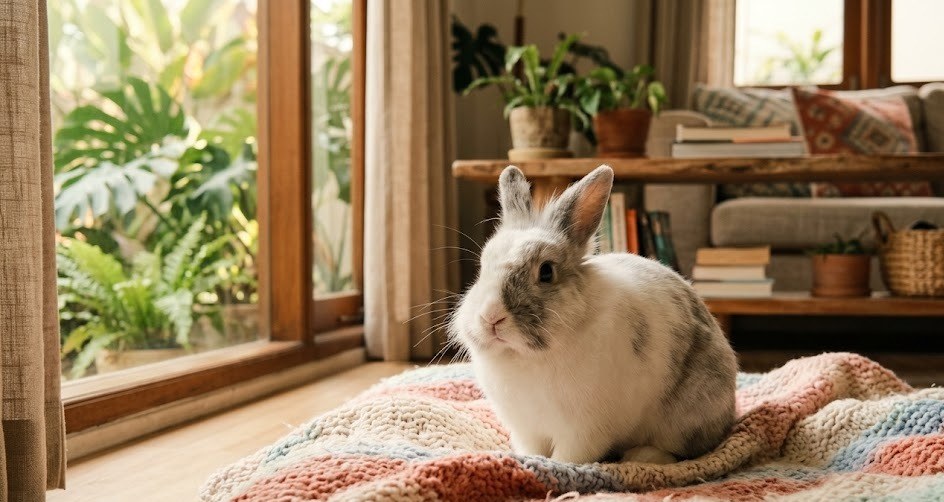

A rabbit that suddenly stops eating and has not pooped for 12 hours is not a minor issue you can wait on until tomorrow. This is one of the most classic signs of gastrointestinal stasis (GI stasis), an emergency condition that is the number one cause of death in pet rabbits worldwide, including in Indonesia. Rabbits are obligate hindgut fermenters, their digestive system must keep moving 24 hours a day, and if it stops, the chain of metabolic consequences can be fatal within hours to days.
This article is a guide for rabbit owners who are panicking because their rabbit refuses to eat, or who want to understand why this condition is considered an emergency, what is actually happening inside the body, the early signs that are often missed, the time window before things get worse, and why home care is very limited. Disclaimer: this article is general guidance based on exotic companion medicine guidelines, not a substitute for a direct consultation with an exotic vet. If you are currently facing a rabbit with the signs in this article, the top priority is: find an exotic vet now, not read at length.
What is GI stasis, an umbrella for two different conditions
The term "GI stasis" is often used as an umbrella for two clinically different scenarios that look similar from the outside but are managed differently:
- Gastrointestinal hypomotility, gut movement slows or stops without any physical obstruction. The most common causes: stress, low-fibre diet, dental pain, dehydration, post-anaesthesia, environmental change. This is the common scenario and usually develops gradually (24–72 hours from early signs to the late stage).
- Gastric dilation / obstruction, there is a physical obstruction (often a hair bezoar or foreign body) or acute gas distension in the stomach. This is rarer but far more rapidly fatal, a rabbit with acute gastric dilation can die within 4–8 hours if untreated. Presentation: distended belly, severe pain, the rabbit appears shocked.
Owners at home usually cannot reliably tell these two conditions apart, both begin with the rabbit refusing to eat and faecal output stopping. Because the fastest potential outcome (gastric dilation) can be fatal within hours, every rabbit that is not eating and not pooping for > 12 hours must be treated as an emergency until proven otherwise by an exotic vet.
Why GI stasis is so fatal in rabbits
To understand why this condition is so serious, you need a little context on the rabbit's unique physiology:
1. Obligate hindgut fermenter, digestion must keep running
Rabbits digest fibre through bacterial fermentation in the cecum (the first pouch of the large intestine). This is a non-stop 24-hour process, cecal bacteria continuously digest, produce short-chain fatty acids (the rabbit's main source of energy), and the output is reabsorbed as cecotrophs (the soft faeces the rabbit re-eats). If gut movement stops:
- Cecal bacteria lose their fresh substrate, the normal population collapses
- Pathogenic bacteria (especially Clostridium) begin to dominate
- Pathogenic bacteria produce toxins (enterotoxaemia), which can be lethal
- Gas accumulates in the stomach and cecum, severe pain + risk of gastric dilation
- Stomach contents dry out into a hard mass, secondary obstruction
2. Rabbits cannot vomit
Unlike cats and dogs, rabbits are anatomically incapable of vomiting. This means that if there is an obstruction or gastric distension, the body has no "release valve", pressure keeps building until the stomach tissue becomes ischaemic or ruptures.
3. Anorexia triggers hepatic lipidosis
A rabbit that has not eaten for > 24 hours begins to rapidly metabolise body fat for energy. Fat accumulates in the liver and causes hepatic lipidosis (fatty liver), a condition that can itself be fatal and significantly worsens the prognosis of GI stasis.
4. Hiding symptoms, prey-animal nature
Rabbits are prey animals in the wild. Their evolutionary instinct is to hide illness for as long as possible so as not to become a predator's target. By the time a rabbit finally shows clear symptoms (severe lethargy, hiding, hunched posture), the disease is usually already well advanced. This is why even the smallest early sign must be taken seriously.
Emergency timeline, when to panic
Based on the clinical literature of exotic companion medicine, this timeline can serve as a rough guide:
| Duration of anorexia | Risk | Action |
|---|---|---|
| < 6 hours | Low, if the rabbit is being selective (refuses pellets but eats hay) it is often not stasis | Observe closely, check faecal output, try offering favourite hay + fresh greens |
| 6–12 hours without eating OR without faeces | Moderate, early stasis very likely | Contact an exotic vet for consultation/booking a visit. Do not wait any longer. |
| 12–24 hours | High, late stasis, hepatic lipidosis beginning to develop | Emergency. An exotic vet is mandatory today, do not wait until tomorrow. |
| > 24–48 hours | Very high, prognosis worsens drastically | Critical emergency, prognosis varies depending on associated conditions |
| Swollen belly + acute pain | Suspect gastric dilation | Emergency within hours, can be fatal < 8 hours |
If you are in Greater Jakarta (Jabodetabek) and are not sure which exotic vet is reachable today, an exotic vet home visit service can be a very helpful option, especially for rabbits, where transport stress often worsens the condition.
Early signs that are often missed
Many GI stasis cases are only brought to the vet once the rabbit is already truly lethargic, yet the early signs usually appeared 6–12 hours earlier. What to monitor:
The earliest signs (often dismissed)
- Selective eating, refuses certain pellets or greens it usually likes, only nibbles a little hay
- Decreased faecal output, smaller faeces, fewer of them, or wide gaps between faecal pellets
- Abnormally shaped faeces, small, non-uniform pellets, or strands of fur (string of pearls)
- Less active in the late afternoon, rabbits are crepuscular, usually active in the morning and late afternoon; sleeping through times it would normally be awake = an alarm
- Not drinking water as usual
More obvious signs (the condition has progressed)
- Total anorexia, refuses all food including favourite treats
- No faeces at all for > 12 hours
- Hunched posture, sitting hunched with the hind legs drawn inward, looking uncomfortable
- Loud tooth grinding (bruxism), coarse, rhythmic grinding of the teeth, indicating visceral pain (different from the gentle tooth purring when content)
- Half-closed eyes, severe lethargy
- Belly appears bloated or hard on gentle palpation
- Absent gut sounds, on gentle palpation there should normally be subtle gut movement; in stasis it is often silent
- Body temperature drops (hypothermia), ears and feet feel cold, a sign of shock
Common causes of GI stasis
Understanding the cause is important not only for diagnosis, but also for prevention after recovery. The most common causes:
Low-fibre / high-carbohydrate diet
- A diet dominated by pellets, without enough hay
- Colourful pellets with seeds, corn, or nuts (snack food for rabbits, not a staple diet)
- Excessive treats (carrots, fruit, biscuits) replacing hay
Stress
- Environmental change (moving house, a new cage, a new animal)
- Loud noises, being disturbed by a household dog/cat
- Transport (often triggers stasis after a trip to the clinic or groomer)
- Overheating (rabbits are sensitive > 27 °C, fatal > 30 °C within a short time)
Dental disease + pain
A rabbit with malocclusion or abnormally growing teeth will be in pain when chewing → eats less → GI motility drops. Dental disease is a hidden cause that is often missed, owners focus on the anorexia, while the root of the problem is teeth that have been abnormal for months.
Dehydration
A leaking water bottle, a rabbit not used to drinking from a new bottle, or dirty water, all can trigger dehydration that then develops into stasis. Check daily water consumption.
Post-anaesthesia or post-surgery
General anaesthesia temporarily suppresses GI motility. Post-surgical rabbits (sterilisation, dental float, etc.) must be monitored closely for the first 48–72 hours to ensure eating and pooping resume normally.
Hair obstruction (trichobezoar)
Rabbits self-groom and swallow shed fur, normally the fur passes through with the help of hay fibre. But in heavily shedding rabbits (especially Angoras or long-haired breeds) without enough hay, the fur can accumulate into a bezoar that obstructs. This is actually almost always secondary to hypomotility, fur that gets stuck because motility has already slowed, not a bezoar that caused stasis in the first place.
First aid at home, limited and not a substitute for a vet
If you have decided you will go to an exotic vet within a few hours, there are some supportive measures you can take at home while waiting, not as a substitute for clinical treatment:
1. Keep offering fresh water
Fresh water in a bowl and a bottle. If the rabbit is still alert and responsive, you can try to assist with a gentle syringe (give slowly at the corner of the mouth, do not force), dehydration worsens stasis. Stop if the rabbit is not swallowing (risk of aspiration pneumonia).
2. Offer fresh hay and favourite greens
Put out fresh, fragrant hay (check it is not stale), add a few fresh leaves of basil/parsley/cilantro. Sometimes a rabbit still in early stasis will begin to nibble, this is a good sign but still requires a vet's evaluation.
3. Critical care recovery formula (if you already have it)
Experienced rabbit owners often keep Oxbow Critical Care or Sherwood SARx at home as an emergency supply. This is a fibre+protein powder mixed with warm water into a paste, given via syringe into the side of the mouth. Only give it if:
- The rabbit is still fully conscious and responsive (not severely lethargic)
- There is no abdominal distension / sign of gastric dilation
- You have already learned the safe syringe-feeding technique
If this is your first time facing this situation and you have never syringe-fed a rabbit, do not try to force it, the risk of aspiration can be more dangerous than a short delay while waiting for the vet.
4. Warm the rabbit if hypothermic
If the ears and feet feel cold, wrap the rabbit in a warm towel (not too hot), or place it in a warm area at 22–24 °C. Hypothermia worsens shock, it must be corrected before and during the trip to the clinic.
WHAT NOT TO DO
- Do not give human medication, paracetamol, ibuprofen, antacids, OTC simethicone, etc. Many human medications are toxic or have dosing that is dangerous for rabbits without a vet's calibration
- Do not give over-the-counter simethicone without consultation, some online sources recommend it for gas distension, but the dose and timing must be under a vet's direction, and it does not resolve the root problem
- Do not force-feed if the rabbit is very lethargic or unresponsive, risk of aspiration pneumonia (more dangerous than a short delay)
- Do not wait until tomorrow morning if it has already been > 12 hours of anorexia + no pooping, these hours are crucial
- Do not massage the belly carelessly, it can rupture a stomach that is already gas-distended
What the exotic vet will do at the clinic
The point is so you understand why a vet is "mandatory", not because of drama, but because proper treatment requires tools and medications that are not available at home:
- Triage + comprehensive physical exam, gentle abdominal palpation to evaluate distension, gas, or a mass; check temperature, hydration, teeth
- Abdominal radiography (X-ray), essential to distinguish hypomotility vs obstruction vs gastric dilation. This is the critical step that determines treatment
- IV or subcutaneous fluids, correct dehydration (the biggest factor that worsens stasis)
- Pain management, often using opioids such as buprenorphine; NSAIDs such as meloxicam in certain cases. Pain control is crucial because pain itself suppresses motility
- Prokinetic agents, drugs that stimulate gut motility (e.g. cisapride, metoclopramide, ranitidine in certain protocols), use varies depending on the case and there is nuance about when it is or is not allowed (especially if obstruction is suspected, prokinetics are contraindicated)
- Syringe feeding / gavage with critical care recovery formula, if the rabbit will not eat on its own
- Thorough dental check, examining the back premolars and molars with an otoscope or endoscope, which often reveals the hidden cause
- Surgery, in cases of physical obstruction that do not respond to medical therapy, an enterotomy is sometimes needed. But rabbits are a high anaesthetic risk, so this decision is made carefully
Prevention, the right diet and environment
After recovery, the main focus is to prevent recurrence, because a rabbit that has had stasis once is more prone to stasis again. Long-term prevention:
Diet
- 80% dried grass hay (Timothy, oat hay, orchard grass), available 24/7, unlimited
- 10–15% varied fresh leafy greens, rotate the types, not monotonous
- 5% quality Timothy-based pellets, not colourful pellets with seeds
- Treats (carrots, fruit, rabbit biscuits) at most 1–2 teaspoons per day as a reward
Hydration
- Clean water 24/7, a bowl is preferred by many rabbits over a bottle (larger intake volume)
- Check for leaking / clogged bottles every day
- Variety: offer high-water-content greens as a hydration bonus (romaine lettuce, cucumber)
Stress management
- A calm environment, away from predators (household cats/dogs)
- Avoid overheating, a temperature > 27 °C is already stressful, > 30 °C can be rapidly fatal
- Provide a hiding place (hidey) in the cage
- Always change the diet gradually (a transition of at least 7–10 days)
Routine dental checks
- Bring adult rabbits in for an annual dental check with an exotic vet, especially rabbits > 3 years old
- Dolichocephalic breeds (Holland Lop, Netherland Dwarf) are more prone to dental disease, check every 6 months
- Observe day to day: signs of drooling, refusing hay while still eating pellets (often a sign of molar pain), weight loss
Daily monitoring
- Check faecal output every time you clean the cage, a change in faecal size/quantity is an early warning
- Weigh weekly, a loss of > 5% in a week = an alarm
- Observe late-afternoon activity (the rabbit's peak activity time)
Why look for an exotic vet familiar with rabbits
Unfortunately, many general vets do not yet have much specific experience treating rabbits. A rabbit is not a "small cat with long ears", its physiology, pharmacology, and disease presentation are unique. A few examples of why experience matters:
- Certain antibiotics are fatal to rabbits, oral penicillin, oral amoxicillin, lincomycin, oral clindamycin can kill off the good cecal bacteria and trigger lethal enterotoxaemia. A vet who is not familiar may accidentally prescribe a drug more dangerous than the original disease
- Rabbit anaesthesia is high-risk, the protocol is different from cats/dogs, and rabbits are very sensitive to post-induction apnoea
- Dental disease is subtle, the back molars are hard to see without a special exotic otoscope, and easy to miss without a proper exotic exam
- Unique disease presentation, a rabbit with pneumonia often does not cough, and a rabbit in pain often only grinds its teeth (no vocalisation)
Before an emergency arrives, it is a good idea to have an exotic vet contact on standby, if you are in Greater Jakarta (Jabodetabek) and do not have one yet, the Prabasa Vet exotic vet home visit service can find a partner vet with experience handling rabbits. Transport stress for a rabbit in stasis can be very harmful, a home visit is often safer than a trip to the clinic.
FAQ
My rabbit hasn't pooped since this afternoon but is still eating a little, is this an emergency?
This is already in the early-warning zone. Faecal output that drops or stops is the earliest sign of declining motility, even if food intake is still present. The combination of "still eating + significantly reduced faeces" often appears in the early stage of stasis before total anorexia. Recommended action: consult an exotic vet immediately (call first for advice), monitor closely over the next 6 hours. If after > 12 hours there is still no significant faeces, a visit is mandatory.
I read online that I can give simethicone (Mylicon) for gas, is it safe?
Simethicone (anti-gas) is indeed often mentioned in international keeper communities as a supportive supply for rabbits with suspected gas distension, and many exotic vets will instruct a specific dose for certain cases. But: (1) it only addresses the symptom, not the root problem; (2) the dose must be calibrated to the specific weight and condition; (3) if it turns out to be a physical obstruction, simethicone resolves nothing and the delay to proper treatment can be fatal. Recommendation: still go to an exotic vet and ask whether simethicone is right for your rabbit's condition, do not self-medicate based on a blog.
How much does GI stasis treatment cost at an exotic vet?
The cost varies depending on severity, diagnostic needs (X-ray, lab), and the duration of treatment. A mild case caught early might be resolved with one visit + take-home medication. A severe case with hospitalisation, days of IV fluids, and possible surgery can be significantly more expensive. What is certain: the cost of keeping a rabbit healthy long-term (a proper hay diet + an annual dental check) is always cheaper than recovery from stasis. For an estimate of Prabasa Vet home visit costs, contact us on WhatsApp to discuss before the visit.
My rabbit has already recovered from stasis once, is it likely to recur?
Yes, a rabbit that has had stasis is more prone to recurrence if the root cause is not addressed. If the cause was diet (too little hay), a complete diet overhaul with a slow transition is essential. If the cause was dental, routine monitoring and re-checks are needed. If the cause was environmental stress, identify and eliminate the trigger. A rabbit with a history of stasis should ideally have an emergency supply at home (Critical Care formula, a small syringe, an exotic vet contact on standby) and the owner must monitor daily faecal output more closely.
Can Prabasa Vet do a home visit for a rabbit with suspected GI stasis?
Yes. A rabbit with stasis benefits greatly from a home visit because transport stress often worsens the condition, dehydration gets worse, gas distension increases, hypothermia develops during the journey. When you WhatsApp us, mention: how many hours the rabbit has not eaten, how many hours it has not pooped, whether there is abdominal distension, the temperature of the ears/feet, and your area. Our team will find a partner vet with rabbit experience and book a visit promptly. For cases with suspected gastric dilation (acute swollen belly + severe lethargy), the condition may require referral to a clinic with radiography and surgery capacity, our team will provide guidance if that is more appropriate.
Closing
GI stasis is one of the few exotic medicine conditions whose outcome is truly determined by how quickly the owner responds. A rabbit brought to an exotic vet within the first 6–12 hours with proper medical support usually recovers well; a rabbit that is left until > 48 hours in the hope that "maybe it will eat on its own tomorrow" often arrives in a condition with a poor prognosis. Internalise this simple rule: a rabbit not eating or not pooping for > 12 hours = call an exotic vet, do not wait. The rest, a proper hay diet, stress management, routine dental checks, is a long-term investment that dramatically reduces the chance that you will need to face this situation at all.
Is your rabbit showing signs of GI stasis right now and needs an exotic vet urgently? Contact us via WhatsApp, mention the duration of anorexia, the duration without pooping, the condition of the belly, and your area. Our team prioritises responses for exotic emergency cases and will find a partner vet with experience handling rabbits.
Medical references used in this article
This article was prepared with reference to the following sources, verified per clinical statement:
- Meredith A, Lord B (eds). BSAVA Manual of Rabbit Medicine, 2nd ed., Chapter 12 Gastrointestinal disease, GI hypomotility and gastric dilation (pp. 169+178), emergency timeline, diagnostics and treatment
- Quesenberry KE, Carpenter JW (eds). Ferrets, Rabbits, and Rodents: Clinical Medicine and Surgery, 4th ed., rabbit gastroenterology chapter, hindgut fermentation physiology, hepatic lipidosis in anorexic rabbits
- Harcourt-Brown F. Textbook of Rabbit Medicine, 2nd ed., GI tract anatomy and physiology, dental disease as an underlying cause, anaesthesia considerations, drug protocols including prokinetic agents and pain management
- Rabbit Welfare Association & Fund (RWAF), emergency care guidance for owners, critical care recovery feeding guidance, GI stasis fact sheet for public awareness
- House Rabbit Society veterinary references, owner handouts for monitoring faecal output, the 80% hay diet recommendation, recognising pain in rabbits
This article is general guidance based on exotic companion medicine guidelines. A rabbit with the signs in this article must be evaluated directly by a vet with experience handling rabbits, do not substitute reading an article for a clinical consultation.