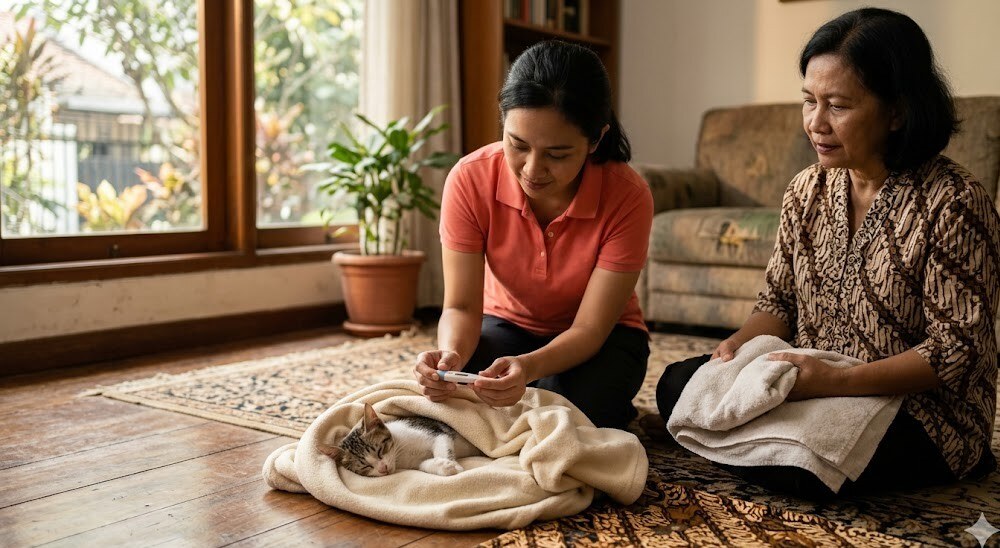

"My cat suddenly had a seizure at 2am at home in Pondok Indah. My usual house call vet isn't answering the phone, and the clinic nearby closes at 9pm. Where do I go?" A scenario like this is more common than many owners realise in Jakarta, and the decision you make in the first 30 minutes can determine the outcome.
A 24-hour vet clinic is a safety net you must get to know before you need it, not when you need it. This article is a practical guide: why Jakarta needs 24-hour clinics, the 6 criteria for choosing a good 24-hour clinic, a list of conditions that cannot wait until morning or be handled by a house call, what you should bring, and when a house call is enough vs when a 24-hour clinic is essential.
Why Jakarta needs 24-hour vet clinics
Jakarta is a dense urban city with millions of pets, but emergency veterinary infrastructure still lags behind human emergency care. Several Jakarta realities make 24-hour clinics important:
- Emergencies don't keep office hours, seizures, breathing difficulty, urinary blockage, accident trauma, heat stroke, and poisoning can happen at any hour. Many fatal cases occur because owners wait until morning
- Jakarta traffic is unpredictable, even in the middle of the night, the journey from South Jakarta to a 24-hour clinic in another area can take 30-60 minutes. Knowing the nearest option before an emergency = saving crucial minutes
- House calls have limitations, a house call vet (including us) can handle many non-emergency conditions, but not life-threatening conditions that require oxygen, an IV pump, immediate X-ray, anaesthesia, or ICU monitoring. Honest stance: if your pet's condition is life-threatening, a 24-hour clinic with complete equipment is the right choice, not a house call
- Jakarta's tropical climate, heat stroke, insect bites, and conditions related to high humidity are more common than in cool climates. Fast access to emergency care is more crucial
6 criteria for choosing a good 24-hour vet clinic
Not every clinic that advertises "24 hours" actually has real emergency capacity. Before an emergency happens, take the time to evaluate 2-3 clinics in your area based on the following 6 criteria. You can confirm by phone or with a short daytime visit.
1. Genuinely operational 24 hours, not just "on-call"
Some clinics advertise "24 hours" but it actually means the vet is on-call from home, which means when you arrive at 3am, the vet needs 30-45 minutes to travel to the clinic. For emergencies like urinary blockage or severe breathing difficulty, 30 minutes can be fatal.
Questions you should ask:
- "Is there a vet on-site throughout the night, or on-call?"
- "How long is the response time if I arrive at 2am without an appointment?"
- "Is there a nurse/medical assistant on-site throughout the night?"
A good 24-hour clinic has at least 1 vet + 1 medical assistant on-site 24/7, not just a vet on-call from home.
2. Complete emergency equipment
Emergency care requires specific equipment that not every clinic has. Before trusting that a clinic can handle an emergency, confirm the following are present:
- Oxygen tank or oxygen concentrator, critical for breathing difficulty, heat stroke, shock, anaesthesia recovery
- IV pump and complete IV fluids, for severe dehydration, shock, post-decompression urinary blockage, post-trauma support
- Digital X-ray, critical for trauma, swallowed foreign bodies, urinary blockage, abdominal distension, fractures
- Ultrasound, for acute abdomen evaluation, free fluid (internal bleeding), emergency cardiac conditions
- ICU monitoring (pulse oximeter, ECG, blood pressure, capnograph), for critical pets needing continuous observation
- Anaesthesia machine with isoflurane/sevoflurane + monitoring, for emergency surgery (urinary blockage when catheterisation fails, trauma needing surgical stabilisation, foreign body removal)
- Plasma or whole blood availability, critical for severe bleeding, DIC, acute anaemia. Not every clinic has a blood bank; ask whether they have access or a fast referral
A 24-hour clinic without this basic equipment is not actually ready for a real emergency, it is just an extended-hours regular clinic.
3. Vets with emergency experience
A general practice vet on a night shift is different from a vet with emergency training. Emergency care requires familiarity with rapid stabilisation protocols, triage, and making invasive decisions within minutes. Ask:
- Does the vet on night duty have additional emergency/critical care training (has attended an ACVECC, BSAVA ECC, or equivalent workshop)?
- Does the clinic regularly handle emergency cases, or is it mostly elective surgery + routine check-ups?
- The volume of emergency cases per week (clinics with high volume usually have a more trained team)
4. In-house lab capability
For an emergency, lab results must be available within 30 minutes, not sent to an external lab and waited on until the next morning. The in-house lab must include:
- Complete Blood Count (CBC), detecting infection, anaemia, thrombocytopenia
- Minimal blood chemistry (BUN, creatinine, glucose, ALT, total protein), evaluating kidney function, liver, metabolic status
- Electrolyte panel (Na, K, Cl), critical for urinary blockage (hyperkalaemia threatens the heart), heat stroke, acute gastrointestinal issues
- Blood gas analysis if possible, for acid-base evaluation
- PCV/total protein quick test, bedside for evaluating dehydration/bleeding
- Urinalysis, critical for urinary blockage, acute kidney issues
5. Location within reach of where you live
The best 24-hour clinic in another city is no help if it takes you an hour to reach. Evaluate 2-3 of the 24-hour clinics closest to your home, not just based on rating, but based on the realistic travel time in Jakarta traffic conditions (daytime vs nighttime differ).
Tip: practise the route to the 2 nearest clinics during the day, remember the parking + entrance, so that during a night emergency you don't get lost.
6. Transparent pricing
Emergency care is expensive, that's the reality. What matters is not that it's cheap, but that it's transparent. A good 24-hour clinic will:
- Provide a written estimate before treatment (diagnostic workup, hospitalisation, surgery if needed)
- Update the estimate if the condition develops and additional treatment is needed
- Explain the treatment options along with a cost range (gold standard vs essential vs palliative)
- Accept modern payment methods (credit card, bank transfer, e-wallet), not just cash
A clinic that hesitates to give a written estimate before treatment, or that raises charges dramatically without an update, a red flag. As the owner, you have the right to know the financial commitment before a decision.
When you MUST go to a 24-hour clinic (cannot wait until morning or a house call)
The following conditions are life-threatening emergencies that require a clinic with complete equipment. A house call, a regular daytime clinic, or waiting until morning = a fatal risk. Go straight to the nearest 24-hour clinic:
Breathing difficulty (dyspnoea)
Rapid, deep breathing with visible effort, open mouth, pale or bluish tongue, the pet unable to rest calmly. This can be due to pleural effusion, pneumonia, congestive heart failure, a feline asthma (crisis), or thoracic trauma. It needs oxygen + fast diagnostics. DO NOT delay.
Seizures
Especially if a seizure lasts >5 minutes (status epilepticus) or seizures recur within 24 hours (cluster seizures). Brain damage can be permanent if not stabilised quickly with IV benzodiazepine.
Urinary blockage in male cats (or male dogs)
Signs: a male cat/dog straining to urinate with no result, going to the litter box frequently, pain, weakness, vomiting. This is an absolute emergency, a full bladder + inability to drain = hyperkalaemia (high potassium) that can stop the heart within 24-48 hours. It needs urethral catheterisation + IV fluids + monitoring of blood K. See the complete guide on signs of a cat emergency.
Uncontrolled bleeding
Trauma with active bleeding that is not controlled with direct pressure for 5 minutes, or suspected internal bleeding (extremely pale gums, a suddenly enlarged belly, the pet progressively weak without external bleeding). It needs ultrasound/FAST evaluation + IV fluids + transfusion if necessary.
Abdominal distension + collapse (GDV / Gastric Dilatation-Volvulus)
A dog with a suddenly enlarged, bloated belly + unable to vomit + excessive drooling + collapse. More common in large breed dogs (Golden, Labrador, Great Dane, German Shepherd). High mortality without surgery within 2-4 hours. Every minute is crucial.
A cat in total fasting >24 hours + weakness
A cat that eats nothing at all for >24 hours (especially an overweight cat) is at risk of hepatic lipidosis, an acute liver condition that is fatal if not feed-tubed quickly. The difference from "a slightly reduced appetite", here it is total refusal + weakness + jaundice in the gums/sclera.
Swallowed foreign body
Especially thread/string/cord (a linear foreign body) in cats, it can entangle the intestines and cause necrosis within 24-48 hours. Or swallowing sharp chicken bones, needles, batteries (caustic). It needs X-ray + possible endoscopy or immediate surgery.
Snake bite or anaphylactic allergy
The face/neck swelling rapidly, hives over the whole body, progressive shock. It needs epinephrine + dexamethasone + IV fluids + observation. For venomous snake bites, antivenom is needed, which is usually not available at a regular clinic.
Severe burns
More than 15% of the body area, or second- to third-degree burns (loss of skin layers). It needs airway evaluation (if there is smoke inhalation), large-volume IV fluids, wound management, pain control.
Established heat stroke
Body temperature >40.5°C with pale/purple gums, collapse, confusion, seizures. It needs evaluation for organ damage (kidneys, liver, coagulation) + IV fluids + 24-72 hour monitoring. Details on heat stroke + first aid at home.
Poisoning (suspected)
A pet suspected of swallowing rodenticide, chocolate, xylitol, oleander, lily (cats), human medication, or household chemicals. Some toxins have specific antidotes that must be given within a certain time window.
A dog vomiting blood or severe bloody diarrhoea
Especially accompanied by progressive weakness, pale gums, dehydration. It can be haemorrhagic gastroenteritis, parvovirus (puppy), a bleeding ulcer, toxins. It needs IV fluids + fast diagnostics. Details on a dog vomiting blood.
What you should bring to a 24-hour clinic
During an emergency, it's easy to forget important things. Prepare the following mental checklist, or better yet, save this list in your phone notes:
- Pet identity, vaccine book/card (if any), name, age, last recorded weight, breed
- Vaccination history, when the last vaccine was, the type of vaccine. Relevant for evaluating parvo, rabies risk, etc
- Medications currently being taken, drug name, dose, when last given. Bring the physical packaging if you can
- Vomit/diarrhoea/urine samples if they can be collected, in a clean container (does not have to be sterile). Useful for diagnostics
- Serial wound photos if there is developing trauma, a photo of the condition 1 hour ago vs now helps the vet evaluate progression
- A note of the time of symptom onset, "vomiting started at 8pm, weakness started at 11pm, now it's 1am", the timeline is critical for diagnostics
- Photo/video of symptoms if symptoms are intermittent (for example a seizure that has stopped by the time you reach the clinic), video helps the vet a great deal
- Payment method, credit/debit card + cash backup. Emergency costs vary widely depending on the condition, the type of animal, and the treatment needed; having a flexible backup payment is important
- A secure carrier, for cats, a hard-shell carrier with a towel inside. For small dogs, the same. For large dogs, a leash + car access that fits
House call vs 24-hour clinic, when each is right
An honest framework from us: both options have different places, and knowing when to use which = the best decision for your pet.
A house call is suitable for:
- Routine vaccination + annual check-ups (especially for cats that get stressed in a carrier)
- Senior pets with mobility issues that are hard to bring to the clinic
- Multiple pets in one home (cost-efficient + no stress of mass transport)
- Consultations for non-emergency conditions that can be evaluated visually + by auscultation + basic lab work (a pet with a mildly reduced appetite, chronic itching, behavioural consultation)
- Post-treatment follow-up that is already stable
- Compassionate euthanasia at home
A 24-hour clinic is suitable for:
- All the life-threatening conditions mentioned above
- Diagnostics requiring X-ray, in-depth ultrasound, or extensive bloodwork with fast results
- Emergency or elective surgery
- Hospitalisation with continuous IV fluids + monitoring
- Anaesthesia for complex procedures
- Conditions requiring 24/7 observation by a medical team
As a house call service, we are honest about our limitations: we do not handle life-threatening emergencies in a home setting because your pet needs equipment that is only available at a clinic. If you contact us for an emergency, we will triage quickly and refer you to the nearest 24-hour clinic with information that helps you + the clinic's vet (timeline, symptoms, suspected condition). See the complete pet emergency guide.
Family preparation so you don't panic during an emergency
A veterinary emergency is stressful + traumatic, even for experienced owners. Pre-emergency preparation dramatically lowers the risk of bad decisions made in a panic:
- Save 2-3 of the nearest 24-hour clinics in your phone contacts, name, full address, phone number, estimated travel time from home
- Familiarise yourself with the route to a 24-hour clinic before an emergency, drive there during the day, remember the parking, remember the emergency entrance area (sometimes different from the main door)
- Discuss with your family, who will drive during a night emergency, who will hold the pet, who will contact the clinic on the way
- An emergency budget reserve, prepare a reserve that is accessible 24 hours (a credit card with enough limit or an e-wallet with a balance). Veterinary emergencies can be costly and usually require an upfront deposit, so having a financial buffer is wise
- Save the number of a house call vet you trust for quick triage consultation, if you are unsure whether this is an emergency or can wait, a second opinion within minutes can be life-saving
- Your pet's medical history record, last vaccine, regular medications, chronic conditions (diabetes, kidney, heart), keep a softcopy in the cloud + a hardcopy at home
FAQ on 24-hour vet clinics in Jakarta
How do I know the 24-hour clinic I choose is genuinely 24 hours, not just marketing?
The simplest way: call the clinic at 11pm or 3am (on an ordinary day, not during an emergency). If someone answers within <2 minutes + a vet on-site can consult directly on the phone = genuinely 24/7 staffed. If no one answers or the person says "the vet is on-call, we'll contact them first" = not truly 24 hours. Do this on a quiet day, not during an emergency, so you know their actual capacity.
Do I have to call first before coming to a 24-hour clinic?
For life-threatening situations (breathing difficulty, an active seizure, heavy bleeding, collapse), go straight to the clinic and have someone else call from the car so the clinic team is ready. For less acute but worrying conditions (repeated vomiting, progressive weakness without life-threatening signs), call first for triage, they can estimate whether you need to come right away or can observe with specific instructions.
What determines the cost of an emergency visit + diagnostics at a 24-hour clinic?
Emergency costs cannot be generalised, they depend heavily on several factors: the medical condition and its severity, the type and size of animal, the diagnostics needed (bloodwork, X-ray, ultrasound), whether hospitalisation or surgery is required, and the duration of monitoring. A good clinic will give a written estimate before approving treatment, and you have the right to ask for a cost range before a decision. If you would like a sense of this before an emergency arises, our initial consultation is free via WhatsApp, tell us about your pet's condition and we'll help explain the relevant factors so you are better prepared.
My pet looks stable after first aid at home. Do I still need to go to a 24-hour clinic?
For some conditions (heat stroke that has been cooled, a seizure that has stopped, a mild allergy that has improved with antihistamine), a medical evaluation is still recommended even if the pet appears stable, internal damage (kidneys, liver, coagulation) often manifests 24-72 hours later. But if the pet has genuinely returned to baseline (eating + active + normal behaviour) within 1-2 hours, observing at home with a plan to see the vet in the morning can be reasonable. Have a phone consultation with your house call vet for a second opinion.
I live in South Jakarta. Where is the nearest 24-hour clinic?
We avoid naming specific clinics in public articles (per the Professional Code of Ethics). The best way to find one: Google "24 hour vet clinic [your area]" + check the rating + reviews from other patients + call to confirm the 6 criteria above. Or, for our patients, we have an internal list of 24-hour clinics we trust based on referral experience, you can ask us during your initial consultation so you are prepared before an emergency.
Can I ask a house call vet to come for a life-threatening emergency?
As a matter of ethical principle, we will decline a request like this and refer you to a 24-hour clinic, not because we don't want to, but because in a home setting we don't have an oxygen tank, a hospital-grade IV pump, X-ray, or team support to handle a critical patient. Bringing a vet to the home when a pet needs oxygen + IV fluids + monitoring = delaying life-saving care. Honest stance: for life-threatening situations, a 24-hour clinic is the right choice. We can help coordinate a referral + provide pre-arrival info to the clinic.
Summary
- A 24-hour vet clinic = a safety net you should get to know before an emergency, not during one
- 6 criteria for a good 24-hour clinic: true 24h staffing (not on-call) + complete emergency equipment (oxygen, IV pump, X-ray, ultrasound, ICU monitoring, anaesthesia) + vets with emergency experience + an in-house lab with results in <30 minutes + a reachable location + transparent pricing
- Must go to a 24-hour clinic (cannot wait until morning or a house call): breathing difficulty, seizures, male urinary blockage, uncontrolled bleeding, abdominal distension + collapse, a cat in total fasting >24h + weakness, swallowed foreign body, snake bite, severe burns, established heat stroke, poisoning, a dog with severe vomiting of blood
- Bring during an emergency: vaccine book + current medications + vomit/diarrhoea samples + serial wound photos + a note of the onset timeline + payment method + a secure carrier
- House call vs 24-hour clinic, house calls for non-emergency + senior care + multiple pets + follow-up. 24-hour clinics for life-threatening situations + complex diagnostics + hospitalisation + surgery
- Family preparation: save 2-3 of the nearest 24-hour clinics in your phone, practise the route during the day, discuss family roles during an emergency, prepare an emergency budget reserve that is accessible 24 hours
If you need a quick second opinion to evaluate "is this an emergency or can it wait until morning?", our initial consultation is free via WhatsApp, send a photo/video of your pet's condition + the symptom timeline, and we'll help triage quickly (straight to a 24-hour clinic? observe at home with a checklist? a house call tomorrow morning?). For a clearly life-threatening situation, don't wait for a consultation, go straight to the nearest 24-hour clinic and we'll help coordinate from there.
Read also: Pet Emergency Guide, Signs of a Cat Emergency You Should Not Delay, A Dog Vomiting Blood: A Jakarta Emergency, Heat Stroke in Dogs and Cats in Jakarta.
Medical references used in this article
This article was prepared with reference to the following sources:
- ACVECC (American College of Veterinary Emergency and Critical Care), Emergency Care Standards + Triage Protocol
- AAHA Emergency and Critical Care Standards for companion animal clinics
- BSAVA Manual of Canine and Feline Emergency and Critical Care 3rd edition, chapters on triage, stabilisation, equipment requirements
- Drobatz KJ et al. Textbook of Small Animal Emergency Medicine, chapter on the clinical approach to the emergency patient
- Silverstein DC, Hopper K. Small Animal Critical Care Medicine 2nd ed, ICU capability + monitoring standards
This article is a general guide for pet owners in Jakarta. Every emergency has specific nuances, if you are unsure whether your pet's condition is an emergency, a quick consultation with a veterinarian for triage is the safe step.