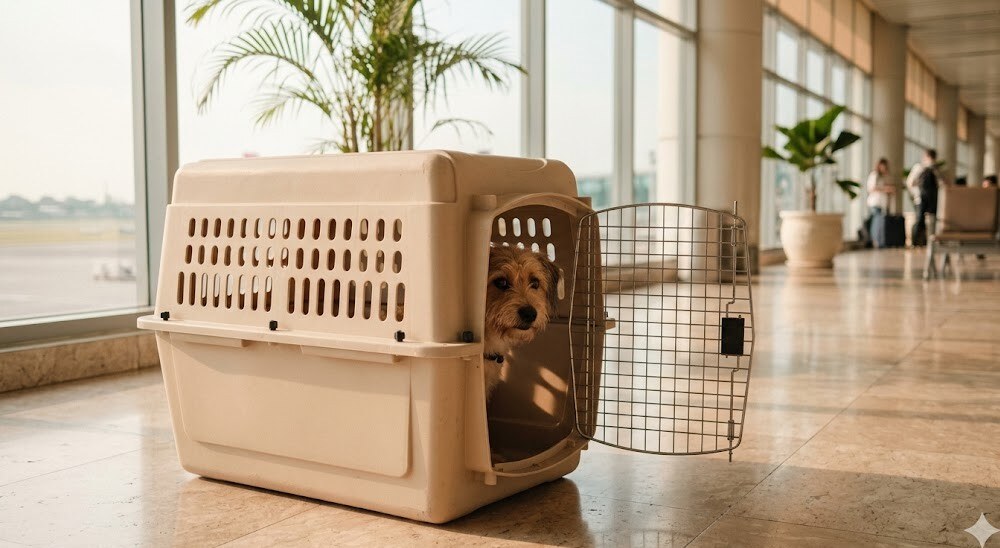

Many owners delay or cancel routine check-ups because their pets are traumatized every time they go to the clinic. A cat that screams throughout the journey, a dog that freezes or shows aggression when entering the clinic, or a pet that is stressed for days post-visit, all of these make owners reluctant to schedule the next visit. The consequences: late-detected illness, missed vaccinations, and declining quality of life.
The Fear-Free movement popularized by Dr. Marty Becker and the AAFP/ISFM Cat Friendly Practice recommendations have revolutionized the approach to vet visits, from "minimal restraint to get the job done" to "creating a positive emotional experience for the pet". Many techniques can begin at home, well before the day of the visit, with a significant impact on stress levels.
This article covers the Fear-Free pre-visit protocol, pre-visit pharmaceuticals (gabapentin, trazodone, discuss with your vet), cat carrier training, low-stress handling, house call vet as an alternative, and when a behavior vet is needed for severe vet anxiety. Disclaimer: this is general guidance, not a substitute for a vet consultation for pets with severe trauma or those needing medication.
Why so many pets are traumatized by vet visits
From a pet's perspective, a vet visit is a series of naturally aversive events:
- Carrier confinement, for a cat that is not used to it, the carrier is associated only with "going somewhere bad"
- Car ride, motion sickness, sounds, vibrations, new smells
- Clinic lobby, the smell of other animals (especially stress smells + predator smells for cats), the sound of dogs barking, bright lighting
- Exam table, slippery surface, high up, exposed
- Restraint for examination, held by a stranger, manipulated
- Aversive procedures, rectal temperature, vaccine injection, palpation of sensitive areas, blood draw
- Alarm pheromone smell from other stressed animals at the clinic
A single first negative experience can create lifetime conditioning, the pet learns "carrier = bad". Subsequent visits only reinforce this, and the stress level escalates with each visit.
Pre-visit protocol for cats (the most stress-prone)
Carrier training (start now, not on the day of the visit)
Critical insight: the carrier should become a safe space that is positive, not a trigger for a visit. Protocol:
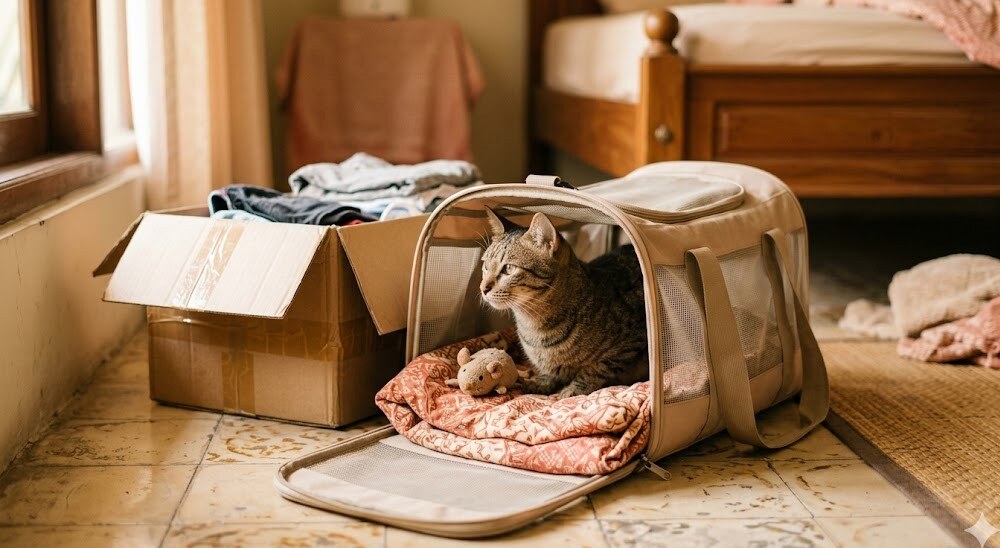
- Keep the carrier available at home, not just appearing on the day of the visit. Place it in a room where the cat often hangs out (living room, bedroom).
- Carrier door open, with soft bedding inside (an old piece of the owner's clothing with a familiar, safe scent)
- Treats in the carrier every day, place high-value treats at the door, then progress further inside. Build a positive association.
- Feeding inside the carrier (for cats already comfortable going in), make the carrier a "reward place".
- Top-loading carrier preferred over front-loading, easier for the owner to lift the cat out without forcefully pulling
- Hard carrier with a removable top is ideal, the exam can be done with the cat staying in the bottom half of the carrier if it is very anxious
Duration: ideally carrier acclimatization 2-4 weeks before the first visit. For an existing pet with trauma, 1-3 months of re-training is needed.
Pheromones (Feliway for cats, Adaptil for dogs)
- Spray in the carrier 15-30 minutes before the cat goes in (alcohol-based, so let it evaporate first)
- A towel sprayed with pheromone to drape over the carrier during the journey
- A diffuser at home for multi-cat households
- Pheromones are not a magic bullet, supportive, in combination with other tactics
Pre-visit pharmaceuticals (consult your vet)
For cats/dogs with moderate-severe vet anxiety that do not respond adequately to training + pheromones, pre-visit medication is a valid option per Fear-Free and ACVB guidelines:
- Gabapentin, in cats, the pre-visit dose is often 50-100 mg per cat 1-3 hours before the visit (the range can be higher for cats with severe anxiety, discuss with your vet). Anxiolytic, mild sedation. In dogs the dose is weight-based. The vet prescribes according to weight and severity.
- Trazodone, for dogs especially, the pre-visit dose is weight-based. Discuss with your vet.
- Acepromazine, sedation but not anxiolytic (the pet remains afraid but cannot express it), generally not preferred as a sole agent for anxiety, per Fear-Free guidelines. A combination with butorphanol is sometimes used by vets for specific scenarios.
Pre-visit medication is NOT a permanent solution for underlying anxiety, it is a temporary bridge while working on training and environment. Discuss with your vet for the appropriate dose per pet.
Towel + warm car
- Drape the carrier with a large towel (preferably a familiar towel with the home scent) to reduce visual stimulation
- Pre-warm the car if the weather is cold (or pre-cool if hot), extreme temperatures add stress
- Drive smoothly, avoid sudden braking or hard acceleration
- Play soft music or keep the car quiet
Pre-visit protocol for dogs
Counter-conditioning
- Drive to the clinic without going in, several times per week, drive to the parking lot, give treats while in the car, drive home. Build the association "clinic area = treats".
- Walk-in social visits, if the clinic allows, come just for treats at reception (5 minutes), without an exam. Many Fear-Free certified clinics offer free "happy visits".
- Consistent treats from clinic staff, if possible, the pet receives treats from the front desk staff each time they come in, building a positive association with clinic people
Day-of preparation
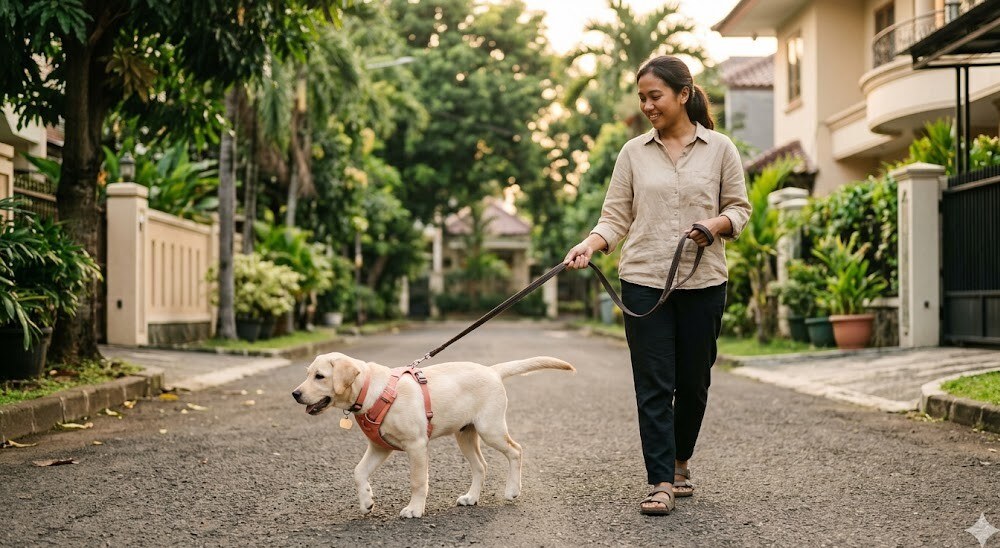
- A long morning walk before the visit to tire out the dog (especially high-energy dogs)
- Skip the meal 4-6 hours before the visit (clinic treats are more appealing on an empty stomach; it also reduces vomiting risk if the pet is a stress-vomiter)
- Bring high-value treats from home (cheese, chicken jerky), sometimes clinic treats are not appealing to a stressed dog
- Bring a favorite toy or blanket
- Adaptil pheromone collar or spray on the leash/harness 30 minutes pre-visit
At-clinic Fear-Free tactics
- Wait in the car, if the clinic allows, wait in the car until the exam room is ready. Reduce stressful lobby exposure.
- Choose a clinic with Fear-Free certification if available, staff trained in low-stress handling, an exam room with a non-slip mat, treats by default, calm voices
- Bring documented stress signals from the owner, tell the staff your pet's specific triggers (for example "she panics if lifted from behind", "tail wrap does not work, do not force it")
- Treats throughout the exam, squeeze cheese or small treats for dogs, churu or a lickable treat for cats, to distract during the exam
- Slow approach, staff approach the pet slowly from the side, allow it to sniff first, do not grab
- Minimal restraint, Fear-Free principle: if the pet refuses restraint, stop and reassess, do not force. Better to postpone a non-urgent exam than to traumatize.
- The exam begins in a "neutral" area, not in a sensitive area. For an anxious cat, the exam can be partially done in the carrier (the cat is not required to come out).
House call vet as an alternative for severe anxiety
For pets with severe vet anxiety that do not respond adequately to the pre-visit protocol, especially cats with a history of trauma from previous vet visits, a house call vet provides significant advantages:
- No carrier confinement, the cat can be examined in an area it finds familiar and secure
- No stressful car ride
- No smell of other stressed animals in the clinic lobby
- The pet is comfortable in its own territory, exam findings are often more accurate (no artifacts from stress: transient hypertension, hyperventilation, abnormal ear position)
- The owner controls the environment, dim lighting, quiet music, minimal disturbance
- Observation of behavior in a natural environment, very helpful for evaluating behavior issues or a senior cat with cognitive change
Limitations of a house call vet:
- Not all diagnostic procedures are feasible at home (advanced imaging such as CT/MRI, surgery beyond minor, full skeletal X-ray)
- Severe emergencies (suspected GDV, severe trauma) still need a 24h clinic with an ICU
- Some procedures need sedation that is more comfortably done at the clinic with recovery monitoring
For routine wellness (annual check-up, vaccination, nail trim, dental scoring, blood draw), a house call vet is generally suitable and significantly reduces stress for pets with vet anxiety.
When a behavior vet is needed
Consult a behavior vet or board-certified veterinary behaviorist (ACVB diplomate) if:
- The pet shows severe aggression that does not respond to standard pre-visit medication
- The anxiety extends to other contexts (separation anxiety, noise phobia, panic attacks), not just vet-specific
- The owner is afraid to handle the pet due to the risk of serious bites/scratches
- Standard pre-visit medication (gabapentin, trazodone) does not provide adequate sedation
- The trauma is severe enough that routine procedures cannot be performed
Behavior modification for severe vet anxiety can include: a structured desensitization protocol, a combination of medications (sometimes with an SSRI such as fluoxetine for chronic anxiety, plus a pre-visit benzodiazepine), and reframing the relationship with vet care entirely. Sometimes a multi-month process.
FAQ on pet vet anxiety
My cat hisses + claws when taken to the clinic, is pre-visit gabapentin safe?
For the majority of healthy cats, pre-visit gabapentin (dose according to weight, discuss with your vet) is safe and effective for reducing anxiety. Side effects are often mild (sedation, mild ataxia that resolves within a few hours). For cats with kidney disease, the dose needs adjustment. Consult your vet before first use, usually start with a trial dose at home a week before the visit to assess the response, then adjust the dose. Pre-visit pharmaceuticals are a valid option per Fear-Free + ACVB guidelines.
My dog freezes at the clinic, how can I reduce the stress?
A freeze response is extreme stress (above the "fight or flight" response tier). Approach: (1) trazodone or gabapentin pre-visit per your vet's prescription, (2) walk-in social visits for counter-conditioning, (3) bring super-high-value treats from home, (4) choose a Fear-Free clinic if available, (5) if the severity is persistent, evaluate a house call vet as an alternative for routine care. For severe cases, a behavior vet consultation.
Do Feliway/Adaptil really work?
The evidence is mixed. Some studies show a modest benefit in reducing stress (especially for multi-cat households with a Feliway diffuser, or an Adaptil collar for dogs with separation anxiety). But pheromones are not a magic bullet, a supportive measure in combination with training, environment management, and sometimes pharmaceuticals. Worth trying for pets with moderate anxiety; if severe, combining with medication is more effective.
My cat is an adult and has never had carrier training, can it be retrained?
Yes, but it takes time (1-3 months on average). Start with the carrier accessible in a living area with the door open, soft bedding, treats at the door/inside, and feeding inside (if it is willing to go in). Do not force it in on the first session. For a cat traumatized by a previous carrier, consider a new carrier with a different design, sometimes the association with a specific carrier can overlay. A top-loading hard carrier is preferred. If progress is stuck, a behavior vet consultation.
Can Prabasa Vet do a house call for a pet with severe vet anxiety?
Yes, this is one of the strongest indications for a house call. For a cat traumatized at the clinic or a dog with severe restraint resistance, a house call allows vaccination, blood draw, nail trim, and a wellness exam to be done in a familiar environment with stress drastically reduced. We can also discuss pre-visit medication (if needed, we have access to prescribe gabapentin/trazodone after a consultation). For a pet visiting for the first time, we usually coordinate via WhatsApp first to discuss the history and plan the visit. Contact us via WhatsApp to discuss.
Closing
Vet anxiety is not about a "spoiled" pet or an owner "spoiling" it, it is a natural response to a multi-factor aversive event. The Fear-Free movement and modern pre-visit protocols can dramatically reduce stress, improve owner compliance with routine care, and ultimately improve the pet's quality of life and longevity.
Key components: carrier training (especially for cats) started at home well before the visit, pheromones as supportive, pre-visit pharmaceuticals (gabapentin/trazodone) for pets with moderate-severe anxiety per a vet consultation, low-stress handling at the clinic, and a house call vet as a valid alternative for pets with severe anxiety or with persistent trauma.
For severe cases that do not respond to the standard protocol, a behavior vet consultation is appropriate, with a combination of behavior modification, chronic anxiolytic medication, and environment management.
Want to consult about vet anxiety or schedule a house call for a pet with a history of trauma? Contact us via WhatsApp, mention the species, age, and specific anxiety pattern.
Read also: How to Manage a Dog Afraid of the Clinic, How to Read Cat Body Language, Separation Anxiety in Dogs, Pet Care Guide.
Medical references used in this article
This article was prepared with reference to the following sources, verified clinical sentence by sentence:
- Fear Free Pet Professional Education, low-stress handling protocols, pre-visit pharmaceutical recommendations, environment design
- AAFP / ISFM Cat Friendly Practice Guidelines, carrier training, low-stress handling for cats, exam protocol
- AAHA (American Animal Hospital Association) Behavior Management Guidelines, fear-free approach to wellness care
- ACVB (American College of Veterinary Behaviorists), clinical guidance on pre-visit pharmacology, behavior modification for vet anxiety
- Becker M, et al. From fearful to fear-free, practical methodology
- Plumb's Veterinary Drug Handbook 7th edition, gabapentin, trazodone, acepromazine indications + dosing
- BSAVA Manual of Canine and Feline Behavioural Medicine 2nd Edition, chapter on veterinary anxiety, fear-based aggression
- Overall KL. Manual of Clinical Behavioral Medicine for Dogs and Cats, desensitization protocols for vet visits
- van Haaften KA, et al. Effects of a single preappointment dose of gabapentin on signs of stress in cats during transportation and veterinary examination (JAVMA), evidence base for gabapentin efficacy
- Hewson C. Evidence-based approaches to reducing in-patient stress (J Feline Med Surg)
This article is general guidance based on international behavior + veterinary medicine guidelines. For specific pre-visit medication dosing, consulting a vet is the right step. For severe anxiety that does not respond to the standard protocol, a board-certified behavior vet consultation is recommended.