
Bringing a pet to fly on an airplane, whether domestic within Indonesia or international, is not a simple decision. Many owners underestimate the complexity of the regulations, the document requirements, and the welfare risks that come with flying with an animal. Every airline has a different policy, there is a big difference between cargo hold vs in-cabin, there are special restrictions for brachycephalic breeds (flat-faced, like the Pug, Persian, Bulldog) whose flight fatality is documented to be higher, and there is a serious medical controversy about giving sedation before a flight.
This article is a guide for you who are planning a flight with a cat or dog, the difference between the 2 transport modes, domestic Indonesia vs international rules, IATA kennel requirements, a list of conditions where flying is NOT advised, pre-flight preparation, and the international stance on sedation for flights. Disclaimer: a general guide based on IATA + international veterinary association guidelines; airline and destination-country regulations can change. You must confirm specifics with the airline + your veterinarian + the destination authorities before booking. This does not replace a veterinary consultation for your animal's specific condition.
2 transport modes: cargo hold vs in-cabin
In-cabin (travels with you in the passenger cabin)
- For small animals, usually the combined weight of the animal + carrier is a maximum of 5-8 kg (depending on the airline). Only fits toy/small breed dogs and cats
- The carrier must fit under the seat in front of you (soft-sided is more flexible)
- You can monitor the animal directly during the flight
- Cabin temperature + pressure is the same as for human passengers (stable)
- Relatively lower stress than the cargo hold
- In-cabin slots are usually very limited per aircraft (1-4 animals max), reserve well in advance
Cargo hold (in a special animal cargo area, separate from passengers)
- For larger animals that do not fit in-cabin
- The carrier must be hard-sided IATA-compliant (a rigid plastic kennel, not soft-sided)
- You CANNOT monitor it during the flight
- The cargo hold on large modern commercial aircraft is indeed pressurized and temperature-controlled (not a cold dark room as in the old myth), but there is still temperature variability during ground handling + tarmac time
- Stress is far higher, handling by ground crew, loud engine noise, dark isolation, transfers between aircraft during connections
- The majority of pet flight welfare incidents occur in the cargo hold
Domestic Indonesia rules
Indonesian airlines generally accept animals for domestic flights, but the policy details vary per airline and can change, Garuda Indonesia, Citilink, Lion Air, Batik Air, Sriwijaya Air, and others have their own rules. Things to confirm with the specific airline when booking:
- Whether the airline accepts animals on your route (not all routes support it)
- The mode available (in-cabin vs cargo hold)
- Maximum carrier weight and size
- Additional fees per animal
- Slots available (limited per aircraft, book well before the day of travel)
- Brachycephalic breed restrictions (many global airlines restrict or ban flat-faced breeds in the cargo hold)
- Temperature restrictions (many airlines refuse animals when the ground temperature at the destination/origin is too hot or too cold)
Mandatory documents for domestic Indonesia (generally)
- A Certificate of Good Health from a veterinarian, issued within 7-14 days before the flight (the window varies per airline). This certificate states the animal is in fit-to-fly condition, core vaccines up-to-date, free of visible contagious disease
- Proof of vaccination that is current (rabies is mandatory for dogs and cats > 3 months)
- A letter from the Agricultural Quarantine office of the origin region if the animal will be moved to another province/region, especially for inter-island routes. Quarantine has offices at major airports; arrange it before check-in
- Some routes require an approval letter from the Quarantine of the destination region
Confirm the specific current requirements with the airline + the Agricultural Quarantine of the origin region when booking, regulations can be updated.
International rules
International flights are far more complex with very specific requirements per destination country. Some common elements:
Preparation well in advance (3-6 months before)
- ISO-compliant microchip (ISO 11784/11785), mandatory in almost all destination countries. An older (non-ISO) microchip may not be readable by international scanners
- Rabies vaccination with very strict documentation, some countries require a minimum of 21 days since the vaccine (waiting period), some countries require > 6 months + a titer test
- Rabies titer test (RNATT or FAVN), some countries (Hong Kong, Singapore, Australia, the EU, UK, Japan) require a blood test for rabies antibodies with a specific lab, meeting a minimum threshold. This test has a validity window and a waiting period after a positive result
- Parasite treatment (dewormer + tick/flea) within a certain window before the flight (the UK, for example, requires a dewormer 24-120 hours before entry)
- International health certificate issued by the government veterinary authority (in Indonesia: Agricultural Quarantine), usually within 7-14 days before the flight
Country-specific quirks
- Australia, New Zealand: very strict (mandatory quarantine at the destination, 6-12 months of preparation)
- UK, Japan, Hong Kong, Singapore: titer test + a 3-6 month waiting period
- European Union: an EU pet passport for within-EU travel, more relaxed provisions for animals originating in the EU but still rigorous for import from outside the EU
- USA: new CDC rules since 2024-2025 for importing dogs, a special health certificate format, an ISO microchip, rabies vaccination with documentation
- Middle East, Africa, South America countries: rules vary enormously, research with the embassy + Quarantine + IATA first before booking the ticket
Commercial pet shipper
For international flights, many owners choose a commercial pet shipper service that specializes in international pet relocation, they handle the paperwork, airline coordination, and coordination with ground services at the destination. Look for one that is a member of IPATA (International Pet and Animal Transportation Association), the industry standard for reputable pet shippers.
IATA standard kennel
If the animal will be in the cargo hold (or even in-cabin for certain airlines), the kennel must comply with the IATA Live Animals Regulations (LAR). Standard specifications:
- Rigid plastic or wood/metal, not soft-sided (for cargo). Soft-sided is only OK for in-cabin on some airlines
- Ventilation on 4 sides (or a minimum of 3 sides + the top for certain aircraft), not just the front door
- A metal door with a secure lock (extra cable ties are often requested by the airline)
- A solid + leak-proof floor with absorbent material (towel, pad), not a grid that the feet can get caught in
- Water + food bowls accessible from the outside without opening the kennel (often integrated into the door)
- "Live Animal" stickers + a "This Way Up" arrow on the side of the kennel (many airlines provide them, or print your own)
- Owner identification with name + phone number + destination address
- Emergency contact attached to the outside (for the ground crew)
Kennel size
The main IATA rule: the animal must be able to (1) stand fully without its head touching the top, (2) turn 360 degrees, (3) lie down in a natural position. A kennel that is too small = rejected by the airline at check-in. A kennel that is too large = extra volumetric weight cost.
Many airlines provide a kennel size calculator that matches the animal's body length, height, and width. Check the specific airline policy 2-3 weeks before the day of travel.
Brachycephalic restriction, needs to be taken seriously
Flat-faced breeds (brachycephalic), Pug, French Bulldog, English Bulldog, Boxer, Shih Tzu, Pekingese, Boston Terrier, Persian Cat, Himalayan Cat, Exotic Shorthair, British Shorthair (some), have a respiratory anatomy that makes them very susceptible to:
- Heat stress, the body's cooling system via panting is not efficient with short airways
- Respiratory distress in conditions of stress, heat, or changing cabin pressure
- Fatal incidents on flights have been documented by global airlines, several cases of brachycephalic dogs dying during or after a flight
The industry's reaction:
- Many global airlines explicitly BAN brachycephalic breeds in the cargo hold (United Airlines, American Airlines, Lufthansa, Air France, etc. have banned-breed lists)
- Some airlines ban them entirely (cargo and in-cabin)
- Airlines that still accept them often require a signed owner waiver (acknowledging the risk) and extra precautions
If your animal is brachycephalic and must fly:
- Confirm the specific policy with the airline first, don't assume
- Prefer in-cabin if possible (stable temperature + pressure + you can monitor)
- Consult a veterinarian BEFORE booking, if the animal has severe BOAS (Brachycephalic Obstructive Airway Syndrome), flying may not be advised at all
- Avoid routes with long connections or extreme summer heat
- Consider an alternative mode (ground transport if possible)
Pre-flight preparation
2-3 weeks before
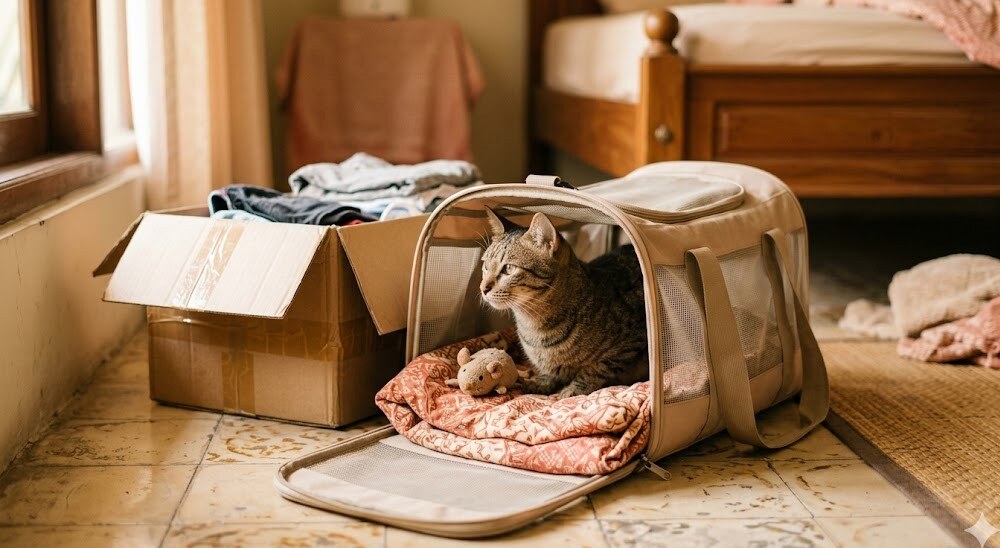
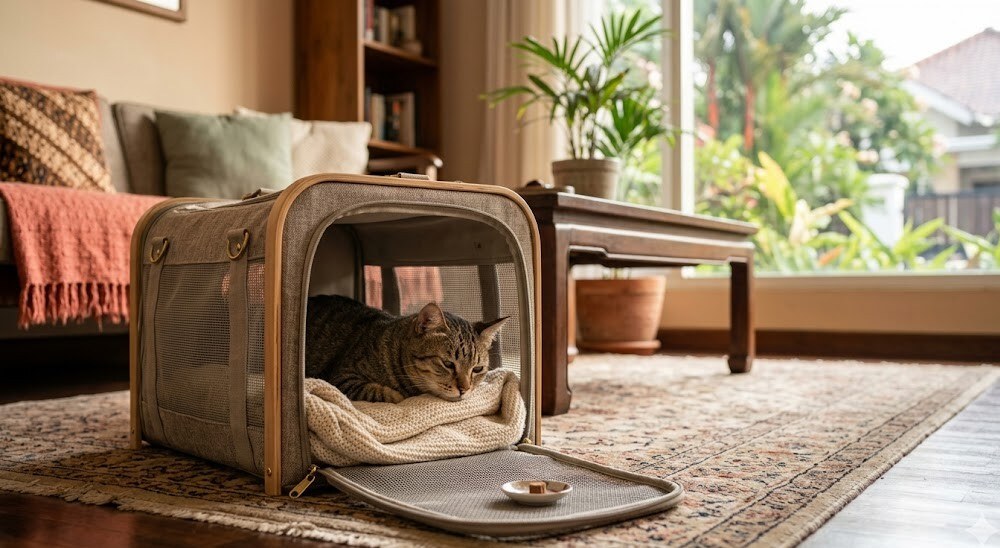
- Acclimate the kennel, place the kennel at home with the door open, let the animal explore on its own, give treats inside, place familiar bedding. Gradually extend the time it spends inside with the door closed. An animal that is not familiar with the kennel will be extra stressed on the day of travel
- Confirm all documents are within their valid window
- Vet visit for the health certificate + pre-flight check
- Refill routine medications if there is a chronic illness
1-2 days before
- Normal exercise, don't over-exercise to the point of dehydrating the animal
- Trim nails (reduce the risk of nails getting caught in the kennel)
- Pheromone spray (Feliway/Adaptil) in the kennel the night before
- Pack familiar items: an old towel (unwashed, with your scent), a small toy, a little food for emergencies during long connections
The day of travel
- Fast from food 4-6 hours before the flight, reduce the risk of vomiting in the kennel. Water is allowed until 1-2 hours before (if the weather is hot, until departure time)
- Pre-departure exercise in the morning, a dog that is already tired is calmer
- Pee / poop before going into the kennel (don't force it, but give the opportunity)
- Arrive at the airport much earlier than usual (3-4 hours for international, 2-3 hours for domestic), the document check + Quarantine + check-in process with an animal takes far longer than for an ordinary passenger
- Line the carrier with a familiar towel that already carries the animal's scent + yours
- Stay calm, animals read the owner's emotions. If you panic at check-in, the animal will read that as "there is danger"
When flying is NOT advised
Some conditions make flying very risky or not recommended:
- A young animal < 8 weeks, the thermoregulation system is not yet mature, immunity is not yet sufficient, too fragile
- An old animal with chronic disease, heart disease, kidney disease, respiratory disease can be exacerbated by stress + cabin pressure changes
- An animal with recent surgery (generally a minimum of 2-3 weeks since the operation, longer for major surgery)
- A female animal in late-term pregnancy or recently given birth (generally a minimum of 4-6 weeks after giving birth)
- An animal with active respiratory disease (URI, asthma, bronchitis), the flight will worsen it
- Brachycephalic with severe BOAS (often short of breath even at rest)
- An animal with a history of severe anxiety, even with sedation (which is also not ideal, see the next section), the risk is high
- An animal with a history of seizures, stress + pressure changes can trigger them
Consult a veterinarian BEFORE booking the ticket if your animal falls into one of the categories above, sometimes the best option is an alternative mode (ground transport, postponing the trip) or delaying the flight until the condition is stable.
The controversy over pre-flight sedation
The classic question: "Can I give a calming medication to the animal before flying so it doesn't get stressed?" The answer from veterinary associations and the airline industry is actually controversial, many airlines and international veterinarians EXPLICITLY DO NOT RECOMMEND routine sedation before a flight, for several reasons:
- Risk of respiratory depression, many sedatives (especially acepromazine, which was once popular) suppress the respiratory drive. At altitude with different cabin pressure, this can be fatal
- Impaired thermoregulation, sedation interferes with the body's ability to regulate temperature, especially dangerous for brachycephalic animals or in hot weather
- Impaired balance, a sedated animal cannot brace itself during turbulence or kennel movement, risking physical injury (getting trapped, dislocation)
- Paradoxical reactions, some animals actually become more agitated with certain sedatives
- No medical supervision during the flight, if there is an adverse reaction, there is no one who can intervene
What is more advisable per modern behavior medicine veterinarians: a mild anxiolytic that does not suppress the respiratory drive (gabapentin, trazodone for dogs, or gabapentin for cats, all off-label, dosed under veterinary supervision, tried at home first before the day of travel to see the individual response). Or, if there is severe ongoing anxiety, long-term behavior modification treatment with a veterinarian before the need to fly.
NEVER give human medication (OTC diazepam, sedative antihistamines, human sleeping pills), all are very dangerous for animals. Consult a veterinarian 2-3 weeks before if your animal needs a pre-flight anxiolytic.
FAQ
How much does it cost to fly with a pet on a domestic Indonesia flight?
It varies per airline and animal/kennel size. Confirm the cost when booking with the airline's customer service, there is usually a per-animal fee plus a fee based on weight (carrier + animal). Some airlines charge it as excess baggage, some as separate cargo. Add budget for the vet certificate, the Quarantine letter, and if needed a commercial shipper. The cost can rise significantly for international (especially with a titer test and paperwork).
If I use a pet shipper service, what do they handle?
An IPATA-member commercial pet shipper usually handles: (1) coordinated booking with a pet-friendly airline, (2) IATA-compliant kennel procurement or rental, (3) paperwork (health certificate, microchip verification, country-specific documents), (4) door-to-door transport if you use the full service, (5) coordinated ground handling at the destination, (6) liaison with the Quarantine authorities at the destination. The cost is higher than booking yourself but many owners consider it worth it for complex international relocations (Australia, UK, etc.).
My cat/dog is old, is it safe to fly?
It depends on the specific condition. An old animal in generally good health + with good diet & exercise can fly with extra preparation. An old animal with chronic disease (heart, kidney, respiratory, neurological) should be evaluated by a veterinarian first for a risk-benefit assessment. If flying is the only option (e.g., a permanent relocation), the veterinarian may recommend a pre-flight stabilization protocol + choosing the shortest possible flight time + pre-flight blood work + a post-flight check-up.
Is the modern cargo hold cold and dark like the old myth?
The cargo hold on large modern commercial aircraft (Boeing 737, Airbus A320 and up) is indeed pressurized and temperature-controlled, not a freezing dark room as in the myth. But: (1) the temperature in the cargo hold is not monitored the same way as the passenger cabin, (2) variability occurs especially during ground handling + a hot/cold tarmac before take-off, (3) ground crew handling of the kennel can be rough, (4) loud engine noise around the cargo door. Modern doesn't equal stress-free.
Can an animal fly with the anxiety medication it takes daily?
Consult a veterinarian first, some long-term anxiety medications (fluoxetine, clomipramine) are safe to continue while flying, some may need a dose adjustment. Don't add a sudden dose for "extra calming" on the day of travel, it can trigger an adverse reaction. An animal already on a chronic anxiolytic regimen may already have a stable response and not need an additional sedative to fly.
Can Prabasa Vet issue a health certificate for a flight?
Yes, for a domestic Indonesia pre-flight health certificate (for airline and Quarantine permits), it can be done via house call, an examination of general condition, and issuing the certificate within the window suited to the airline (generally 7-14 days before the flight). When you WhatsApp, mention: the flight date, the airline, the route (origin-destination), the species + breed + age + weight of the animal, and your area. For international travel with titer test requirements or destination-country-specific documents, there is paperwork that must go through the Agricultural Quarantine channel, that is separate coordination, and we can help point you to the right channel.
Closing
Flying with a pet can be done safely, but it needs far more thorough planning than an ordinary flight for yourself. Confirming the specific airline policy, documents valid in the correct window, an IATA-compliant kennel, and pre-flight prep that is not last-minute are investments that avoid a nightmare on the day of travel (or, worst case, an animal welfare incident).
Most important: be honest with yourself about the animal's fitness to fly. Not all animals are suited to flying, brachycephalic animals with severe BOAS, old animals with chronic disease, or animals with extreme anxiety may be better off with an alternative mode or not traveling at all. Consult a veterinarian before booking the ticket, not after.
Need a health certificate for a flight or a pre-flight consultation for your animal? Contact us via WhatsApp, mention the flight date, the airline, the route, the species + breed + age + weight, and your area, and our team will find a partner veterinarian for a pre-flight check + health certificate within the right window.
Read also: Preparing to Move Home with Pets: Stress Reduction, Adopting an Adult Cat from a Shelter: Adaptation Tips, Pet Care Guide, House Call Vet.
Medical references used in this article
This article was prepared with reference to the following sources, verified per clinical statement:
- IATA Live Animals Regulations (LAR) latest edition, kennel specification, ventilation requirements, labeling, container size rules
- IPATA (International Pet and Animal Transportation Association), best practices for commercial pet shipping, country-specific paperwork checklist
- AVMA (American Veterinary Medical Association) Air Travel with Pets resources, pre-flight veterinary guidance, sedation stance, brachycephalic risk assessment
- USDA APHIS Pet Travel guidelines, international export documentation, rabies titer requirements, microchip ISO standard
- BSAVA Manual of Canine and Feline Behavioural Medicine 2nd Edition, pre-flight anxiety management, off-label anxiolytic (gabapentin, trazodone) dosing under veterinary supervision
- Plumb's Veterinary Drug Handbook 7th Edition, anxiolytic dosing for situational anxiety, antiemetics, contraindication of acepromazine for pre-flight sedation in some breeds
- WSAVA Vaccination Guidelines 2024 , rabies vaccination protocol for international travel, titer test interpretation
- OFFLU + WOAH guidelines, international animal movement, quarantine principles, brachycephalic welfare considerations
This article is a general guide based on IATA + international veterinary association guidelines. Airline and destination-country regulations can change, confirm specifics with the airline + your veterinarian + the Quarantine authorities before booking. For your animal's specific medical conditions, especially brachycephalic animals, old animals, or those with chronic disease, consulting a veterinarian is the right step before deciding to fly.