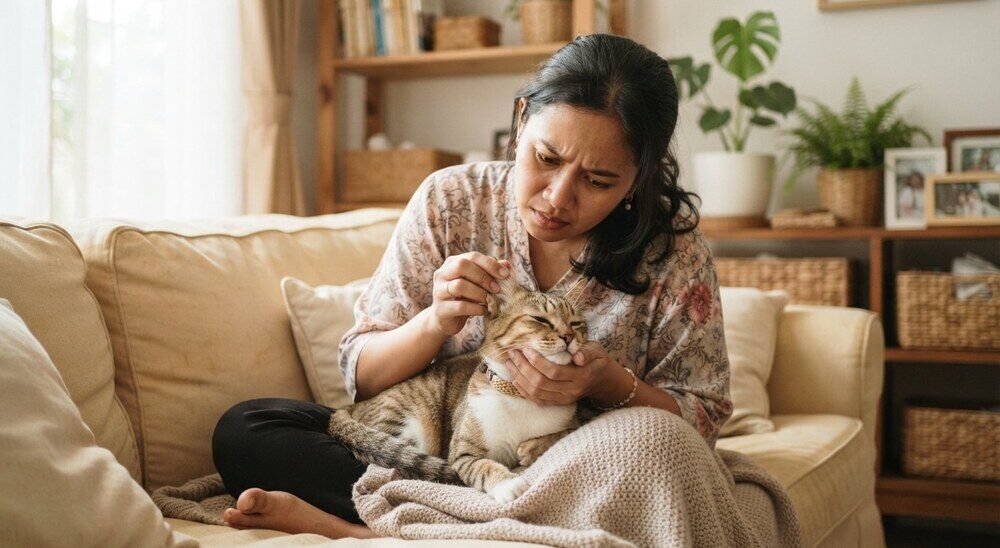

Watery eyes or eye discharge in cats and dogs is one of the most common complaints in consultations. Most are mild and can be managed at home with routine cleaning, but some are a sign of serious disease (corneal ulcer, glaucoma, uveitis) that needs a vet immediately. Distinguishing the two is important, under-reacting can lead to permanent vision loss, while over-reacting wastes unnecessary cost and stress.
This article covers the common causes of watery eyes, how to safely clean at home, the red flags that need a vet immediately, and the common mistakes to avoid. Disclaimer: this is general guidance, not a substitute for a direct examination. For an eye that is red, painful, or where the pet is squinting persistently, consulting a veterinarian is the right step.
A quick bit of anatomy: why eyes can water
A pet's eyes (like a human's) have:
- A tear film produced by the lacrimal glands, for lubrication, corneal nutrition, and antimicrobial function
- A drainage system via the nasolacrimal duct, tears flow from the eye to the nose through a small duct
- The conjunctiva, the membrane lining the inner eyelid, which can become inflamed into conjunctivitis
- The cornea, the transparent outer layer, sensitive to injury
- The third eyelid (nictitating membrane), a third eyelid that can appear when a cat is sick/stressed
Watery eyes (epiphora) can be due to:
- Excessive tear production (irritation, inflammation, foreign body)
- Inadequate drainage (blocked nasolacrimal duct, brachycephalic breeds with abnormal anatomy)
- A combination of both
Common causes of watery eyes
1. Brachycephalic breeds (Persian, Himalayan, Pug, Bulldog, Shih Tzu)
A flat face with shallow eye sockets and a distorted nasolacrimal duct anatomy = chronic watery eyes that are often normal for these breeds. Brown/red tear staining below the eyes is common. Routine daily cleaning, and occasionally sub-clinical attention.
2. Allergic conjunctivitis
Allergens (dust, pollen, mold) cause conjunctival inflammation, red, itchy eyes with clear watering. Often seasonal or after an environmental change.
3. Bacterial conjunctivitis
The discharge changes from clear to mucopurulent (thick yellow-green-brown). Often secondary to another cause (allergy, virus, trauma).
4. Feline upper respiratory infection (URI), cats
FHV-1 (Feline Herpesvirus) and FCV (Calicivirus) often cause bilateral conjunctivitis with mucopurulent discharge, a runny nose, and sneezing. Kittens and immunocompromised cats are the most vulnerable. Chlamydophila felis is also relevant.
5. Kennel cough / canine respiratory disease complex, dogs
Bordetella, parainfluenza, or adenovirus can cause bilateral conjunctivitis + a dry cough.
6. Foreign body
Grass, dust, or hair in the eye = acute irritation. The pet squints, has watering in one eye, and paws at its face. It needs a veterinary evaluation, do not try to remove it yourself if it is lodged.
7. Corneal ulcer
Corneal injury (a scratch from a claw, sharp grass, a foreign body) = an ulcer. Signs: persistent squinting in one eye, abundant clear watering, photophobia (avoiding light), and discharge. Red flag, needs a vet immediately because it can progress to perforation without treatment.
8. Glaucoma
Increased intraocular pressure = severe pain, watery eye, an enlarged or bulging eye, red sclera, dilated pupil. Emergency, permanent vision loss within 24-48 hours without treatment.
9. Uveitis
Inflammation of the inner structures of the eye. Signs: red eye, squinting, watery eye, constricted pupil, photophobia. Often has a systemic underlying cause (FIP, FeLV, FIV, ehrlichiosis, leptospirosis). Needs a vet.
10. Blocked nasolacrimal duct
A blocked drainage system causes chronic tear overflow. It appears normal apart from tear staining and damp fur below the eye. It can be congenital or acquired (post-trauma, chronic inflammation). Diagnosed via duct flushing at the clinic.
11. Ectropion / entropion (dogs)
An eyelid that turns out (ectropion, often in breeds such as Basset Hound, Bloodhound) or turns in (entropion, Chow Chow, Shar-Pei). Both conditions cause chronic irritation. Surgical correction for serious cases.
12. Dry eye (KCS, Keratoconjunctivitis Sicca)
Paradoxical: inadequate tear film production causes a dry eye plus compensatory thick mucus. Often in senior dogs or predisposed breeds (Cocker Spaniel, Bulldog). Diagnosed via the Schirmer Tear Test at the clinic. Treatment is lifelong (ophthalmic cyclosporine).
How to clean the eyes safely at home
For mild watery eyes without red flags (see the next section), routine cleaning can be done at home:
- Wash your hands before touching the pet's eye
- Use safe materials:
- Sterile saline (the kind used for contact lenses, preservative-free if possible), the safest
- Warm boiled water (room temperature), an alternative
- A commercial pet-specific eye wipe (non-irritant)
- DO NOT use: hydrogen peroxide, alcohol, soap, baby shampoo (except on medical instruction), human eye drops (especially those containing tetrahydrozoline or a decongestant, very dangerous for pets)
- Use clean cotton or a soft cloth, one pad per eye (do not share a pad between eyes, because it can cross-contaminate if there is an infection)
- Wipe from the inner corner outward, a gentle movement toward the outside of the face, following the natural drainage
- Clean off dried crust that has stuck on, saturate the cotton with saline, hold it on the crust for 10-15 seconds to soften it, then wipe gently. Do not pull it off by force.
- Frequency: 1-2x a day for brachycephalic breeds or pets with mild tear staining. More often if there is active discharge.
- Stop and consult a veterinarian if the eye looks increasingly red, the pet becomes more uncomfortable, or other signs appear
Red flags: when a vet is needed immediately
Do not delay for:
- Persistent squinting of one eye (squinting / blepharospasm), a sign of pain, could be a corneal ulcer or glaucoma
- The eye looks cloudy, bulging, or larger than usual, possible glaucoma (emergency)
- The pupil is not responsive to light, or the left and right pupils differ in size (anisocoria), neurologic or severe ocular pathology
- The sclera (the white part) is very red with prominent blood vessels, uveitis, glaucoma, or severe conjunctivitis
- Very abundant, mucopurulent, or bloody discharge
- Photophobia, the pet avoids light, hides in dark places
- Repeatedly pawing at the face with distress, possible foreign body or severe irritation
- Vision change, the pet bumps into furniture, is hesitant going up stairs, or clearly cannot see
- Bilateral mucopurulent discharge in a kitten, often a URI that needs treatment
- The tear color changes to thick yellow-green, a bacterial infection that needs an ophthalmic antibiotic
- The eye appears to have blood inside it (hyphema)
- Sudden onset after trauma (post-fight, post-fall), needs evaluation for corneal abrasion, lens luxation, retinal detachment
For acute cases of suspected glaucoma or severe trauma, a 24-hour clinic is the right choice, not a house call and not waiting.
Common mistakes that actually make it worse
- Using human eye drops, tetrahydrozoline (Visine, Insto, etc.) can be very dangerous, with a decongestant absorbed systemically. DO NOT.
- Self-medicating with antibiotic ointment, if there is a corneal ulcer, some antibiotics (especially steroid combinations) can worsen the ulcer significantly. Ophthalmic antibiotics must be prescribed by a vet after an examination.
- Hydrogen peroxide / alcohol, severe irritants for the conjunctiva
- Pulling off dried crust by force, can damage the conjunctival epithelium, leading to worse irritation
- Ignoring persistent squinting, delaying the diagnosis of a corneal ulcer can lead to perforation
- Using the same cotton for both eyes, cross-contamination if there is an infectious cause
- Over-cleaning, wiping every hour can irritate the conjunctiva. 1-2x a day for routine is enough.
- Using a cotton bud (Q-tip) directly on the eye, risk of corneal abrasion. Use a soft cloth or pad.
Long-term prevention and maintenance
- Brachycephalic breeds, routine daily cleaning, monitor tear staining, evaluate the nasolacrimal duct at routine check-ups
- Pets with a history of allergic conjunctivitis, identify the allergen if possible (HEPA filter at home, change detergent, etc.), antihistamine or cyclosporine eye drops as prescribed by the vet
- Cats with a history of FHV-1, the virus is dormant and can flare up during stress; minimize stress + L-lysine supplement (efficacy is controversial, discuss with the vet)
- Core vaccines, FVRCP for cats prevents primary FHV-1/FCV infection; DHPP for dogs
- Routine annual check-ups include an eye examination, eye conditions in senior cats/dogs (cataract, glaucoma, KCS) often have subtle early-onset signs
- Avoid trauma, supervise multi-pet interactions, be careful with tall/thorny plants in the garden
Pet watery eyes FAQ
Red/brown tear staining below a white dog/cat's eyes, is it dangerous?
Tear staining is due to porphyrin (a pigment in tears) that oxidizes in the fur. It is cosmetic, not inherently dangerous, but it is a sign of the chronic epiphora behind it. For brachycephalic breeds, it is often normal. For other breeds, evaluate the underlying cause (allergic, blocked duct, dental disease with referred eye irritation). Pet-specific tear stain removers are available, but working on the underlying cause is more important than cosmetics alone.
A kitten with a swollen eye covered in yellow crust, can it be cleaned at home?
A kitten with bilateral mucopurulent discharge often has a URI (FHV/FCV/Chlamydia). Routine cleaning with saline is safe and recommended (if the crust seals the eye shut, the kitten cannot open it), but it needs a veterinary evaluation for diagnosis + treatment (ophthalmic antibiotics, antiviral if severe FHV, supportive care). Kitten URI can progress seriously, consulting a veterinarian is recommended, especially if the kitten is lethargic or not eating.
A senior dog's eye suddenly turns cloudy, cataract or something else?
A cloudy lens in a senior dog can be:
- Nuclear sclerosis (normal aging, vision not greatly impaired, no treatment needed)
- Cataract (vision impaired, sometimes surgically correctable)
- Glaucoma (emergency)
- Chronic uveitis
Is it safe to use human eye drops for a pet?
No. Human eye drops with tetrahydrozoline (Visine, Insto) or other decongestants can be toxic. Eye drops with a steroid can worsen a corneal ulcer. Preservative-free lubricating drops (artificial tears) are sometimes OK for routine use, but still consult a veterinarian before using them. Ophthalmic antibiotics must be prescribed after an evaluation.
Can Prabasa Vet examine a cat/dog's eyes at home?
Yes for initial evaluation and non-emergency cases: mild conjunctivitis, tear stain assessment, blocked nasolacrimal duct evaluation, dry eye screening (if a Schirmer Tear Strip is available). For cases of suspected glaucoma, severe corneal ulcer, uveitis, or acute trauma, these need a clinic with tonometry + an advanced ophthalmoscope + a slit lamp; we can help with a referral recommendation to a 24h clinic or an ophthalmologist in your area. Contact us on WhatsApp to discuss case by case.
Closing
Watery eyes in pets are a common complaint with a spectrum of causes from benign (brachycephalic breeds, mild allergies) to emergency (glaucoma, corneal ulcer). Routine cleaning with saline + a soft cloth is safe and helpful for mild cases, but persistent squinting, a cloudy/bulging eye, photophobia, or a vision change are red flags that need a vet immediately, not waiting.
What is important to avoid: human eye drops (especially decongestants), self-medicating with antibiotic-steroid combinations without a diagnosis, and delaying evaluation of cases with signs of pain. Core vaccines (FVRCP/DHPP) prevent many infectious conjunctivitis cases, and routine check-ups are important for early detection of senior eye conditions (cataract, glaucoma, KCS).
For a healthy pet with mild tear staining or routine cleaning needs, a home maintenance + monitoring approach is sufficient. For any concern, consulting a veterinarian is better than self-treating with potentially wrong medication.
Want to consult about your pet's eyes or schedule a house call for an examination? Contact us on WhatsApp, mention the type of animal, age, and specific signs.
Read also: Ear Cleaning for Cats: How to Do It Safely and Frequency, Dental Brushing for Cats and Dogs, Signs a Sick Cat Needs a Vet, Pet Care Guide.
Medical references used in this article
This article was prepared with reference to the following sources, verified per clinical sentence:
- ACVO (American College of Veterinary Ophthalmologists), clinical guidelines for conjunctivitis, corneal ulcer, glaucoma
- BSAVA Manual of Small Animal Ophthalmology, diagnostic workup, treatment protocol, breed-specific predispositions
- Slatter's Fundamentals of Veterinary Ophthalmology, anatomy + physiology, disease classification, surgical considerations
- Maggs DJ, Miller PE, Ofri R. Slatter's Fundamentals of Veterinary Ophthalmology, comprehensive feline + canine ocular disease reference
- Plumb's Veterinary Drug Handbook 7th edition, ophthalmic medication, contraindications of steroids in corneal ulcer, ophthalmic antibiotic spectrum
- ISFM Feline URI Management Guidelines, FHV-1, FCV, Chlamydophila treatment
- ABCD Feline Herpesvirus Guidelines, epidemiology, treatment, prevention
- Gelatt KN. Veterinary Ophthalmology, chapters on conjunctivitis, KCS, glaucoma
This article is general guidance based on veterinary ophthalmology guidelines. For a pet's eyes with red flags (persistent squinting, a cloudy/bulging eye, photophobia, a vision change), a direct veterinary evaluation is the right step. Self-treatment with human eye drops is not recommended.