Blog

Pet Care Education

Practical tips and guides for caring for dogs, cats, and exotic pets at home.

Dog

Diabetes Insipidus in Dogs and Cats: PU/PD Signs, Telling It Apart from DM, and Treatment

A guide to diabetes insipidus (DI) in dogs and cats — what DI is (not diabetes mellitus, no high blood sugar, but rather a deficiency of or resistance to ADH/vasopressin), classification of central DI (ADH deficiency from the pituitary) vs nephrogenic DI (the kidney not responding to ADH), clinical signs (extreme PU/PD 100+ ml/kg/day), telling it apart from DM/CKD/Cushing/hyperthyroid, diagnosis via the water deprivation test (mind the safety) + desmopressin trial, treatment with desmopressin acetate (DDAVP) ophthalmic or intranasal, prognosis, plus an FAQ for owners stuck at "drinks a lot but the diabetes test is negative".

19 May 2026 11 min read
Dog

Fluid Therapy in Pets (IV/Subcutaneous): When It Is Needed, How to Do It Safely, and AAHA Guidelines

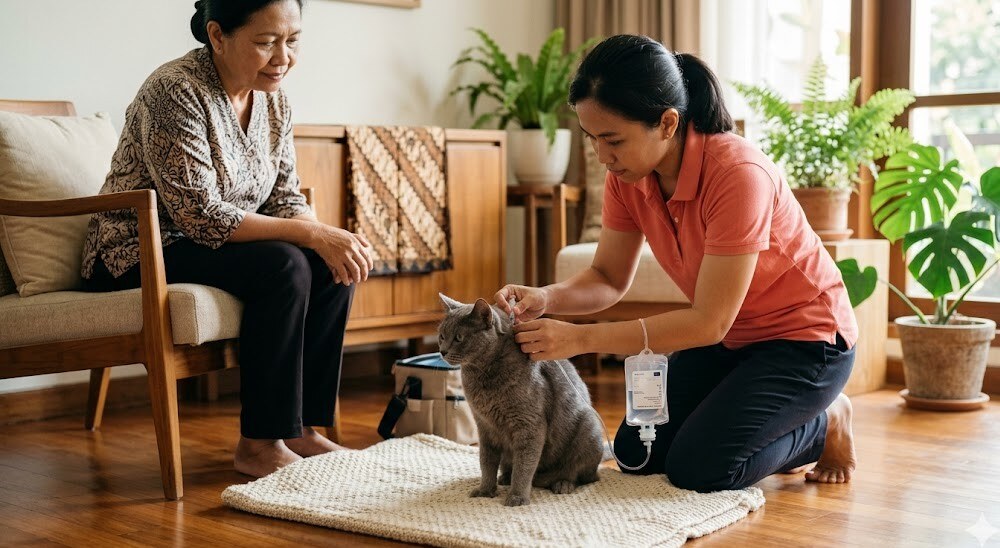
A guide to fluid therapy (IV and subcutaneous fluids) for dogs and cats — when it is needed (moderate-severe dehydration, prolonged vomiting/diarrhea, anorexia, CKD, hypovolemic shock, post-operative), types of fluid (crystalloids LRS/Plasmalyte/NaCl vs colloids), the difference between IV and SC (IV for severe + emergency, SC for mild-moderate maintenance such as CKD), assessing dehydration clinically (skin tent + mucous membranes + capillary refill + eyeball position), modern AAHA 2024 Fluid Therapy Guidelines (more conservative shock dose than the old ones), when SC fluids can be given at home, plus FAQ.

19 May 2026 11 min read
Cat

Feline Hepatic Lipidosis (Fatty Liver) in Detail: Pathophysiology, Diagnosis, and Treatment

Complete guide to feline hepatic lipidosis (fatty liver) — what it is (accumulation of triglycerides in hepatocytes due to an imbalance between lipid mobilization and export), why cats are susceptible (obligate protein metabolism, a fasted state quickly triggers it), at-risk groups (obese cats + stress + sudden anorexia), clinical signs (anorexia + jaundice + ptyalism + muscle wasting), diagnosis (hyperechoic liver on ultrasound + ALT/ALP/bilirubin biochemistry + FNA aspirate cytology), the treatment paradigm (early aggressive enteral nutrition via feeding tube — not force-feeding or IV alone), good prognosis with early intervention, plus FAQ.

19 May 2026 12 min read
Dog

Hypothermia in Dogs and Cats: Signs, First Aid, and Emergency Care

A guide to hypothermia in dogs and cats for owners in Indonesia — what hypothermia is (body temperature below 37.5°C in dogs / 38°C in cats), the most common causes (prolonged wetness from rain, strong AC for small/short-coat animals, neonatal puppies/kittens, post-anesthesia, extreme cold exposure), classification of mild (32-35°C) vs moderate (28-32°C) vs severe (<28°C), signs from early to severe (shivering, lethargy, bradycardia, depression, coma), home first aid (passive rewarming with towels + blankets, avoid direct hot pads), when to seek a 24-hour emergency clinic, plus FAQ.

19 May 2026 10 min read
Dog

Ingrown Nails in Dogs and Cats: Signs and Solutions

A guide to ingrown nails (claws growing into the paw pad) in dogs and cats — what it is, why it happens (seniors with reduced activity, dewclaws not worn down naturally, indoor cat nails left untrimmed), clinical signs (limping, paw licking, abscess, foul smell at the pad), risk of secondary infection + osteomyelitis if left untreated, when a clinic is needed (nail piercing the pad + abscess), prevention through routine trimming, plus an FAQ for owners who are scared to clip nails.

19 May 2026 9 min read
Dog

Anaphylaxis in Dogs and Cats: Signs, Triggers, and Emergency First Aid

A guide to anaphylaxis (severe systemic allergic reaction) in dogs and cats — what it is (massive IgE-mediated mast cell degranulation → release of histamine + vasoactive mediators → distributive shock), the most common triggers (bee/wasp/insect stings, acute vaccine/drug reactions, food, snake bite, transfusion), clinical signs (acute, minutes-hours — vomiting + urticaria + facial edema + collapse), the difference between the dog presentation (GI + cardiovascular) and the cat (respiratory dominant), first aid (protect the airway, shock position), when an EpiPen is relevant, clinic treatment with epinephrine + diphenhydramine + steroids + IV fluids, prognosis depending on how fast intervention happens, plus an FAQ.

19 May 2026 11 min read
Exotic

Keeping an Axolotl: Aquarium Setup, Cold Temperatures, and Husbandry for New Owners

A guide to keeping an axolotl (Ambystoma mexicanum) for new owners in Indonesia — what an axolotl is (a neotenic amphibian from Mexico that stays aquatic for life, paedomorphic), the main challenge in tropical Indonesia (cold temperatures of 16-18°C ideal, needs a chiller or a dedicated AC room), aquarium setup (minimum 75-100 litres for an adult, no small gravel substrate, gentle filtration, no UV, no aggressive live plants), water quality (parameters, cycling the tank, ammonia/nitrite/nitrate), diet (earthworms, axolotl pellets, no beef heart), the hands-off philosophy (do not handle, they dislike contact), signs of illness (fungal infection + gill regression + impaction), when an exotic amphibian vet is needed, plus a niche FAQ for owners in Indonesia.

19 May 2026 10 min read
Exotic

Keeping a Guinea Pig: Vitamin C Diet, Enclosure, and Socialisation

A guide to keeping a guinea pig (Cavia porcellus) for new owners in Indonesia — what it is (a social herbivorous rodent from the Andes, adults 700-1200 g, living 5-7 years), its unique vitamin C requirement (they cannot synthesise it themselves like humans — needing 10-30 mg/kg/day from diet, deficiency causes scurvy), enclosure setup (minimum 0.75 m² per animal, solid floor not wire, hiding spots, multi-level OK), diet (timothy hay ad libitum + fresh high-vit-C vegetables + commercial vit-C-fortified pellets, avoid iceberg lettuce/alfalfa for adults), socialisation (highly social, better in same-sex pairs), signs of illness (dental malocclusion, respiratory infection, calcium urolithiasis, scurvy), when you need an exotic vet, plus an FAQ for new owners.

19 May 2026 11 min read
Exotic

Keeping Ball Pythons and King Snakes for New Owners: Husbandry, Diet, and Safety

A guide to keeping ball pythons and king snakes for new owners in Indonesia — what these species are (ball python Python regius, docile and compact; king snake Lampropeltis, variable, corn-snake-style), basic husbandry (terrarium size + temperature gradient + is UVB needed? + substrate + hiding spots + water), diet (frozen-thawed rodent preferred over live, schedule by size), handling safety (avoid handling for 48 hours after feeding, never during shedding, avoid large pythons for solo owners), signs of illness (regurgitation + mouth rot + scale rot + mite parasites), when you need an exotic vet, plus an FAQ for new owners.

19 May 2026 11 min read
Dog

Long Car Trips with Pets: Motion Sickness, Preparation, and Safe Travel Tips

A guide to long car trips with dogs and cats — why motion sickness happens (an immature vestibular system in young animals + anxiety + negative travel associations), clinical signs (drooling + vomiting + lethargy + restlessness + diarrhea), preparation before the trip (gradual conditioning to the car, last meal 4-6 hours before, adequate hydration), the travel kit (safe carrier + water + food + lap mat + emergency medication), anti-emetic medication (maropitant Cerenia for motion sickness) and anxiolytics (trazodone, gabapentin) per a vet evaluation, AAHA Travel Safety guidelines (seatbelt harness or secured carrier), breaks every 2-3 hours (dogs), no leaving alone in a hot car, plus an FAQ for the trip home/relocation.

19 May 2026 10 min read