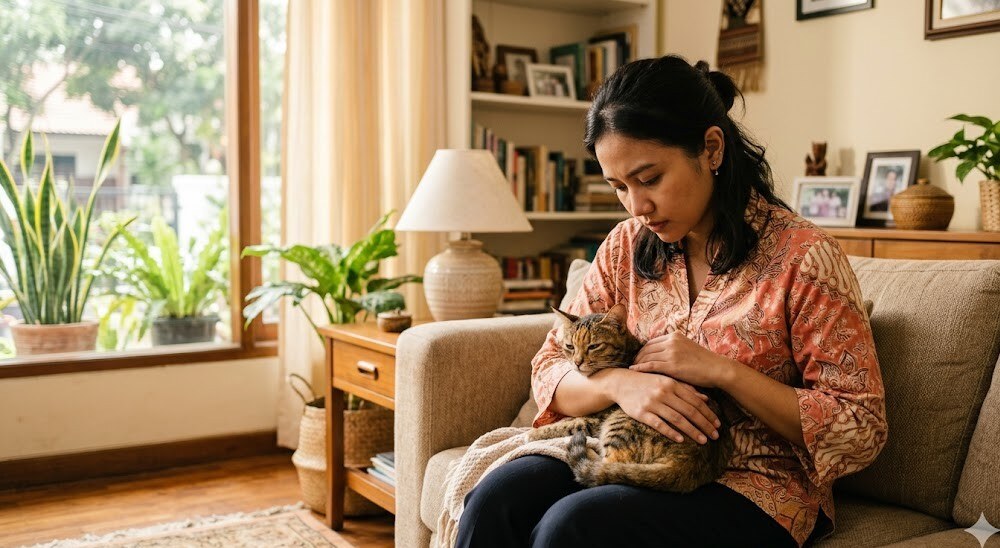

"My cat suddenly started breathing with its mouth open, its belly is heaving up and down, and it won't move. It's been 10 minutes. Is this normal panting after playing, or an emergency?" This question really already has its answer the moment you ask it: cats do not pant to cool down the way dogs do. A cat that opens its mouth to breathe is almost always showing a serious problem, extreme stress, hyperthermia, or more often, dyspnea from a heart, lung, or chest cavity issue.
This article explains why panting in cats is completely different from dogs, how to recognise the signs of dyspnea that require an immediate trip to a 24-hour clinic, common causes ranging from acute feline asthma to HCM (hypertrophic cardiomyopathy) that often hides until crisis, asthma triggers at home that are easily overlooked, and the safe first aid to provide during transport to the clinic.
Why panting in cats is NOT normal the way it is in dogs
Many owners mistakenly assume cat panting is the same as in dogs, simply a cooling mechanism when hot. This is wrong and can be fatal if it delays treatment.
Dogs use panting as their primary cooling mechanism because they have no body sweat glands. Cats also lack body sweat glands (apart from a few on their paw pads), but cats do not use panting as a routine cooling mechanism. Cats cool their bodies mainly by grooming (saliva evaporating from the fur) and seeking out cool spots, not by panting.
If a cat is panting with its mouth open, it is almost always one of the following:
- Acute extreme stress, a trip to the clinic in a carrier, aggression from a large dog, being moved to a new home, prolonged restraint. This "can happen" temporarily but still needs to be reduced because it overdrives the heart and lungs
- Hyperthermia / heat stroke, trapped in a hot car, an unventilated room, or somewhere stuffy. Details: Heat Stroke in Dogs and Cats in Jakarta
- Pathological dyspnea, the cat cannot get enough oxygen through the nose, so it must use its mouth. This is an emergency. Most common causes: acute feline asthma, HCM + pulmonary edema, pleural effusion (FIP / chylothorax / CHF), or pneumonia
- Excessive activity + obesity, an obese cat forced into intense play may pant temporarily. But recovery is fast (under 5 minutes in a cool spot), if it does not recover, evaluate for other causes
Practical rule: a cat panting with its mouth open while at rest (not carrier stress, not after intense play, not heat) should always be evaluated as a potential emergency. Count the respiratory rate (RR), normal resting cats breathe 20-30 breaths/minute. Consistently above 40 = abnormal.
Signs of cat dyspnea that require an immediate 24-hour clinic visit
Several hallmark signs of severe dyspnea in cats indicate the need for an immediate 24-hour clinic visit:
- Open mouth, tongue slightly out, at rest, in an air-conditioned home, not carrier stress. A strong indicator the cat is not getting enough oxygen through the nose
- Pale or cyanotic gums (bluish/purplish), normal cat gums are pink. Pale = poor perfusion. Blue/purple = severe hypoxemia. Check the upper gums or the inner eyelid
- Sternal recumbency posture, the cat refuses to lie on its side or relax, only sitting with its chest on the floor, neck stretched forward, elbows splayed out. Just like orthopnea in dogs, the cat is maximising lung expansion
- Obvious abdominal effort, the belly moves extra up and down with each breath. The abdominal muscles are used as accessory respiratory muscles because the diaphragm is no longer enough
- Resting RR consistently above 40 breaths/minute, count the chest rise and fall for 15 seconds times four. In a cat with a history of heart disease, a resting RR above 30 already warrants immediate evaluation
- Fainting / collapse, especially during mild activity or after coughing
- Stridor / wheezing / abnormal sound while breathing, newly appearing snoring, wheezing, or whistling sounds
- Refuses to move, restless, hides in an unusual place, a cat hiding under the bed or in a dark corner combined with laboured breathing = a classic struggling cat. Hiding is a response of a seriously ill cat
- Sudden hind-leg paralysis + laboured breathing + painful meowing, a combination highly suspicious for arterial thromboembolism (ATE) / saddle thrombus secondary to HCM. A true minute-by-minute emergency (see HCM section)
One or more of the signs above = 24-hour clinic, immediately. A cat that is already cyanotic or has ATE can decompensate within minutes.
Common causes of cat breathing difficulty
1. Feline Asthma
- Chronic lower airway inflammation with acute bronchoconstriction → wheezing, coughing, dyspnea
- Onset can be chronic (recurrent coughing) or an acute crisis
- Classic: a cat in the "praying position", neck stretched forward, chest down to the floor, coughing with a gagging sound that is often mistaken for "vomiting a hairball"
- Predisposed breeds: Siamese + Oriental Shorthair
- Acute treatment: oxygen + bronchodilator (terbutaline injection or albuterol inhaler with a spacer) + corticosteroid. For maintenance: systemic corticosteroid or inhaler with a spacer (AeroKat)
2. Hypertrophic Cardiomyopathy (HCM) + complications
- The most common heart disease in cats, the left ventricular wall becomes abnormally thick → diastolic dysfunction → backflow to the lungs → pulmonary edema
- Often hides without symptoms until crisis, the cat looks healthy, then suddenly has acute dyspnea at night. Many cats are already in CHF the first time they see a vet
- Predisposed breeds: Maine Coon, Ragdoll, Persian, British Shorthair, Sphynx + a strong genetic component (the MYBPC3 gene in Maine Coon and Ragdoll, genetic testing available)
- The most fatal complication: Arterial Thromboembolism (ATE) / saddle thrombus, a blood clot from the left atrium of a cat with HCM enters the aorta and blocks the iliac branch. Acute signs: sudden hind-leg paralysis + extreme pain + laboured breathing + cold hind legs with no pulse. A true emergency, guarded prognosis even with optimal treatment
- Acute CHF treatment: oxygen + furosemide IV + monitoring. Maintenance: clopidogrel to prevent ATE in at-risk-stage HCM cats (per ACVIM consensus)
3. Pleural effusion (fluid in the chest cavity)
- Fluid accumulates in the pleural cavity → the lungs cannot expand → restrictive dyspnea (rapid shallow breathing, prominent sternal posture)
- Most common causes in cats:
- FIP wet form (effusive), in young cats (especially under 2 years), thick yellow fluid + systemic signs. Details: FIP in Cats: Signs, Diagnosis, GS-441524 Treatment
- Chylothorax, lymphatic fluid (chyle, milky white) leaking into the pleural cavity, often without a clear cause
- CHF from HCM, some cats with advanced HCM develop pleural effusion in addition to pulmonary edema
- Pyothorax, a bacterial abscess in the pleural cavity, often after a bite wound or foreign body migration
- Thoracic neoplasia, mediastinal lymphoma, especially in FeLV-positive cats
- Acute treatment: thoracocentesis (drainage with a needle/catheter under ultrasound guidance), diagnostic (fluid analysis) + therapeutic (relieving restrictive dyspnea). Only possible at a clinic with the right capacity, impossible at home
4. Pneumonia + bronchopneumonia
- Bacterial / viral (often part of complex feline upper respiratory infection) / aspiration
- Signs: dyspnea + fever + lethargy + reduced appetite
- Treatment: systemic antibiotics + oxygen + nebulization + supportive care
5. Airway foreign body / trauma
- A cat choking on a small object (needle, thread, bone fragment), hyper-acute onset
- Thoracic trauma from a fall from height ("high-rise syndrome", a cat falling from an apartment balcony), pneumothorax, hemothorax, diaphragmatic hernia
6. Heat stroke
- A cat trapped in a parked car, a closed unventilated room, or a cupboard/drawer
- Treatment details: Heat Stroke in Dogs and Cats in Jakarta
7. Dehydration + severe anemia
- Severe anemia (Hct below 15-18%) → not enough red blood cells to carry oxygen → compensatory hyperventilation. Causes in cats: advanced-stage chronic kidney disease, FeLV, FIV, immune-mediated hemolytic anemia, neoplasia
- Very pale gums = a striking sign
Feline asthma triggers that are often overlooked at home
For cats already diagnosed with asthma or those that cough frequently, identifying triggers at home is important for prevention. Some triggers owners often fail to notice:
- Cigarette smoke, second-hand smoke is one of the strongest triggers. A household member who smokes indoors = a constant trigger
- Litter dust, especially dusty clumping clay, when the cat buries its waste, particles are inhaled. Switch to wood pellets, tofu litter, or low-dust silica if your cat has a history of asthma
- Air fresheners, aromatherapy candles, essential oil diffusers, many essential oils are toxic to cats (tea tree, peppermint, citrus, pine, ylang-ylang, eucalyptus) and are also airway irritants. Avoid completely
- Cleaning sprays, perfume, hair spray, aerosol deodorant, do not spray in a room with a cat
- House dust + mould, in Jakarta's high humidity, mould in the bathroom or in a rarely-cleaned AC unit can be a trigger
- Incense smoke and mosquito coils, highly irritant, and a direct trigger of a crisis in asthmatic cats
- Outdoor pollen + spores, if the cat is free-roaming or near open windows
For cats with diagnosed asthma, this environmental management is often as important as medication. Many owners can significantly reduce crisis frequency by eliminating triggers at home.
First aid for a cat with breathing difficulty, what you SHOULD do
Your goal at home: do not stress the cat, transport it calmly to a 24-hour clinic. A cat with dyspnea is highly sensitive to restraint, noise, and stress, which raise oxygen demand and worsen the crisis. You cannot stabilise severe dyspnea at home without oxygen.
- Stay calm + use a soft voice, the cat reads your emotions and tone. Do not shout to call family members, do not panic
- Move it to a quiet, cool room, minimal stimuli, AC on, TV off, do not crowd it with guests or active children
- Let the cat choose its own position, it will usually sit in sternal position by itself. DO NOT force it to change position or "calm" it with excessive petting, that adds stress
- Record the data, RR (count 15 seconds × 4), gum colour, duration since onset, any coughing / wheezing / vomiting / hind-leg paralysis. Take a photo with your phone if you can
- Call the 24-hour clinic first, make sure a vet is on duty + briefly describe the condition so they can prepare an oxygen cage. A clinic with feline-friendly handling capacity is preferable
- Carrier with a towel + soft bedding + minimal jostling, use the carrier the cat is used to (familiar smell), place a soft towel as bedding, spray Feliway pheromone if you have it. Carry the carrier steadily with both hands, do not swing it
- Air-conditioned car, cat in the back seat with the carrier secured by a seat belt, not on your lap (too much movement), not on the hot car floor. Cover the carrier with a thin towel to reduce visual stimuli if the cat is calmer in the dark, but ensure adequate ventilation
- For a cat with an HCM diagnosis and a clopidogrel prescription, ensure medication compliance. Ask the vet before the visit if the condition changes
What you must NOT do when a cat has breathing difficulty
- DO NOT force it to drink or eat, the swallowing reflex is impaired, high aspiration risk
- DO NOT over-restrain, holding tightly to "calm" it actually makes it worse. A stressed cat = higher oxygen demand = worsening dyspnea
- DO NOT spray air freshener / aromatherapy "to calm it", many essential oils are toxic + airway irritants, triggering an acute asthma attack
- DO NOT give human medications, antihistamines (CTM, cetirizine), human corticosteroids, human bronchodilators, human cough medicine. Many have doses/formulations dangerous to cats (paracetamol is fatal to cats)
- DO NOT delay hoping it will "get better on its own", pulmonary edema from HCM and acute asthma do not self-resolve
- DO NOT roughly force the cat out of its hiding spot, hiding is a stress response. Get it out calmly, using a towel as a sling if needed
- DO NOT transport via motorbike ride, vibration + heat + stress + fumes = a crisis trigger. Use an air-conditioned car if possible, or call a taxi/Grab with the AC on
- DO NOT request a house call for acute dyspnea, house call services (including ours) do not have oxygen, x-ray, or thoracocentesis. A cat with severe dyspnea needs a 24-hour clinic facility with feline emergency capacity
When to go to a 24-hour clinic immediately
Cat breathing difficulty is almost always an indication for a 24-hour clinic because its common causes, HCM, pulmonary edema, pleural effusion, acute feline asthma, all need oxygen + immediate diagnostics + injectable treatment that is not available with a house call.
Take it to a 24-hour clinic immediately if any of the following are present:
- Open mouth, panting, or breathing with obvious effort, at rest, not carrier stress, not after intense play
- Pale or cyanotic gums (bluish/purplish)
- Prominent sternal recumbency (neck stretched forward, elbows splayed, refusing to lie on its side)
- Resting RR above 40 breaths/minute (above 30 for a cat with a history of heart disease)
- Obvious abdominal effort (the belly pumping)
- Fainting / collapse
- Sudden hind-leg paralysis + laboured breathing + painful meowing + cold hind legs → suspect ATE / saddle thrombus, a hyper-emergency
- A history of choking (suspected foreign body)
- Trauma from a fall from height (high-rise syndrome) + laboured breathing
- A cat with an HCM diagnosis whose RR suddenly increases at night
- An asthmatic cat whose crisis does not respond after 1-2 puffs of an albuterol inhaler with a spacer (previously prescribed by a vet)
When you call the 24-hour clinic, mention: breed + age + estimated weight, duration of dyspnea, gum colour, any coughing / wheezing / vomiting / hind-leg paralysis, and any history of HCM / asthma / FIP. This information helps the clinic prepare an oxygen cage + diagnostics + medications ready.
What the vet will do at the clinic
The approach to cat dyspnea at the clinic differs from dogs, feline-friendly handling is crucial because stress worsens everything:
- Oxygen first, thorough examination later, a dyspneic cat goes into an oxygen cage for a minimum of 10-30 minutes before handling. A cat in crisis can decompensate from mere restraint for auscultation
- Careful auscultation, muffled heart sounds (effusion), S3/S4 gallop rhythm or murmur (HCM + heart disease), wheezes (asthma), crackles (pulmonary edema)
- Pulse oximetry + point-of-care thoracic ultrasound, minimal stress, quickly identifies effusion / B-lines before radiographs
- Thoracic radiograph, the initial gold standard: pulmonary edema pattern, effusion, bronchial pattern (asthma), masses, cardiac silhouette
- Echocardiography if HCM or other heart disease is suspected, the gold standard for diagnosing HCM
- Bloodwork, CBC, biochemistry, T4 (hyperthyroidism can precipitate an HCM crisis), NT-proBNP to differentiate cardiogenic vs non-cardiogenic dyspnea, FeLV/FIV status
- Thoracocentesis if there is pleural effusion, drainage + fluid analysis (modified transudate / chylous / pyogranulomatous FIP / septic / chyle)
- Therapeutic treatment: furosemide IV for cardiogenic pulmonary edema, terbutaline injection or albuterol nebulization for an asthma crisis, corticosteroids, antibiotics for pneumonia / pyothorax, ATE treatment (strong analgesia + monitoring + clopidogrel maintenance), surgery for diaphragmatic hernia, and so on
FAQ on cat breathing difficulty
My cat suddenly started open-mouth breathing in the carrier on the way to the clinic, is this an emergency or just stress?
It can be both. Extreme carrier stress can indeed make a cat pant temporarily, but the fact that ordinary carrier stress makes a cat pant indicates that the cat's cardiovascular reserve is low. A healthy cat usually does not pant in a carrier. When you arrive at the clinic, let the cat settle in an oxygen cage before handling. Discuss with the vet, this episode may be an early clue to undiagnosed HCM, so screening echocardiography may be appropriate.
How do I count a cat's respiratory rate accurately, and when?
Count when the cat is sleeping calmly or resting in a familiar place, not while being held, not just after waking, not when there is a disturbance. Count the number of chest rises and falls for 15 seconds, multiply by 4. Do this over several consecutive days to get a baseline resting RR. Normal resting cat: 20-30. Apps like "Cardalis" and several cardiology consensus groups recommend a sleeping respiratory rate (SRR) below 30 as an indicator of stability in cats with a history of HCM.
My cat often coughs + makes a "hairball vomiting" sound but no hairball comes out, could it be asthma?
Very possibly. Many cats with feline asthma are misdiagnosed as "vomiting a hairball" because the cough pattern ends similarly to retching, the cat in the praying position, neck forward, abdomen contracting, with a gagging sound. But no hairball or fluid vomit comes out. This pattern is more consistent with an asthma cough. Consult a vet for a thoracic radiograph, bronchial pattern + air-trapping are classic findings. A treatment trial with corticosteroids + bronchodilator often provides a strong diagnostic response.
May I give a human albuterol inhaler to my asthmatic cat?
Only if it has been prescribed by a vet and you have an AeroKat spacer for cats. The albuterol (salbutamol) inhaler is indeed used as a rescue medication in asthmatic cats, but with a special delivery system (spacer + cat mask) so the correct dose reaches the lungs. Without a spacer, most of the medication does not reach the cat's lungs. Excessive use of rescue albuterol is actually counter-productive (overdose causes tachycardia + hypokalemia). Always discuss a rescue + maintenance protocol with a vet.
My 1-year-old cat is suddenly weak + breathing hard + has a swollen belly, what is this?
That combination is highly suspicious for FIP wet form (effusive) with abdominal or pleural effusion. FIP classically strikes young cats under 2 years, often recently adopted from a shelter / cattery, with a timeline of several weeks of lethargy + reduced appetite + fever unresponsive to antibiotics + a swollen belly (ascites) or laboured breathing (thoracic effusion). Go to a 24-hour clinic immediately for evaluation, FIP now has treatment (GS-441524) with far better outcomes than the pre-2020 era. Details: FIP in Cats: Signs, Diagnosis, GS-441524 Treatment.
I have a Maine Coon / Ragdoll, does it need HCM screening even if healthy?
Recommended. Maine Coon and Ragdoll have a genetic HCM component with the MYBPC3 gene identified, genetic testing is available (homozygous, heterozygous, negative). But genetic testing is not an HCM diagnosis, a heterozygous cat may not develop HCM, and a cat without a known mutation can still develop HCM. The most informative screening: baseline echocardiography at 1-2 years of age, repeated every 1-2 years. Discuss a screening plan with a cardiology specialist or a vet with echo capacity, especially if you plan to breed.
How much does a 24-hour emergency clinic plus cat dyspnea diagnostics cost?
It varies depending on the clinic and diagnostic needs. A 24-hour emergency consultation, oxygen stabilisation, thoracic radiograph, and basic bloodwork usually cover the initial evaluation. Echocardiography, thoracocentesis, or hospitalisation in an oxygen cage add significant cost depending on duration. It is better to invest in accurate diagnostics up front, especially echocardiography for an HCM diagnosis that determines lifetime treatment, than to try treatments without a diagnosis. Consult a vet for an estimate based on your cat's condition.
Summary
Cats do not pant to cool down the way dogs do. A cat that opens its mouth to breathe almost always shows extreme stress, hyperthermia, or pathological dyspnea. For pathological dyspnea, common causes are acute feline asthma, HCM + pulmonary edema, pleural effusion (FIP / chylothorax / CHF / pyothorax), pneumonia, foreign body, or heat stroke.
Signs of severe dyspnea, open mouth at rest, pale/cyanotic gums, sternal posture, abdominal effort, RR above 40, fainting, or the combination of hind-leg paralysis + laboured breathing (ATE), mean a mandatory 24-hour clinic, not a house call. House call services (including ours) do not have the oxygen, x-ray, and thoracocentesis that are decisive in critical minutes.
First aid at home: stay calm + use a soft voice + a cool room + let the cat choose its own position + a carrier with minimal jostling + transport in an air-conditioned car to a 24-hour clinic. DO NOT force fluids / restrain / spray air freshener / give human medications. Call the clinic first so the oxygen cage is ready when the cat arrives.
For owners of cats diagnosed with HCM, asthma, or FIP, long-term management at home (medication compliance, eliminating asthma triggers, monitoring baseline SRR, preventing crisis precipitators) strongly determines the outcome. Regular consultation with a vet (including home evaluations for monitoring) is part of the lifetime plan.
Want an initial consultation to assess your cat's breathing pattern or plan baseline screening (especially for Maine Coon / Ragdoll / Persian / British Shorthair breeds)? Contact us on WhatsApp, mention the breed, age, weight, resting RR (if you have counted it), gum colour, and the main concern. The Prabasa Vet team will help assess the urgency: refer to a 24-hour clinic immediately, or schedule a routine home evaluation for baseline staging.
Read also: Complete Pet Emergency Guide, Signs of a Cat Emergency You Should Not Delay, FIP in Cats: Signs, Diagnosis, GS-441524 Treatment.
Medical references used in this article
This article was prepared with reference to the following sources:
- ACVIM Consensus Statement on the Classification, Diagnosis, and Management of Cardiomyopathies in Cats (Luis Fuentes et al., 2020), HCM staging, CHF criteria, indications for clopidogrel for ATE prevention, sleeping respiratory rate (SRR) monitoring
- ISFM (International Society of Feline Medicine) Consensus Guidelines on Feline Asthma + Cardiology, diagnosis and management of chronic and acute feline asthma, environmental triggers
- BSAVA Manual of Feline Practice 2nd ed, chapters on feline asthma, HCM, pleural effusion, FIP, feline-friendly handling for dyspnea
- BSAVA Manual of Canine and Feline Emergency and Critical Care 3rd ed, feline dyspnea triage, oxygen therapy, thoracocentesis, pre-diagnostic stabilisation
- Plumb's Veterinary Drug Handbook 7e, monographs for terbutaline (bronchodilator for asthmatic cats), furosemide (feline CHF), clopidogrel (ATE prevention in HCM cats), albuterol inhaler with a spacer
- ABCD (Advisory Board on Cat Diseases) Guidelines on FIP, diagnosis of FIP wet form (effusion) and GS-441524 treatment
This article is a general guide based on ACVIM, ISFM, BSAVA, and ABCD guidelines. For an accurate diagnosis and a treatment plan tailored to your cat's specific condition, consulting a veterinarian for a direct evaluation is the right step. Acute dyspnea in cats is an indication for referral to a 24-hour clinic, not a house call.