
There is one thing that often makes bird owners hesitate to seek help. A sick bird is actually most fragile when moved. Sunned, put in a box, carried on a motorbike in the heat or rain, then made to wait in a waiting room full of noise and strange animals. For an already weak bird, the journey itself is sometimes riskier than the illness. This is why a bird vet who comes to your home makes sense for many cases.
This article explains when a bird truly needs a vet, the types of birds and complaints we usually handle, emergency signs that should not be delayed, and how a home visit works. The goal is not to frighten, but to help you decide more calmly.
Why Birds Need a Vet Who Understands Avians
Birds are not small versions of dogs or cats. Their metabolism is fast, their airway is unique (they have air sacs, not just lungs), and by instinct they are skilled at hiding illness. In the wild, a bird that looks weak is a predator's target, so they mask symptoms until they truly cannot anymore. As a result, by the time a bird begins to look sick to its owner, the condition has often progressed quite far.
Handling birds also demands particular care. Handling technique, safe dosing, and observing respiratory signs differ from mammals. So an examination by a vet used to birds helps reduce mishandling.
Types of Birds and Complaints Commonly Handled
This service is open to household pet birds as well as songbirds, including lovebirds, canaries, songbirds, parakeets, and hookbills. Common complaints:
- Noisy breathing, snoring, or being out of breath
- Lethargy, fluffed feathers, sleeping often during the day
- Not eating or losing weight
- Droppings changing colour or consistency (loose, green, watery)
- Watery eyes or nose, sneezing
- A songbird or other singer suddenly going silent with lethargy
- Wounds, foot and nail problems, or abnormal growth
Not every complaint immediately means a serious illness. Most can in fact be guided first through consultation, so you know whether a visit is needed or home monitoring is enough.
Ask the vet by your bird type
Pick your bird and a pre-filled WhatsApp chat opens so our team knows exactly which type it is.
Emergency Signs That Should Not Be Delayed
Some conditions need fast action. Seek help right away if the bird shows:
- Constant open-mouth breathing, the tail bobbing with each breath
- Lethargy to the point of being unable to perch, slumped at the cage floor
- Total food refusal for more than a few hours (small birds have thin energy reserves)
- Bleeding that does not stop
- Seizures or repeated falls from the perch
- Obvious abdominal bloating or egg-binding in a female bird
In small birds, the time gap matters greatly. Because their metabolism is fast, the condition can worsen within hours, not days. If in doubt, it is better to ask early than to wait.
How the Home Visit Works
The process is simple and starts with a conversation. You describe the complaint over WhatsApp, ideally with a short photo or video of the bird and its droppings. From there we help judge whether the situation can be guided with consultation, needs a home visit, or is an emergency needing immediate care.
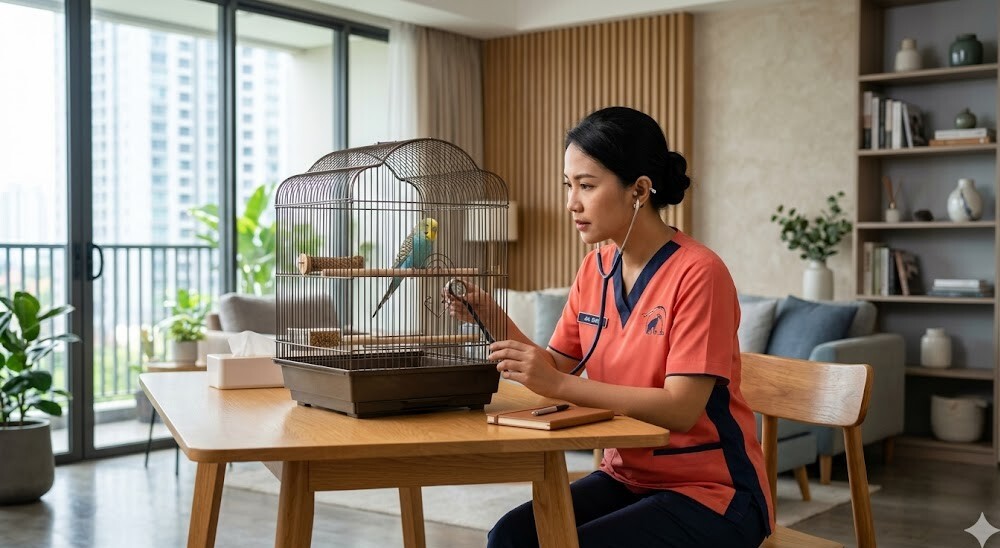
If a visit is made, the vet comes to your home in the Jabodetabek area. The examination takes place in the environment the bird knows, so its stress is far lower and the symptoms shown are more honest. For owners outside Jabodetabek, remote consultation can still help guide the first steps and decide whether a referral to the nearest facility is needed.
What we protect is the calm of the process. The bird does not need to make a journey that worsens its condition, and you can understand what is happening.
Free Initial Consultation
If you are unsure whether your bird is alright, start with a chat. The initial WhatsApp consultation is free of charge. Describe the symptoms, send a photo or video if you have one, and we help judge the most sensible step for your bird's condition.
Frequently Asked Questions
Does every sick bird need a home visit?
No. Many complaints can be guided first through consultation. A visit is advised when a direct examination or procedure is genuinely needed.
My bird stresses when handled by strangers. Is this safe?
That is precisely the advantage of a home visit. The bird is examined in its own cage and environment, so stress is more controlled. Handling is done minimally and as carefully as possible.
I am outside Jabodetabek, can I be helped?
Yes, through remote consultation. We help assess the symptoms and guide the first steps, including when a referral to the nearest facility is best.
What should I prepare before consulting?
A short photo or video of the bird breathing and while active, a photo of the latest droppings, plus info on food, how long the symptoms have lasted, and the latest changes in the cage.
Free consultation via WhatsApp
Just start with a chat. The initial WhatsApp consultation is free, and from there we decide the best step together. Contact us via WhatsApp and mention the type of bird, its symptoms, and your area.