
There is a particular kind of worry that hits when a beloved tiny pet suddenly looks listless. Owners of hedgehogs, sugar gliders, or hamsters often feel the same thing: they want to rush to a vet, but they hesitate over whether an ordinary clinic truly understands how to handle an animal this small and fragile. That worry is reasonable. Exotic pets really are not just miniature dogs or cats. Their anatomy, metabolism, and needs are very different, and a small handling mistake can have big consequences.
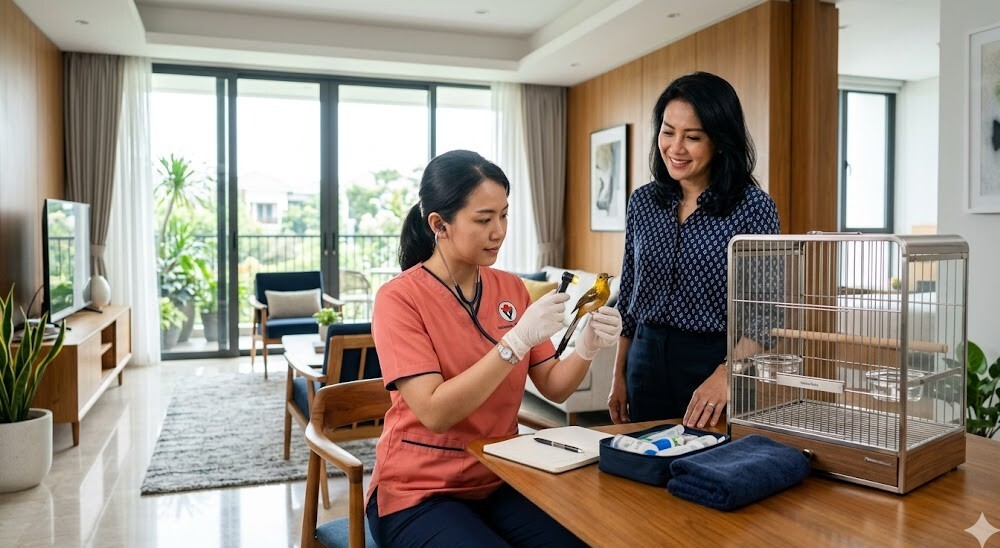
An exotic pet vet home-visit service exists to answer that worry. Instead of forcing a small, already-stressed animal to make a journey, the examination is done at home, in surroundings it already knows.
Why exotic pets need a vet who genuinely understands them
Exotic pets hide illness extremely well. In the wild, showing weakness means becoming a target for predators, so this instinct carries over into the cage at home. As a result, by the time a hamster or sugar glider finally looks sick, the condition is often already advanced. This is why the time gap matters so much, and why an examination by a vet used to reading subtle signs in small species is important.
Medication dosing, handling technique, and even how an animal is restrained during examination all differ from larger animals. A light body leaves a thin margin for error. So species knowledge is not just a nice extra, it is the foundation of safety.
Species we handle
This service covers the small exotic pets commonly kept in Indonesia:
- Hedgehogs with typical issues such as skin, nail, and digestive problems.
- Sugar gliders that are sensitive to stress, social patterns, and nutrition.
- Hamsters whose very small bodies demand extra precision.
- Reptiles and tortoises that are strongly affected by enclosure temperature, lighting, and humidity.
- Guinea pigs with their particular vitamin C and fibre needs.
- Ferrets with an active character and certain disease vulnerabilities.
If your pet is not listed above but is a small exotic, please ask first over WhatsApp. Most cases can still be guided.
Ask the vet by your pet's species
Pick your animal and a pre-filled WhatsApp chat opens so our team knows exactly which species it is.
Emergency signs you should recognise
Each species has different danger signals. Recognising them early can save a life.
- Hedgehogs: stopping eating for more than a day, an unsteady or dragging gait, and a swollen belly.
- Sugar gliders: excessive self-biting, weakness to the point of struggling to climb, and sunken-looking eyes.
- Hamsters: noisy or laboured breathing, wet diarrhoea, and a rapidly growing lump.
- Reptiles and tortoises: a constantly gaping mouth with mucus, swollen closed eyes, and prolonged food refusal with lethargy.
- Guinea pigs: stopping eating along with stopping passing droppings, excessive drooling, and heavy breathing.
- Ferrets: repeated vomiting, hind-body weakness, and pale gums.
Any of the signs above are best not delayed. In animals this small, a few hours can make a big difference.
How the home visit works
The process is kept simple so you do not add to your burden when you are already anxious. You reach out over WhatsApp and describe the animal's condition and symptoms. From there the direction of care is discussed, whether initial advice is enough or a visit is genuinely needed. If a visit is required, the vet comes to your home in the Jabodetabek area with basic examination equipment. The examination is done slowly so the animal stays calm, then you receive an explanation of the condition and a care plan you can carry out at home.
For those of you outside Jabodetabek, nationwide reach is still available in the form of remote consultation. Many issues, especially around enclosure, temperature, and nutrition, can be helped without meeting in person.
You are not facing this alone
Caring for small exotic pets does demand extra attention, but you do not have to guess on your own. Even the smallest question, from feeding patterns to confusing symptoms, deserves to be asked before it is too late.
Frequently asked questions
Can I consult first before deciding on a visit?
Yes. The initial WhatsApp consultation is free. From your description of the symptoms, we help judge whether home advice is enough or a visit is genuinely needed.
My pet is very small and stresses easily, is it safe to examine?
That is precisely the main reason the examination is done at home. A familiar environment lowers stress, and handling is matched to the species' size and temperament.
I am outside Jabodetabek, can I still be helped?
Yes, through remote consultation. Enclosure, temperature, lighting, and nutrition issues can often be guided without a physical visit.
My pet is not on the species list above, will it be turned away?
Not automatically. Please ask first over WhatsApp. Many other small exotic cases can still be guided.
Free consultation via WhatsApp
Have a small exotic pet that is worrying you? Describe the symptoms over WhatsApp. The initial consultation is free, and from there we decide the best step together. Contact us via WhatsApp and mention the type of pet, its symptoms, and your area.