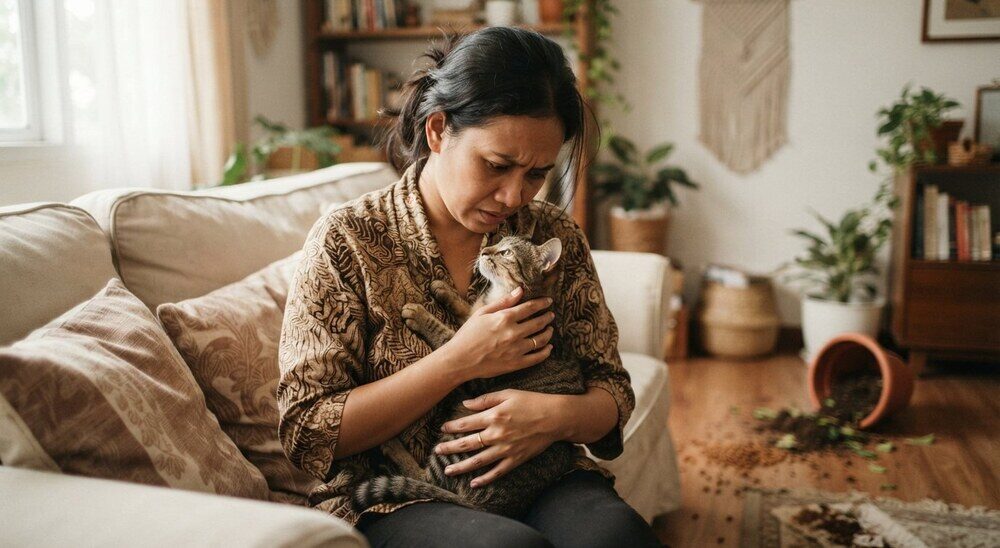

"My cat was just vaccinated this morning, now she's lethargic and won't eat, is this normal or does she need to see a vet?" This is one of the most common questions we get on WhatsApp after vaccinations. And the answer is: it depends.
Post-vaccine reactions are common and usually harmless. But some reactions are serious and need prompt attention. This article helps you tell the difference between what's normal (just monitor at home) and what needs an immediate trip to a 24-hour clinic, plus what you can do to minimise the risk.
Why do vaccines cause reactions?
Vaccines work by triggering the immune system to build antibodies against disease antigens. This process naturally involves a mild inflammatory response, and that response is what you see as a "side effect" after vaccination.
In healthy animals, this reaction is mild and resolves on its own within 24-48 hours. In a small number of animals, the immune system over-responds (allergy, hypersensitivity), and that's where serious reactions can occur.
Normal post-vaccine reactions (first 24-48 hours)
Here are reactions that are common and usually nothing to worry about. Just monitor at home:
- Lethargy or sleepiness, the animal sleeps more and is less active than usual. Resolves within 24-48 hours
- Slight fever, body temperature rises a little (for cats and dogs, a mild fever is around 39.5-40°C; normal temperature is usually 38-39.2°C). Usually resolves within 24 hours
- Swelling at the injection site, a small lump at the scruff (back of the neck) or thigh that feels warm. Usually resolves within 1-2 weeks
- Temporary loss of appetite, the animal is less interested in food for 1-2 days but still drinks water. Offer favourite foods at a warm temperature (done safely, never microwave it for a cat, but you can use warm water to soften wet food)
- Sneezing or a slightly runny nose, especially after intranasal vaccines (sprayed into the nose rather than injected). Resolves within 1-3 days
What to do: let the animal rest, provide clean water and favourite foods at room temperature, and avoid heavy play for the first 24 hours. Avoid bathing, intensive grooming, or long trips for 48 hours after vaccination.
Reactions that need prompt veterinary care (concerning)
Here are reactions that signal a serious problem and need veterinary evaluation as soon as possible:
Anaphylaxis, the first 60-minute window
A severe allergic reaction (anaphylaxis) usually appears within the first 60 minutes after the injection, sometimes within minutes. Per the WSAVA 2024 guidelines, this is the most critical window and the reason vets often ask you to stay at the clinic, or stay in the area where the vet is doing a house call, for 15-30 minutes after the injection.
Signs of anaphylaxis:
- Swelling of the face, eyes, or lips
- Severe itching all over the body, especially the face
- Repeated vomiting within 30-60 minutes after the vaccine
- Acute diarrhoea
- Severe weakness or fainting
- Difficulty breathing, pale or bluish tongue or gums
- Collapse
What to do: if you are still at the clinic or the vet is still at your home, tell the vet immediately, epinephrine or antihistamine treatment is usually already available in the vet's bag. If you are already home and the vet has left, head to the nearest 24-hour clinic immediately. Don't wait for the symptoms to get worse.
Delayed reactions (1-7 days after vaccination)
Some reactions appear hours to days after vaccination. These warrant a vet consultation:
- Vomiting for more than 24 hours or repeated vomiting more than 3 times in 12 hours
- Diarrhoea that does not stop within 24-48 hours, especially if there is blood
- High fever (above 40°C) lasting more than 24 hours
- Severe weakness, the animal won't get up and won't drink water at all
- Injection-site swelling that keeps growing after 1-2 weeks, or an abscess (pus) forms
- Excessive limping if the vaccine was in the leg, lasting more than 48 hours
- Prolonged watery eyes or nose for more than 5 days after an intranasal vaccine
If you are in South Jakarta and need a quick consultation, you can WhatsApp our partner vet in South Jakarta directly, or find your nearest 24-hour clinic.
Feline Injection-Site Sarcoma (FISS), specific to cats
FISS is a malignant tumour that appears at a former vaccine injection site in cats, usually months to years after vaccination. The incidence is estimated to be low (around 1 in 10,000 to 1 in 30,000 injections), but serious enough that international feline expert panels (AAFP/ISFM) recommend several preventive approaches:
- Strategic injection sites, many feline vets choose to inject in the lower leg or distal tail (rather than the scruff/back of the neck). The reason: if a tumour develops, it is easier to remove surgically (even amputation as a last resort) without having to remove a lot of vital tissue
- Different sites for different vaccines, e.g. rabies in the right leg, tricat in the left leg. If a reaction develops, you and the vet can tell which vaccine triggered it
- Monitor swelling that doesn't resolve, the "3-2-1" rule: if injection-site swelling is still present after 3 months, or is more than 2 cm in diameter, or is growing larger at any time, get it evaluated promptly for a biopsy
Discuss this with your cat's vet, many vets in Indonesia have started adopting these AAFP protocols, but if your vet isn't familiar with them, there's no harm in asking about injection sites and a post-vaccine monitoring plan.
Dogs and cats at higher risk of vaccine reactions
Some groups of animals have a higher-than-average risk of vaccine reactions:
- Toy breeds, dogs such as Chihuahua, Pomeranian, Maltese, and Pug have a higher incidence of vaccine reactions than large breeds. Vetcompass UK research shows this correlation, particularly for allergic reactions
- Animals with a history of previous vaccine reactions, if your animal has reacted after a vaccine before, tell the vet before the next vaccine. The vet may choose a different vaccine type, space the vaccines out (no combo in one visit), or give an antihistamine as pre-medication
- Animals with health conditions, dogs/cats with autoimmune disease, active cancer, or organ failure need a more careful risk-benefit evaluation. Discuss with the vet
- Very young or very senior animals, the immune system is less stable and the vaccine response can sometimes be excessive
Preventing vaccine reactions
A few things you can do to minimise the risk:
- Don't over-vaccinate, follow evidence-based schedule guidelines (WSAVA, WHO), not "more often = safer". An unnecessary vaccine = risk without added benefit
- Make sure the animal is healthy at the time of vaccination, no fever, no diarrhoea, no vomiting, eating normally over the last 3-5 days. Vaccinating a sick animal can burden the immune system and the vaccine response may not be optimal
- Tell the vet the previous vaccine history, including vaccine names, dates, and any reactions that occurred. Bring the vaccine record book or a screenshot
- Monitor the first 60 minutes after vaccination in a safe place, at a clinic, wait 15-30 minutes before going home. With a house call, the vet usually waits 10-15 minutes before leaving. If you are home alone with the animal, don't leave it unattended for the first 60 minutes
- If the animal has a history of vaccine reactions, discuss the options: split the schedule (one vaccine type per visit, not a combo), antihistamine pre-medication, or a different vaccine type
- Record any reactions that occur, even if mild and not needing treatment, note it in the vaccine record book (date, vaccine type, reaction). This info is useful for future vaccinations
Vaccine side effect FAQ
My dog has a mild fever after the vaccine, should I give paracetamol?
NO. Paracetamol (acetaminophen) is highly toxic to cats (it can be fatal) and the safe dose for dogs is very narrow. Don't give human medication without consulting a vet. For a mild post-vaccine fever, monitoring at home is usually enough, apply a room-temperature damp cloth, provide drinking water, let the animal rest. If the fever is high or lasts more than 24 hours, then see a vet.
My cat vomited once after the vaccine, is that dangerous?
Vomiting once in the first 24 hours after a vaccine falls into the "normal reaction" category, just monitor. What to worry about: repeated vomiting (3+ times in 12 hours), vomiting that continues for more than 24 hours, or vomiting with other symptoms (facial swelling, severe weakness, difficulty breathing). Details on emergency signs in cats are in the article Cat Emergency Signs You Should Not Delay.
The injection-site swelling is the size of a marble and it's been 3 days, is that normal?
A small swelling (marble-sized or smaller) at the injection site is still within the normal category, it usually resolves within 1-2 weeks. What needs a vet evaluation: swelling that keeps growing, swelling more than 2 cm in diameter, swelling still present after 3 months, or swelling that is draining pus or has a wound. For cats specifically, remember the "3-2-1" rule mentioned above.
Can I vaccinate if my animal just recovered from an illness (e.g. a week ago)?
It depends. For a mild illness that has fully resolved (e.g. cat flu that's over, with the animal eating and active again), vaccination is generally fine. For serious diseases (parvovirus, panleukopenia, FIP), recovery takes longer and the vet may advise delaying the vaccine 2-4 weeks after full recovery. Consult the vet who treated the original illness for the right timing.
Can my animal be "allergic" to a particular vaccine for life?
Yes. If your animal has had a serious allergic reaction after a particular vaccine (e.g. anaphylaxis after leptospira in a small dog), the risk of a similar reaction with the next vaccine is higher. Tell the vet before vaccinating, options: avoid the same vaccine type (if it isn't a core vaccine), change brands (a different adjuvant formulation can make a difference), or antihistamine pre-medication. For core vaccines such as rabies that are legally required, discuss a safe vaccination strategy with the vet.
I'm panicking after the vaccine, when can I call the vet outside office hours?
Always, if the symptoms fall into the "concerning" category above. Anaphylaxis doesn't wait for office hours. If your vet isn't available, find the nearest 24-hour clinic. For mild symptoms (a little lethargy, mild fever), you can usually monitor at home until office hours the next morning.
Summary
Most post-vaccine reactions are normal and resolve on their own within 24-48 hours: lethargy, mild fever, small injection-site swelling, temporary loss of appetite. What needs a prompt vet visit: anaphylaxis in the first 60 minutes (facial swelling, difficulty breathing, collapse), repeated vomiting for more than 24 hours, persistent high fever, or large swelling that doesn't resolve.
To minimise the risk: don't over-vaccinate, make sure the animal is healthy at the time of vaccination, tell the vet about any previous reactions, and monitor the animal for the first 60 minutes after the injection in a safe place.
If you need a vaccine at home so you can observe your animal right after vaccination without the stress of travel, see Prabasa Vet's house call vaccination service or message us on WhatsApp for a free consultation.
Read also: The Complete Guide to Pet Vaccination, Rabies Vaccine for Dogs and Cats in Indonesia, Cat Emergency Signs You Should Not Delay.
Medical references used in this article
This article was prepared with reference to the following sources, verified per clinical statement:
- Squires RA, et al. WSAVA Guidelines for the Vaccination of Dogs and Cats. Journal of Small Animal Practice 2024 , adverse reaction section (first 60-minute anaphylaxis window, post-vaccine observation protocol, follow-up recommendations for animals with a reaction history)
- AAHA Canine Vaccination Guidelines (latest edition), vaccine reaction categories, adverse event reporting documentation
- AAFP/ISFM Feline Vaccination Advisory Panel Report, FISS (feline injection-site sarcoma) considerations, injection-site strategy, "3-2-1" monitoring rule
- Vetcompass UK studies on vaccine adverse events in dogs, correlation of small breeds with higher vaccine reaction incidence
- Plumb's Veterinary Drug Handbook, 7th edition, antihistamine (diphenhydramine) monograph as pre-medication, contraindication of paracetamol in cats
This article is general guidance based on the international WSAVA, AAHA, and AAFP guidelines. For your animal's specific condition, including vaccination history, previous reaction history, and current health status, consulting a veterinarian is the right step. For emergency post-vaccine symptoms (anaphylaxis, difficulty breathing, collapse), head to the nearest 24-hour clinic immediately, do not wait for office hours.