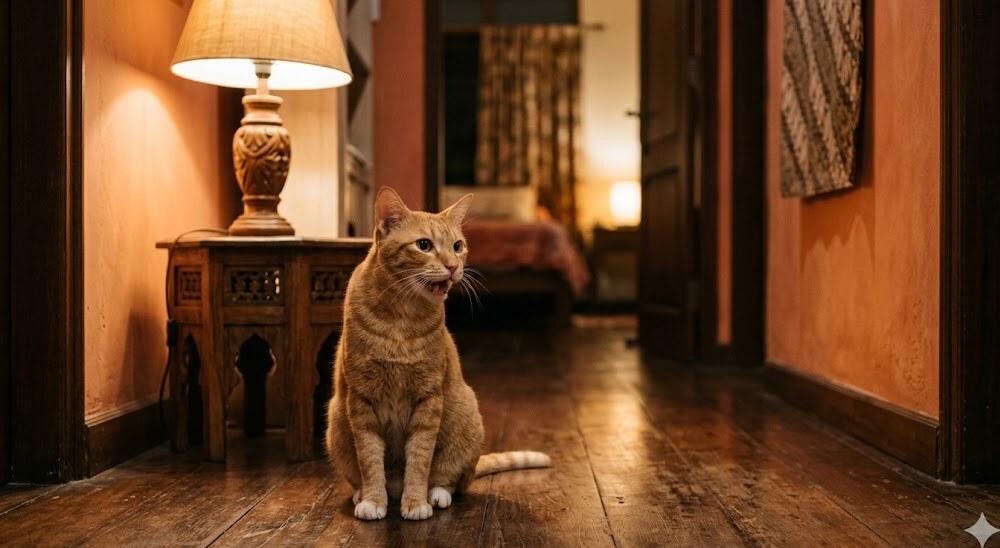

Transitioning a cat from outdoor to indoor only is one of the hardest changes for an adult cat to accept. If you have just moved into an apartment, just got advice from a veterinarian after your cat was bitten by a stray cat (FIV/FeLV risk), or simply realized that letting your cat roam outside in Jakarta is a high-risk gamble with vehicles and predators, you may be struggling with a cat that meows at the door at 3 a.m., scratches the window frame, or successfully escapes when a guest opens the door.
The good news: this transition can succeed with the right approach. What makes a cat seem "unwilling to be indoor" is often not the cat, but an indoor environment that is boring compared to the stimulus-rich outdoors. An outdoor cat is used to hunting, marking, climbing trees, and socializing with other cats. If your home only has one sofa + one food bowl, of course it wants out.
This article is a complete guide based on the AAFP/ISFM Indoor Cat Initiative + the Ohio State University Indoor Pet Initiative, why the indoor transition matters for safety, a realistic gradual strategy (6-8 weeks), the 9 environmental tweaks to prepare, the signs of stress to monitor, and when you need a consultation with a veterinarian or behaviorist. Disclaimer: a general guide based on international feline behavior guidelines, not a replacement for a direct consultation with a veterinarian for your cat's specific condition.
Why transitioning to indoor only matters
The "indoor vs outdoor" debate in the international cat community is fairly settled on the indoor-only side for the modern urban context, the AAFP (American Association of Feline Practitioners) has had a formal position statement since 2020 recommending that cats be kept indoor only or as supervised outdoor (catio/leash) in areas with high traffic density + a high feral cat population. The Jakarta + Greater Jakarta context generally matches these criteria.
The specific risks of letting a cat roam freely outside in a large Indonesian city:
- Motor vehicles, the #1 cause of death for outdoor cats in urban areas. Motorbikes in Jakarta are harder for cats to avoid due to their low profile + similar sound.
- Infectious diseases from stray cats, FIV (Feline Immunodeficiency Virus) and FeLV (Feline Leukemia Virus) are transmitted via bites or saliva, retroviruses with no cure. Calicivirus, herpesvirus, and panleukopenia also spread through contact. Core vaccines help a lot but are not 100%.
- External and internal parasites, fleas, ticks, ear mites, tapeworms from small prey (rats, lizards), giardia from pond or gutter water. Repeated treatment raises costs + the risk of drug resistance.
- Predators + other animals, stray dogs (especially returning at night), snakes (rainy season), large rats, or territorial cats that attack.
- Dehydration + heatstroke, Jakarta is hot + humid. Outdoor cats often lack consistent access to clean water. Heatstroke during the day can be fatal within hours.
- Poisoning, rat poison (rodenticide) ingested not directly but via prey (relay toxicity), radiator antifreeze, plant pesticides, or salted fish in the trash.
- Permanent loss, a cat that has just moved house often escapes and doesn't come back. Even a pre-existing outdoor cat can get lost during an extreme weather event or after being scared by firecrackers/fireworks.
A well-managed indoor cat with good environmental enrichment can live 12-18 years (median). An outdoor cat in urban Indonesia averages 3-5 years. The difference is not small, it can be over a decade of extra bonding with your family.
Challenge: why outdoor cats resist being indoors
A cat already used to the outdoors has certain instincts and habits that make the transition difficult. It is important you recognize this is not a "naughty cat", it is natural behavior that needs redirecting, not punishment.
- Vocalizing to go out (excessive meowing). Often most obvious in the morning or before the usual time it went out. It can last 2-4 weeks before fading with a consistent strategy.
- Scratching doors, window frames, or balcony doors. Not to destroy, the cat leaves a scent mark + visual mark as "this is my territory, let me out."
- Escape attempts when the door opens. A cat used to going out has high muscle memory + reward expectation every time the door opens. Guests, couriers, or family members who forget must be extra careful.
- Internal hyperactivity + frustration. The hunting energy usually spent outdoors is now trapped at home without an outlet, it can appear as midnight zoomies, redirected aggression toward other cats/humans at home, or destructive behavior.
- Appetite status + weight gain. Without outdoor activity + with stress, a cat is prone to becoming sedentary + emotional eating. Sub-acute obesity can develop within 3-6 months.
What you want to avoid: the "occasionally let out" compromise. A cat that gets intermittent reinforcement (sometimes the door is opened, sometimes not) is actually more persistent with vocalizing and escape attempts than a cat kept consistently indoors. This is classical operant conditioning, a variable reward = the strongest behavior driver.
The 9-step transition strategy: 6-8 weeks to fully settle
1. Gradual transition (not cold turkey)
For a cat that has long been outdoors, suddenly going fully indoor can trigger acute stress. A gradual approach is more humane:
- Weeks 1-2: Short supervised outdoor time, use a harness + leash, or only allow going out when you are home and can observe. Outdoor duration cut to 30-50% of before.
- Weeks 3-4: Reduce to 1 outdoor session per day, short duration (15-30 minutes), at a consistent time (e.g., 5 p.m.).
- Weeks 5-6: Cut to 2-3x per week supervised, or redirect to a catio/enclosed balcony as alternative outdoor exposure (see point 4).
- Weeks 7-8+: Fully indoor. Outdoors only via a catio or a supervised leash walk.
Note: if there is an urgent medical reason (the cat just tested positive for FeLV/FIV and must stop spreading to stray cats, or was just bitten by a snake and must be monitored), a fast transition does have to be done, discuss with a veterinarian about a Feliway pheromone or a short-term anxiolytic as a bridge.
2. Vertical territory enrichment
One of the most important findings of the Ohio State University Indoor Pet Initiative: a cat assesses "territory size" not by floor area, but by the number of vantage points + climbing paths. A 30m² apartment with a tall cat tree + multiple perches can feel "bigger" than a flat 100m² house with no vertical space.
- Cat tree at least 1.5 meters, ideally near a window. Multiple platforms at different heights for choice.
- Window perch, a chair or platform beside a window so the cat can observe outside. This is a compromise for the instinct to go out, it still "patrols its territory" but safely.
- Wall shelf cat highway, if possible, install 2-3 shelves on the wall forming a path from floor → sofa → cat tree → top of the cabinet. Cats love being able to walk the whole house without going down to the floor.
- Cabinets or shelves that are safe to climb, clear away items that fall easily, make several high spots accessible.
3. Daily mental stimulation
An outdoor cat's habit is to hunt 8-12 small prey per day (when it can). Now indoors, you have to replicate the hunt → pounce → catch → eat sequence to satisfy the same instinct.
- Food puzzle or slow feeder, give part of the daily food via a puzzle bowl or treat ball. Turns feeding from a "30-second task" into a "5-10 minute task with mental stimulation." Many commercial options exist; for DIY, a toilet paper roll filled with kibble also works.
- Interactive play 15-20 minutes, 2x a day, feather wand, mouse on a string, laser pointer. The key: end the session with a "catch" + treat (if using a laser, finish on a physical toy it can "catch", a pure laser without closure can trigger frustration).
- Toy rotation, don't put out all the toys at once. Rotate 3-4 sets each week so there is "always something new" to explore.
- Cat TV / bird feeder outside the window, install a bird feeder outside the cat's favorite window. A free source of visual stimulation all day long.
- Catnip or silver vine, 2-3x per week, give 10-15 minutes of access. Natural olfactory stimulation.
4. Catio or enclosed balcony, a safe outdoor alternative
A catio (cat patio) = an enclosed outdoor structure that lets a cat enjoy fresh air + sunlight + outdoor sounds without the risk of getting out. This is the best compromise for a cat that truly craves outdoor exposure.
A common format in the Indonesian context: enclose the balcony with scratch-resistant netting (cat-proof mesh) or install a custom screen frame. Make sure there is no gap > 5cm, a cat can squeeze through a surprisingly small gap. You can also build a simple outdoor structure in the garden (if you have one) with a PVC frame + chicken wire.
What to add in the catio: a cat tree, scratching post, cat-safe plants (catnip, cat grass, valerian), and a seat for yourself so you can have coffee while keeping it company. Many cats that initially struggled with the indoor transition settle dramatically once a catio is built.
5. Secure window screening
Beware of "high-rise syndrome", the veterinary term for cats that fall from a height (apartment floor 4+). Contrary to the popular myth, cats do NOT always land well, from a low height (2-3 floors) it is actually more dangerous because they haven't had time to equalize their position.
If you live in an apartment or a house on floor 2+:
- Install wire mesh or netting on all frequently-opened windows. A standard mosquito screen is NOT enough, an adult cat can scratch through it in 1-2 minutes. Use stainless steel mesh or a pet-rated screen.
- Balcony, install a safety net at least 1.8m high or fully enclose it (catio).
- Tilt-and-turn windows (the kind that tilt at the top), DANGER. A cat that tries to pass through often gets trapped in the V-gap and strangulates. Lock it in the 0 position or fully open with a barrier.
6. Litter box: the N+1 rule + the right location
An outdoor cat often pees in the garden, on the ground, or in a pot. Once it transitions indoors, it needs an acceptable indoor toilet. The rule from AAFP/ISFM:
- Number of litter boxes = number of cats + 1. 1 cat = 2 boxes minimum. 2 cats = 3 boxes. Distribute them in different locations (don't pile them in one corner).
- Location: quiet, low-traffic, accessible (no need to climb stairs or pass an existing dog). NOT near the food + water.
- Box type: a large open-top box is generally more preferred than a covered box (smell trap + claustrophobic). Minimum size 1.5× the cat's body length.
- Litter: the majority of cats prefer unscented fine clay clumping. Scented litter (cherry, lavender) often makes cats avoid it. If the cat is new to the indoor transition, try a few types to find the preferred one.
- Cleanliness: scoop at least 2x a day. Full litter change every 1-2 weeks (depending on type). A cat that finds a dirty box will eliminate elsewhere.
Full details at Litter Box Training for Cats: A Complete Guide.
7. Adequate scratching posts
An outdoor cat scratches on trees and rough wood, a natural need to maintain its claws + mark territory + stretch its muscles. An indoor cat without a scratching outlet will scratch the sofa, the door frame, or the table legs. Not defiance, it is a biological need.
- At least 2-3 scratching posts in the home, distributed in frequently-traveled areas (near the bed, near the entrance, near the sofa).
- At least 60cm tall so the cat can fully stretch while scratching. A post that is too short is often ignored.
- Material: sisal rope (the favorite of most cats) > cardboard > carpet. Vary it to find your cat's preference.
- Stable: a post that wobbles while being scratched will be abandoned. Buy one with a heavy base or attach it to the wall.
- Horizontal + vertical: some cats prefer to scratch horizontally (on the floor), some vertically. Provide both.
Details at Destructive Scratching in Cats: Solutions without Declawing.
8. Dietary management, the indoor cat profile
An outdoor cat burns a lot of calories (patrolling, hunting, climbing). An indoor cat burns far fewer, if food intake is not adjusted, weight gain within 3-6 months is very predictable.
- Indoor cat formula food, lower in calories, higher in fiber (for hairball control), maintains lean muscle. Many brands have an "indoor" variant, not a marketing gimmick, the formulation is different.
- Portion control, measure with a scale or cup, don't free-feed. The majority of adult indoor cats need 200-250 kcal/day (adjust to body weight + body condition score, discuss with a veterinarian for the exact number).
- Partial wet food, indoor cats often have low water intake. Wet food (50-100g a day) increases water turnover + is more satiating per calorie, plus it reduces the risk of FLUTD (urinary tract issues).
- Monitor weight monthly, if the body condition rises from 5/9 to 7/9 in 3 months, cut the portion 10-15% + add a play session.
9. Patience: 6-8 weeks is the median
A cat that has been outdoors for years needs time to re-pattern. The median for full settling is 6-8 weeks. What you must do during this phase:
- Be consistent, do NOT make an exception of "just out once is fine." Each exception resets its progress by 5-7 days.
- Reward calm behavior, ignore demanding behavior. When it vocalizes at the door, do NOT scold it (attention = reinforcement), turn your body away, leave the room. When it plays with a toy or rests on the cat tree, give a treat + verbal praise.
- Maintain routine, consistent feeding times, consistent play session times. Cats thrive on predictability.
- A Feliway pheromone diffuser in the main area can help, ISFM research shows a calming effect in some transitioning cats.
Signs of stress to monitor
Acute stress from the indoor transition mostly resolves within 2-4 weeks with the right strategy. But chronic stress can emerge if enrichment is lacking, and some signs need attention because they can escalate to a medical problem:
- Overgrooming to the point of baldness, coat thinning on the belly, inner thighs, or hind legs. Can be stress-related (psychogenic alopecia) or allergy/parasites, need to rule out medical first.
- Urine spraying or eliminating outside the litter box, can be territorial marking (stress + frustration) or medical (FLUTD, infection, crystals). Very important to distinguish, if there is little-by-little urine + frequent straining posture, it could be an emergency urinary blockage (especially male cats).
- Excessive hiding, if the cat hides for >2-3 days without coming out to eat + use the litter box, this is a red flag.
- Rapid weight gain, gaining >10% body weight in 2-3 months. Trigger dietary management + add activity.
- Excessive vocalization, different from the normal "vocalizing to go out in weeks 1-3." Consistent vocalizing >4 weeks with no day/night pattern can indicate stress + need a medical evaluation (also rule out hyperthyroidism in senior cats).
- Redirected aggression, attacks on another cat in the home or on humans that appear without a clear trigger. Indicates a high stress level that is not being channeled.
- Decreased appetite + lethargy, the most concerning. Acute stress can suppress appetite, but a cat that does not eat for >24-48 hours is at risk of hepatic lipidosis (a serious fatty liver syndrome). Consult a veterinarian before 48 hours.
When you need a vet or behaviorist
The majority of indoor transitions settle with environmental tweaks + patience. But there are situations that need professional intervention:
- Prolonged stress >6-8 weeks with no progress, especially with persistent spraying or overgrooming
- Aggression toward family members that is severe or repeated
- Weight loss + appetite decrease that is sustained, mandatory medical work-up (rule out hyperthyroid, gastrointestinal, dental, renal)
- Self-injurious behavior, overgrooming to the point of wounds, tail biting, head-pressing
- Elimination outside the litter box that is persistent after you have already optimized the box setup, could be medical (urinary, GI) or severe behavioral
For chronic stress that doesn't respond to environmental + behavioral modification, a veterinarian may consider:
- A Feliway Classic or MultiCat pheromone diffuser, non-prescription, low risk, something you can try before a consultation.
- Short-term anxiolytic pharmacology as a bridge, fluoxetine, gabapentin, or paroxetine off-label in cats for behavioral indications. Must be under veterinary supervision, not bought yourself, requires proper dosing + side effect monitoring (especially hepatic in cats).
- A consultation with a feline behavior consultant or a veterinarian with an interest in behavior, many chronic problems need a deeper environmental assessment + a customized protocol.
Safety: an indoor cat should NOT be let out again
One of the most frequently asked questions: "my cat has been indoor for 6 months, now it seems calm. Is it safe to let it out occasionally?"
Short answer: no. A cat that has long been indoors is actually more vulnerable when let out freely:
- Road sense declines, its reflex to avoid vehicles is not as sharp as before.
- Immunity exposure drops, core vaccines may still protect, but intense contact with stray cats after being indoors can overwhelm the immune system.
- The territorial map is lost, a cat that once knew its way home, after 6 months indoors, often doesn't come back if it escapes (or takes a long time). There are many reports of cats lost permanently because the owner thought "it's fine, it used to be outdoor."
- Excessive stress triggers, some cats that have settled indoors actually panic in the previously-familiar outdoor environment. They can run into the road without direction.
If it wants outdoor exposure, the safe route: a catio or a supervised leash walk. Not free roaming.
FAQ on transitioning a cat from outdoor to indoor
My cat has been outdoor for 8 years, can it still transition indoors?
Yes, but more slowly and with more aggressive enrichment. A senior cat (>8 years) that used to be outdoor often actually settles faster because its natural energy level has already dropped, the harder ones are actually mid-adults (3-7 years) that still have a high hunting drive. The keys are the same: gradual transition, vertical territory, mental stimulation, a catio if possible. Median full settle for a senior cat: 4-6 weeks (faster than average).
Can using a harness leash for walks help the transition?
Yes, for some cats. The majority of cats need 2-4 weeks to adapt to wearing a harness at home first before they can walk outdoors calmly. Choose an H-style or jacket harness (not a collar, a cat can slip out of a collar). Start indoors: put it on for 5 minutes + treat, gradually add time. Once comfortable, then try a quiet park near home. Avoid busy sidewalks + loud horn noises early on. Not for every cat, some will stress even with slow training, and that's OK, a catio is the alternative.
My cat always escapes when guests arrive, what should I do?
Door safety strategies that work:
1) Baby gate or second door system, install a gate in the hallway to the main door so guests come in → close the gate → then open the house door.
2) Brief the guests, give a warning upfront: "our cat is new to the indoor transition, please don't leave the door open for long."
3) Confine the cat in a closed room while a short-stay guest is present (courier, security guard, house helper). Not needed for a long-stay guest who is already seated.
4) Microchip + collar with a WhatsApp number tag as a safety net in case of escape, a cheap investment for peace of mind.
5) Train recall, call the name + shake the treat bag = treat. Consistent 2x a day. After 2-3 weeks the cat will come running to the sound of the treat bag, useful if it does get out.
My apartment is small (30m²), is it enough for an indoor cat?
Enough, as long as the vertical space is optimal. A cat assesses territory in 3D, not by floor area. A 30m² apartment with a 1.8m cat tree + wall shelf cat highway + window perch + a small catio balcony = richer stimulus than a flat 100m² house with no enrichment. What matters: at least 3 different high-vantage points, 2-3 scratching posts, a daily food puzzle, 2x play sessions of 15 minutes. Many cats are happy in a studio apartment with the right setup.
Feliway pheromone, effective or just marketing?
There is a moderate evidence base. ISFM and several systematic reviews (Mills et al, Pereira et al) show a calming effect in a subset of cats, not a magic bullet, and it doesn't work in every individual. A realistic suggestion: try a Feliway Classic diffuser for 30 days as an adjunct (not a stand-alone solution) to the environmental + behavioral strategies above. If within 4 weeks you + your family observe a decrease in vocalizing/spraying/anxious behavior, continue. If there is no change, stop, not all cats respond.
Can Prabasa Vet provide a behavior consultation for a cat transitioning indoors?
Yes, via a home visit. A cat behavior consultation is optimally done at home because the veterinarian can observe the environment setup, litter box layout, vertical space, and the dynamic with family members + existing pets. The veterinarian will rule out medical issues first (overgrooming + spraying + appetite issues can be medical) before discussing a behavioral protocol. For chronic cases, a referral to a behavior consultant or a discussion of adjunct pharmacology under veterinary supervision may be needed. Contact us via WhatsApp, mention the cat's age, how long it was outdoor before the transition, how long the transition has been going, and the signs of stress that have emerged. The team will schedule a partner veterinarian in your area.
Closing
The outdoor-to-indoor transition is not about "caging" the cat, it is about expanding its indoor world so that its natural needs (climbing, hunting, observing, marking) are still met without fatal risks. Outdoor cats in urban Indonesia live a median of 3-5 years. A well-managed indoor cat can live 12-18 years. The difference is not just time, but over a decade of extra bonding with your family.
Keys to success: a gradual transition over 6-8 weeks, vertical enrichment + daily mental stimulation, a catio or leash walk as a safe outdoor alternative, secure window screening (high-rise syndrome is real), the litter box N+1 rule, dietary adjustment to an indoor formula, and full consistency without exceptions. Acute stress mostly resolves in 2-4 weeks, anything persistent >6-8 weeks needs a medical + behavior evaluation.
Need a consultation or a home evaluation for your cat's transition? Contact us via WhatsApp, mention the cat's age, outdoor history (how long, in what area), and the signs that worry you. The initial consultation is free, and the team will help schedule a home visit if needed.
Also read: Multi-Cat Household: Managing Stress + Conflict, Cat Body Language: Reading Mood, Stress, and Fear, Adopting an Adult Cat: Adaptation Tips, Litter Box Training for Cats, Destructive Scratching in Cats, Pet Care Guide.
Medical references used in this article
This article was prepared with reference to the following sources, verified per clinical sentence:
- AAFP/ISFM Indoor Cat Initiative + Environmental Needs Guidelines (Ellis et al, Journal of Feline Medicine and Surgery 2013), five pillars of a healthy feline environment, vertical territory, resource distribution, litter box N+1 rule
- AAFP Position Statement on Free-Roaming Abandoned and Feral Cats (2020), recommendation of indoor-only or supervised outdoor in urban areas with a high-risk environment
- Indoor Pet Initiative, Ohio State University College of Veterinary Medicine, 3D territory concept, environmental enrichment framework
- ISFM Feline Stress and Health Guidelines (Heath et al, Journal of Feline Medicine and Surgery 2022), chronic stress signs, environmental modification protocol, pheromone evidence base
- BSAVA Manual of Canine and Feline Behavioural Medicine 2nd Edition, psychogenic alopecia, urine marking differential, indoor cat behavioral problem management
- Plumb's Veterinary Drug Handbook 7th Edition, anxiolytic dosing for feline behavioral indications (fluoxetine, gabapentin, paroxetine, all off-label, veterinarian-supervised only)
- Vnuk D, et al. Feline high-rise syndrome. Journal of Feline Medicine and Surgery 2004 , incidence and injury pattern of cats falling from height
- Mills DS, et al. A triple blind placebo-controlled investigation into the assessment of the effect of Feliway on anxiety-related behaviour. Veterinary Record 2013 , pheromone evidence in the context of behavioral modification
This article is a general guide based on international feline behavior guidelines. For your cat's specific condition, including age, outdoor history, health condition, home layout, and the dynamic with existing pets, consulting a veterinarian is the right step.